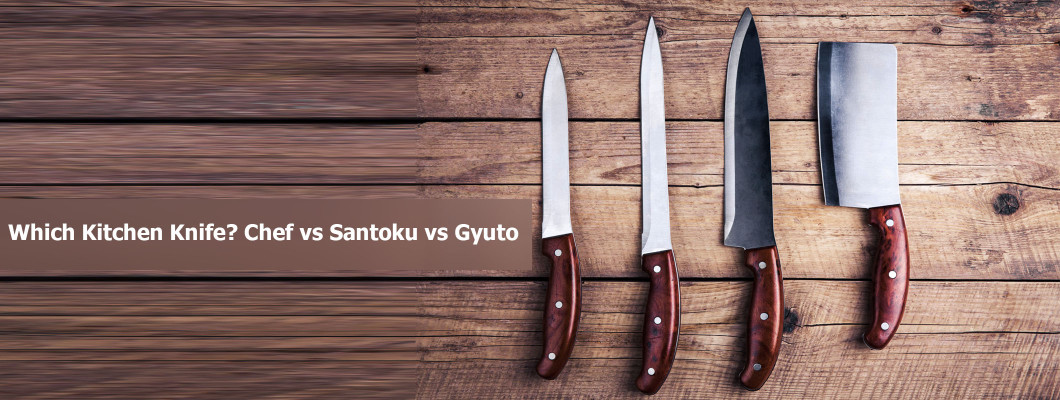
Which Kitchen Knife Do You Need? Chef vs Santoku vs Gyuto vs Cleaver
For most home cooks, one knife does about 80 percent of the work: a chef's knife or its Japanese cousin the gyuto. If you had to buy a single blade, buy that. Everything else — the santoku, the cleaver, the boning and fillet knives, the kitchen hatchet — earns its place by doing one job better than the all-rounder can. This guide matches each knife to the task it is actually best at, so you buy the right blade instead of the most blades.
Every knife below is hand-forged in Tokha-3, Kathmandu, Nepal from 5160 high-carbon spring steel — the same steel we use for our Gurkha kukris — full tang, oil-tempered and hand-ground, with free personalisation on every order.
Quick Answer — Which Knife for Which Cook?
If you want the short version, here it is. The detail on each follows below.
| If you want to... | Buy this | Blade |
|---|---|---|
| Do everything with one knife (Western) | Chef's knife | 8-10 in |
| Do everything with one knife (Japanese) | Gyuto | 7-8 in |
| Cut mostly vegetables, precisely | Santoku | 6.5-7 in |
| Slice roasts, fish and carve cleanly | Sujihiki / Kiritsuke | 7.5-10.5 in |
| Chop vegetables fast, in volume | Chinese chef cleaver | 10 in |
| Butcher meat and cut through bone | Serbian / butcher cleaver | 9-12.5 in |
| Break down poultry and joints | Kitchen hatchet | 3-9 in |
| Bone meat or fillet fish | Boning / fillet knife | 7.5-9 in |
The All-Rounders — Chef's Knife and Gyuto
If you buy one knife, buy one of these two. Both are designed to do a bit of everything — slicing, dicing, mincing, chopping — and between them they cover the vast majority of kitchen tasks. The difference is where they come from and how they feel.
The Western chef's knife
The chef's knife is the workhorse of the Western kitchen: a broad, curved blade with enough belly to rock through herbs and enough length and weight to power through a squash. Ours come in 9, 10, 12 and 13-inch blade lengths — the 9 and 10-inch are the everyday choice for most cooks, while the 12 and 13-inch heavy chef knives cross over into jungle and camp use. If you cook with a rocking motion and want one confident, robust blade, this is it.
The gyuto — the Japanese chef's knife
The gyuto is the Japanese take on the same idea: an all-purpose chef's knife, but typically lighter, thinner and flatter through the edge than a Western chef's knife. That flatter profile favours a push-cut and tap-chop over a rock, and the thinner blade slips through produce with less effort. Cooks who find a Western chef's knife heavy often prefer a gyuto. Ours is a 7-inch blade — nimble, sharp, and a genuine do-everything knife.
The Vegetable Specialists — Santoku and Chinese Cleaver
Two very different knives that share a job: cutting vegetables quickly and cleanly. Which suits you depends on how much you cut and how you like to move.
The santoku
The santoku — "three virtues," meaning slicing, dicing and mincing — is a shorter, flatter Japanese knife with very little belly. That flat edge is made for a straight up-and-down chop rather than a rock, which many home cooks find more intuitive and more controlled, especially for vegetables. At 6.5 to 7 inches it is lighter and easier to handle than a full chef's knife, which is why it is such a popular first "real" knife. If you cook a lot of vegetables and a big chef's knife feels unwieldy, start here.
The Chinese chef cleaver
Do not let the word "cleaver" mislead you. The Chinese chef cleaver is not a bone chopper — it is a thin, broad-bladed vegetable knife, and in a Chinese kitchen it is the everyday all-rounder. The tall blade lets you rock and push through mountains of vegetables, scoop them up off the board, and crush garlic with the flat. If you prep vegetables in volume and want speed, a Chinese cleaver is a revelation. Just do not confuse it with the heavy meat cleavers below — different tool, different job.
The Slicers — Sujihiki and Kiritsuke
When the job is a clean, long slice — carving a roast, portioning fish, slicing brisket — a dedicated slicer beats a chef's knife. These blades are long, narrow and flat, built to draw through in a single stroke without sawing or tearing.
- The sujihiki is the Japanese slicing and carving knife — a long, narrow blade that glides through cooked meat and fish for clean, even slices. If you carve roasts or serve fish, it does what a chef's knife cannot.
- The kiritsuke is a prestigious hybrid — part slicer, part chef's knife, with a distinctive reverse-tanto tip. Traditionally the mark of a head chef, it slices beautifully and handles general work too, rewarding a confident hand.
The Heavy Hitters — Meat Cleavers and Kitchen Hatchets
This is where real chopping power lives. Unlike the thin Chinese vegetable cleaver, these are forward-weighted, heavy-spined blades built to go through meat, joints and bone. If you break down whole cuts, butcher your own meat, or cook game, one of these belongs in your kitchen.
Meat and bone cleavers
The Serbian cleaver — the rectangular Balkan profile that went viral for good reason — is a superb all-round heavy chopper, equally at home on a big vegetable pile or a rack of ribs. The butcher's heavy cleaver and the various bone cleavers go further, built with the mass to chop cleanly through joints and dense bone without folding the edge.
Kitchen hatchets and the pizza axe — our signature segment
You will not find these elsewhere. Our hand-forged kitchen hatchets, at 3 and 9-inch blade lengths, are half-cleaver, half-axe — compact butchering tools for breaking down poultry, splitting joints and prep that defeats a normal knife. And the Pizza Axe is exactly what it sounds like: a 12-inch hand-forged axe with a keen edge and rosewood handle, built to chop pizza, bread and anything else at the table. It is a genuine tool and a conversation piece in equal measure — and one of our most-gifted knives.
The Precision Knives — Boning and Fillet
Two specialists for meat and fish work, where a flexible or narrow blade does what a broad chef's knife never can.
- The boning knife has a narrow, stiff blade to work close around bone and joints, separating meat cleanly with minimal waste. If you break down whole chickens or bone out cuts, it pays for itself fast.
- The fillet knife is thin and, in our lightweight version, flexible — made to run along the spine of a fish and take off a clean fillet. We offer a wider-blade version for stability and a lighter one for finesse.
So What Should You Actually Buy?
Stripped to the essentials:
- Buying your first serious knife? A chef's knife or a gyuto. It does the most, and everything else is an addition later.
- Find big knives unwieldy, cook lots of veg? A santoku.
- Prep vegetables in real volume? A Chinese chef cleaver.
- Carve, slice roasts, serve fish? A sujihiki (or a kiritsuke if you want it to double as a chef's knife).
- Butcher meat, cut bone? A Serbian or butcher's cleaver — or a kitchen hatchet for joints and poultry.
- Bone meat or fillet fish? The dedicated boning or fillet knife.
A sensible three-knife kitchen is a chef's knife or gyuto, a paring or small utility knife, and one specialist for what you cook most — a cleaver, a slicer, or a fillet knife. Build from the all-rounder outward, and buy each specialist when a real task calls for it.
New to hand-forged blades? Read why hand-forged chef knives outperform factory-made ones before you choose. And once your knife arrives, our guide to caring for a carbon steel chef knife keeps it sharp and rust-free for decades.
Can't Find the Exact Knife You Want?
If the profile, blade length, handle material or finish you need isn't in the catalogue, our smiths forge kitchen knives to your exact specification from 5160 spring steel, full tang, with free engraving. Send a sketch or a description for a free quote within 24 to 48 hours.
Order a Custom Kitchen Knife →Frequently Asked Questions
What is the difference between a chef's knife and a santoku?
A chef's knife has a longer, curved blade with belly, built for a rocking cut and general all-purpose work. A santoku is shorter (6.5-7 inches) with a flatter edge, made for a straight up-and-down chop, and is lighter and easier to handle. Choose a chef's knife as a do-everything blade; choose a santoku if you cook a lot of vegetables or find a big knife unwieldy.
What is the difference between a chef's knife and a gyuto?
They do the same job — both are all-purpose chef's knives. The gyuto is the Japanese version: typically lighter, thinner and flatter through the edge, favouring a push-cut over a rock. A Western chef's knife is heavier with more curve. Cooks who find a Western chef's knife heavy often prefer the gyuto; both are excellent single-knife choices.
Is a Chinese cleaver for chopping bones?
No — that is the most common mistake. The Chinese chef cleaver is a thin, broad-bladed vegetable knife, the everyday all-rounder of the Chinese kitchen, used for slicing, rocking and scooping produce. For bone and heavy meat you need a heavy meat cleaver such as a Serbian or butcher's cleaver, which are built with far more mass. Different tools despite the shared name.
What knife do I need to cut through bone?
A heavy meat cleaver — a butcher's cleaver, a bone cleaver, or a Serbian cleaver — or a kitchen hatchet for joints and poultry. These are forward-weighted and heavy-spined to chop through bone without damaging the edge. Never use a thin chef's knife or a Chinese vegetable cleaver for bone; it will chip the edge.
If I only buy one kitchen knife, which should it be?
A chef's knife or a gyuto. Between them they handle the large majority of kitchen tasks — slicing, dicing, mincing and chopping. Buy the all-rounder first, then add specialists (a cleaver, slicer, or fillet knife) as your cooking calls for them.
What is a kiritsuke knife used for?
The kiritsuke is a hybrid of a slicer and a chef's knife, with a distinctive reverse-tanto tip. It slices cleanly like a sujihiki but also handles general chef-knife work, which is why it was traditionally reserved for the head chef. It rewards a confident, experienced hand and makes an impressive all-in-one for a cook who wants one striking blade.
What's the difference between a boning knife and a fillet knife?
A boning knife has a narrow, stiff blade for working close around bone and joints in meat and poultry. A fillet knife is thinner and often flexible, made to run along a fish's spine and take off clean fillets. Boning knife for meat, fillet knife for fish, though both handle delicate trimming.
Are these knives good for outdoor and BBQ cooking?
Yes. Because they are forged from tough 5160 spring steel rather than harder, more brittle kitchen steels, they handle rough use — cutting on a wood block, occasional bone, weather exposure — better than a typical Japanese kitchen knife. The kitchen hatchets, cleavers and Pizza Axe are especially popular with BBQ and outdoor cooks. Just dry and oil the blade after use.
Shop Hand-Forged Chef & Kitchen Knives
30+ Hand-Forged Kitchen Knives, Made in Nepal
Chef knives, santokus, gyutos, cleavers, kitchen hatchets, boning and fillet knives — all forged from 5160 spring steel, full tang, with free personalisation and free worldwide shipping. Find the right one, or commission a custom build.
Browse the Full Collection →