
Explore the rich history and cultural significance of the kukri/khukuri, the legendary weapon of the Gurkhas. Discover how this iconic blade has shaped the legacy of the Gurkha soldiers and their role in history. From battlefield tales to the craftsmanship behind the kukri, we delve into the tradition, honor, and warrior spirit that continues to define the Gurkha heritage. At Everest Forge, we honor the art of hand-forging these blades in Nepal, preserving the legacy of the kukri for future generations.
13 Oct

0
536
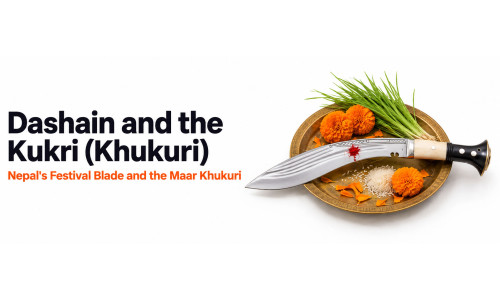
At Dashain the Khukuri Is Worshipped, Not Just Carried: How Nepal's Greatest Festival Uses the Blade
Dashain is Nepal's biggest festival, fifteen days in late September or October that celebrate the goddess Durga's victory over the buffalo demon Mahishasura, and it is the one time of year when the kukri (khukuri) moves from tool to sacred object. On Maha Navami, the ninth day, households, army units and workshops clean their khukuris, mark them with red tika and flowers, and worship them alon..
17 Sep
0
707
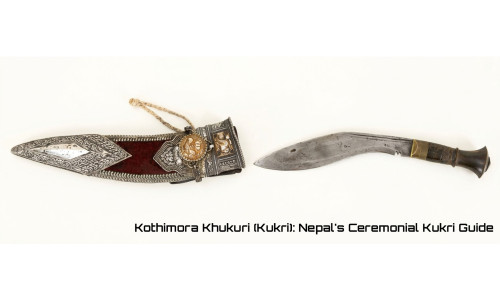
What Is a Kothimora Khukuri (Kukri)?
A kothimora is the ceremonial form of the Nepali khukuri (kukri): a hand-forged khukuri whose scabbard is covered in velvet and mounted with decorated silver or white-metal plates at the throat, along the body and at the tip. It is the highest-status khukuri in Nepali tradition. Rather than being carried for work, a kothimora is presented — at military retirements and commissions, promotions, weddings and other formal honours — and kept as a mark of respect..
17 Sep
0
560
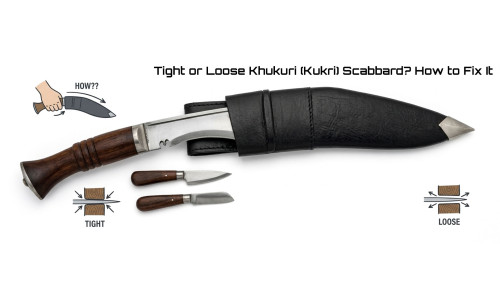
How Do You Fix a Tight or Loose Khukuri (Kukri) Scabbard?
A khukuri (kukri) that sticks in its scabbard can usually be fixed in minutes, without touching the blade. First, take the karda and chakmak out of their pockets — when they are in, they press on the dap and pinch the blade. Then shake the empty dap mouth down to clear any wood chips the edge has cut from the core. If it is still tight, clean the blade, let a damp dap dry, and break a new one in with slow draws. If it still binds, find ..
16 Sep
0
581
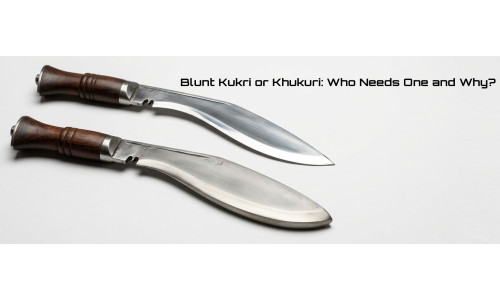
Blunt Kukri or Khukuri: Who Needs One, and Who Does Not?
A blunt kukri — or blunt khukuri — is the right choice for anyone who will handle it near other people, perform with it, train with a partner, present it at a ceremony or keep it where children can reach it. It is the wrong choice for anyone who wants to chop, clear brush or use it as a working tool, because a kukri exists to cut. The blade can look exactly the same either way.
This guide goes through who a blunt khukuri suits, who shou..
16 Sep
0
406
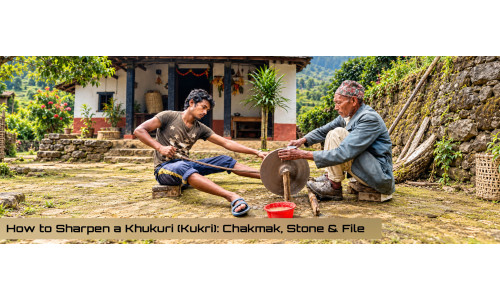
How Do You Sharpen a Khukuri (Kukri)?
You sharpen a khukuri (kukri) in two different ways, and most guides blur them together. Day to day, you hone it with the chakmak, the small blunt steel that rides in the back of the scabbard. That realigns an edge that has rolled or folded, but it removes almost no metal. When the edge is genuinely dull or chipped, you sharpen it with an abrasive that follows the curve: sandpaper over a soft backing, a puck or round rod, or a file for real damage. The tri..
15 Sep
0
938
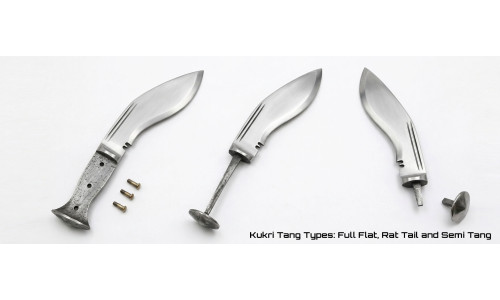
Kukri Tang Types: Full Flat, Full Rat Tail and Semi Tang Explained
The tang is the part of the blade you cannot see, and it decides whether a khukuri survives a decade of chopping or comes apart in a season. Take the handle away and the three common constructions look nothing alike. Put it back on and two of them become impossible to tell apart, and the difference between those two is the one that matters most.
This guide shows what sits under the handle of each tang type, how the butt of eac..
13 Sep
0
405
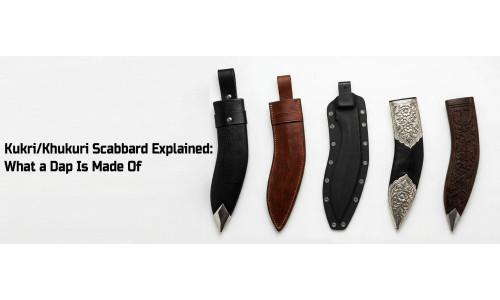
The Kukri/Khukuri Scabbard (Dap) Explained: Wood Core, Laha and the Sarki
The scabbard is not a leather bag. Inside it are two halves of carved wood, hollowed to the curve of one specific blade, held together by nothing but the leather stretched over them. It is made by a different craftsman from the one who forged the blade, it is fitted to that blade and no other, and it is the single commonest cause of rust on a kukri. Almost nobody explains any of this.
Every kukri and khukuri photograph ..
08 Sep
0
233
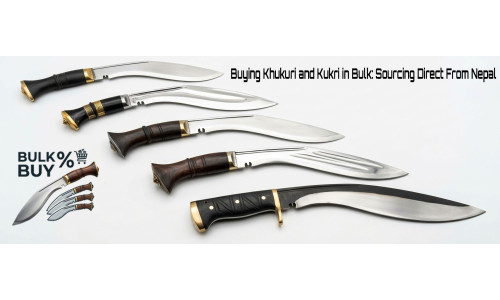
Buying Khukuri and Kukri in Bulk: A Retailer's Guide to Sourcing Direct From Nepal
Almost every kukri sold in a Western shop has passed through two or three hands before it reaches the shelf, and every wholesale kukri price you have been quoted reflects that. A forge in Nepal makes it, a trading house in Kathmandu buys it, an importer in your country buys from them, and you buy from the importer. Each step adds margin, and none of them adds anything to the blade.
Buying wholesale khukuri dire..
04 Sep
0
624
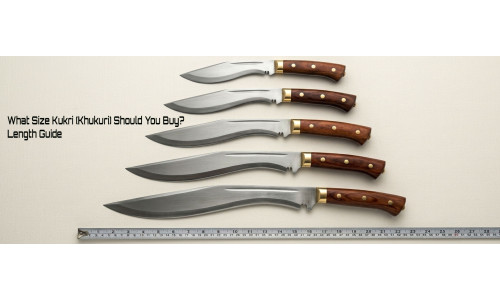
What Size Kukri (Khukuri) Should You Buy? Blade Length by Job
For most people the answer is a blade between 10 and 12 inches. That is the traditional service size, it has barely moved in over a century of military and village use, and it remains the most useful single blade we make. Drop to 7 to 9 inches if you want something you will genuinely carry every day. Go to 13 to 16 if the main job is chopping wood. Above roughly 18 inches the kukri stops being a tool and becomes a sword.
The kukri ..
30 Apr
0
1478
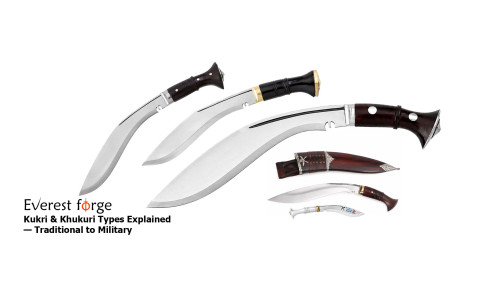
Kukri & Khukuri Types Explained — From Traditional to Military, Ceremonial to Survival
The kukri — spelled khukuri in Nepali — is not a single blade. It is a family of blades, each evolved for a specific purpose, environment, or tradition over centuries of use in the Himalayas and beyond. The inward curve and weighted belly that define every kukri are constant. But the size, weight, grind, steel treatment, handle material, scabbard style, and intended use vary significantly across different typ..