

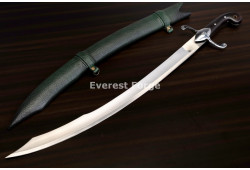
Brand: Everest Forge
A Hand-Forged Persian Shamshir With an Upswept Point
This is a hand-forged shamshir with a 27 inch deeply curved single-edged blade, a compact 6 inch hilt with a hooked butt, and a green leather scabbard shaped to the arc of the blade. It is 33 inches overall and 940 grams, forged from..
$284.99
Ex Tax:$284.99
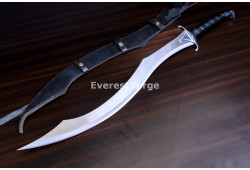
Brand: Everest Forge
A Hand-Forged Fantasy Khopesh With a Sculpted Guard and Deep Curved Blade
This is a 27 inch hand-forged fantasy khopesh: a single-edged blade sweeping in one deep continuous curve from an angular ricasso shoulder to a fine upswept point, broad through the forward third where the cut ..
$274.99
Ex Tax:$274.99
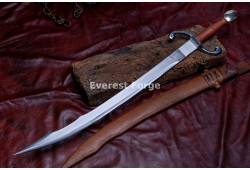
Brand: Everest Forge
Hand-Forged Scimitar Sword — Full-Tang 5160 Curved Blade with Wood Handle and Leather Sheath
This is a hand-forged, fully functional scimitar — a classic curved sword of the Middle Eastern and Persian tradition, forged in Nepal from 5160 high-carbon spring steel, oil-quenched and tem..
$244.99
Ex Tax:$244.99
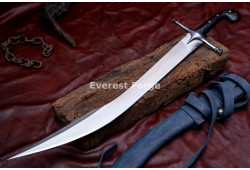
Brand: Everest Forge
Hand-Forged Fantasy Scimitar — Full-Tang 5160 Curved Blade with Star Guard and Blue Scabbard
This is a hand-forged, fully functional fantasy scimitar — a deeply curved single-edged sword forged in Nepal from 5160 high-carbon spring steel, oil-tempered, full tang, and sharpened to a t..
$249.99
Ex Tax:$249.99
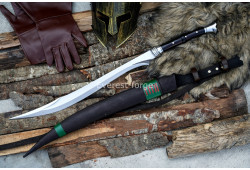
Brand: Everest Forge
Custom Scimitar Sword – Hand Forged Curved Blade with Historical Roots
The Custom Scimitar Sword is inspired by the iconic curved swords that shaped warfare across the Middle East, Persia, and surrounding regions for centuries. Known for their elegant curve and fluid cutting ability,..
$194.99
Ex Tax:$194.99
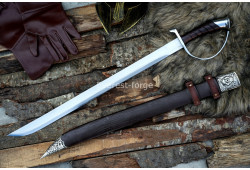
Brand: Everest Forge
Hand Forged D-Guard Sabre – A Classic Cavalry Blade Reimagined
This D-Guard Handle Sabre is a powerful interpretation of the classic sabre swords once carried by cavalry soldiers across Europe, Central Asia, and South Asia. Designed for speed, control, and effective cutting, the sa..
$249.99
Ex Tax:$249.99

Brand: Everest Forge
British Saber Sword – 25 Inch Hand-Forged Functional Sword
The British Saber Sword is a curved, well-balanced functional saber inspired by classic cavalry designs. Each blade is hand-forged from 5160 high carbon spring steel and oil-tempered for resilience and edge retention, then sh..
$264.99
Ex Tax:$264.99

Brand: Everest Forge
Hungarian Saber Sword – 24 Inch Hand-Forged Functional Sword
The Hungarian Saber Sword is a finely balanced and fully functional hand-forged weapon, inspired by traditional European sabers known for their curved, single-edged blades. This 24-inch sword is forged from 5160 high carbon..
$249.99
Ex Tax:$249.99
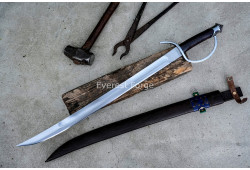
Brand: Everest Forge
Scimitar Sword – Hand-Forged Curved Saber with Rosewood Handle
The Scimitar Sword is a traditional curved saber inspired by Middle Eastern and South Asian warrior blades. With a distinctive sweeping curve and long cutting edge, this 24-inch hand-forged sword is built for slashing p..
$194.99
Ex Tax:$194.99
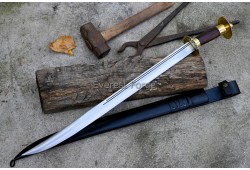
Brand: Everest Forge
Talwar Sword – Hand-Forged Lightweight Indo-Nepalese Blade with Rosewood HandleThis 20-Inch Talwar Sword by Everest Forge is a sleek and functional version of the iconic curved sabre from the Indian subcontinent. Hand-forged in Nepal from 5160 high-carbon leaf spring ste..
$174.99
Ex Tax:$174.99
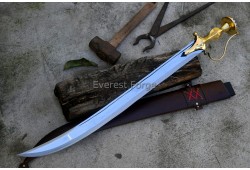
Brand: Everest Forge
Talwar Sword – Hand-Forged Indo-Nepalese Blade with Brass HiltThe 24-Inch Talwar Sword by Everest Forge blends historical Indo-Nepalese blade design with the ceremonial beauty of a handcrafted brass hilt. Forged in Nepal using traditional blacksmithing techniques, this sword represents ..
$274.99
Ex Tax:$274.99
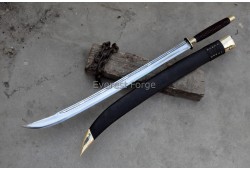
Brand: Everest Forge
27-Inch Traditional Talwar Sword – Hand-Forged Indo-Nepalese Sabre with Full Tang Rosewood HandleThe 27-Inch Traditional Talwar Sword is a handcrafted tribute to the legendary sabres used by warriors of the Indian subcontinent and Nepal. Forged in Nepal using time-honored methods, this ..
$249.99
Ex Tax:$249.99
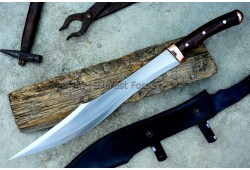
Brand: Everest Forge
Small Scimitar Sword – 16" Hand-Forged Curved Blade | Full Tang | 5160 Leaf Spring Steel | Sharpened & Ready | Made in Nepal
The Small Scimitar Sword is a compact yet powerful interpretation of the classic scimitar design. With a 16-inch curved blade, this hand-forged sword is idea..
$149.99
Ex Tax:$149.99
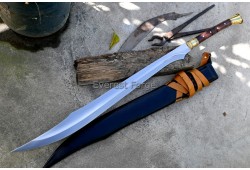
Brand: Everest Forge
Long Custom Scimitar – 29" Hand-Forged Sword | 5160 Leaf Spring Steel | Full Tang Rosewood Handle | Battle Ready | Made in Nepal
The Long Custom Scimitar features an extended 29-inch curved blade, inspired by traditional Arabian and Persian scimitar swords but reimagined for modern fun..
$349.99
Ex Tax:$349.99
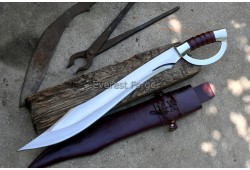
Brand: Everest Forge
Scimitar Sword with D-Guard – Hand-Forged Functional Blade | 5160 Leaf Spring Steel | Leather-Wrapped Rosewood Handle | Made in Nepal
Inspired by the elegant yet deadly curvature of historical Middle Eastern scimitars, this 18-inch hand-forged sword is designed for both collectors and ..
$184.99
Ex Tax:$184.99
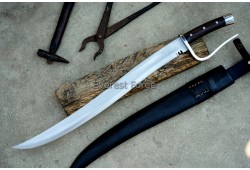
Brand: Everest Forge
Scimitar-Style Jungle Machete – Hand-Forged Heavy-Duty Blade | Full Tang | 5160 Steel | Rosewood Handle | Made in Nepal
Combining the graceful curve of a scimitar with the rugged functionality of a working machete, this 21-Inch Jungle Machete is designed for demanding field use. It’s a..
$164.99
Ex Tax:$164.99
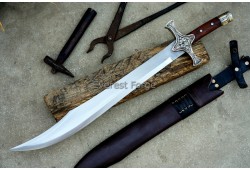
Brand: Everest Forge
Arabian Scimitar Sword – Hand-Forged Curved Blade | 5160 Steel | Rosewood Handle | Battle-Ready | Made in NepalInspired by the legendary curved swords of the Middle East, the 19-Inch Arabian Scimitar Sword is a masterfully hand-forged piece built for both collectors and functional users..
$154.99
Ex Tax:$154.99
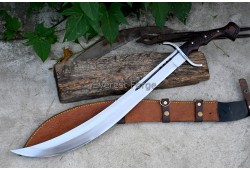
Brand: Everest Forge
21" Scimitar Machete – Heavy-Duty Curved Blade | Hand-Forged in Nepal | 5160 Leaf Spring Steel | Comfort Grip Rosewood HandleDesigned for performance in the field, the 21-Inch Scimitar Machete merges the graceful curve of a traditional scimitar with the strength and utility of a rugged ..
$174.99
Ex Tax:$174.99
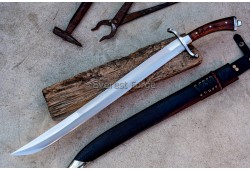
Brand: Everest Forge
21" Scimitar Sword – Talwar Style | Hand-Forged Combat Blade | 5160 Leaf Spring Steel | Rosewood Handle | Forged in Nepal
Inspired by the legendary Indian Talwar and traditional Scimitar designs of the Middle East and South Asia, this 21-Inch Scimitar Sword is a powerful, battle-ready ..
$149.99
Ex Tax:$149.99
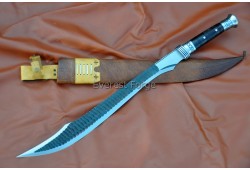
Brand: Everest Forge
Hand-Forged Scimitar Machete — A Curved, Dao-Style Sword-Machete
The Hand-Forged Scimitar Machete is a curved, dao-style sword-machete: a single hand-forged blade that bridges a long working machete and a light curved sword. Forged in Nepal from 5160 high-carbon spring steel, full ta..
$164.99
Ex Tax:$164.99
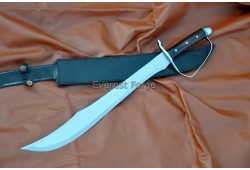
Brand: Everest Forge
Scimitar Sword – Hand-Forged Historical Blade | Carbon Steel | D-Guard Rosewood Handle | Made in Nepal
Reviving the power and elegance of the historic Middle Eastern scimitar, this 18-Inch Hand-Forged Scimitar Sword is a compact yet capable weapon made for real-world function and inspi..
$144.99
Ex Tax:$144.99
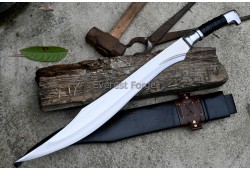
Brand: Everest Forge
18-Inch Hand-Forged Scimitar Sword – Rosewood HandleA fusion of heritage and functionality, this 18-inch Hand-Forged Scimitar Sword pays tribute to centuries-old sword-making traditions while delivering performance for today’s adventurers, collectors, and craftsmen. Forged from high-qua..
$184.99
Ex Tax:$184.99

Brand: Everest Forge
Scimitar Sword – 24" Hand-Forged Curved Blade | 5160 Steel | Rosewood Handle | Forged in Nepal
Channel the spirit of ancient warriors with this 24-Inch Scimitar Sword, a finely hand-forged blade inspired by the iconic curved sabers of Middle Eastern, Persian, and Central Asian history...
$194.99
Ex Tax:$194.99
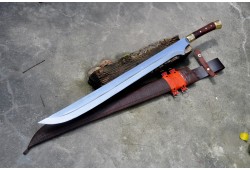
Brand: Everest Forge
Large Broad Scimitar Saber — Hand-Forged 27-Inch Curved Blade
The Large Broad Scimitar Sword is a hand-forged Middle Eastern scimitar saber — a long, broad, deep-bellied curved blade built for real cutting and serious display. Forged in Nepal from 5160 high-carbon spring steel, full ..
$324.99
Ex Tax:$324.99

Brand: Everest Forge
Custom D-Guard Scimitar Sword — Hand-Forged Curved Blade with a Steel Hand Guard
The Custom D-Guard Scimitar Sword is a hand-forged, fully functional curved scimitar fitted with a steel D-guard knuckle bow that wraps and shields the hand. Forged in Nepal from 5160 high-carbon spring ..
$174.99
Ex Tax:$174.99
Showing 1 to 25 of 25 (1 Pages)