

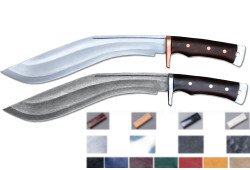
Brand: Everest Forge
A Hand-Forged Defender Kukri/Khukuri, Built the Way You Want It
Choose the blade finish, the handle, the fittings, the scabbard colour and whether to add the karda and chakmak, then add your engraving — and we forge that exact khukuri. Every selection updates the preview on screen. The..
$124.99
Ex Tax:$124.99
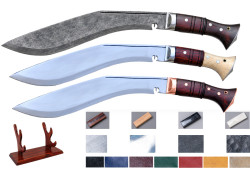
Brand: Everest Forge
A Hand-Forged Survival Kukri/Khukuri, Built the Way You Want It
Choose the blade finish, the handle, the fittings, the scabbard colour and whether to add the karda and chakmak — then we forge that exact khukuri. Every selection updates the preview on screen. There are 1,080 possible bu..
$119.99
Ex Tax:$119.99
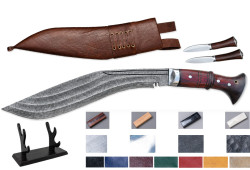
Brand: Everest Forge
A Hand-Forged 3 Chirra Beast Kukri/Khukuri, Built the Way You Want It
Choose the blade finish, the fittings, the handle, the scabbard colour and whether to add the karda and chakmak — then we forge that exact khukuri. Every selection updates the preview on screen. There are 864 possibl..
$124.99
Ex Tax:$124.99
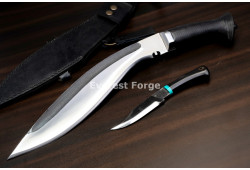
Brand: Everest Forge
A 14 Inch Kukri on a Stacked Leather Grip
A stacked leather grip is built rather than carved. Rings of leather are punched, threaded onto the tang one after another, compressed hard, and then turned and finished as a single piece — so what looks like one dark handle is actually forty..
$164.99
Ex Tax:$164.99
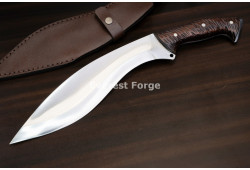
Brand: Everest Forge
A Kukri Built for Bushcraft
Most kukris are built to chop, and they are heavy because that is what chopping wants. This one is built for the other half of the work: the notching, splitting, feather-sticking, carving and cooking that fills the hours between the times you actually need..
$144.99
Ex Tax:$144.99
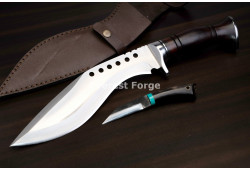
Brand: Everest Forge
A Kukri That Comes With Its Karda
Almost every kukri we sell ships as a single blade, and almost every page on this site says so plainly. This one is the exception. It comes with a karda — the small companion knife that belongs to the kukri tradition — and that is the main reason to ..
$144.99
Ex Tax:$144.99
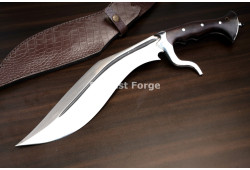
Brand: Everest Forge
What Is a Guarded Kukri?
A kukri with a steel guard. That sounds unremarkable until you look at the rest of the range and notice that not one other kukri we make has one, and neither does any traditional Nepali kukri. This is a 13 inch forward-curved blade hand-forged from 5160 high-..
$154.99
Ex Tax:$154.99
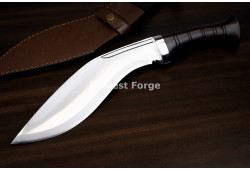
Brand: Everest Forge
What Is a Bhojpure Kukri?
A bhojpure is a village pattern from eastern Nepal, and it is the pattern most people picture when they picture a kukri: a broad blade with the widest part of the belly carried well forward, a heavy forward curve, and thick stock through the spine. This one ..
$134.99
Ex Tax:$134.99
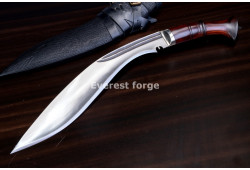
Brand: Everest Forge
A Hand-Forged Sirupate Khukuri With a Chirra Blade and Flared Rosewood Hilt
This is a 15 inch hand-forged sirupate, the slender pattern of Nepali kukri named after the leaf of the siru grass. The blade runs long and narrow through its length with a chirra ground inside the spine and ..
$164.99
Ex Tax:$164.99
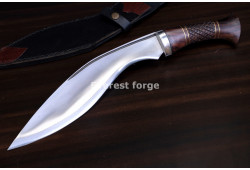
Brand: Everest Forge
A Hand-Forged Nepali Kukri With a Carved Grip and Inlaid Brass Rings
This is a 12 inch hand-forged kukri in presentation dress: the rosewood grip is cut with a diamond chequer across its rear half, banded with two inlaid brass rings and flared at the butt, and the blade is ground wit..
$149.99
Ex Tax:$149.99
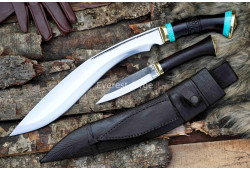
Brand: Everest Forge
Cross-Heritage Warrior Kukri Combining Gurkha and Saxon Blade Traditions
The Gurkha Saxon Warrior Kukri is a unique cross-heritage blade that unites two historic warrior traditions into a single functional form. Inspired by the forward-weighted power of the Nepali kukri and the str..
$184.99
Ex Tax:$184.99
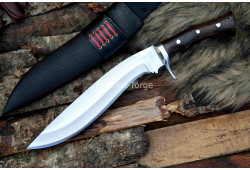
Brand: Everest Forge
Wider, Lighter Blade Geometry for Efficient Field Work
The Refined Baspate Kukri is inspired by the traditional Nepali Baspate blade profile, named after its distinctive bamboo-leaf shape. In Nepali, Bas means bamboo and Pate means leaf—together describing the long flowing curve an..
$129.99
Ex Tax:$129.99

Brand: Everest Forge
The Classic Sirupate Kukri is a traditional Nepali khukuri design, prized for its slim, leaf-like blade profile that makes it lighter, faster, and easier to handle than heavier kukri styles. The name “Sirupate” comes from the siru grass leaf, which the blade closely resembles in shape. ..
$149.99
Ex Tax:$149.99
Brand: Everest Forge
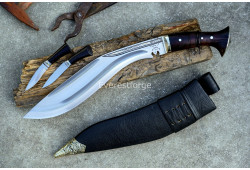
The Survival Chirra Kukri is a rugged working blade built for heavy-duty field use. Its 12-inch blade features a traditional chirra (fuller groove) that reduces weight while maintaining strength, giving excellent balance and cutting efficiency. Hand-forged from 5160 high carbon steel (l..
$134.99
Ex Tax:$134.99
Brand: Everest Forge
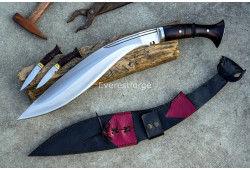
The Jungle Master Khukuri is built for maximum chopping power and endurance in the wild. Featuring a massive 16-inch blade, this heavy-duty khukuri machete is designed for clearing dense jungle, cutting wood, and handling the toughest survival tasks. Each blade is hand-forged from 5160 ..
$184.99
Ex Tax:$184.99
Brand: Everest Forge
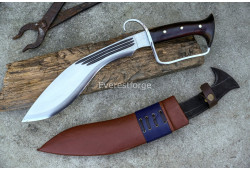
The 12-Inch D-Guard Khukuri Machete is designed as a heavy-duty working blade for farm, camp, and survival use. Hand forged from 5160 high carbon leaf-spring steel, the blade is shaped and tempered using traditional techniques that ensure both durability and cutting power. Water temperi..
$129.99
Ex Tax:$129.99
Brand: Everest Forge
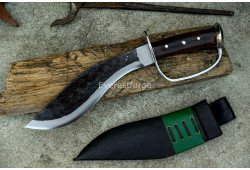
The D-Guard Farmer Khukuri is a compact, hard-working kukri machete built for real field use—farm, bush, and camp. Each blade is hand forged from high-quality 5160 leaf-spring steel using traditional techniques, then water-tempered for a tough working hardness with resilient flex. After..
$129.99
Ex Tax:$129.99
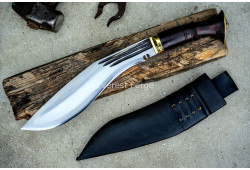
Brand: Everest Forge
Chirra Khukuri – 12-Inch Full Tang Hand-Forged Kukri Machete with Triple Fuller
The Chirra Khukuri is a heavy-duty kukri machete designed for strength, control, and efficiency. Recognized by its signature triple-fuller design (known as “chirra”), this blade style is built to delive..
$119.99
Ex Tax:$119.99
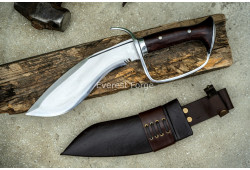
Brand: Everest Forge
D-Guard Kukri Knife – Compact Hand-Forged Full Tang Khukuri for Camping & Hunting
The D-Guard Kukri Knife is a compact yet powerful utility blade built for rugged outdoor use. Designed with a protective D-guard handle, this 9-inch kukri offers both control and hand safety, maki..
$124.99
Ex Tax:$124.99
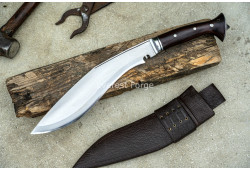
Brand: Everest Forge
Survival Kukri | Heavy-Duty Hand-Forged Khukuri for Camping, Bushcraft & Outdoor Use
The 12-Inch Survival Kukri is a rugged, field-tested utility blade built for extreme outdoor use. Inspired by the legendary khukuris used by Gurkhas during World War II in Burma and Malaya, thi..
$134.99
Ex Tax:$134.99

Brand: Everest Forge
Rhino Khukuri – Heavy-Built Utility Blade with Fuller and Balance Holes
The Rhino Khukuri is built for strength, weight, and real-world functionality. Inspired by the raw power of the rhino, this wide-bladed khukuri is designed to excel in heavy chopping, wood processing, and outdo..
$144.99
Ex Tax:$144.99
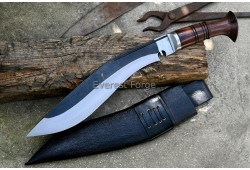
Brand: Everest Forge
Bhojpure Shepherd Khukuri – Rugged Working Blade from the Fields
The Bhojpure Shepherd Khukuri is a practical and robust blade forged by Everest Forge, inspired by the everyday tools carried by shepherds and farmers in the Bhojpur region of Nepal. Designed for daily use in rugged t..
$124.99
Ex Tax:$124.99
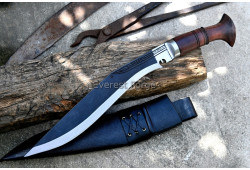
Brand: Everest Forge
Shepherd Sirupate Khukuri – Lightweight Hand-Forged Kukri for Speed & Precision
While trekking the hills of Nepal, the Everest Forge team encountered a local shepherd carrying a slender, well-worn sirupate khukuri. Designed for daily use in the rugged terrain, the blade he carr..
$119.99
Ex Tax:$119.99
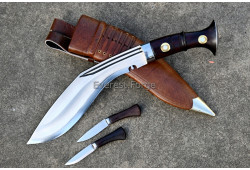
Brand: Everest Forge
Everest Angkhola Panawal Khukuri – Heavy-Duty Full Tang Utility Kukri
The Everest Angkhola Panawal Khukuri is a robust and reliable blade, custom-designed by Everest Forge for serious users who demand strength and performance. Forged with a traditional Angkhola fuller profile..
$129.99
Ex Tax:$129.99

Brand: Everest Forge
Kasai Khukuri/Kukri –Traditional Butcher Kukri with Black Blade
The Kasai Khukuri (also spelled Kukri), meaning "butcher’s khukuri" in Nepali, is a heavy-duty working blade forged for serious tasks. Inspired by the traditional Nepali butcher's knife known as the “Dau,” this hand-fo..
$124.99
Ex Tax:$124.99
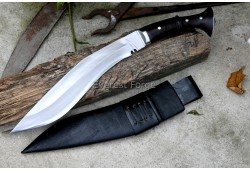
Brand: Everest Forge
Hollow Ground Survival Kukri – Lightweight Combat-Ready Khukuri
The Hollow Ground Survival Kukri is a tactical evolution of the classic Nepalese khukuri, engineered for real-world use in demanding outdoor environments. This new design features a 12-inch semi-polished blade with a pre..
$124.99
Ex Tax:$124.99
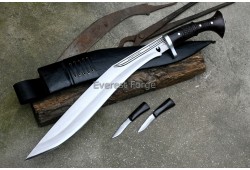
Brand: Everest Forge
Cheetlange Swift Blade Kukri – Lightweight 16-Inch Traditional Khukuri Machete
The Cheetlange Swift Blade Kukri is a large, lightweight working blade designed for speed, slicing power, and field functionality. Hand-forged in Nepal, this kukri features a 16-inch narrow blade with a pr..
$149.99
Ex Tax:$149.99
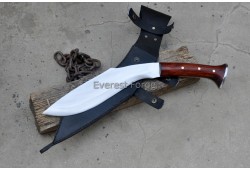
Brand: Everest Forge
Ironback Kukri – Thick Spine Heavy-Duty Khukuri for Rugged Outdoor Use
The Ironback Kukri is a no-nonsense powerhouse with one defining feature — the thickest spine in our lineup. Built for hard strikes, deep cuts, and relentless field use, this kukri is forged with heavy-duty perf..
$144.99
Ex Tax:$144.99