Kratos' Two Signature Weapons, and the Real Blades Behind Them
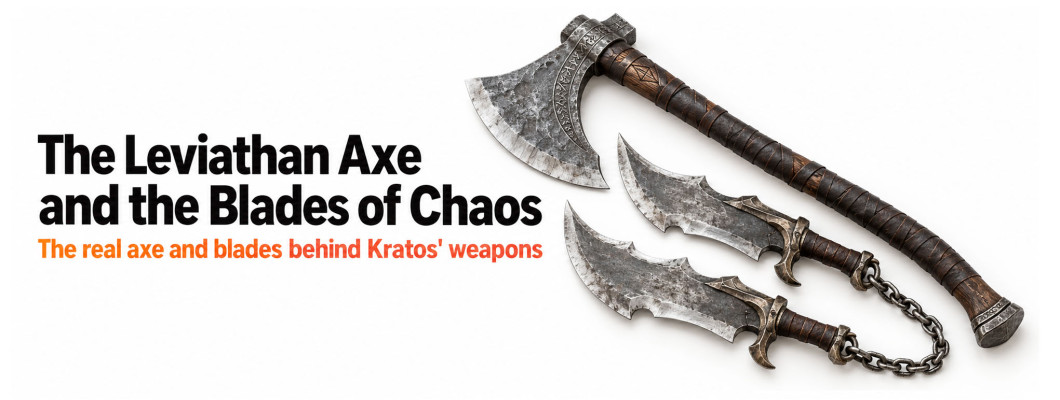
The Leviathan Axe is the frost-runed, bearded axe Kratos carries in God of War (2018) and God of War Ragnarök (2022). In the story it was forged by the dwarf brothers Brok and Sindri for Kratos' wife Faye. The Blades of Chaos are the pair of curved blades on chains he has carried since the first game in 2005, a gift from Ares that bound him to the god of war. One is clearly based on the Viking bearded axe; the other has no single real ancestor, but its short, forward-curving chopping blades sit close to the Greek kopis. Below: the story of each weapon, the real history behind it, and what it takes to forge one in steel.
| Quick facts | Leviathan Axe | Blades of Chaos |
|---|---|---|
| First game | God of War (2018) | God of War (2005) |
| Made by (in the story) | Brok and Sindri, the Huldra brothers | Given by Ares, god of war |
| Weapon type | One-handed bearded war axe | Pair of short curved blades on chains |
| Power in the game | Frost runes; thrown and recalled to the hand | Fire; swung on chains at long range |
| Closest real weapon | Viking bearded axe (skeggøx) | Greek kopis and other forward-curving choppers |
| Can it be forged for real? | Yes, as a working bearded axe | Yes, as a pair of blades; the chains are for display |
What Is the Leviathan Axe?
When Santa Monica Studio moved Kratos from Greek myth to Norse myth for the 2018 game, it gave him a new weapon to match the new world. The Leviathan Axe opens the game in his hands. It belonged to Faye, his second wife, whose death starts the journey, and it is the weapon he uses to teach and protect his son Atreus.
Within the story, the axe was made by Brok and Sindri, the bickering dwarf smiths who also forged Thor's hammer Mjölnir. They built it to stand against the hammer, and it borrows the hammer's best trick: Kratos can throw it, then call it back to his hand from any distance. Runes along the blade give it the power of frost, so a thrown axe freezes what it hits.
In God of War Ragnarök (2022), the long winter of Fimbulwinter weakens the axe and it has to be rebuilt and upgraded again. Fully upgraded, the plain runes give way to ornate patterning and a gold serpent winding up the haft, a nod to Jörmungandr, the world serpent.
The name, by the way, is not Norse at all. Leviathan is the sea monster of the Hebrew Bible. The axe is Norse in its shape and its runes, not in its name.
The Real Axe Behind the Leviathan: The Viking Bearded Axe
Look at the Leviathan's head and you see a real Viking Age pattern: the bearded axe, called skeggøx in Old Norse, literally "beard axe". The "beard" is the lower part of the blade that drops well below the line of the haft.
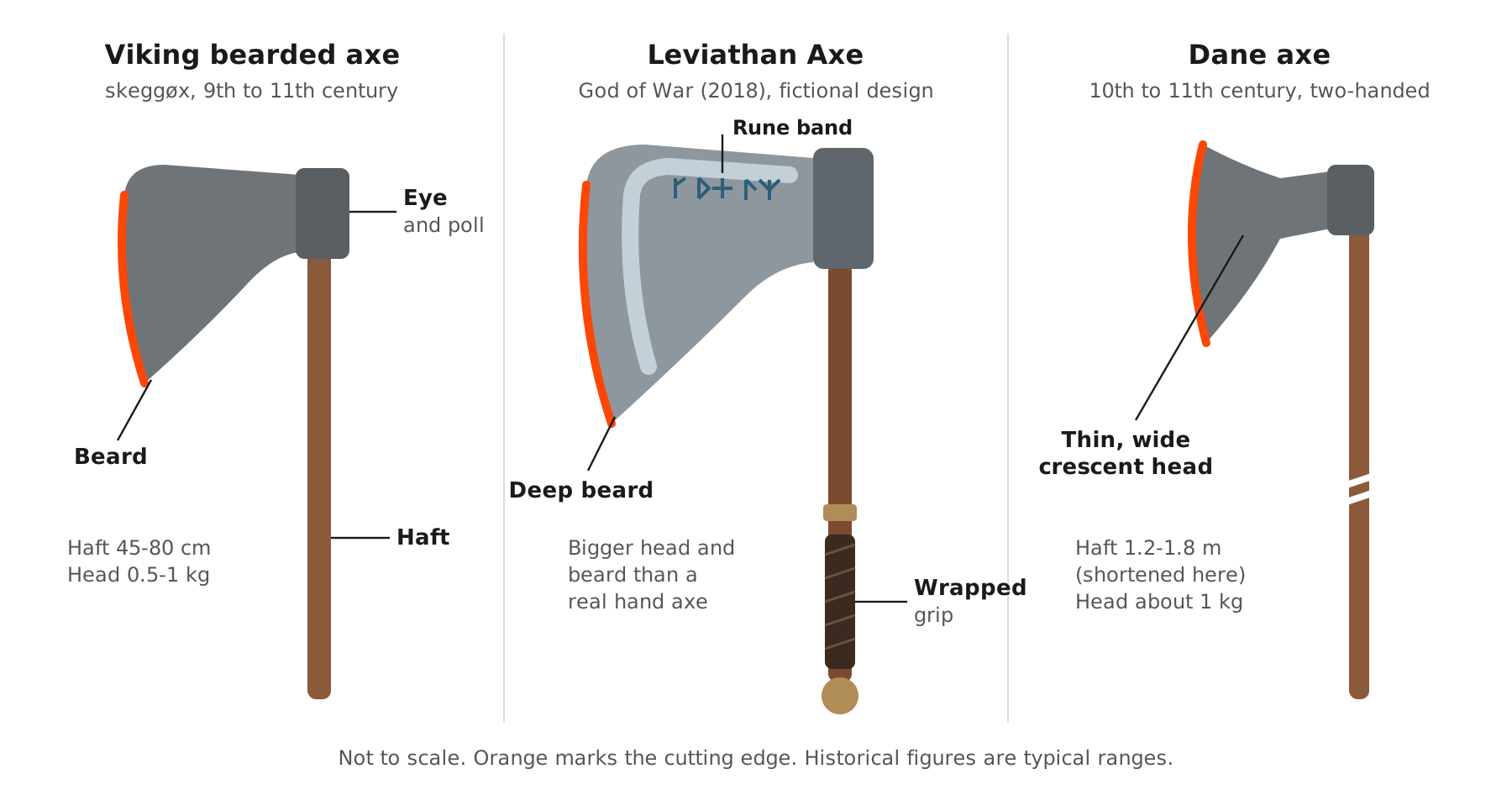
The beard was a practical design, not decoration:
- A long edge on a light head. Cutting away metal behind the beard gave a long cutting edge without the weight of a solid wedge. In battle, a light head is a fast head.
- A hook. The beard could catch the rim of a shield and pull it down, or hook a weapon or a limb.
- A choked grip. The hand could slide up behind the beard for close, controlled work, which also made the same axe useful for carving and woodwork.
Viking fighters carried hand axes like this alongside, or instead of, swords, because an axe used far less iron and every farm already had one. For war, the big brother was the Dane axe, a thin, wide crescent head on a two-handed haft well over a metre long. We cover both in detail in our Viking axe guide.
The runes and ornament on the Leviathan also have real precedent. The Mammen axe, found in a 10th-century grave at Mammen in Denmark, is an iron axe head inlaid all over with silver patterns. It was a status piece, made to be seen. The game's rune band is the same idea in fantasy form.
Could a Real Leviathan Axe Work?
Mostly, yes. Take away the magic and you have a bearded war axe, a design that worked in battle for centuries. Three things change when it becomes steel:
- The head size. In the game the head and beard are drawn larger than a real one-handed axe, so the axe reads clearly on screen. A forged version either keeps that look and accepts more weight, or slims the head toward historical proportions so it handles like a real hand axe.
- Throwing. Axes can be thrown, and axe throwing is a sport, but a heavy war axe is not a throwing axe, and nothing comes back to your hand. A real Leviathan-style axe is for chopping, display and cosplay.
- The runes. These become engraving or etching on the head. They are decoration; they add nothing to the cut.
For balance, a hand axe wants most of its weight in the head but not so much that it pulls the wrist. Our guide on how to choose an axe explains head weight and haft length, and our axe handle guide explains why heads come loose and how a head is hung properly.
| If you commission one | What to decide |
|---|---|
| Head shape | Game-accurate oversized head, or slimmer historical bearded head |
| Steel | 5160 spring steel, hardened and tempered for an axe edge |
| Edge | Sharpened working edge, or unsharpened for display and cosplay |
| Rune band | Engraved or etched, plain or filled with colour |
| Haft and grip | Wooden haft with a wrapped grip and a decorative pommel |
| Finish | Polished, satin or darkened head |
Want a Leviathan-inspired axe made to your size and finish? Tell us what you want and we will forge it.
Start a custom forge requestWhat Are the Blades of Chaos?
The Blades of Chaos are where Kratos' story begins. In the first God of War (2005), he is a Spartan captain about to lose a battle. He calls on Ares, god of war, and swears his service in exchange for victory. Ares answers with two curved blades whose chains are seared into Kratos' forearms, binding the weapons and the debt to his body.
Swung on their chains, the blades let him strike at long range and sweep through crowds of enemies, wreathed in fire. They became the most recognisable weapon in the series. Kratos fights with other chained blades in the later Greek games, the Blades of Athena in God of War II (2007) and the Blades of Exile in God of War III (2010), but the originals are the ones fans remember.
In the 2018 game, Kratos has hidden the Blades of Chaos away, trying to leave his past behind. Retrieving them partway through the story is one of the game's big moments, and from then on he fights with both the axe and the blades, frost and fire.
The Real Blades Behind the Blades of Chaos
No army ever fought with swords on chains. The chains are game logic: they give Kratos reach and a fighting style nobody else has. But the blades themselves have a recognisable shape, short, broad and curving forward, built to chop.
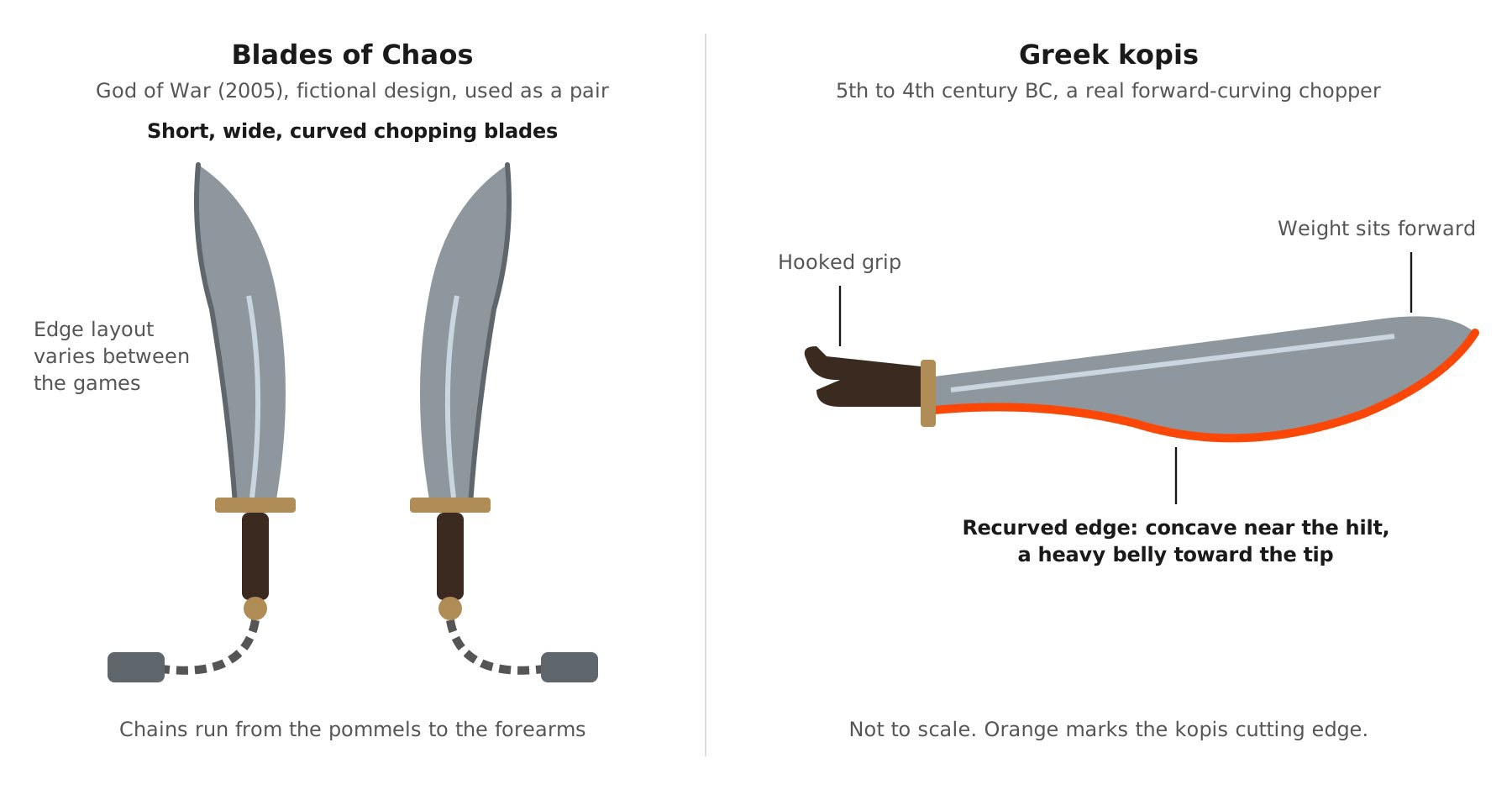
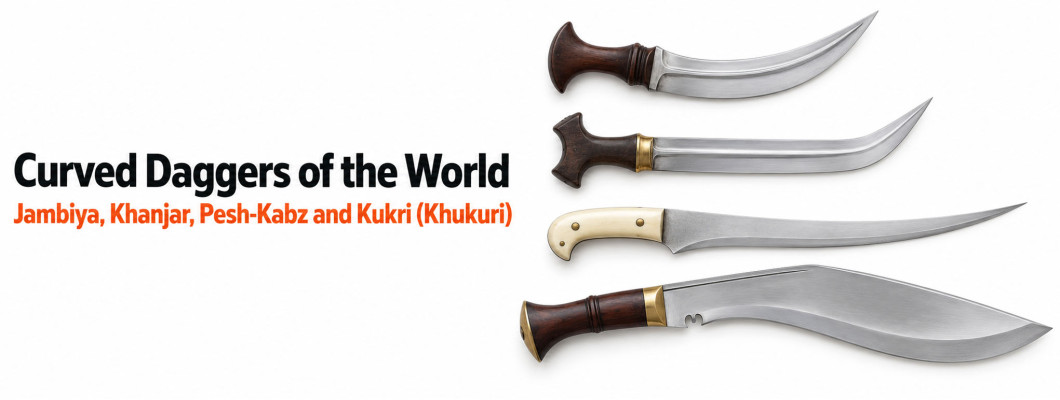
The closest real match, and a fitting one for a Spartan hero, is the Greek kopis. It is a single-edged sword of the 5th and 4th centuries BC whose blade curves forward, with the weight carried toward the tip, so it falls into a cut like an axe. Writers such as Xenophon recommended a curved chopping sword like this for cavalry. We explain it fully in our kopis guide, and why it is often confused with the Egyptian khopesh in Kopis vs Khopesh.
The Blades of Chaos are shorter than a kopis and carried in pairs, and their exact shape changes from game to game. A real pair is best thought of as two short, heavy, forward-curving choppers, closer to a large knife than a sword.
Leviathan Axe vs Blades of Chaos
| Leviathan Axe | Blades of Chaos | |
|---|---|---|
| Mythology | Norse era | Greek era, carried into the Norse games |
| Element | Frost | Fire |
| Fighting style | Heavy close blows, thrown and recalled | Fast, wide sweeps at range on chains |
| What it means for Kratos | A gift from Faye; his new life as a father | A bond to Ares; his violent past |
| Real ancestor | Viking bearded axe | No direct one; closest to the kopis |
| Forged version | A working bearded axe | A pair of short curved blades; chains for display only |
The contrast is the point of the 2018 game. The axe is controlled and defensive; the blades are rage. When Kratos picks the blades up again, the game is saying his past has caught up with him.
Forging Kratos' Weapons for Real at Everest Forge
Everest Forge is a custom forge. Every blade we make is forged after you order it, at our forge in Kathmandu, so a God of War-inspired piece is a normal request for us. A few honest notes first:
- Steel. We forge in 5160 spring steel only. We do not make Damascus or pattern-welded heads, so any "rune" or pattern is engraved or etched, not folded into the steel. Our steel guide explains why 5160 suits an axe and a chopping blade.
- Working or display. We can sharpen the edge for real use, or leave it blunt for cosplay and events, which many conventions require. See our real steel cosplay guide.
- The chains. For a Blades of Chaos pair, any chain is decorative or detachable. We will not make a chain that fastens a blade to your arm.
- Left-handed. Any build can be made left-handed. Just write "Left Handed" in the order note.
If you would rather start from a standard design, these are the closest real axes we already forge:
To see how an order moves from your idea to a finished blade, read what happens after you order a custom blade. You can also browse standard patterns in our Build Your Blade configurator.
Your Leviathan-inspired axe, forged to order
Choose the head shape, edge, runes, haft and finish. Send us reference images and we will quote and forge it in 5160 spring steel.
Request a custom forgeRelated Reading
Frequently Asked Questions
Who made the Leviathan Axe in God of War?
In the story, the dwarf brothers Brok and Sindri forged it. They are the same smiths who made Thor's hammer Mjölnir, and they built the axe to rival it.
Who did the Leviathan Axe belong to before Kratos?
It was made for Faye, Kratos' second wife and the mother of Atreus. She left it to Kratos, and her death is what starts the 2018 game.
Is the Leviathan Axe from Norse mythology?
No. It was created for the game. Its shape and runes are Norse in style, but the name comes from Leviathan, the sea monster of the Hebrew Bible.
What real axe is the Leviathan Axe based on?
It follows the Viking bearded axe, or skeggøx, whose blade drops in a "beard" below the haft. The game enlarges the head and adds a rune band.
Who gave Kratos the Blades of Chaos?
Ares, the god of war. Kratos swore service to Ares in exchange for victory in battle, and the blades' chains were seared into his forearms as part of that bond.
Are the Blades of Chaos based on a real weapon?
Not directly. No army fought with blades on chains. The blades' short, forward-curving chopping shape is closest to the Greek kopis, which suits a Spartan hero.
Can you make a real Leviathan Axe?
Yes, as a bearded war axe inspired by the game. We forge it in 5160 spring steel through our custom forge, sharpened for use or blunt for cosplay, with engraved or etched runes.
Can a real axe be thrown and recalled like in the game?
Axes can be thrown, but nothing returns to your hand, and a heavy war axe is not a throwing axe. A real Leviathan-style axe is for chopping, display and cosplay.
Can you forge the Blades of Chaos with chains?
We can forge the pair of curved blades, with a chain added for display or made detachable. We do not make chains that fasten a blade to your arm.
Is an Everest Forge God of War axe an official replica?
No. Everest Forge is not affiliated with Sony Interactive Entertainment or Santa Monica Studio. We forge our own designs inspired by the games, to your specification.