Axe Handles: Why Heads Come Loose, and How to Hang One Properly
A loose axe head is fixed by rehanging it, not by soaking it in water. That single myth ruins more axes than any other piece of advice in circulation — it swells the wood briefly, the wood dries looser than it started, and the rot begins quietly inside the eye where nobody can see it. This guide covers why heads work loose in the first place, how a handle is actually hung, how to choose a replacement, and how to fit it. It also covers the one mistake that permanently destroys an axe head, which a surprising number of people are still told to make.
Why Heads Come Loose
Three causes, and they compound.
Wood moves with humidity. This is the big one. Timber takes up moisture in damp conditions and gives it back in dry ones, swelling and shrinking as it does. An axe stored in a heated house through winter loses moisture and the handle shrinks inside the eye, which is why heads so often turn up loose in spring after a season in a warm shed or garage. The head has not changed at all; the wood around it has.
Overstrike damage. Missing the target with the bit and hitting with the handle just behind the head crushes and splinters the wood at exactly the point holding everything together. Every overstrike does a little damage even when nothing visibly breaks.
A hang that was never right. If the handle did not fill the eye completely when it was fitted, or the wedge was under-driven, the axe left the factory on its way to being loose. This is common in mass-produced axes and it is invisible until it is not.
The Soaking Myth
Ask anywhere and someone will tell you to stand the axe head-down in a bucket of water overnight. It is the most persistent bad advice in the tool world and it is worth being blunt about.
It appears to work. Water swells the wood, the head tightens, and the axe feels sound for a few days. Then the wood dries and shrinks — and it shrinks past where it started, because wood that has been repeatedly wetted and dried loses its resilience. You end up looser than before.
Worse, the water sits inside the eye where air cannot reach it, against steel. That means rot in the wood and rust on the inside of the head, neither of which you can inspect.
Soaking in linseed oil is a gentler version of the same error. Oil is a good finish and a good preservative, and it will not fix a mechanical problem. If the head moves, the hang has failed, and the fix is mechanical.
How a Hang Actually Works
Worth understanding before you take one apart.
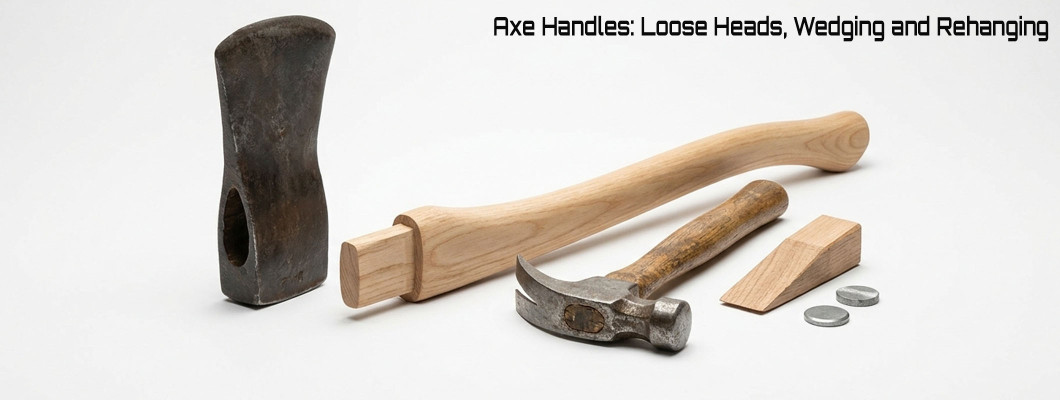
The eye of the axe head is not a straight hole. It is tapered, narrower in the middle and wider at the top, so that once the handle is spread inside it the head physically cannot come off upward.
The handle is driven in from below. It is shaped to match the eye, then seated so a small amount of wood protrudes above the head.
Then a kerf — a saw cut down the centre of the handle end, running roughly two-thirds of the eye's depth — receives a wooden wedge, driven in to force the wood outward against the tapered walls. That expansion is what locks the head on.
Many hangs then add a metal cross-wedge, driven in at right angles to spread the wood in the other axis too. Useful, and not a substitute for a properly fitted wooden wedge.
Nothing here relies on glue or friction alone. It is a mechanical lock, which is why a proper hang lasts decades and a bad one lasts a season.
Choosing a Replacement Handle
Grain direction matters more than species. Look at the handle end-on: the growth ring lines should run roughly in line with the axe bit, and looking along the length they should run straight the whole way without exiting the side. Grain that runs out partway along is a break waiting for a reason, and no amount of good fitting fixes it.
Species. Hickory is the traditional choice for toughness and shock absorption; ash is the European equivalent. Rosewood, which we use, is denser and heavier, giving a solid feel and taking a finish well.
Length. Match it to the head weight and to your own reach rather than buying the longest available. The sizing method is in our guide to choosing an axe.
Finish. Buy unfinished or lightly oiled. Thick varnish is slippery in wet hands and hides the grain you needed to inspect.
Oversized is better than undersized. A replacement handle should need fitting. One that drops into the eye without work will never hang tight.
Removing the Old Handle
Never burn it out. This is the mistake that permanently destroys an axe. Putting the head in a fire to burn away the wood takes the steel back above its tempering temperature, undoing the heat treatment the smith spent hours getting right. The head will look fine and the edge will never hold again. Our guide to heat treatment explains why the damage is invisible and permanent.
The correct method is dull and effective. Saw the handle off close under the head. Clamp the head in a vice, then drill several holes down through the remaining wood inside the eye to break it up, and punch the pieces out with a drift and hammer, working from the top down since that is the direction the taper allows.
Take the time to clean the eye completely. Old wood and wedge remnants left inside will stop the new handle seating.
Fitting the New Handle
This is patient work with a rasp, and it is almost entirely a matter of not removing too much.
Dry fit constantly. Push the handle into the eye, note where it binds, take material off only there. Repeat many more times than feels necessary. Every pass removes wood you cannot put back.
Aim for a snug fit through the full depth, not just at the top. A handle touching only at the ends will loosen quickly.
Seat it by striking the butt, not the head. Hold the axe with the head up and strike the bottom of the handle downward on a solid surface. The head's own inertia drives it onto the handle. Hammering directly on the head damages it and drives the handle nowhere useful.
Leave a little wood proud above the top of the eye — enough to be trimmed flush after wedging, not so much that the wedge has nothing to push against.
Wedging
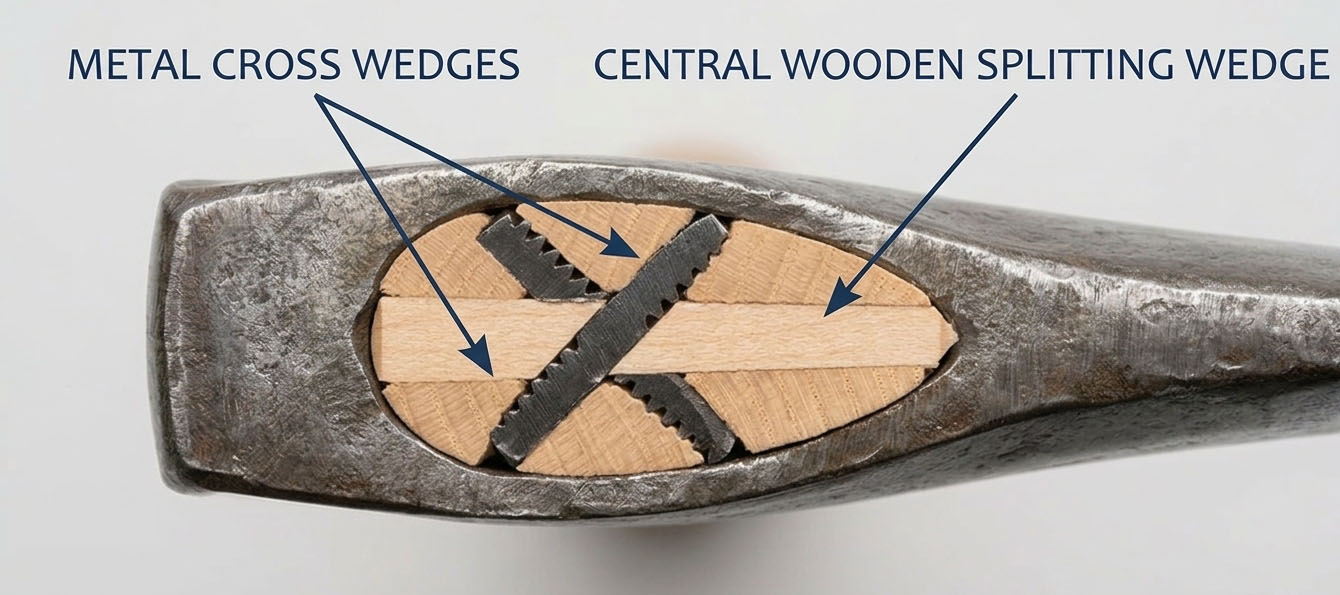
Top-down visual guide showing correct axe wedging orientation: the central wooden splitting wedge fills the complete kerf slot, intersected diagonally by metal cross wedges for extra hold.
The wedge is what actually holds the axe together, so this is not the step to rush.
Cut the kerf to roughly two-thirds of the eye depth if the handle did not come with one. Coat the wooden wedge lightly with wood glue — as an aid, not as the mechanism — and drive it into the kerf steadily until it stops moving. It should stop firmly rather than bottoming out with a hollow sound.
Do not over-drive it. Past a certain point you are splitting the handle rather than expanding it, and a split you cannot see is a failure you will meet later.
Trim the protruding wedge and handle flush, add a metal cross-wedge if you are using one, and let the glue cure fully before the axe goes near wood.
Finishing and Ongoing Care
A few coats of boiled linseed oil, allowed to dry properly between them, feeds the wood and slows the moisture exchange that loosens heads in the first place. Re-oil once or twice a year — more often if the axe lives outdoors or in a dry heated space.
Store axes somewhere with stable humidity rather than in a heated house one season and an unheated shed the next. Those swings are what move the wood.
And check the hang before use, every time. Grip the head in one hand and the handle in the other and try to twist them against each other. It takes two seconds.
Repair or Replace?
| What you find | What it means | Action |
|---|---|---|
| Slight movement, handle otherwise sound | Wedge has loosened or wood has shrunk | Re-wedge, or rehang |
| Splintering behind the head | Overstrike damage | Replace the handle |
| Crack anywhere in the handle | Terminal | Replace, do not attempt repair |
| Grain running out the side | Built-in weak point | Replace before it fails |
| Handle soft, dark or smelling damp | Rot, often from soaking | Replace |
| Head mushroomed at the poll | Used as a hammer | Head problem, not a handle one |
Having One Made Instead
If you are rehanging an axe because the handle was never right for you, the better answer is to have the next one built correctly rather than to keep adapting the wrong tool.
Handle length, handle wood, straight or curved profile, and finish are all commissionable, and so is the head weight they carry. A handle matched to your height and to the job is not a luxury — it is the difference between an axe you reach for and one that sits in the shed.
Send your height, the intended use, and any length you already know suits you through custom forge, and we confirm every dimension in writing before forging. Every axe we make is hung by hand in Kathmandu on rosewood, with the head forged from 5160 spring steel.
A Handle Built to Your Reach
Handle length, wood, profile and finish — with a head weight to match. Hand-forged and hand-hung in Kathmandu from 5160 spring steel, tempered, sharpened, and supplied with a hand-stitched leather sheath. Tell us your height and the job.
Request a Custom Axe →Frequently Asked Questions
Should I soak a loose axe head in water?
No. It is the most persistent bad advice in the tool world. Water swells the wood so the head tightens for a few days, then the wood dries and shrinks past where it started, leaving the axe looser than before. The water also sits inside the eye against steel where air cannot reach it, causing rot in the wood and rust inside the head. If the head moves, the hang has failed, and the fix is mechanical.
Why does my axe head keep coming loose?
Usually wood movement with humidity. Timber takes up and gives back moisture as conditions change, and an axe kept in a heated house or dry shed loses moisture so the handle shrinks inside the eye. Overstrike damage — missing with the bit and hitting with the handle behind the head — is the second cause. The third is a hang that was never right, where the handle did not fill the eye or the wedge was under-driven.
Can I burn the old handle out of an axe head?
Never. Putting the head in a fire takes the steel above its tempering temperature and undoes the heat treatment, and the damage is permanent and invisible — the head will look fine and the edge will never hold again. Instead, saw the handle off under the head, clamp the head, drill through the wood remaining in the eye to break it up, and punch the pieces out with a drift from the top down.
How deep should the kerf be for an axe wedge?
Roughly two-thirds of the depth of the eye. Too shallow and the wedge cannot expand the wood through enough of the eye to lock the head; too deep and you weaken the handle below the head where it takes the most stress. Drive the wedge in steadily until it stops firmly rather than bottoming out with a hollow sound, and do not over-drive it, because past a point you are splitting the handle rather than expanding it.
How do I seat an axe head onto a new handle?
Hold the axe with the head upward and strike the butt of the handle downward against a solid surface. The head's own inertia drives it onto the handle. Do not hammer directly on the head, which damages it and achieves little. Dry fit repeatedly with a rasp before this, removing material only where the handle binds, and aim for a snug fit through the full depth of the eye rather than only at the ends.
What grain direction should an axe handle have?
Looking at the end of the handle, the growth ring lines should run roughly in line with the axe bit. Looking along its length, the grain should run straight the whole way without exiting the side. Grain that runs out partway along creates a built-in break point that no amount of careful fitting will fix, and it is the single most important thing to check when buying a replacement handle.
When should an axe handle be replaced rather than repaired?
Replace on any crack, on splintering behind the head from overstrike, on grain running out the side, and on wood that has gone soft, dark or damp-smelling from rot. Slight movement with an otherwise sound handle can be fixed by re-wedging or rehanging. A mushroomed poll is a head problem rather than a handle one, caused by using the axe as a hammer.
How should I finish and maintain an axe handle?
A few coats of boiled linseed oil, dried properly between coats, then re-oiled once or twice a year and more often if the axe lives outdoors or in dry heated air. Oil feeds the wood and slows the moisture exchange that loosens heads. Avoid thick varnish, which is slippery in wet hands and hides the grain. Store axes somewhere with stable humidity rather than moving them between heated and unheated spaces.