Axe vs Hatchet vs Tomahawk: What Actually Separates Them
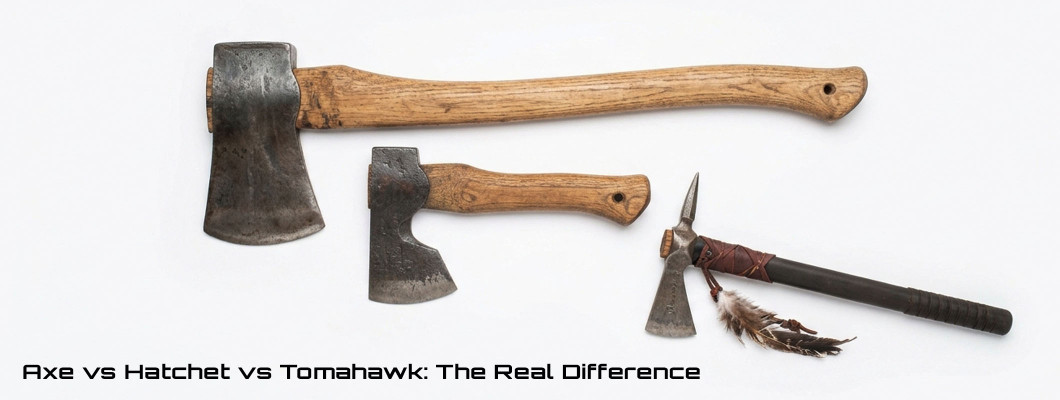
It is not the shape of the head. It is head weight and handle length — and in the tomahawk's case, how the head attaches. A hatchet is a one-handed tool with a light head on a short handle. An axe is heavier on a longer handle and wants both hands. A tomahawk is a specific North American form with a light head, a slim straight handle, and a friction fit that lets the head be knocked off and replaced in the field. Everything else — bearded, felling, splitting, camp, boy's axe — is a variation on those two measurements. This guide sorts out the terms, explains what each is genuinely good at, and tells you which one you actually need.
The Hatchet
A hatchet is defined by being usable in one hand. That means a head somewhere around half a kilo to three-quarters, and a handle roughly 12 to 16 inches — short enough that the other hand is free to hold what you are cutting.
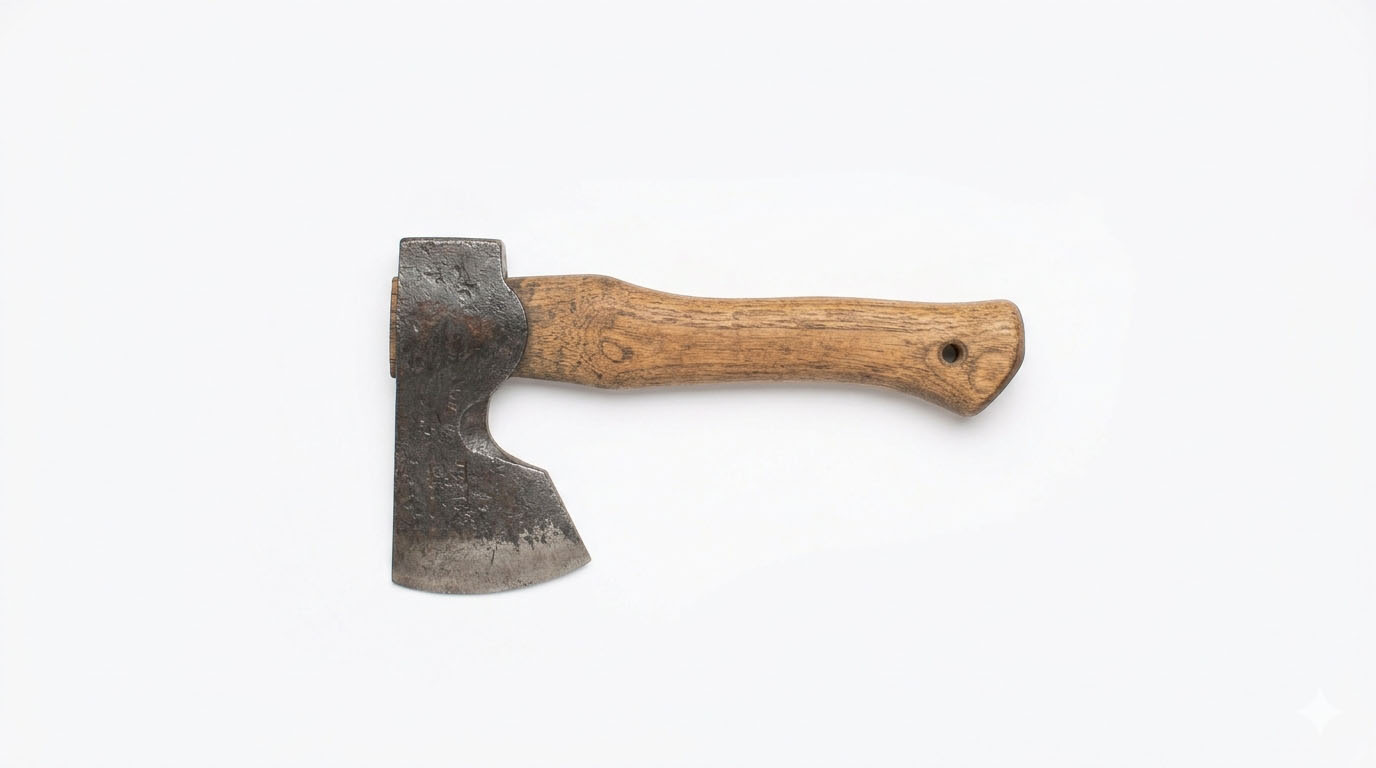
What it is good at is close work: splitting kindling, limbing branches, driving tent pegs, processing small wood at a campsite, and being carried without noticing it. What it is bad at is anything requiring power. A hatchet cannot fell a tree in reasonable time and it should not be asked to, because the short handle means your hand is close to the impact and a glancing blow travels toward your leg.
Most people who think they want an axe want a hatchet. It is the tool that actually gets used.
The Axe
An axe has enough head weight and handle length that the tool does the work rather than your arm. Handles run from about 19 inches up to 36, and the head from roughly a kilo to two.
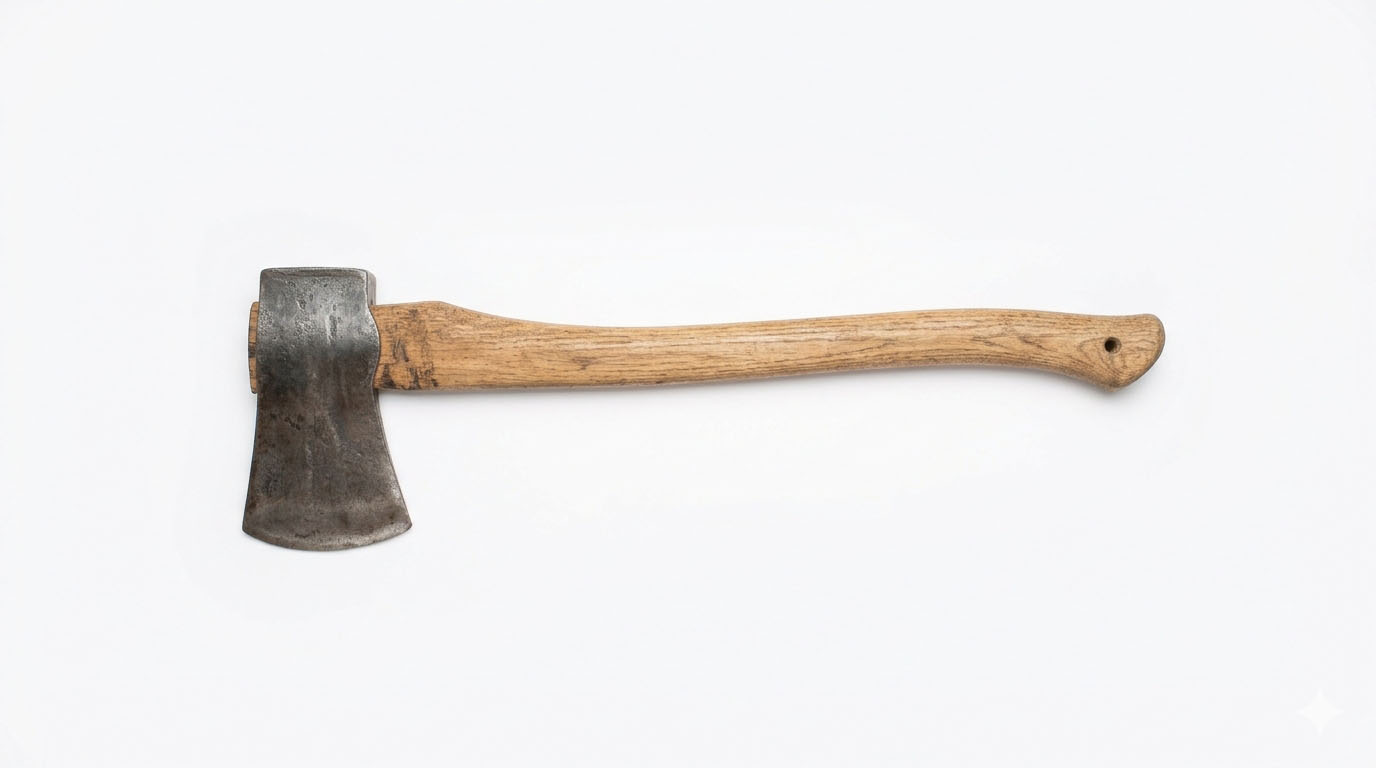
Within that there are real distinctions worth knowing, because they are not interchangeable:
Felling axe. Long handle, thin bit, sharp edge. Designed to cut across the grain, which is a slicing action, so the bit is relatively narrow and needs to be sharp. Around 28 to 36 inches.
Splitting axe and maul. The opposite geometry. A thick wedge-shaped head that forces wood apart along the grain, so edge sharpness matters far less than the wedge angle and the weight behind it. A maul is heavier still.
Boy's axe, three-quarter axe, forest axe. The middle ground at roughly 24 to 28 inches — enough leverage to fell small trees, short enough to carry. Arguably the most useful single axe for someone who wants one axe.
Broad axe. Flat on one face, bevelled on the other, for hewing round logs into square timber. A woodworking tool, not a chopping one.
Bearded axe. The head has a cutout below the bit, extending the cutting edge downward. It lightens the head, gives you a hook, and lets you choke up behind the bit for controlled carving. Strongly associated with Norse work, and it is a genuinely functional shape rather than a decorative one.
The Tomahawk
The tomahawk is the one people get wrong, because it is not simply a small axe with a straight handle.
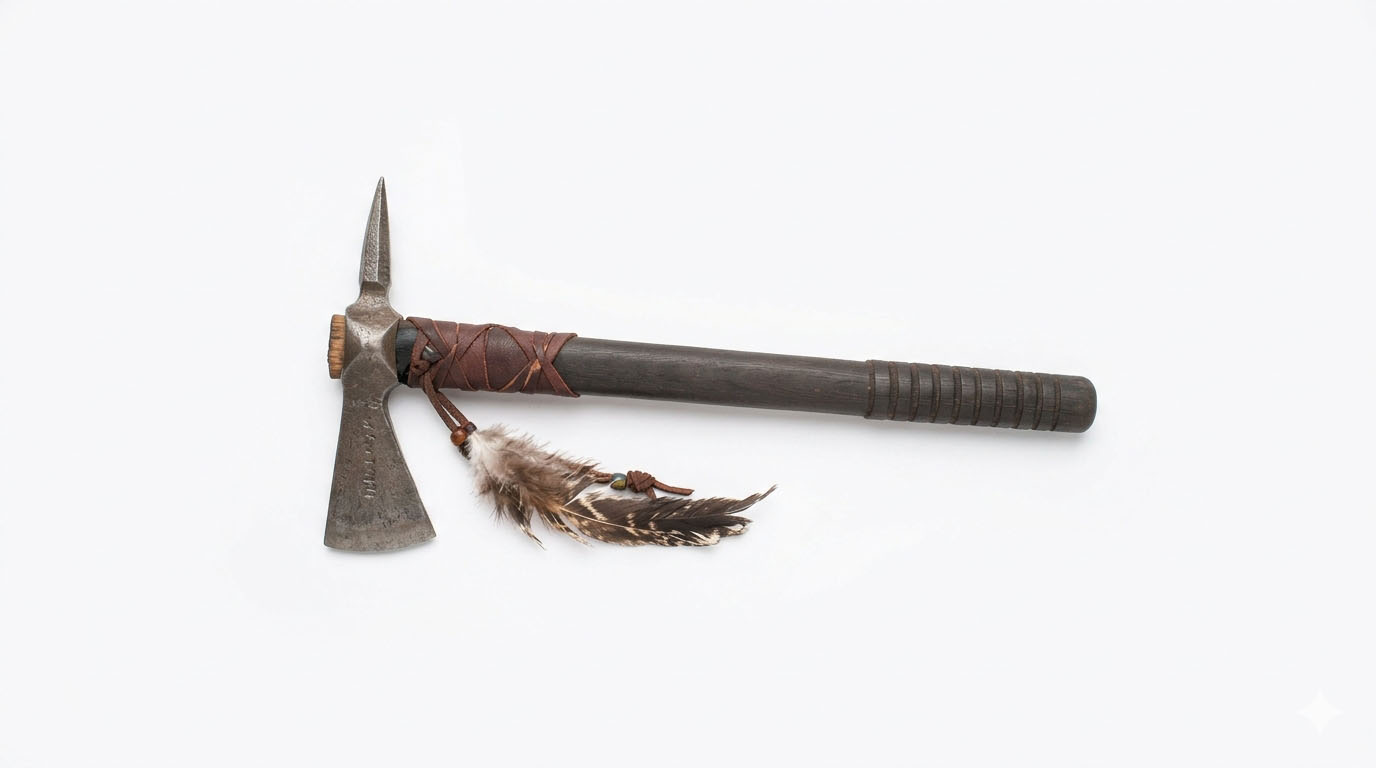
The word comes from an Algonquian language of the Virginia coast, and it originally described an indigenous striking weapon that was not necessarily metal at all. What we now picture as a tomahawk is largely a product of the fur trade: European-made trade axe heads, light and cheaply produced, that were adopted and adapted across eastern and central North America from the seventeenth century onward. Some were made as pipe tomahawks, with a bowl and a hollow handle, and functioned as diplomatic gifts and ceremonial objects as much as tools.
The real distinction is in the eye. On an axe or hatchet, the eye is wider at the top, and the head is fitted from below and locked with a wedge driven into the handle end. On a traditional tomahawk this is reversed: the eye tapers so the head slides on from the bottom of the handle and wedges itself by friction as it rides up. No glue, no wedge, no hardware.
The consequence is practical. A tomahawk head can be knocked off and rehung on a new handle in the field with nothing but a knife and a piece of wood — which mattered enormously for a tool carried hundreds of miles from any workshop. It also makes the tomahawk the natural choice for throwing, since a thrown tool loses handles, and a broken tomahawk handle is a twenty-minute problem rather than a trip home.
Modern "tactical tomahawks" are usually one-piece steel with scale handles and share the profile but not the construction. That is a different object wearing the name.
The Two Numbers That Actually Matter
Forget the names for a moment. Every one of these tools is described by head weight and handle length, and those two numbers tell you what it can do.
Handle length gives you leverage and speed at the bit. Double the handle and the head arrives considerably harder for the same effort. It also moves your hands further from the point of impact, which is a safety benefit as much as a power one. The cost is control in tight spaces and weight to carry.
Head weight gives you momentum through the cut. A heavy head keeps moving when it meets resistance. A light head stops. That is why a hatchet bounces out of green wood while a felling axe buries itself.
The two work together, and the mistake buyers make is maximising both. A heavy head on a long handle is a powerful tool and a tiring one, and most people overestimate how long they will swing it.
Compared
| Hatchet | Axe | Tomahawk | |
|---|---|---|---|
| Handle | 12–16" | 19–36" | 18–22", slim and straight |
| Hands | One | Two | One |
| Head | Light | Medium to heavy | Light |
| Head fitted | From below, wedged | From below, wedged | From below the grip, friction |
| Best at | Kindling, limbing, camp work | Felling, splitting, real volume | Throwing, utility, field repair |
| Worst at | Anything needing power | Close work, portability | Heavy chopping |
So Which Do You Need?
Camping and hiking: a hatchet, around 14 inches. It handles everything a campsite actually requires and you will carry it without resenting it. Our own camp axes sit here.
Bushcraft and serious wood processing: something in the 19-inch class. Enough leverage to fell and buck small timber, still portable.
Firewood at home: a splitting axe or maul, and a long handle. This is the one job where the heavier, longer tool is straightforwardly correct.
Throwing: a tomahawk or a purpose-built throwing axe. Light head, replaceable handle, and accept that handles are consumable.
Historical interest and display: a Viking-pattern or bearded axe, sized to what you want it to look like on the wall rather than to a task. Ours run to a 26-inch handle with a 7.5-inch edge, which has real presence.
Kitchen and butchery: a hatchet, and a short one. A 3-inch blade for close work at the block, a 9-inch for heavier butchering.
When to Have One Made
Axes are unusually good candidates for commissioning, because the two things that decide how an axe performs — head weight and handle length — are exactly the two things a catalogue cannot personalise.
Worth commissioning when you want a head weight the range does not offer, a handle length matched to your own height and reach, a specific historical pattern such as a Dane axe or a particular bearded profile, a left-handed or unusual bit geometry, or engraving on the head.
Height matters more with axes than with most tools. A handle that suits someone at five foot four and one that suits someone at six foot two are not the same handle, and every axe you can buy off a shelf was sized for an average that may not be you. Tell us your height and what the axe is for, and we will size it.
Send the specification through custom forge and we will confirm every dimension in writing before forging. All our axes are hand-forged in Kathmandu from 5160 spring steel reclaimed from vehicle leaf springs — the same steel we use for every blade we make, chosen because it absorbs repeated impact without cracking. Why that matters is covered in our steel guide.
An Axe Sized to You, Not to an Average
Head weight, handle length, bit geometry, engraving — all commissionable. Hand-forged in Kathmandu from 5160 spring steel, tempered and sharpened, with a hand-stitched leather sheath. Tell us your height and what the axe is for and we will spec it before forging.
Request a Custom Axe →Frequently Asked Questions
What is the difference between an axe and a hatchet?
Head weight and handle length. A hatchet is designed for one hand, with a light head and a handle around 12 to 16 inches, and it excels at kindling, limbing and camp work. An axe has a heavier head on a handle from about 19 to 36 inches and needs both hands, letting the tool do the work rather than your arm. A hatchet cannot fell a tree in reasonable time and should not be asked to.
Is a tomahawk just a small axe?
No, and the real difference is in the eye. On an axe or hatchet the eye is wider at the top and the head is fitted from below and locked with a wedge. On a traditional tomahawk the taper is reversed, so the head slides on from the bottom of the handle and wedges by friction alone. That means the head can be knocked off and rehung on a field-made handle with just a knife, which is why tomahawks suit throwing.
What is a bearded axe?
An axe whose head has a cutout below the bit, extending the cutting edge downward and leaving a hook shape. It is a genuinely functional design rather than decoration: the cutout lightens the head for the length of edge it provides, the hook has practical uses, and the gap lets you choke up behind the bit for controlled carving work. Strongly associated with Norse axes and still made today.
What is the difference between a felling axe and a splitting axe?
Opposite geometry for opposite jobs. A felling axe cuts across the grain, which is a slicing action, so it has a relatively thin bit and needs a sharp edge. A splitting axe forces wood apart along the grain, so it has a thick wedge-shaped head where the wedge angle and weight matter far more than edge sharpness. Using either for the other's job works badly.
What size axe should I buy for camping?
A hatchet of around 14 inches for most campers. It handles kindling, limbing, tent pegs and general camp wood processing, and it is light enough that you will actually carry it rather than leaving it in the car. If you are doing serious bushcraft or processing larger timber, step up to something in the 19-inch class for the extra leverage, accepting the additional weight.
Does a longer handle make an axe more powerful?
Yes, considerably — doubling handle length makes the head arrive much harder for the same effort, and it moves your hands further from the impact, which is a safety benefit too. The costs are reduced control in tight spaces and more weight to carry. The common mistake is maximising both handle length and head weight at once, producing a powerful tool that is exhausting to use.
Where does the word tomahawk come from?
From an Algonquian language of the Virginia coast, originally describing an indigenous striking weapon that was not necessarily metal. The familiar form owes much to the fur trade, when light European-made trade axe heads were adopted and adapted across eastern and central North America from the seventeenth century. Some were made as pipe tomahawks, with a bowl and hollow handle, serving as diplomatic gifts and ceremonial objects as well as tools.
What is a spike tomahawk?
A tomahawk with a spike opposite the bit instead of a flat or hammer poll, a common trade-era pattern still made today. The spike is used for prying, piercing and utility work, and it balances the head so the tool sits differently in the hand from a plain hawk. Like any traditional tomahawk it is hung from the bottom of the handle and held by friction, so the handle stays field-replaceable.
Can I have an axe made to a specific handle length?
Yes, and it is worth doing. Handle length should be matched to your height and reach, and every off-the-shelf axe is sized to an average that may not be you. Head weight, bit geometry and engraving are also commissionable. Send your height and the intended use through our custom forge request and we will spec the axe and confirm every dimension before forging.