Owning a Sword Is Legal in All 50 States; Carrying One Is Where the Rules Differ
Swords are legal to own in all 50 US states. No state bans a private adult from buying, owning or keeping a sword at home, and there is no federal law against shipping one across state lines. What changes from state to state is carry: whether you can wear a sword openly, whether you can conceal it, how long a blade may be before it becomes a "dangerous weapon" in the eyes of the statute, and where you may not take it at all. This guide sets out the state-by-state pattern, the federal shipping position, and how Everest Forge delivers hand-forged blades to US customers.
If you want the worldwide picture first, start with our global sword laws guide; this post is the US-state detail that guide could not fit. For blades that are not swords, see are knives legal, country by country and machete laws by region.
Three Questions Every State Law Actually Answers
Most confusion about sword law comes from treating "is it legal" as one question. In practice every US statute splits into three, and the answers are usually different.
1. Ownership. Can an adult buy a sword, keep it at home, hang it on a wall, cut tatami in the garden? In every state, yes. The federal government regulates switchblades (the Federal Switchblade Act of 1958) and ballistic knives, not swords. No state has a sword ban, and no state requires a licence or registration to own one. The only consistent limit is age: most carriers and all reputable makers, Everest Forge included, deliver bladed goods only to adults.
2. Carry. Can you wear the sword in public? This is where the 50 states diverge. Some (Arizona, Texas, Kansas, Ohio, Tennessee) treat a sheathed sword like any other tool. Others (California, Massachusetts, Michigan, Virginia, New York City) restrict concealed carry, double-edged blades, or carry in public view. A sword is almost impossible to conceal, so in most states the practical rule is that open carry in a scabbard is tolerated and concealed carry is the offence.
3. Place and intent. Even in the most permissive states, schools, courthouses, government buildings, airports, bars and sports venues are off-limits, and carrying any weapon "with intent to use it unlawfully" is an offence everywhere. A sword carried to a re-enactment in its scabbard reads very differently to a court than a sword carried into a nightclub.
Keep those three questions in mind as you read the table. "Legal to own" is the easy part; the state-specific detail is almost always about the second and third.
Sword Laws by US State: The Table
The table below summarises the position in each state and the District of Columbia. "Open carry" means a sword worn visibly in a scabbard. "Concealed" means hidden on the person or, in some states, within reach in a vehicle. Where a state names a blade length, that is the length at which the law starts to treat a knife as a weapon; a sword exceeds every one of them, so the length limit tells you which rule applies, not whether the sword is allowed. Statute references are given so you can check the current text yourself.
| State | Own at home | Open carry (sheathed) | Concealed carry | Notes and statute |
|---|---|---|---|---|
| Alabama | Yes | Generally allowed | Restricted | Concealed bowie-type blades prohibited (Code 13A-11-50). No blade length limit. |
| Alaska | Yes | Allowed | Allowed for adults 21+; must declare to police on contact | AS 11.61.220. Very permissive outside schools and courthouses. |
| Arizona | Yes | Allowed | Allowed for adults 21+ | ARS 13-3102. State pre-emption blocks stricter city rules. |
| Arkansas | Yes | Allowed | Allowed | ACA 5-73-120 only penalises carry with intent to use unlawfully. |
| California | Yes | Allowed if worn openly in a sheath at the waist | Prohibited for any fixed blade | Concealed dirk or dagger is a wobbler (PC 21310); open sheath carry defined at PC 20200. Los Angeles and other cities add open-carry length limits. |
| Colorado | Yes | Allowed | Prohibited over 3.5 inch blade | CRS 18-12-105. Denver has its own ordinance. |
| Connecticut | Yes | Restricted | Restricted | CGS 53-206 restricts carrying a blade of 4 inches or more on the person or in a vehicle; exemptions for home, business and transport to and from them. Keep swords at home or cased in transit. |
| Delaware | Yes | Generally allowed | Prohibited | Concealed deadly weapon, 11 Del. C. 1442. |
| District of Columbia | Yes | Prohibited outside the home | Prohibited | DC Code 22-4504 bars carrying a dangerous weapon in public. Transport cased only. |
| Florida | Yes | Allowed | Allowed for anyone eligible for a concealed weapon licence (permitless since 2023) | FS 790.01, 790.053. Schools and certain venues excluded. |
| Georgia | Yes | Needs a weapons carry licence for blades over 12 inches | Same | OCGA 16-11-125.1 defines a knife over 12 inches as a weapon; carry outside home, car or business needs the licence. |
| Hawaii | Yes | Generally allowed | Prohibited, including concealed in a vehicle | HRS 134-51 (dirk, dagger, deadly weapon). |
| Idaho | Yes | Allowed | Allowed for adults 21+ outside restricted places | IC 18-3302. |
| Illinois | Yes | Allowed | Allowed | 720 ILCS 5/24-1 penalises intent, not length. Chicago ordinance restricts blades over 2.5 inches; Cook County and other cities differ. |
| Indiana | Yes | Allowed | Allowed | No sword or blade-length statute; only ballistic knives are banned. |
| Iowa | Yes | Allowed | Restricted over 5 inch blade | Iowa Code 724.1 and 724.4 treat a concealed blade over 5 inches as a dangerous weapon. |
| Kansas | Yes | Allowed | Allowed | Full knife pre-emption since 2013; no length limit. |
| Kentucky | Yes | Allowed | Allowed for adults 21+ (permitless since 2019) | KRS 527.020. |
| Louisiana | Yes | Allowed | Restricted | RS 14:95 penalises intentional concealment of a dangerous weapon. |
| Maine | Yes | Allowed | Prohibited for dirk, stiletto, dagger and similar | 25 MRS 2001-A. |
| Maryland | Yes | Allowed unless carried with intent to injure | Prohibited | Crim. Law 4-101. Baltimore City adds its own rules. |
| Massachusetts | Yes | Prohibited for double-edged blades; single-edged generally allowed | Prohibited for double-edged blades | MGL 269 s.10(b) lists daggers, dirks and double-edged blades. A single-edged sabre or falchion sits outside the list; a double-edged arming sword does not. |
| Michigan | Yes | Allowed | Prohibited for dirk, dagger, stiletto or double-edged stabbing blade, including in a vehicle | MCL 750.227. Transport in the trunk, cased. |
| Minnesota | Yes | Allowed | Allowed | Minn. Stat. 609.66 penalises intent. Minneapolis has an ordinance. |
| Mississippi | Yes | Allowed | Restricted for bowie, dirk and butcher-type blades | Miss. Code 97-37-1. |
| Missouri | Yes | Allowed | Allowed outside firearm-restricted places | RSMo 571.030 as amended 2017. |
| Montana | Yes | Allowed | Allowed | Knife restrictions repealed 2017. |
| Nebraska | Yes | Allowed | Restricted over 3.5 inch blade unless eligible under permitless carry | Neb. Rev. Stat. 28-1202; check the 2023 amendments. |
| Nevada | Yes | Allowed | Prohibited for dirk, dagger or machete without a sheriff's permit | NRS 202.350. |
| New Hampshire | Yes | Allowed | Allowed | All knife restrictions repealed 2010. |
| New Jersey | Yes, with a lawful purpose | Risky | Risky | NJSA 2C:39-3(e) and 2C:39-5(d): daggers, dirks and stilettos without an "explainable lawful purpose" are offences. Collectors and re-enactors generally fine at home; do not carry. |
| New Mexico | Yes | Allowed | Prohibited for dagger, bowie and similar | NMSA 30-7-2. |
| New York | Yes | Allowed statewide; prohibited in public view in NYC | Allowed statewide absent intent; restricted in NYC | Penal Law 265.01 (dagger or dirk with intent). NYC Admin Code 10-133 bans carrying a blade of 4 inches or more in public view. Transport cased. |
| North Carolina | Yes | Allowed | Prohibited for bowie, dirk and dagger | GS 14-269. |
| North Dakota | Yes | Allowed | Restricted over 5 inch blade unless eligible under permitless carry | NDCC 62.1-01-01, 62.1-04. |
| Ohio | Yes | Allowed | Allowed | SB 140 (2021) removed knives from the concealed deadly weapon rule unless used as a weapon. |
| Oklahoma | Yes | Allowed | Allowed | Daggers, bowies and swords removed from 21 OS 1272 in 2016. |
| Oregon | Yes | Allowed | Prohibited for dirk and dagger | ORS 166.240. |
| Pennsylvania | Yes | Allowed | Allowed | 18 Pa.C.S. 908 lists only automatic blades. Philadelphia ordinance bans cutting weapons on public streets. |
| Rhode Island | Yes | Allowed | Prohibited over 3 inch blade | RIGL 11-47-42. |
| South Carolina | Yes | Allowed | Restricted | SC Code 16-23-460 (concealed deadly weapon). |
| South Dakota | Yes | Allowed | Allowed (permitless since 2019) | SDCL 22-14. |
| Tennessee | Yes | Allowed | Allowed | Blade length limits repealed 2014 (SB 1771). |
| Texas | Yes | Allowed | Allowed | HB 1935 (2017): a blade over 5.5 inches is a "location-restricted knife", legal to carry except in schools, bars, hospitals, churches, sports venues, polling places and similar. Under-18s restricted. |
| Utah | Yes | Allowed | Allowed for adults 21+ (permitless since 2021) | Utah Code 76-10-504. |
| Vermont | Yes | Allowed | Allowed | 13 VSA 4003 penalises carry with intent to injure. |
| Virginia | Yes | Allowed | Prohibited for dirk, bowie, machete and similar | Va. Code 18.2-308. |
| Washington | Yes | Allowed if not carried in a manner that causes alarm | Prohibited for dagger, dirk and similar | RCW 9.41.250 and 9.41.270. Seattle adds a fixed-blade ordinance. |
| West Virginia | Yes | Allowed | Restricted over 3.5 inch blade unless 21+ and eligible under permitless carry | WV Code 61-7-2, 61-7-3, 61-7-7. |
| Wisconsin | Yes | Allowed | Allowed unless a prohibited person | 2015 Act 149; state pre-emption. |
| Wyoming | Yes | Allowed | Allowed for residents (permitless) | Wyo. Stat. 6-8-104. |
Summary of the statutes as understood at the time of writing, October 2026. Statute numbers are given so you can read the current wording for yourself. City ordinances are only flagged where they are well known; always check your own municipality.
The Patterns Behind the Table
Fifty-one rows look chaotic, but they fall into four families once you read the statutes side by side.
Permissive states. Arizona, Arkansas, Kansas, Montana, New Hampshire, Ohio, Oklahoma, Tennessee, Texas, Utah, Vermont, Wisconsin, Wyoming and a handful of others have either repealed blade-length rules outright or rewritten them around intent and location. In these states a sheathed sword, open or concealed, is lawful for an adult outside restricted places. Texas is the model: it stopped asking "how long is the blade" in 2017 and started asking "where are you taking it".
Open-yes, concealed-no states. The largest group: Alabama, Delaware, Maine, Maryland, Michigan, Nevada, New Mexico, North Carolina, Oregon, Virginia and others. Their statutes were mostly written in the 19th century against the bowie knife and the dirk, and they still read that way. A sword worn openly in a scabbard is outside the offence; a sword hidden under a coat, or in some states loose in the passenger footwell, is inside it.
Length-trigger states. Colorado (3.5 inches), Iowa (5 inches), Rhode Island (3 inches), Nebraska and West Virginia (3.5 inches), Georgia (12 inches). Here the number only decides which rule applies. Any sword exceeds all of them, so you simply read the "over the limit" rule: concealed carry prohibited, or a licence required for carry.
Restrictive states and cities. Massachusetts and its double-edged rule, Connecticut's four-inch carry statute, New Jersey's "explainable lawful purpose" test, the District of Columbia, and the city ordinances of New York, Chicago, Philadelphia, Los Angeles and Seattle. None of these bans ownership. What they do is make carrying a sword outside the home something you need a specific lawful reason for, and make cased transport the only sensible way to move one.
A useful typological note for collectors: several statutes draw the line at double-edged blades, because the dagger and the dirk were the weapons the legislators feared. This means a single-edged sabre, falchion, messer or kukri-khukuri can sit outside a restriction that catches a double-edged arming sword of identical length. Read the words of the statute, not the headline.
Choose the blade type, length, finish and handle that suit your use and your state, and the forge builds it to order.
Build Your BladeFederal Law and Shipping a Sword Across State Lines
There is no federal statute restricting the sale, ownership, interstate shipment or import of swords. The Federal Switchblade Act (15 USC 1241-1245) covers automatic knives and nothing else, and the 1986 ballistic knife amendment covers spring-propelled blades. A sword is neither. The US Postal Service, UPS, FedEx and DHL all carry sheathed, boxed blades as ordinary goods; the only carrier rules are about packaging (the edge must be fully protected so handlers cannot be cut) and about the recipient being an adult.
Import. Hand-forged swords arriving from Nepal enter the US under the tariff heading for swords, cutlasses and similar arms (HTS chapter 93). No import permit is required for a private buyer, and Customs and Border Protection does not treat a sword as a restricted item. A small duty may apply, which the carrier collects before or on delivery; the exact rate depends on the tariff schedule in force at the time, so we quote it as a separate line rather than hiding it in the price.
Interstate shipping. Because carry restrictions are state and city matters, nothing stops a sword shipped from one state being received in another. The receiving state's law governs what you do with it after it arrives. The exceptions worth knowing: a few sellers refuse to ship fixed blades to Massachusetts, New Jersey or New York City out of caution, not law. Everest Forge ships to all 50 states and DC. The buyer is responsible for knowing the carry rules at the destination, and the sword must be received by an adult.
Moving house with a collection. Transport swords cased, in a locked box or the trunk, not in the passenger cabin. That single habit keeps you outside every "concealed in a vehicle" statute in the table.
How Everest Forge Ships to the United States
Everest Forge works on a forge-on-demand model. Nothing is held in stock; every blade in the hand-forged sword collection is forged in our Kathmandu workshop after the order is placed, from mono-steel 5160 spring steel, full tang, with a hardwood or horn hilt and a scabbard fitted to that blade.
- Dispatch. Catalogue builds dispatch in 2 to 3 business days. Custom builds take 4 to 6 weeks at the forge.
- Carrier. DHL or FedEx, tracked, 7 to 14 business days to a US address.
- Packaging. Blade sheathed, scabbard wrapped, the whole piece boxed with the edge fully protected, as the carriers require.
- Adult signature. We ship only to adults. Where the carrier offers age verification on delivery, we use it.
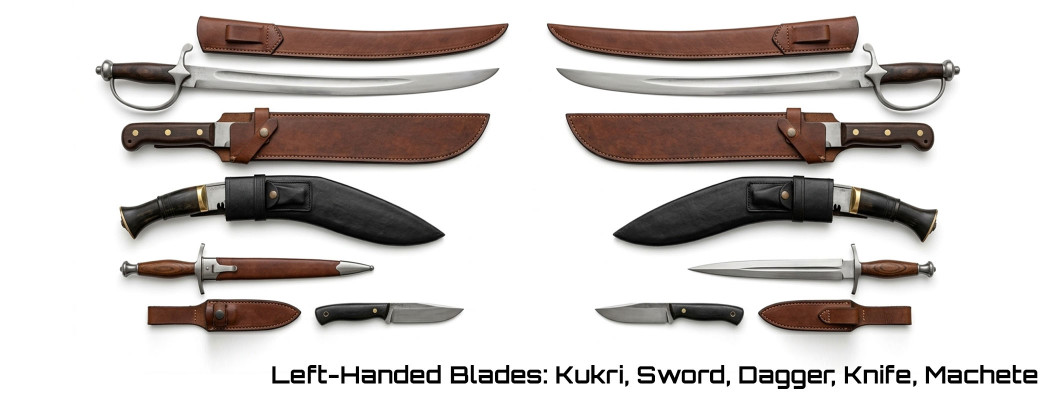
- Options by order note. Any blade can be ordered left-handed by writing "Left Handed" in the order note. Any blade can be ordered to stage-combat specification, with a blunt edge and rounded tip, by order note; several US re-enactment groups and theatre companies order this way because a blunt-edged sword is both safer to rehearse with and simpler to explain to a venue.
Full carrier, duty and returns detail is on our shipping and returns page. If you are weighing a display piece against a cutting piece, our battle-ready explainer sets out exactly what the phrase means at this forge: a heat-treated 5160 blade, full tang, built to cut, not a wall-hanger with a sharp edge.
An honest note. Several historical originals that inspire our catalogue, Viking-age swords and early European blades among them, were pattern-welded. Everest Forge does not make pattern-welded, folded or laminated steel. Every blade here is mono-steel 5160 spring steel, chosen because it is tougher, more predictable under heat treatment and far easier to maintain than a layered blade. Where a product page names a historical type, the steel is the modern equivalent, not a reconstruction of the original metallurgy.
Practical Advice for US Buyers
Buying. Ownership is lawful everywhere, so the purchase decision is about the blade, not the law. Pick the type by use: a display or collection piece, a cutter for backyard tatami, a re-enactment sword, a stage blade. The blade configurator lets you set type, length, finish and handle in one screen, and the forge builds that exact combination.
Carrying. If you need to carry a sword outside the home, for a re-enactment, a martial arts class, a film shoot or a convention, carry it sheathed and visible, go directly to and from the event, and avoid every restricted location in your state's list. In Massachusetts, Connecticut, New Jersey, DC and the big-city ordinances, carry it cased and out of sight instead; that is the opposite rule, and it is the one that matters there. Our guide to buying a kukri or khukuri from the USA walks through the same questions for the Gurkha blade, which several states treat as a large knife rather than a sword.
Conventions and events. Most venues have their own weapons policy that overrides nothing in law but will get you ejected. Peace-bonding (zip-tying the blade into the scabbard) is standard; a stage-combat build with a blunt edge is often the simplest way to clear a venue check.
Daggers and double-edged pieces. The dagger is the blade that US statutes worry about most, which is why so many rules turn on the double edge. We will publish a dedicated double-edged knife law guide; until then the global sword laws hub carries the country-level dagger notes.
Australia and other destinations. This post covers the US only. An Australian state-by-state guide is in preparation and will be linked from the same hub.
Related Guides
Commission a Blade Built for Your State and Your Use
Tell us the type, the length, single or double edge, sharp or stage-combat, left or right hand. The forge quotes it, builds it in 4 to 6 weeks, and ships it tracked to any US address.
Start a Custom Forge RequestFrequently Asked Questions
Are swords legal to own in every US state?
Yes. No US state bans private ownership of a sword, and no state requires a licence or registration to own one. Restrictions apply to carrying a sword in public, not to owning it at home.
Which states let you carry a sword openly?
Most states allow a sheathed sword to be worn openly. Arizona, Texas, Kansas, Ohio, Tennessee, Oklahoma, Montana, New Hampshire and others are fully permissive; Alabama, Virginia, Michigan, North Carolina, Oregon and many more allow open carry but prohibit concealment. Massachusetts, Connecticut, New Jersey, DC and several big cities restrict carry in public altogether.
Can I carry a sword in Texas?
Yes. Since 2017 a blade over 5.5 inches is a "location-restricted knife", lawful to carry openly or concealed by an adult everywhere except schools, bars, hospitals, churches, sports venues, polling places, correctional facilities and similar listed locations.
Is it legal to carry a sword in California?
A fixed blade worn openly in a sheath at the waist is lawful under Penal Code 20200. Concealed carry of any fixed blade is an offence under Penal Code 21310. Los Angeles and other cities add open-carry blade length ordinances, so check your city.
Can a sword be shipped to my state?
Yes. No federal law restricts shipping swords between states or importing them for private use, and USPS, UPS, FedEx and DHL all carry boxed, sheathed blades. Everest Forge ships to all 50 states and DC by tracked DHL or FedEx, 7 to 14 business days, to adult recipients.
Do I pay import duty on a hand-forged sword from Nepal?
A small duty under the swords tariff heading may apply. The carrier collects it before or on delivery. The rate depends on the tariff schedule in force, so it is quoted separately rather than built into the blade price.
Why do some state laws mention double-edged blades?
Many statutes were written against the dagger and the dirk, so they restrict double-edged blades specifically. A single-edged sabre, falchion, messer or kukri-khukuri can fall outside a rule that catches a double-edged arming sword of the same length. Massachusetts is the clearest example.
Can I bring a sword to a convention or re-enactment?
Usually, if the state allows open carry and the venue permits it. Carry it sheathed, go directly to and from the event, and expect to peace-bond the blade. A stage-combat build with a blunt edge and rounded tip, available on any Everest Forge blade by order note, clears most venue checks.
What is the safest way to transport a sword in a car?
Cased, in the trunk or a locked box, not loose in the cabin. This keeps you outside every "concealed in a vehicle" rule, including those in Michigan, Hawaii and Connecticut.
Does Everest Forge give legal advice on carry?
No. We are sword makers, not lawyers. This guide is a researched summary; the current statute for your state and city is the authority, and a local attorney is the right person to ask before you carry a blade in public.