How to Display a Sword: Stands, Wall Mounts and What Quietly Ruins a Blade
Where you hang a sword matters more than most owners realise. A blade on display is not in storage limbo — it is sitting in a specific microclimate, resting on specific materials, taking specific loads, for years. Get it right and a hand-forged blade will look the same in a decade. Get it wrong and you will find rust behind the guard, a sagging scabbard, a faded wrap, or a sword on the floor. This guide covers the two decisions that matter — how you mount it and where you put it — plus the materials that damage blades quietly enough that nobody connects cause to effect.
Stand or Wall Mount?
Both work. They fail in different ways, so pick for your room rather than for the look.
A table or floor stand keeps the blade accessible, lets air move freely around it, and needs no holes in the wall. Airflow matters more than people expect — a blade with air on all sides dries out after handling instead of holding moisture against a surface. The drawbacks are that it takes surface space, it is easier to knock over, and it puts the sword within reach of anyone in the room.
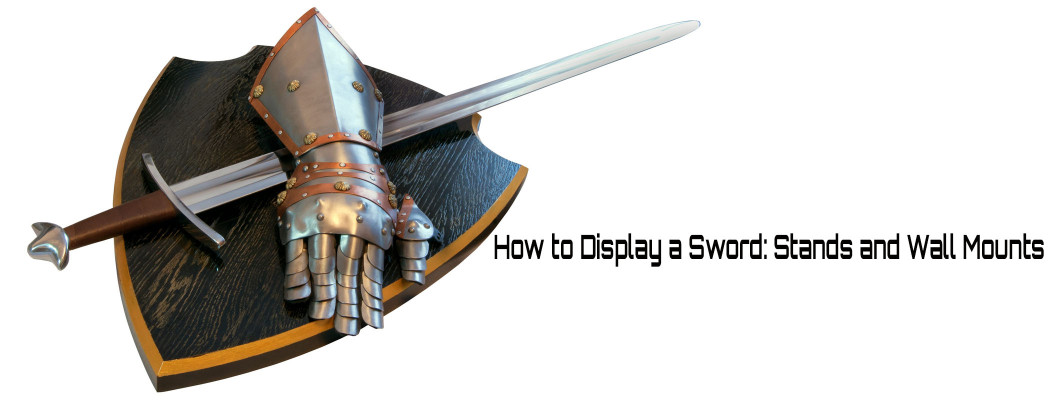
A wall mount saves space, gets the sword above knocking height, and is the classic look. But it commits you to one spot, and that spot is now permanently exposed to whatever that wall does — which, as the next section explains, is the single biggest variable in how a displayed blade ages. It also depends entirely on the fixing. A sword coming off a wall is the most common display accident there is, and it is nearly always plasterboard failing rather than the bracket.
A cabinet or case gives the best protection from dust and handling, and lets you control humidity with silica gel. The trap is sealing it too well: a closed case with no ventilation and no desiccant will hold condensation against the steel every time the room's temperature swings.
Edge Up or Edge Down?
For most European and Asian straight swords there is no strong convention and no functional difference. Horizontal on a two-arm stand, vertical in a rack, point up or point down — all fine.
Two cases where it does matter.
Resting the edge on a support. If the blade sits directly on a hard cradle, put the spine down rather than the edge. Long-term pressure on a fine edge against wood or metal will dull and mark it, and on a sharpened blade it also makes handling the stand risky. Good stands are cut to hold the blade in a felt-lined or padded cradle for exactly this reason.
Japanese blades follow a convention. A katana is traditionally displayed edge up on its stand, reflecting how it was worn thrust through the belt. A tachi, worn slung from the belt edge-down, is displayed edge down. If you are displaying a Japanese-style blade and want it to read correctly to anyone who knows, that is the rule.
The Wall You Choose Matters More Than the Mount
This is the section that actually saves blades.
Avoid exterior walls. An outside wall runs colder than the room, and when warm humid air meets a cold surface, moisture condenses. A blade mounted on an exterior wall in a heated house is being dewed regularly, and it will show rust long before an identical blade on an interior wall.
Avoid bathrooms, kitchens and anywhere with steam. Obvious once said, routinely ignored. Kitchens add airborne grease to the humidity.
Avoid basements and garages. Both usually run humid and both swing in temperature.
Keep it out of direct sunlight. The steel does not care, but everything around it does. Sunlight fades and dries leather scabbards and grip wraps, bleaches wood, and degrades cord bindings. A sword in a sunbeam ages visibly at the fittings while the blade stays fine.
Keep it away from heat sources. Radiators, fireplaces and heating vents drive local temperature and humidity swings, and dry out leather and wooden handle materials until they shrink and loosen.
Watch salt air. If you live near the coast, carbon steel needs noticeably more attention and an interior room is worth choosing.
The ideal is an interior wall in a room with stable temperature and moderate humidity — a living room or study rather than a hallway, porch, cellar or conservatory.
Materials That Quietly Damage Blades
What the sword touches, and what sits near it in a closed case, is a genuine conservation issue that almost no sword site mentions.
- Oak. Oak releases acidic vapours as it ages, and in an enclosed display case those vapours corrode steel. Museum conservators have known this for a long time. If you are building or buying a case, oak is the wood to avoid; a cedar or sealed hardwood lining is a better choice.
- Wool and some felts. Wool holds moisture against whatever it touches, and some contain sulphur compounds that tarnish metal. Padding is good; damp padding pressed against steel for two years is not. Check the cradle material on any stand and keep it dry.
- Leather in prolonged contact. Tanning chemicals are acidic and leather absorbs moisture from the air. That is fine for carrying and terrible for years of storage — see the scabbard section below.
- Rubber and some foams. Rubber can release sulphur compounds, and cheap foams off-gas as they degrade. Neither belongs pressed against a blade long term.
- PVC. Soft PVC releases chloride as it ages. Never store a blade wrapped in a PVC sleeve or resting on vinyl.
The safe list is short and boring: untreated cotton or linen, sealed non-oak hardwood, inert closed-cell foam, and air.
Scabbard On or Off?
Off, for long-term display, if the scabbard is leather or leather-lined.
Leather holds atmospheric moisture and the tanning chemicals are acidic, so a blade left sheathed for years sits in a small, damp, mildly acidic environment with no airflow. This is the most common cause of rust that owners never see coming, because the blade looked fine the last time they drew it and then it did not.
Display the blade exposed on a stand or mount, and keep the scabbard alongside it. If you want the sheathed look, draw the blade every few months, wipe it, oil it and put it back — and accept that it needs that attention.
Wooden scabbards with a proper lining are gentler than leather, but the airflow argument still applies.
Display Options Compared
| Option | Best for | Watch out for |
|---|---|---|
| Table or floor stand | Airflow, access, no wall damage | Knocking over; within reach |
| Wall mount | Space saving, above knock height | Fixings; wall choice is permanent |
| Glass cabinet | Dust, handling, controlled humidity | Condensation if sealed with no desiccant |
| Left in scabbard | Nothing, long term | Trapped moisture, acidic leather |
| Flat in a drawer or case | Storage, not display | Padding material; check periodically |
Displaying More Than One
Collections bring their own problems.
Do not let blades touch. Steel against steel marks both, and contact points trap moisture. Space them or separate them with an inert material.
Mind the cumulative weight. Three swords on one rack is a real load on one set of fixings.
Rotate what you handle. A collection where one favourite gets picked up weekly and the rest sit untouched for years will develop problems in the untouched ones, because nobody is looking at them. Handling is inspection.
Keep a record. Photographs and notes on each blade, and a date for when each was last oiled. It sounds fussy for three swords and it becomes essential at fifteen. The complete sword collector's guide covers building and documenting a collection properly.
Maintenance While on Display
Display is not maintenance-free. A blade on a wall is still breathing the room's humidity, and every time someone picks it up they leave salt and acid from their skin on the steel.
The short version: wipe after handling, keep a light film of oil on the blade, and check it every couple of months — monthly in a humid climate. High-carbon steel like our 5160 spring steel rewards a small habit and punishes neglect.
The full routine, including what to use and how to deal with rust that has already started, is in our guide to preventing rust on swords, kukris, machetes and knives.
Hand-Made Wooden Display Stands
Wooden stands made in our Kathmandu workshop to hold a blade properly — cradled, spine down, with air on all sides. Suitable for swords, kukris, machetes and daggers, and shipped worldwide alongside your blade.
Browse Display Stands →Frequently Asked Questions
Is a sword stand or a wall mount better?
Neither is universally better. A stand gives airflow all around the blade, needs no wall fixings and keeps the sword accessible, but takes surface space and can be knocked over. A wall mount saves space and gets the blade above knocking height, but commits you to one location and depends entirely on the fixing — a sword coming off a wall is usually plasterboard failing rather than the bracket. Choose for your room and your household.
Should a sword be displayed edge up or edge down?
For most European and Asian straight swords it makes no functional difference. Two exceptions matter. If the blade rests directly on a hard cradle, put the spine down rather than the edge, since prolonged pressure will mark and dull a fine edge. And Japanese blades follow a convention: a katana is displayed edge up, reflecting how it was worn through the belt, while a tachi is displayed edge down.
Where should I not hang a sword?
Avoid exterior walls, which run colder than the room and condense moisture onto the blade. Avoid bathrooms, kitchens, basements and garages for humidity and temperature swings. Keep it out of direct sunlight, which fades and dries leather scabbards, grip wraps and cord bindings even though the steel itself is unaffected. Keep it away from radiators, fireplaces and heating vents. An interior wall in a stable room is ideal.
Should I store a sword in its scabbard?
Not for long-term display, if the scabbard is leather or leather-lined. Leather absorbs atmospheric moisture and its tanning chemicals are acidic, so a sheathed blade sits in a damp, mildly acidic, unventilated space for years. This is the most common cause of rust owners never see coming. Display the blade exposed with the scabbard alongside, or draw and oil it every few months if you prefer the sheathed look.
What materials damage a sword on display?
Oak is the notable one — it releases acidic vapours as it ages, which corrode steel inside an enclosed case, something museum conservators have long known. Wool and some felts hold moisture and may contain sulphur compounds. Rubber and cheap foams off-gas. Soft PVC releases chloride as it degrades. Safe materials are untreated cotton or linen, sealed non-oak hardwood, inert closed-cell foam, and open air.
Is a glass display case good for swords?
Yes for dust, handling and controlled humidity, provided you manage the air inside it. A case sealed tightly with no ventilation and no desiccant will condense moisture onto the steel every time the room's temperature swings. Include silica gel packs, replace or recharge them, and check the blade periodically rather than assuming the case is doing the work.
How do I hang a sword safely with children in the house?
Mount it well above reach, or use a lockable cabinet. Remember that a table or floor stand puts a sword within reach of anyone in the room, which makes wall mounting or a case the better option in a household with children. Fix wall mounts into studs or masonry with appropriate fixings rather than into plasterboard alone, and in earthquake-prone areas secure blades so they cannot be shaken free.
How often should I oil a sword that is only on display?
Check it every couple of months, and monthly in a humid climate or near the coast. A displayed blade is still exposed to ambient humidity, and every time someone handles it they leave salt and acids from their skin on the steel. Wipe it down after any handling and keep a light film of oil on the blade — display is not maintenance-free, just lower maintenance than use.