The Complete Sword Collector's Guide — How to Start, Build & Display a Hand-Forged Blade Collection
A sword collection is one of the most historically rich, visually striking, and intellectually rewarding collections a person can build. Unlike coins, stamps, or most other collectibles, a hand-forged sword is a physical object with weight, balance, history, and craft embedded in every element of its construction. Each blade in a serious collection tells a story — of the culture that produced it, the period it came from, the blacksmith who forged it, and the buyer who chose it. Building a blade collection is not just about acquiring objects. It is about building a relationship with human history through the objects that shaped it.
At Everest Forge we hand-forge every blade in Kathmandu, Nepal from 5160 high carbon spring steel — swords, kukris, daggers, axes, and spears from every major cultural tradition in the world. Every blade in our range is available with free personalisation, and every specification beyond our standard range is available as a fully custom commission. This guide covers everything you need to know to start, build, and display a serious hand-forged blade collection — from your first blade through a comprehensive multi-cultural collection that represents the full breadth of human sword-making tradition.
Everest Forge — Hand-Forged Blades for Serious Collectors
Every Culture. Every Period. Every Type. One Forge.
Browse our complete collection of hand-forged swords, kukris, daggers, axes, and spears — or commission a completely custom blade built to your exact specification. Free personalisation on every order. Ships worldwide via DHL Express from Kathmandu, Nepal.
Shop All Blades → Custom Forge →Why Collect Hand-Forged Swords?
The question of why people collect swords is less obvious than it might appear — and the answer is more nuanced than simply "they look impressive on a wall." A serious hand-forged blade collection is simultaneously an investment in craft, a physical archive of human history, a conversation with the blacksmiths and warriors of the past, and a genuinely beautiful set of objects that reward close attention in a way that photographs and reproductions never can.
Historical Depth
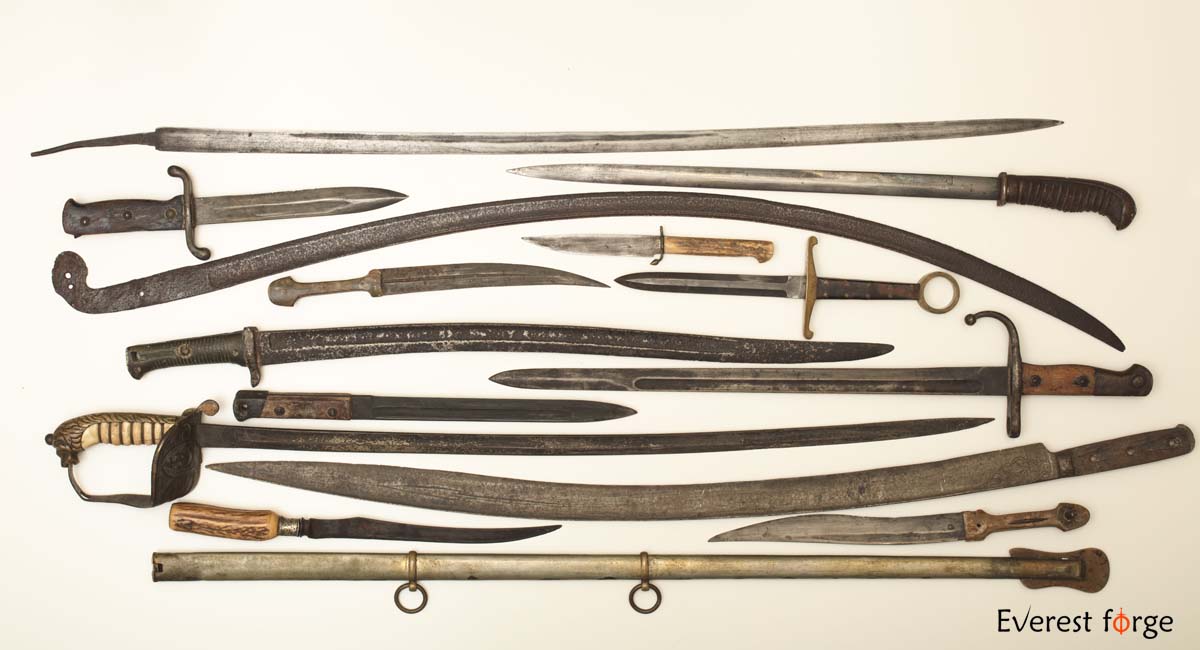
Every sword typology represents a specific cultural moment — a specific answer to specific problems of warfare, economics, and craftsmanship at a specific point in history. A collection that spans from Bronze Age leaf-blades through Roman Gladii, Viking arming swords, medieval longswords, and Eastern scimitars is a physical timeline of human civilisation told through its most defining tool.
Craft & Construction
A hand-forged blade is a crafted object — every element of its construction represents a decision made by a blacksmith who understood steel, fire, and blade geometry at a level that takes years to develop. Collecting hand-forged blades means collecting genuine craft — not manufactured products, but made objects with the marks of the maker embedded in every detail.
Tangible History
Unlike books, films, or museum visits, a hand-forged sword in your hands connects you physically to the tradition it represents. The weight of a properly constructed Viking arming sword, the balance of a Roman Gladius, the forward pull of a kukri's weighted belly — these are sensations that no reproduction of any other kind can deliver. History becomes tactile.
Visual Power
A well-curated blade collection displayed properly is one of the most visually striking interiors possible — every blade a different silhouette, a different surface treatment, a different cultural aesthetic. The visual language of a collection that spans Viking to Egyptian to Nepalese is unlike anything else you can build.
Starting Your Collection — The First Blade
The most important decision in building a collection is the first blade. Not because the first blade is the most significant — it rarely is — but because the first blade sets the direction. It answers the question: what kind of collector are you? Are you drawn to historical authenticity? To a specific cultural tradition? To dramatic visual impact? To the craft of forging itself? The answer to that question should drive the first purchase.
For the Historically Focused Collector
Start with the blade that represents the period or culture you find most compelling. If Viking history is your passion — start with an authentic Viking arming sword. If Roman history is your focus — start with a Roman Gladius. If the Gurkha tradition is what draws you — start with a current issue military khukuri. Begin at the source of your interest and let the collection grow outward from there.
For the Visually Focused Collector
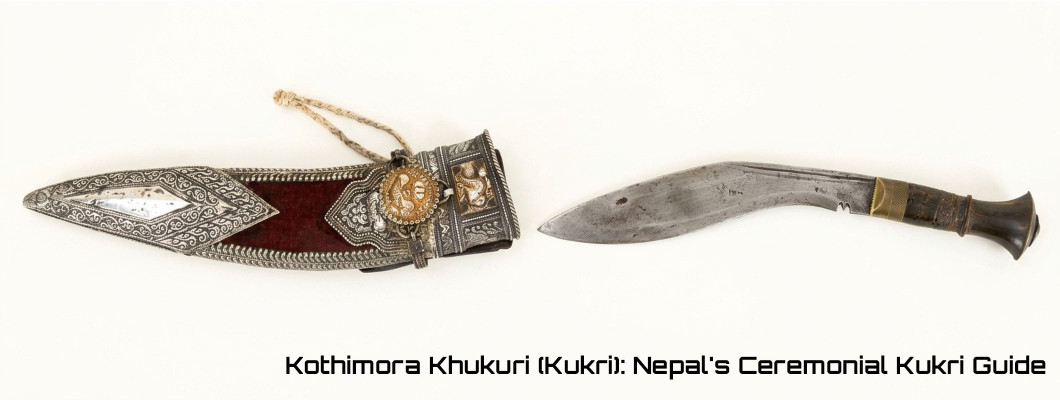
Start with the blade that has the most immediate visual impact for you — the one you cannot stop looking at. Whether that is the ceremonial drama of a Kothimora silver scabbard khukuri, the fluid curve of a scimitar, or the ancient elegance of a La Tène Celtic sword — start with what moves you most. The collection will develop its own logic over time.
For the Craft-Focused Collector
Start with a blade that demonstrates the highest level of blacksmith craft — something that rewards close inspection with details that reveal the maker's skill. Our etched and engraved khukuri collection, our Kothimora ceremonial pieces, and our custom commissioned blades are where the highest levels of craft are most visible.
Building Your Collection by Cultural Tradition
The most comprehensive and intellectually rich approach to sword collecting is to build by cultural tradition — acquiring representative blades from each major sword-making culture across human history. This approach creates a collection with genuine educational depth and visual diversity that no single-culture collection can match. Our complete guide to swords by cultural tradition — Swords of the World by Culture — covers every tradition in detail.
European Swords — The Broadest Tradition
European sword-making spans three thousand years — from Bronze Age leaf-blades through Viking arming swords, Celtic La Tène patterns, medieval longswords, Renaissance Degen, and single-edge sabre patterns. A European-focused collection alone could span an entire career of collecting.
Viking & Medieval → | Historical Swords → | Celtic La Tène → | Bronze Age → | Degen →
Ancient Mediterranean — Rome & Greece
The swords of the ancient Mediterranean world are among the most historically significant ever made — the Roman Gladius that built an empire, the Greek Xiphos of the hoplite warrior, the Greek Kopis of the cavalry soldier. Each blade a chapter in the story of ancient civilisation.
Middle Eastern & African — The Curved Blade Traditions
The curved blade traditions of the Middle East and Africa produced some of the most distinctive and visually dramatic swords in history — the scimitar and its variants, the Egyptian Khopesh, and the diverse tribal blade traditions of the African continent.
South Asian & Nepalese — The Kukri Tradition
The South Asian and Nepalese blade traditions are the cultural heritage of our forge — the kukri and khukuri in all their forms, the Nepalese sword, and the Indian Talwar representing the rich blade-making tradition of the Himalayan region and the Indian subcontinent.
All Kukri & Khukuri → | Nepalese & Talwar → | Kothimora Ceremonial →
Building Your Collection by Blade Type
An alternative approach to collecting by culture is collecting by blade type — building a collection that represents the full range of blade forms across cultures, from the shortest daggers through medium-length swords to the longest blades in the range. This approach creates a collection with exceptional visual variety and allows comparison of how different cultures solved similar design problems.
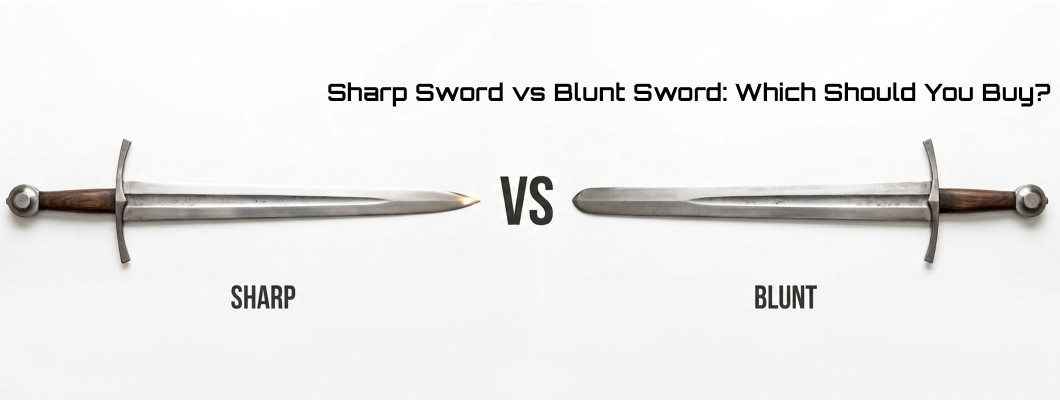
Swords
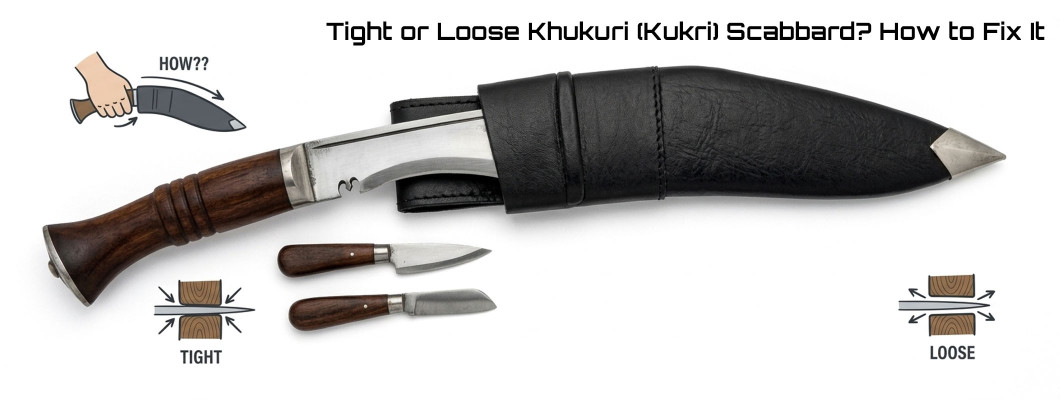
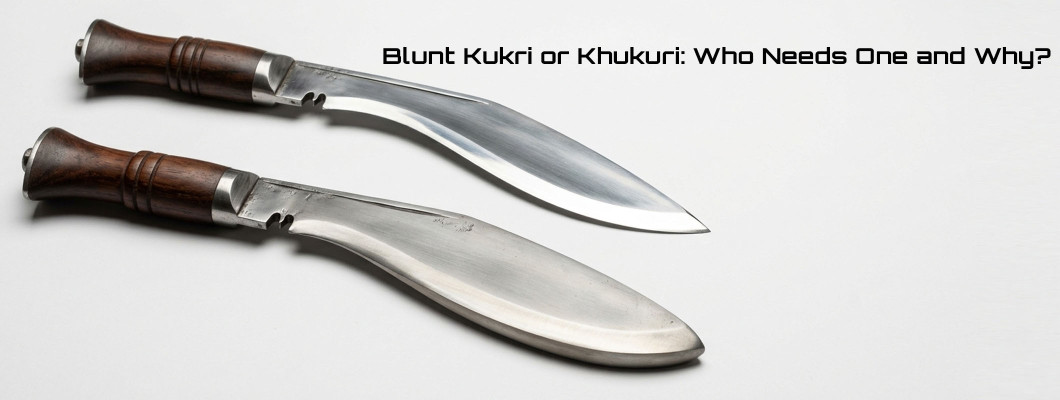
Kukri & Khukuri
Daggers
Axes
Spears
Machetes
The Collector's Tier — What Makes a Blade Worth Collecting
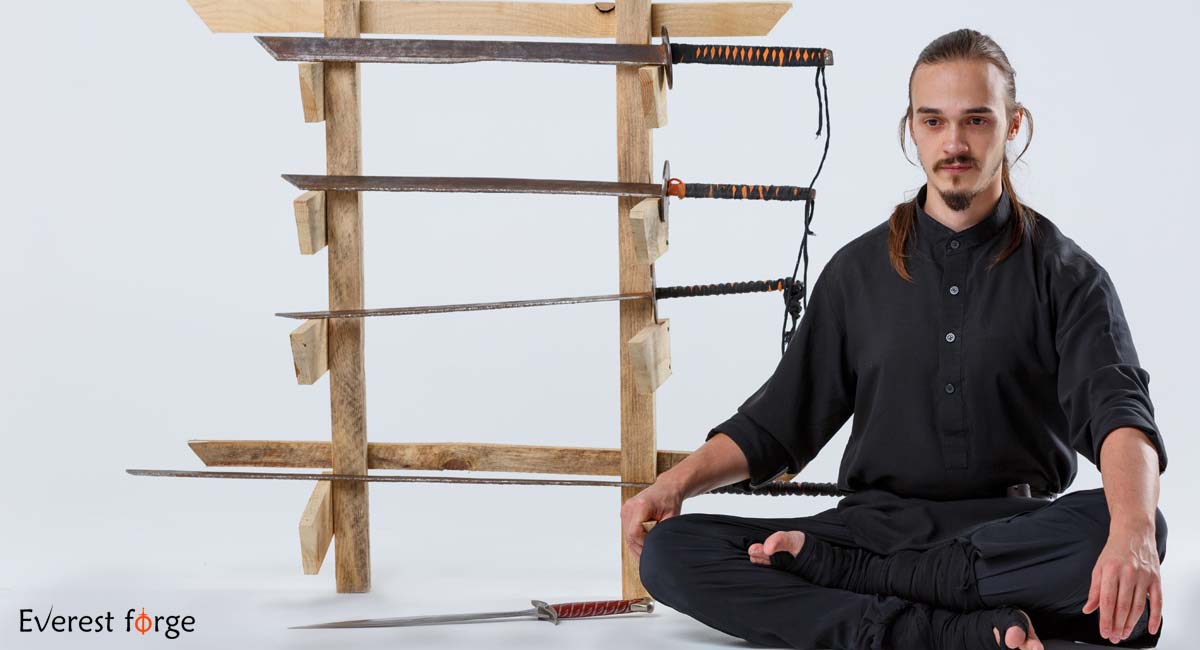
Not all blades are equal from a collector's perspective — and understanding what distinguishes a genuinely collectible blade from a decorative piece is the most important knowledge a new collector can acquire. Here are the criteria that serious collectors use to evaluate any blade:
Steel Quality & Construction
The only steel worth collecting is high carbon steel — 5160, 1075, 1080, or equivalent grades that give the blade the correct flex, edge retention, and patina development of a real working blade. Stainless steel is harder and more brittle — it does not patina naturally, it does not flex correctly, and it does not behave like historical steel. Every Everest Forge blade uses 5160 high carbon spring steel — the same material class as genuine historical weapons.
Full Tang Construction
A collectible sword must be full tang — the steel of the blade extending through the entire handle. Partial tang construction is a cost-cutting measure that compromises both structural integrity and authenticity. Every Everest Forge blade is full tang, correctly fitted, and built to handle real use — not just display.
Hand-Forged vs Machine Made
A hand-forged blade carries the marks of the maker — subtle variations in surface texture, grind, and finish that are the physical evidence of a human craftsman working with steel. Machine-made blades are uniform to a degree that real forge work never is — and for a serious collector, that uniformity is not a virtue. It is the evidence of an absence of craft.
Historical Accuracy
For historical blade collectors, the accuracy of a blade to its historical original — in dimensions, geometry, steel treatment, and construction — is the primary measure of collectible value. Our historical replica kukri collection and historical sword range are built to the dimensions and construction of the original patterns.
Personalisation & Provenance
A blade with personalisation — a name, date, symbol, or inscription engraved permanently into the steel — has a provenance that a generic blade does not. Every Everest Forge blade is available with free personalisation — making every blade in your collection a unique piece with your mark embedded in it permanently.
Custom Commissioned Blades — The Pinnacle of Collecting
The highest tier of blade collecting is the custom commissioned piece — a blade built entirely to your specification, for your collection, that will never exist in exactly that form for any other collector. Our Custom Forge service allows you to commission any blade — a specific historical pattern replicated to exact museum dimensions, a blade from a tradition we do not cover in our standard range, or a completely original design built to your own specification.
Custom commissions at Everest Forge are used by collectors who want a historical replica built to the exact specifications of a specific museum piece — blade length, width, geometry, grind profile, handle construction, and scabbard style all matched to the original. They are used by collectors who want a blade from a tradition not covered in our standard range. And they are used by collectors who simply want a blade that is entirely their own — a piece that no other collection contains in that exact form. Contact us at everestforge.com/contact to discuss your commission.
Everest Forge — Custom Forge for Serious Collectors
Commission the Blade Your Collection Needs
Historical replica to exact museum specification. A blade from a tradition not in our standard range. A completely original design. Any specification — built by hand in Kathmandu, photographed for your approval, and shipped worldwide via DHL Express.
Start Custom Commission → Contact Us →Displaying Your Collection
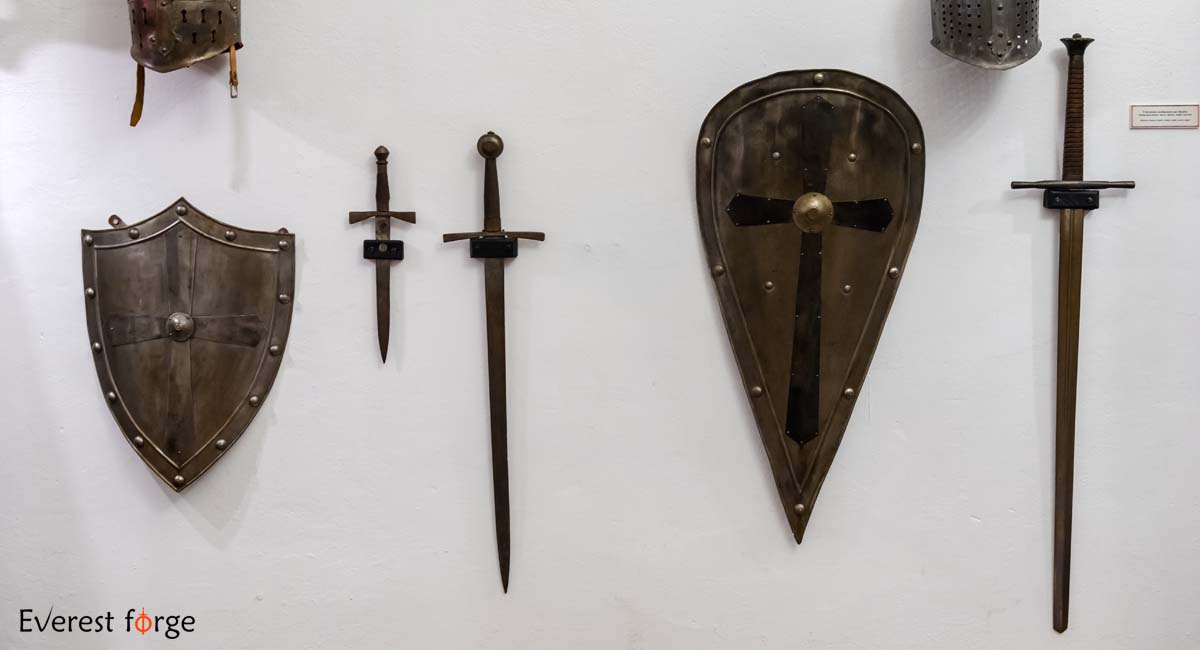
A blade collection deserves a display that respects the objects and communicates their significance. Here are the key principles for displaying a hand-forged blade collection properly:
Wall Mounting
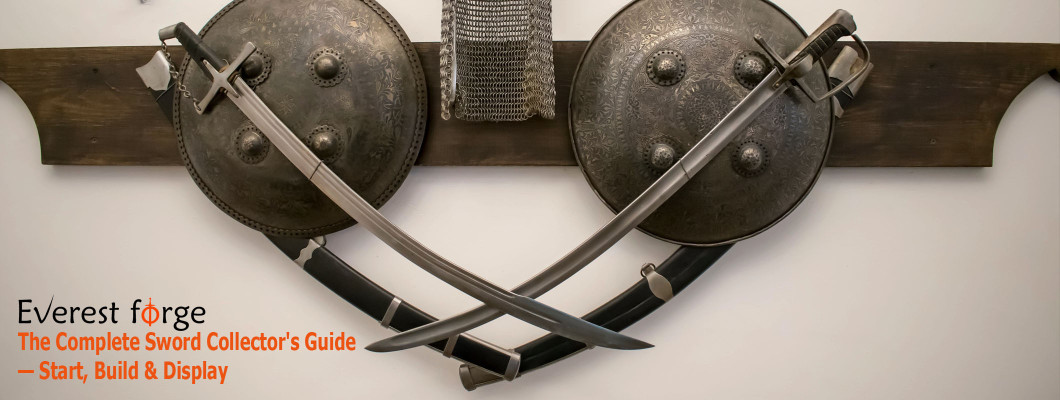
The most common and visually effective display method — horizontal wall mounts with proper brackets that support the blade without stressing the tang or handle. Group by culture for thematic coherence, or by size for visual rhythm. Ensure the wall material can support the weight of full-tang blades properly.
Lighting
High carbon steel responds dramatically to directional lighting — the surface texture, the grind lines, and the edge geometry all become visible under a raking light that would be invisible under overhead diffuse lighting. Directional spotlights or picture lights mounted above a blade wall transform the display from decorative to genuinely dramatic.
Maintenance for Display
Blades displayed in the open air require periodic maintenance — a light wipe with oil every few months to prevent surface rust, and a more thorough cleaning and oiling once or twice a year. Our blade maintenance guide covers the full process for keeping your collection in optimal condition.
Documentation
A serious collection deserves documentation — photographs of each blade, notes on its cultural tradition, historical period, and specific typology, and a record of any personalisation or commission details. Documentation transforms a collection of objects into an archive with genuine intellectual value.
Gifts for Sword & Blade Collectors
A hand-forged blade from Everest Forge is one of the most distinctive and personally significant gifts available — a physical object with history, craft, and personalisation built into it. For the collector in your life, here are the most popular gift choices:
For the History Enthusiast
Historical swords →, historical replica kukris →, or a Roman Gladius → — all with free personalisation engraved for the recipient.
For the Viking Enthusiast
Viking swords → or Seax swords → — with the recipient's name or a Norse rune engraved free of charge.
For the Gurkha & Kukri Collector
Kothimora ceremonial khukuri →, military issue khukuri →, or etched & engraved kukri → — the most prestigious gift in the kukri range.
For the Serious Collector — Custom Commission
Commission a blade built to their exact specification — or to the specification of a historical original they have always wanted in their collection. The most significant and personal gift a collector can receive. Begin at Custom Forge →
Everest Forge — Hand-Forged in Nepal Since 2010
Build the Collection. Start with One Blade.
Every blade hand-forged from 5160 high carbon steel in Kathmandu, Nepal. Free personalisation on every order — name, date, symbol, or custom logo. Photo approval before shipping. 30-day guarantee. Ships worldwide via DHL Express.
Shop All Swords → Shop Kukri → Shop Daggers → Custom Forge → Swords by Culture →Frequently Asked Questions
What is the best first sword to buy for a collection?
Start with the blade from the culture or period you find most compelling — whether that is a Viking arming sword, a Roman Gladius, or a Nepalese kukri. Begin at your area of strongest interest and let the collection grow outward from there.
What steel should a collectible sword use?
Every collectible sword should be forged from high carbon steel — 5160, 1075, or equivalent grades. Stainless steel does not patina naturally, does not flex correctly, and does not behave like historical steel. Every Everest Forge blade uses 5160 high carbon spring steel — the same material class as genuine historical weapons.
What is a full tang sword and why does it matter for collecting?
A full tang sword has the steel of the blade extending through the entire length of the handle — the structural foundation of any genuine working or collectible blade. Partial tang construction is a cost-cutting measure that compromises both integrity and authenticity. Every Everest Forge blade is full tang.
Can I commission a historical replica for my collection?
Yes. Our Custom Forge service builds historical replicas to exact period specifications — blade length, width, geometry, grind profile, handle construction, and scabbard style all built to match a specific historical original. Contact us with your reference specifications or museum dimensions.
Can I get free personalisation on a collectible blade?
Yes. Free personalisation is available on every blade — a name, date, motto, symbol, or custom logo engraved permanently into the blade, guard, pommel, or scabbard. Selected directly on the product page. No extra charge on any order.
How do I maintain a hand-forged sword collection?
Hand-forged high carbon steel requires periodic oiling to prevent surface rust — a light wipe with food-grade mineral oil or camellia oil every few months for displayed blades, and more thorough cleaning and oiling for blades in storage. Read our complete blade maintenance guide for full care instructions.
What is the best kukri for a blade collection?
For collectors, the Kothimora ceremonial khukuri with silver scabbard is the most prestigious piece. The historical replica kukri range offers the most historically accurate patterns. The etched and engraved kukri collection shows the highest levels of artisan craft.
Does Everest Forge ship worldwide?
Yes. We ship to the USA, UK, Australia, Canada, Europe, and most international destinations via DHL Express with full tracking from Kathmandu, Nepal. Check our Legal & Import Guide for country-specific import information.