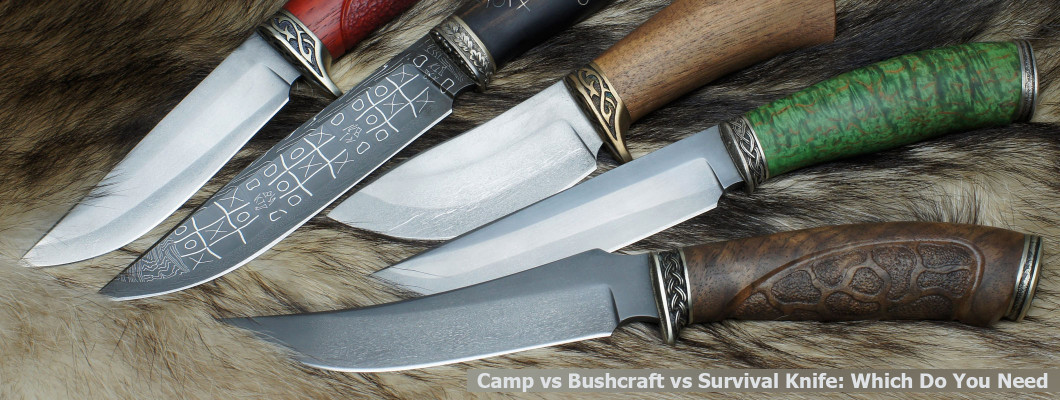
Camp Knife vs Bushcraft Knife vs Survival Knife — What Actually Separates Them
The short answer: a camp knife is built around fire and food, a bushcraft knife is built around control, and a survival knife is built around not having anything else. All three are hand-forged fixed blades. All three look broadly similar in a photograph. They are not interchangeable, and the difference is not marketing — it shows up in blade length, grind, spine thickness and where the weight sits in your hand.
Most people shopping for one of these are really shopping for two. That is worth knowing before you spend, because the knife that carves a feather stick beautifully is the same knife that will disappoint you at a butcher block, and the blade that splits firewood without complaint is too heavy to control for fine work.
Every knife discussed below is hand-forged in Tokha-3, Kathmandu, Nepal from 5160 high-carbon spring steel, full tang, oil-tempered and sharpened to a working edge. This is a guide to choosing between them, not a sales page — the honest recommendation in several cases is that you need a different tool entirely.
The Short Answer in One Table
| Camp Knife | Bushcraft Knife | Survival Knife | |
|---|---|---|---|
| Main job | Food prep, fire prep, camp chores | Carving, notching, wood control | Everything, when it is the only blade you have |
| Typical blade length | 7 to 12 inches | 4 to 6 inches | 7 to 10 inches |
| Blade profile | Wide, deep belly, often cleaver-like | Straight spine, modest belly, fine point | Broad clip point, bowie or tanto |
| Spine thickness | Medium to thick | Medium — thin enough to carve | Thick, built to be struck |
| Weight bias | Forward, toward the tip | Neutral, at the hand | Slightly forward |
| Where it disappoints | Fine carving, detail work | Chopping, batoning thick rounds | Precision cuts, food prep finesse |
| Shop it | Forged Camp Cleavers | Bushcraft Knives | Hunting & Survival Knives |
The Camp Knife — Built Around Fire and Food
A camp knife lives at a fixed camp. It processes food, splits kindling, breaks down small game, opens bags, cuts cord and takes abuse on a chopping block. It is the knife you leave in the kitchen box rather than on your belt.
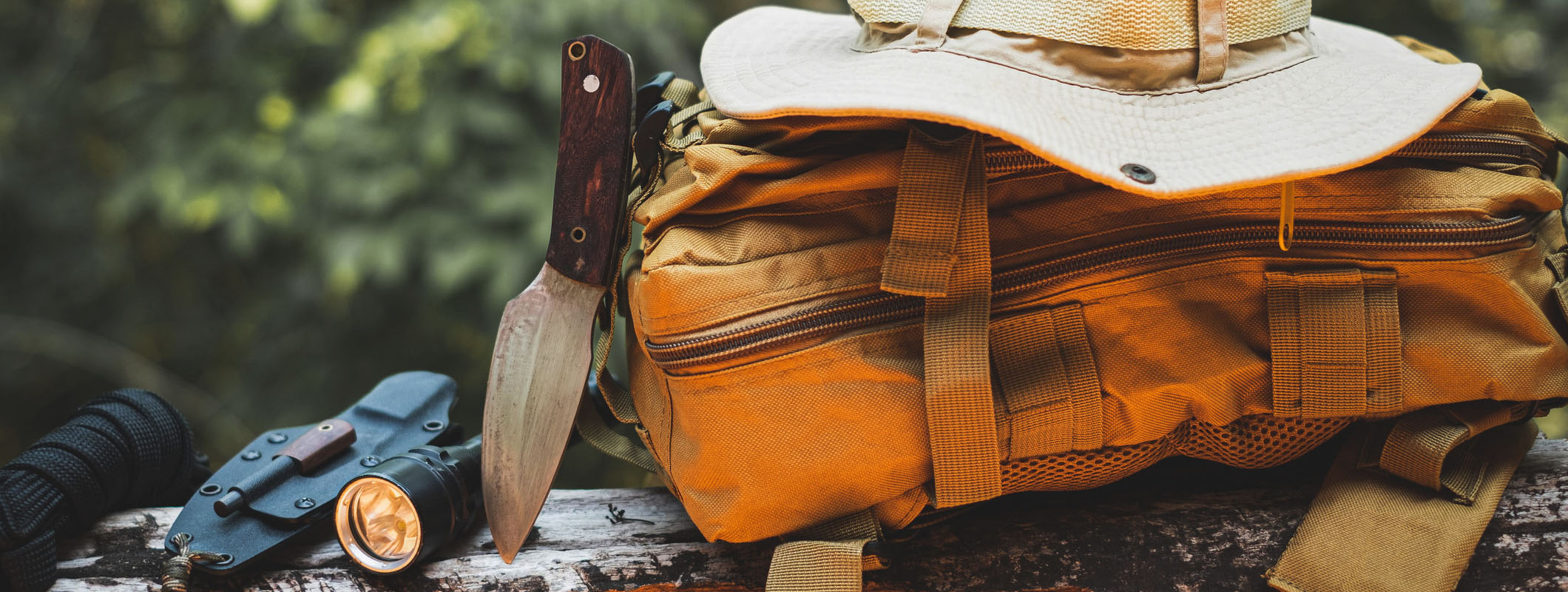
The defining feature is forward weight. A camp knife wants mass toward the point of the cut so that the blade does the work instead of your wrist. That is why so many good camp knives are cleaver-shaped — a wide blade with a deep belly and a heavy tip section chops through bone, joints and wrist-thick branches with a short, controlled swing.
What to look for
- Blade depth over blade length. A 10-inch cleaver with a 3-inch-deep blade out-chops a 12-inch narrow knife.
- A handle you can hold with wet hands. Rosewood with a full-tang construction and a slight swell behind the guard.
- A flat spine you can strike or press on for splitting kindling.
- Enough edge to slice, not just chop. A camp knife that only chops means carrying a second blade for food.
Camp knives worth looking at
An honest note. If your camp work is mostly clearing brush and cutting trail rather than preparing food, a camp knife is the wrong tool and you want a machete or an axe instead. Neither is a compromise — they are simply better at that specific job.
The Bushcraft Knife — Built Around Control
Bushcraft is woodcraft. Feather sticks, try-sticks, pot hangers, tent pegs, notches, traps, spoon carving, bark stripping, fine kindling. Every one of those tasks rewards precision and punishes a heavy blade.
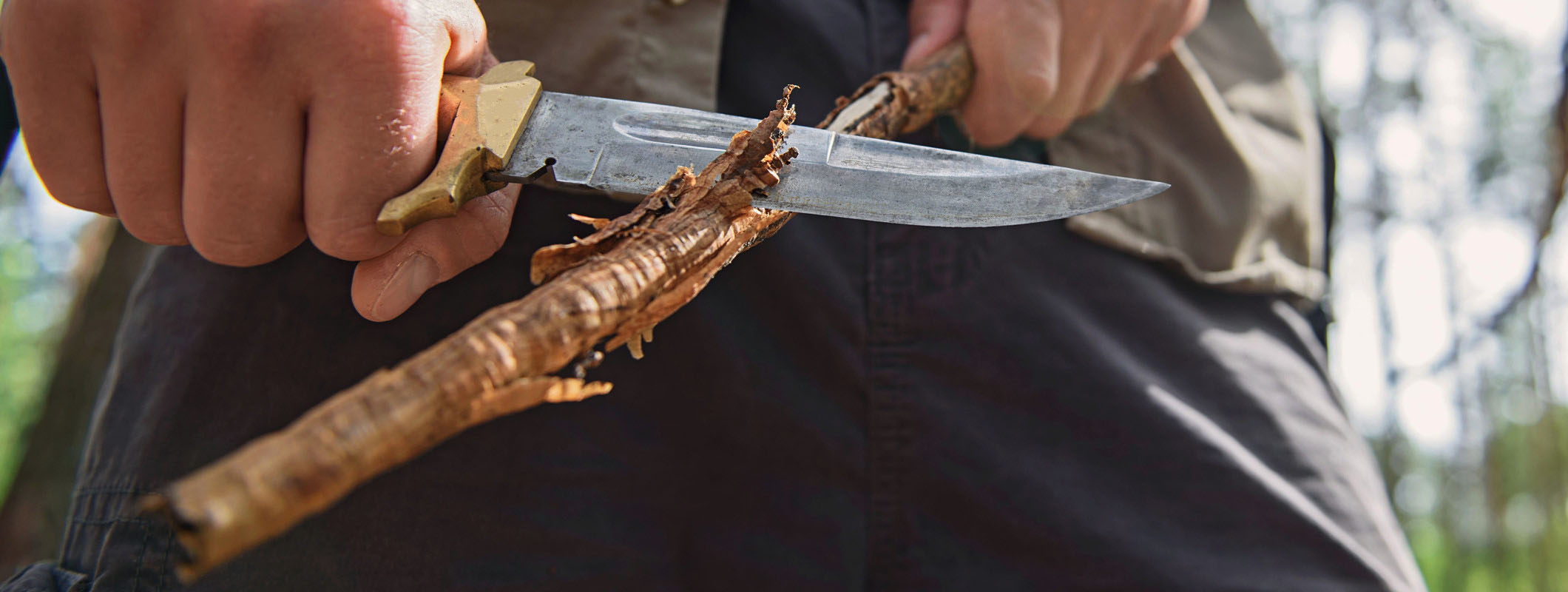
This is why a serious bushcraft knife is shorter than people expect — usually 4 to 5 inches. A longer blade puts the edge further from your hand, and control drops off with every inch. The classic bushcraft knife is small enough to choke up on, with a straight spine you can press your thumb along and a point fine enough to start a notch.
Grind matters more here than anywhere else
A Scandi grind — a single flat bevel running from the primary grind to the edge with no secondary bevel — is the traditional bushcraft geometry. It bites into wood, it is easy to sharpen in the field because you lay the whole bevel flat on the stone, and it is forgiving of a beginner's technique. The trade-off is that it slices food poorly and chips more readily on bone.
A flat or convex grind is more versatile across food, rope and wood, tougher at the edge, but harder to maintain freehand and slightly less controlled in a carving cut. Neither is objectively correct. If you are carving daily, favour Scandi. If the knife has to do a bit of everything, a flat grind serves better.
A word on the spine
A square-ground 90-degree spine will throw sparks off a ferrocerium rod and scrape tinder. A rounded or bevelled spine will not. This is a small detail that separates a knife designed by someone who has used one from a knife designed to look right in a photograph. It is also something we can specify on a custom build.
Bushcraft knives worth looking at
Browse the full heavy-duty bushcraft knives collection, or step down in size to compact and EDC knives if you want something that carries every day.
The Survival Knife — Built Around Not Having Anything Else
A survival knife is defined by a constraint, not a task. It is the blade you have when the pack is gone, the axe is at camp, and whatever needs doing has to be done with the one tool on your belt. That constraint forces a specific set of compromises.
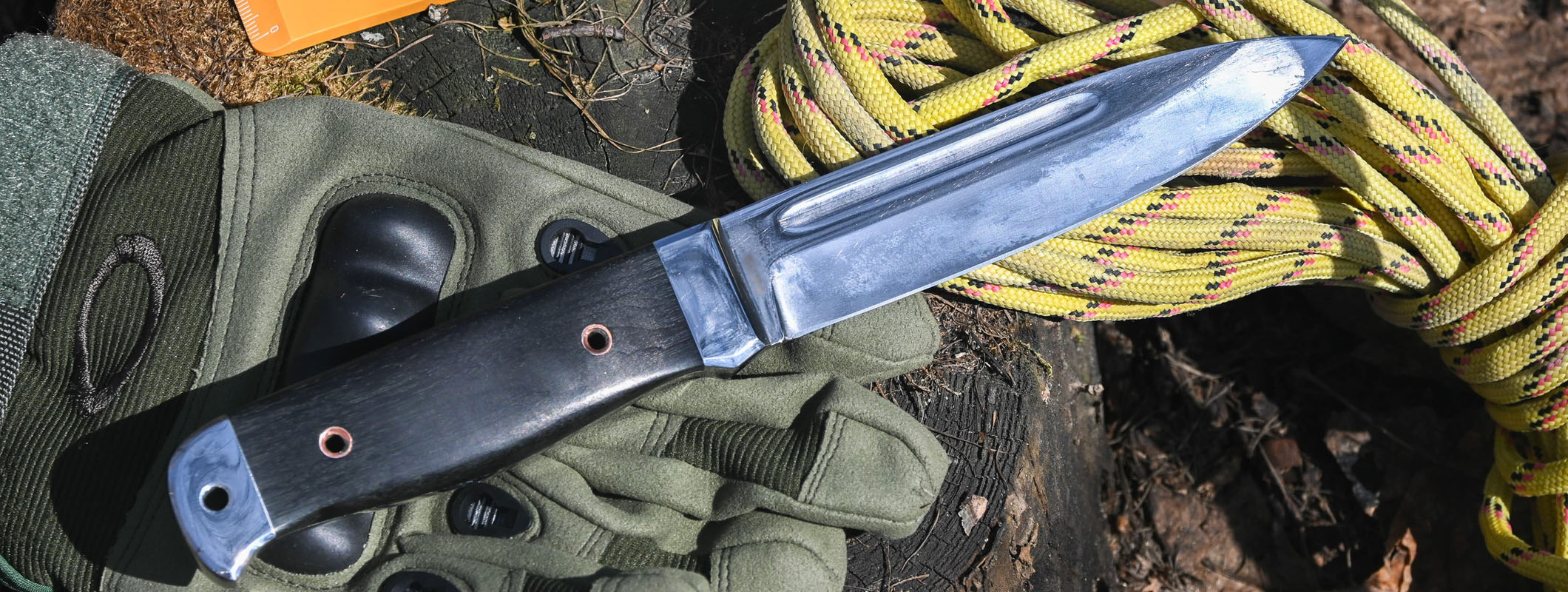
It has to be long enough to chop — usually 7 inches and up. It has to have a spine thick enough to be struck with a baton without taking a set. It needs a full tang, because a survival knife will be pried with whether or not the manufacturer approves. And it wants a strong point, because a broken tip on a survival knife is a broken knife.
What it gives up is finesse. A survival knife will field-dress an animal, but not gracefully. It will carve, but you will work harder for the same result. Anyone who tells you a survival knife does everything well is selling something — it does everything adequately, which is the entire point.
Survival knives worth looking at
The Jungle Bolo Duo works on the same principle: a heavy chopper for the wood, a small utility blade for everything the chopper is too blunt an instrument to handle. If you can carry two, carrying two beats compromising on one.
Where the Hunting Knife Fits
The hunting knife is the fourth blade in this conversation and the one most often confused with the other three. It is not a general outdoor knife. It is a processing tool, optimised for skinning, caping and field dressing.
That means a shorter blade with a pronounced belly for the sweeping cuts that separate hide from muscle, a point controlled enough to open a cavity without puncturing what is inside it, and an edge that holds through a whole animal. A hunting knife is a poor chopper and a mediocre carver, and neither of those things matters, because it is not for chopping or carving.
Full Tang, Steel and Heat Treatment — the Part That Decides Everything
Blade shape determines what a knife is for. Construction determines whether it survives being used that way.
Full tang means the steel of the blade continues as a single unbroken piece through the entire handle, with the scales attached to it. A rat-tail tang narrows to a thin rod inside the handle. Rat-tail is acceptable on a display piece and a genuine liability on any knife that will be batoned, pried or struck. Every fixed blade in the collections above is full tang.
5160 high-carbon spring steel is the working standard here. It is the steel used in vehicle leaf springs, chosen for exactly the property a hard-use knife needs — it bends and returns rather than snapping. It takes a keen edge, it is straightforward to sharpen in the field with a simple stone, and it is tough at the impact loads that chip harder stainless steels. The trade-off is honest: it is a carbon steel, so it will rust if you leave it wet. Keep it lightly oiled.
Heat treatment is the part nobody photographs and the part that decides everything. A well-shaped blade with a bad temper is a bad knife. Everest Forge blades are oil-tempered and hand-sharpened before they ship. You can read what that process involves on how your blade is forged, and the standard we hold functional blades to on the Everest Forge Battle Ready Standard.
So Which One Should You Actually Buy?
- You cook at a fixed camp or car-camp. Camp knife or cleaver. Chopping and food prep dominate your usage. Start with the camp cleavers.
- You hike in, sleep out, and work wood. Bushcraft knife. Under 6 inches, carrying comfort matters, control matters more than mass. Start with the bushcraft knives.
- One blade goes in the pack and that is all. Survival knife. Accept that it is second-best at every individual task and best overall at the set. Start with the hunting and survival knives.
- You hunt. A hunting knife plus something bigger. Do not try to field-dress with a chopper.
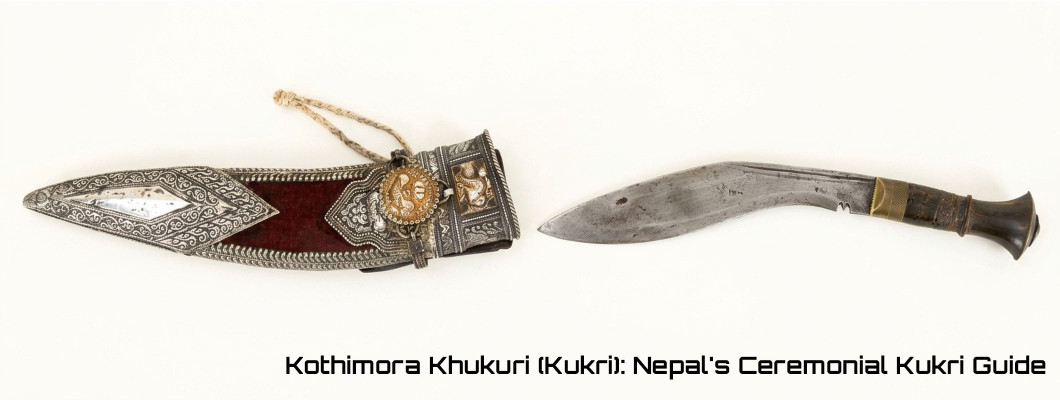
- You genuinely want one blade for camp and bush. Look at a working kukri. The forward-curved kukri geometry puts mass ahead of the hand for chopping while keeping a usable belly near the grip for finer work. It is the blade Nepal solved this exact problem with several centuries ago, and it is still the most honest answer to "one knife, two jobs".
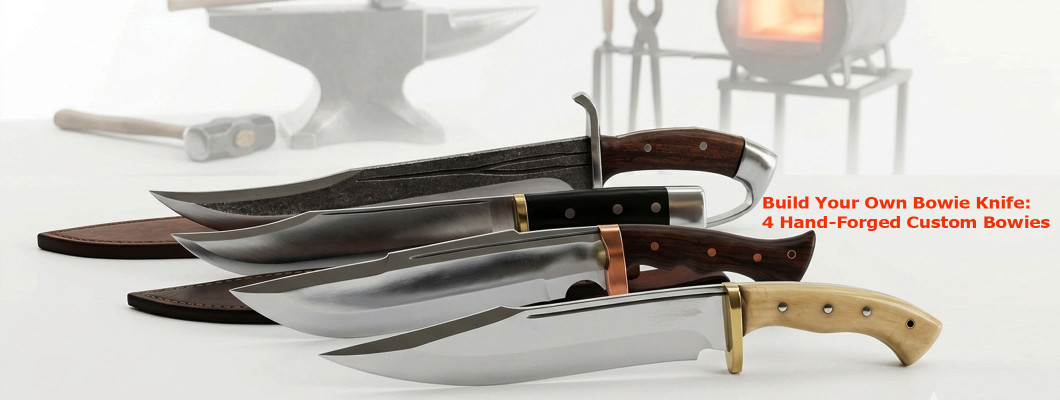
If you are choosing between a large knife and a bowie, the practical distinction is that a bowie's clip point and deep belly bias it toward cutting and fighting geometry, while a camp or survival chopper biases toward mass and impact. Both are excellent. They are not the same knife.
When None of These Are Quite Right
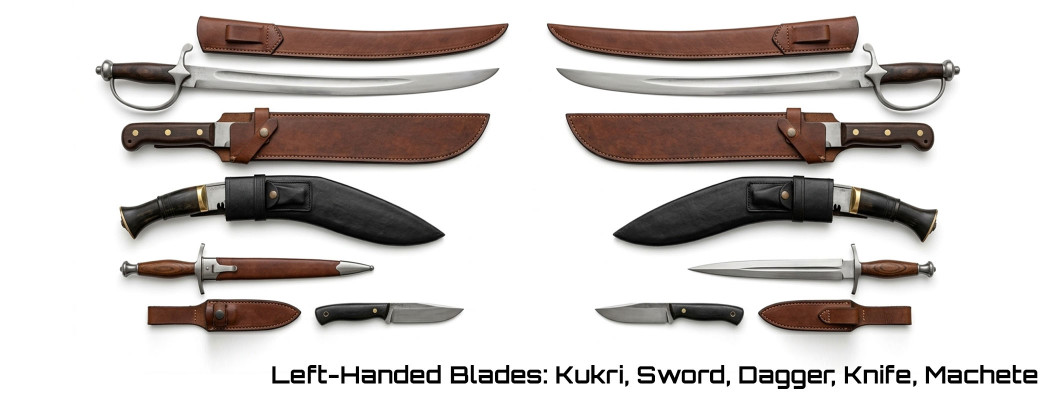
Every knife above is a fixed pattern that suits most people most of the time. If you have a specific job in mind — a particular blade length, a Scandi grind on a heavier blade, a 90-degree spine, a left-handed sheath, a handle sized to your hand, horn or bone scales instead of rosewood, or a profile you have sketched yourself — that is what the custom forge is for.
Design the Fixed Blade You Actually Want
Tell our smiths the blade type, length, grind, spine thickness, tang, handle material, guard and sheath — or send a sketch, a photo or a 3D model. Every custom blade is hand-forged in Nepal from 5160 spring steel, full tang, oil-tempered and sharpened. We reply to every request within 24 to 48 hours with a free quote.
Request a Custom Forge →Want a rough figure before you commit to a full request? The custom forge price estimator gives you a ballpark from your specifications. And if you would rather keep a stock pattern but make it yours, we offer free personalisation — a name, initials or a message engraved on the blade or handle at no extra cost.
Frequently Asked Questions
Can one knife do all three jobs?
Adequately, yes. Well, no. A 7 to 8 inch survival knife with a flat grind is the best single compromise — it chops passably, carves passably and prepares food passably. If you can carry two blades, a small bushcraft knife paired with a chopper or kukri outperforms any single knife at every task.
What blade length should I choose?
Roughly: 4 to 5 inches for carving and bushcraft, 6 to 8 inches for general outdoor use, 9 inches and up when chopping is the priority. Longer is not better — past about 10 inches you are into machete and kukri territory, where the geometry is designed for the job rather than stretched to reach it.
Scandi grind or flat grind — which is better?
Scandi for wood, flat for versatility. A Scandi grind bites into timber and sharpens easily in the field because the whole bevel sits flat on the stone. A flat grind slices food and rope better and holds up more robustly on bone. If the knife is mainly for carving, take Scandi. Otherwise take flat.
Is a full tang really necessary?
For any knife that will be batoned, pried with or struck, yes. A rat-tail tang concentrates all the stress at the point where the narrow rod meets the blade, which is where it breaks. Every fixed blade in these collections is full tang.
Will a 5160 carbon steel blade rust?
Yes, if you neglect it. Carbon steel trades corrosion resistance for toughness and ease of sharpening. Wipe the blade dry after use and keep a light film of oil on it when it is stored. Many users deliberately let a stable dark patina form, which slows further oxidation.
Camp knife, machete or axe — which for firewood?
An axe for splitting rounds, a machete for clearing green growth and brush, a camp knife or cleaver for kindling and anything you also intend to eat. A large knife will do all three in a pinch and none of them as efficiently as the correct tool.
Is a kukri a survival knife?
It is arguably the original one. The forward-curved kukri profile concentrates mass ahead of the hand for chopping while keeping a usable cutting belly close to the grip, which is exactly the compromise a survival knife tries to make. Nepali soldiers, farmers and woodcutters have used it as a single general-purpose blade for generations.
Can I baton with these knives?
With the survival and camp blades, yes — full tang, thick spine and oil-tempered 5160 are the three things batoning demands. Strike the spine over the wood, never over the unsupported blade past the exit point, and do not baton through knots. Fine bushcraft knives with thinner stock are not intended for it.
How do I sharpen a forged carbon steel knife in the field?
A simple pocket stone or a small diamond plate is enough. 5160 responds quickly and does not need diamond abrasives the way high-vanadium stainless does. Hold your bevel angle consistently, work one side until you raise a burr along the full edge, then flip and repeat, finishing with light alternating passes to remove it.
Can you forge a custom fixed blade to my own design?
Yes. Blade type, length, profile, grind, spine thickness, tang, handle material, guard, pommel and sheath are all specifiable, and you can upload sketches, reference photos or 3D models. Submit a custom forge request and we will respond within 24 to 48 hours with a free quote.
Shop Hand-Forged Fixed Blades
Every Blade Hand-Forged in Nepal, Full Tang, Ready to Work
Over 100 hand-forged fixed blades across camp cleavers, bushcraft knives, hunting and survival blades, and compact everyday carry. Forged from 5160 spring steel by our smiths in Tokha-3, Kathmandu, oil-tempered and sharpened before they ship.
Browse All Forged Knives →