From Viral Viking Photo to Your Collection: Hand-Forged Norse Weapons
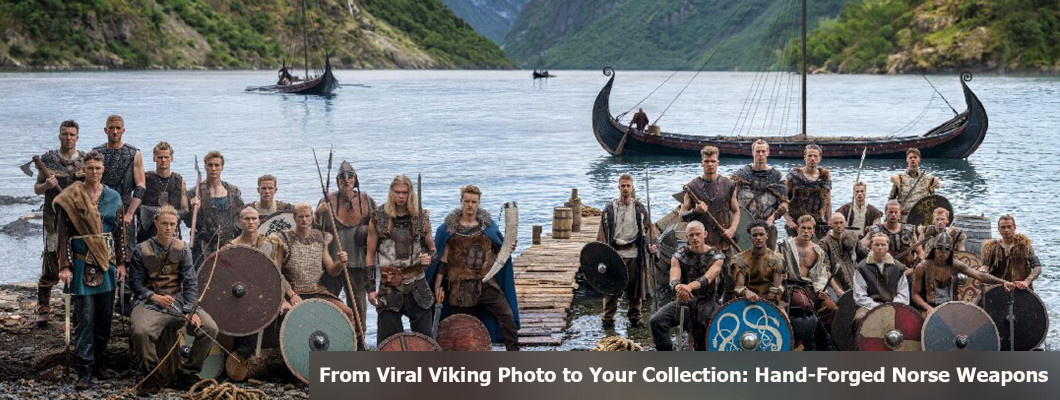
On 4 June 2026, the Norwegian Football Federation broke the internet with a single image. The entire World Cup squad — Erling Haaland, Martin Odegaard and the rest — stood on a fjord beach dressed as Norse warriors, weapons in hand, with working Viking longships moored behind them. The photographer David Yarrow titled the piece "The Vikings are Coming." It marks Norway's first World Cup appearance since 1998, and within hours it was being called one of the greatest team photos in the sport's history.
What caught our eye at the forge was not the football. It was the steel. Look past the long hair and the fjord and you will see a careful selection of authentic Norse arms: broad single-edged axes, straight double-edged swords, round wooden shields with iron bosses, and a forest of spears. These are not random props. They are a fairly faithful nod to what a tenth-century Norwegian carried. So we thought it was worth explaining what is really in the picture — and how pieces like our own hand-forged Viking and historical swords are made by hand today.
An honest note before we start. We had nothing to do with the Norwegian FA shoot, and the weapons in that photograph are not ours. This is simply a craft piece. We forge original Viking-inspired swords, axes and tools in Kathmandu, and a viral moment is a good excuse to talk about how this gear was really made a thousand years ago — and how we make ours now.
Why the photo landed so hard
The shoot worked because it was real. In an age where almost any image can be generated on a laptop, Yarrow and the federation went the other way. A beach near Oslo was secured privately and dressed as a working Viking camp. The longships in the frame are genuine operating reconstructions, not composites. The players bought into it completely, which is why the long-haired figures look less like footballers in costume and more like warriors stepping out of Norse mythology.
There is also a neat historical thread underneath the marketing. The Vikings who sailed west from Norway reached North America around the year 1000, roughly five centuries before Columbus. A Norwegian squad travelling to a World Cup hosted across the Atlantic is, whether the federation intended it or not, a tidy echo of that voyage. "The Vikings are Coming" is a sharper caption than it first appears.
What weapons are actually in the picture
If you want to understand the photo properly, it helps to know the four core pieces of a Viking warrior's kit. Each one tells you something about the period.
The axe
The axe was the everyday weapon of the North. It was cheaper than a sword, doubled as a tool, and in skilled hands it was formidable. The broad, crescent-edged heads you can pick out in the squad photo descend directly from the Viking axe, sometimes called the Dane axe. That same shape later evolved into the Norwegian peasant battle axe, a symbol so important to the country that a version appears in the national coat of arms and as the emblem of Saint Olav. When a Norwegian holds an axe, it is not just a weapon. It is heritage.
The sword
A sword was a statement of status. Pattern-welded blades took weeks of skilled smithing, so they belonged to chieftains and wealthy warriors rather than ordinary farmers. The Viking sword is a double-edged, single-handed weapon with a broad fuller running down the blade to keep it light, and a distinctive lobed pommel. Scholars sort the surviving examples using a system called Petersen typology, and if you want the full picture our guide to Viking sword types walks through it. Many of these blades were given names and passed down through generations.
The shield
The round shield is the visual signature of the whole era. Built from planks of spruce, fir or linden, faced with leather or linen, and finished with an iron boss to protect the hand, it was light enough to move quickly and tough enough to take a blow. The painted designs in the Norway photo follow real conventions — bold geometric quarters and curling serpent knotwork that you find on surviving fragments and in the sagas. We do not stock a stock shield line, but a matched shield can be made to your design through our Custom Forge service.
The spear
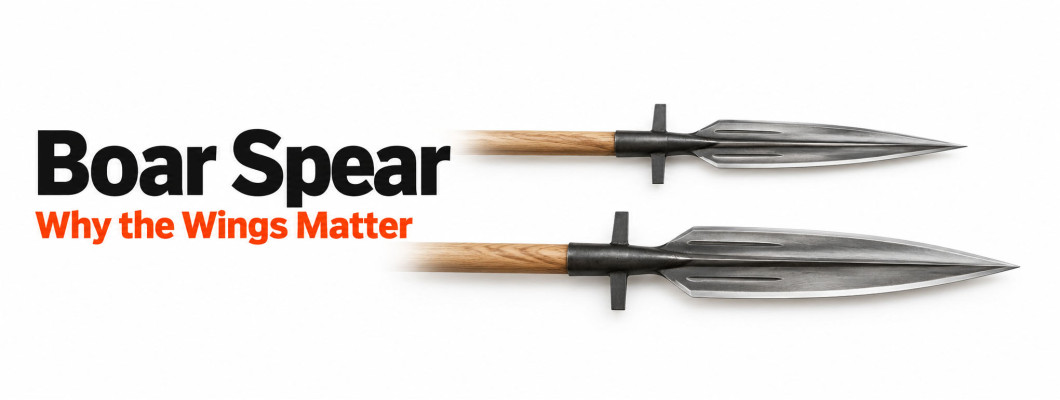
The least glamorous and the most common. Most warriors fought with a spear, not a sword, because a spearhead needed far less iron and far less skill to make. Odin himself carried the spear Gungnir, so even the humblest weapon had a place in the mythology.
Want to hold a piece of this history rather than just look at it? Explore our hand-forged Viking and historical collection — swords, axes and seaxes, each one made to order in our Kathmandu workshop.
Browse the Viking and historical rangeHow these blades were really made — then and now
The romance of the Viking smith is mostly true. A blade began as raw bloomery iron, folded and forge-welded to even out the carbon and burn away impurities. The finest swords were pattern-welded, twisting bars of different iron together so the finished blade carried a rippling, almost watery surface. It was slow, hot, expensive work, and a master smith was a person of real standing in the community.
Our process honours that lineage while being honest about the materials. We forge our Viking-inspired blades and axe heads from 5160 high-carbon spring steel rather than reconstructed bloomery iron, because it gives a tougher, more dependable edge that a modern owner can actually maintain. Each piece is hammered, ground, heat-treated and hand-finished by a single smith, then fitted with hardwood and leather. The Petersen Type X Viking sword is a good example — a historically grounded form, made one at a time. For the deeper backstory of the form itself, our history of the Viking sword goes further.
Have a specific blade in your head — a particular pommel, blade length, etching or engraving? Our Custom Forge service turns your own design into a hand-forged piece, and it is where most of our most personal Viking commissions begin.
Commission a custom Viking bladeOwning a piece of the Viking moment
You do not need a World Cup squad behind you to appreciate this craft. A forged Viking sword mounted above a desk, a bearded axe on a stand, or a seax on display turns a flat photograph into something you can pick up and feel. Collectors, re-enactors, fans of the sagas and Norse history, and people who simply loved that Norway photo all arrive at the same place in the end: they want the real thing, made by hand, not a costume-shop replica.
Every order ships worldwide on a delivered-duties-paid basis, so the price you see is the price you pay, with import duties and taxes handled before the parcel reaches your door. No surprise customs bills, no guesswork.
From a viral photograph to your own wall. Start with a ready-made piece from the historical range, or design your own from scratch.
See the Viking range Start a Custom ForgeFrequently asked questions
What is the Norway Viking World Cup photo?
It is an official squad image released by the Norwegian Football Federation on 4 June 2026, ahead of Norway's first World Cup since 1998. Shot by photographer David Yarrow and titled "The Vikings are Coming," it shows the players dressed as Norse warriors on a fjord beach with working Viking longships behind them.
Who took the photo?
The image was created by the renowned photographer David Yarrow in collaboration with the Norwegian Football Federation. Yarrow is known for large, cinematic, real-world shoots, and he has said the longships in the frame are genuine operating reconstructions rather than digital effects.
Are those real Viking weapons in the picture?
They are accurate reproductions used as props for the shoot. The axes, swords, shields and spears follow real tenth-century forms, which is why the scene looks so convincing. They are not antiques, and they are not our products.
Did Everest Forge make the weapons in the photo?
No. We had no involvement in the shoot and the props are not ours. We are a hand-forge that makes original Viking-inspired swords, axes and tools, and we wrote this piece because the photo is a great way to talk about how Norse arms were really made.
What kind of axe is in the Norway photo?
The broad, crescent-edged heads are descended from the Viking axe, sometimes called the Dane axe. That same shape later became the Norwegian peasant battle axe, which is so culturally important that a version appears in the national coat of arms and as the emblem of Saint Olav. You can see our take on the form on our hand-forged Viking axe page.
What is a Viking sword exactly?
It is a double-edged, single-handed sword with a broad fuller down the blade to reduce weight, and a lobed pommel. The finest examples were pattern-welded, which made them costly status symbols carried by chieftains rather than ordinary warriors. Our Viking sword types guide explains how historians classify them.
How were the round shields built?
From planks of light wood such as spruce, fir or linden, faced with leather or linen, and finished with an iron boss in the centre to protect the hand. The bold geometric and serpent-knot designs in the photo follow patterns found on surviving fragments and described in the sagas.
What steel do you use for your Viking blades?
We forge from 5160 high-carbon spring steel. Original Viking blades used folded bloomery iron, but modern spring steel gives a tougher, more dependable edge that an owner today can actually maintain, while keeping the traditional shapes and proportions.
Are your pieces made by hand or by machine?
Each piece is forged, ground, heat-treated and finished by a single smith in our Kathmandu workshop, then fitted with hardwood and leather. They are individually made to order, not machine-stamped wall-hangers or cast reproductions.
Can I order a Viking sword, axe or shield like the ones in the photo?
Yes. Browse the historical and Viking sword range for ready-made designs, or use our Custom Forge service to commission a sword, axe or round shield shaped around your own design.
Do you ship internationally and are there extra customs charges?
We ship worldwide on a delivered-duties-paid basis. Import duties and taxes are handled before the parcel reaches you, so the price you see at checkout is the full price, with no surprise customs bill on arrival.
Why did the Norway photo become so popular?
Because it was genuinely produced in the real world at a time when most striking images are made on a computer. A real beach was dressed as a Viking camp, real longships were used, and the players committed fully, so the result looks like a scene from Norse mythology rather than a costume photo.