Pirate Swords and Daggers: What Pirates Really Carried
Real pirates of the Golden Age carried cutlasses, hangers, daggers and dirks — short, brutal, practical blades built for boarding actions fought at arm's length on a crowded deck. The elegant duelling rapier of the movies was rare, mostly a captain's status symbol, and almost useless in a real fight below decks. The cutlass ruled because it never misfired, never needed reloading, never failed in wet weather, and could cut rigging as easily as an opponent.
This guide covers the blades pirates actually used, why each one existed, which Hollywood myths are pure invention, and how to own a hand-forged replica made in real high-carbon steel.
The Cutlass: The True Pirate Sword
If one blade deserves the name "pirate sword", it is the cutlass. Short, broad and slightly curved, with a heavy blade built for chopping power and a knuckle guard or basket protecting the hand, it was the most universally carried weapon among Golden Age pirates. Blades typically ran between 24 and 30 inches — long enough to reach, short enough to swing in a stairwell.
Its dominance was practical, not romantic. Ship decks were cramped, combat was sudden, and the fighting happened at terrifyingly close range. A long cavalry sword or battlefield pike was useless in that space. The cutlass was cheap, required no fencing-school training, and doubled as a working tool — cutting rope and rigging in an emergency, felling wood ashore, even opening coconuts.
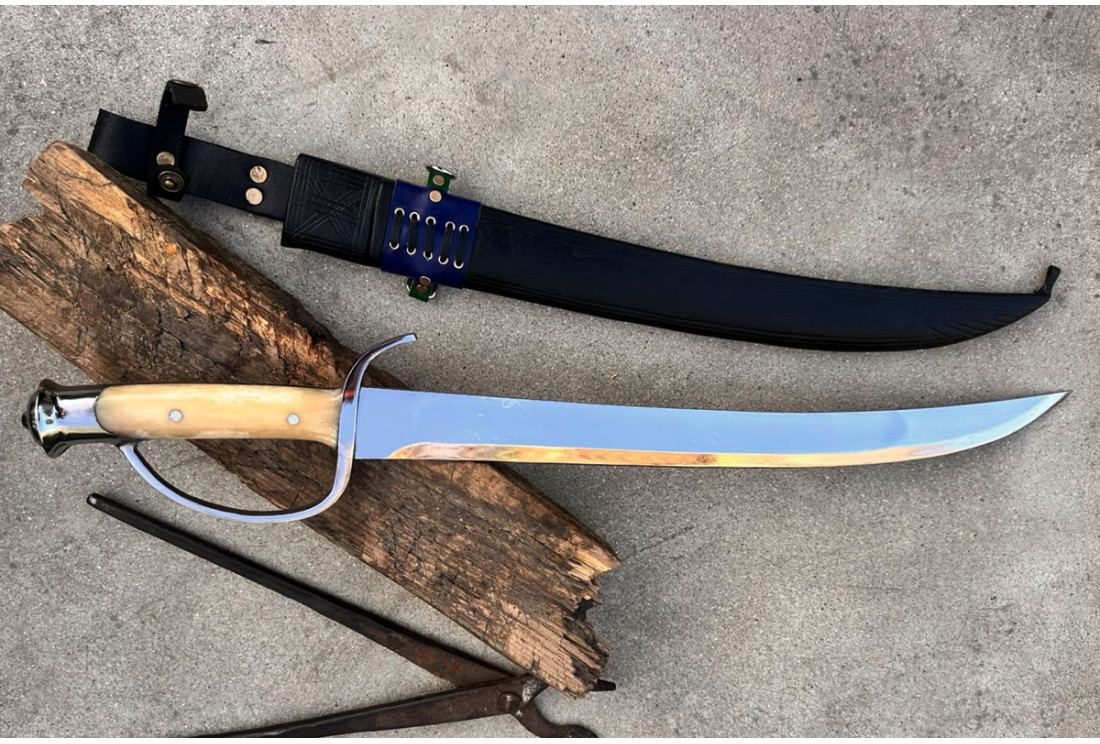
Pirate Cutlass — Hand-Forged Curved Sabre with Bone Hilt and Knuckle Guard
Our closest interpretation of the classic Golden Age cutlass: a curved, single-edged sabre blade with a swept knuckle guard to protect the hand in close quarters, finished with a bone hilt. Hand-forged in Nepal in high-carbon steel — a collector's centrepiece with real historical character.
Cutlass or Machete? The Two Are Closer Than You Think
Here is a detail most pirate articles miss. In the English-speaking Caribbean, a machete is still called a "cutlass" to this day. That is not a coincidence — the pirate cutlass evolved directly from the heavy, machete-like utility blades that sailors and plantation workers already used every day. The line between weapon and tool was never clean.
That makes a full-tang chopping cutlass the most historically honest pirate blade you can own: it is exactly what the original was, a working chopper that could fight.
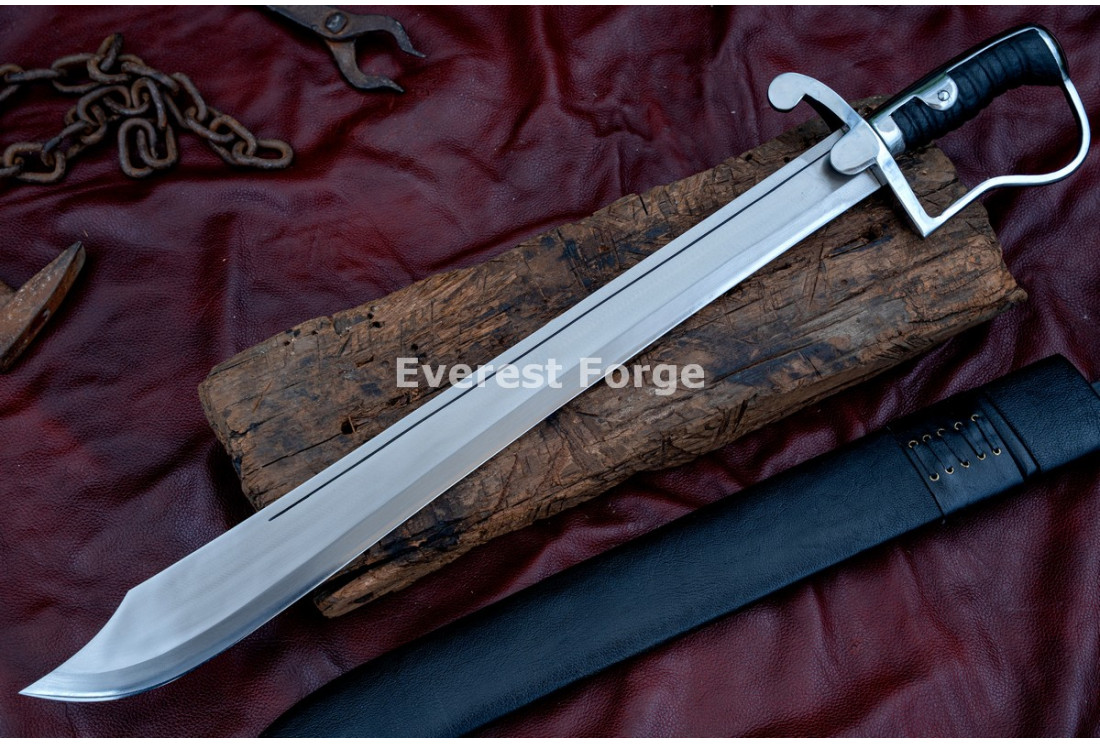
Hand-Forged Pirate Cutlass Machete — Full-Tang 5160 Curved Chopping Blade with D-Guard
The working pirate blade. Forged from 5160 spring steel with a full tang and a D-guard, this is a cutlass built to actually chop — brush, rope, wood, camp work — exactly as the original sailors' blade was used. Rugged, functional, and true to the machete-cutlass lineage.
If you want the chopping side of that heritage without the sabre styling, our full machete collection covers the working end of the family.
Which Pirate Cutlass Is Right for You?
| Pirate Cutlass (Bone Hilt) | Pirate Cutlass Machete (D-Guard) | |
|---|---|---|
| Character | Classic Golden Age sabre | Working sailor's chopper |
| Hand protection | Swept knuckle guard | D-guard |
| Hilt | Bone | Full-tang working handle |
| Steel | Hand-forged high-carbon | 5160 spring steel, full tang |
| Best for | Collectors, display, cosplay, historical interest | Chopping, bushcraft, camp use, hard field work |
| Buy | View cutlass | View machete |
Both can be customised. Blade length, finish, hilt material and engraving are all open — see the custom forge section below.
The Hanger: The Sailor's Everyday Short Sword
Before the cutlass became dominant, many pirates carried a hanger — a short sword used widely by sailors, soldiers and officers. Some were straight-bladed, others gently curved, typically around 20 to 24 inches. Hangers were cheaper and lighter than military broadswords, comfortable to wear while actually working a ship, and perfectly suited to a boarding action that demanded mobility rather than fencing-school precision.
Many pirates used a hanger for everyday carry and saved the heavier blade for a real fight. A hanger was also a quiet mark of standing among the crew.
Daggers and Dirks: The Backup That Never Failed
Pirates rarely relied on a sword alone. Shipboard combat turned frantic in seconds, so most men carried several weapons. A naval dirk or a plain knife was the constant companion — used for eating, for ship work, for cutting line, and as the last resort in a fight when a cutlass was too long or a pistol already spent.
The dagger was a straight-bladed thrusting weapon, its crossguard genuinely useful in a cutlass fight: it could catch an incoming blade, deflect it, and open the counter-cut. The dirk was a smaller, simpler knife of the same family. Pirate crews signed articles that required every man to maintain his arms — a scabbard for every blade was standard, and neglecting your weapons was a punishable offence.
The Scottish dirk in our traditional and historical daggers collection is the closest living relative of the blade a pirate would have worn on his belt. For the full range, browse our hand-forged dagger collection.
The Captain's Rapier: Status More Than Steel
Some wealthier captains and former privateers did carry rapiers or smallswords, particularly in the earlier decades of the Golden Age. These were light, elegant thrusting swords associated with gentlemen and naval officers, and they were frequently plunder — taken from captured Spanish or French officers.
But in a real boarding melee they were close to useless. A rapier is a duelling weapon that needs space, footing and time, and a pirate boarding party offered none of the three. Carrying one was mostly a display of success: proof you had beaten someone important enough to own one.
Axes, Machetes and the Rest of the Arsenal
The boarding axe deserves its place beside the cutlass. It was a weapon, a breaching tool and a firefighting instrument all at once — naval combat had a habit of setting everything alight at inconvenient moments. Crews also carried pikes, long knives, machetes and, for the poorest hands, a simple belaying pin clubbed straight off the rigging.
Uniformity was never the point. Pirates used whatever they could capture, repair or improvise, which is why a real pirate arsenal looked nothing like a matched set from a film.
Pirate Sword Myths, and What Actually Happened
The blade between the teeth. The image of a pirate swinging from the rigging with a cutlass clenched in his jaw is theatre, not history. Nobody fought that way.
The elaborate staircase duel. Hollywood pirate duels — athletic, drawn-out, rapiers flashing on narrow stairs — bear almost no resemblance to reality. Real shipboard fighting with cutlasses was brutal, fast and terrifyingly close. A pirate typically held a cutlass in one hand and a pistol in the other, using the blade to deflect while firing point-blank. The goal was to end the fight in seconds, not to display swordsmanship.
The famous named sword. Legendary pirate blades with names are largely an invention of nineteenth and twentieth century fiction. Real pirates rarely named their weapons. A sword was a tool, and it was replaced without sentiment the moment a better one was captured.
What was true: Blackbeard really did go into battle wearing several braces of primed flintlock pistols across his chest. And Anne Bonny and Mary Read were described in trial records as fighting with cutlass and pistol alongside the men.
Commission Your Own Pirate Blade
Want a cutlass to your own specification? A boarding axe, a captain's dagger, a dirk, a pirate machete, or a blade from your own drawing? Everest Forge hand-forges custom pirate weapons to order in Nepal — you choose the blade profile, the length, the steel finish, the hilt material, the guard, the scabbard, and any engraving. Send a sketch, a reference photo, or a written brief, and our smiths will tell you exactly what is possible.
What You Can Customise on a Pirate Sword
- Blade profile — straighter naval hanger, deep-bellied chopping cutlass, or a heavier sabre curve
- Blade length — from a compact 20-inch hanger to a full 30-inch cutlass
- Guard — knuckle guard, D-guard, basket, cupped guard, or none at all
- Hilt material — bone, horn, rosewood, or leather wrap
- Blade finish — mirror polish, satin, raw forged, blackened, or an aged antique look
- Scabbard — leather over wood or full leather, in your choice of colour
- Engraving — names, dates, ship names, initials, or your own artwork
Explore More Hand-Forged Blades
- Full Sword Collection — historical, fantasy and custom blades across every style we forge.
- Machetes — the working end of the cutlass family, built to chop.
- Daggers — over 100 hand-forged daggers, dirks and sidearms.
- Traditional and Historical Daggers — including the Scottish dirk, the pirate's belt-knife cousin.
- Movie Swords — functional steel versions of iconic film and franchise blades.
- Custom Forged Swords — one-of-a-kind blades built to customer specification.
Why Everest Forge
Every blade we make is hand-forged in Kathmandu, Nepal by Kami-caste bladesmiths, from 5160 high-carbon spring steel, oil- or water-tempered for real strength. These are not cast display props — they are functional blades with weight, balance and an edge. We ship worldwide, and every custom project is reviewed individually before a single piece of steel is cut.
Frequently Asked Questions
What sword did pirates actually use?
The cutlass was the most widely carried pirate sword — a short, broad, slightly curved blade of roughly 24 to 30 inches with a knuckle guard. Pirates also carried hangers, daggers, dirks and boarding axes, and wealthier captains sometimes carried a rapier or smallsword as a status symbol.
Why did pirates prefer the cutlass?
It was reliable and practical. Unlike a pistol it never misfired, never needed reloading and never failed in wet weather. It was cheap, needed no formal training, was short enough to use in cramped decks and stairwells, and doubled as a tool for cutting rope and rigging.
Is a cutlass the same as a machete?
They are closely related. The cutlass evolved from heavy machete-like utility blades used by sailors, and in the English-speaking Caribbean a machete is still called a "cutlass" today. A cutlass is essentially a fighting machete with hand protection.
How long was a pirate cutlass?
Most cutlass blades ran between roughly 24 and 30 inches. Hangers were shorter, typically around 20 to 24 inches. Our cutlasses can be forged to your preferred blade length as a custom order.
Did pirates really use rapiers?
Some did, but rarely in combat. Rapiers and smallswords were light thrusting weapons carried mainly by wealthier captains and former privateers, often taken as plunder. In a chaotic boarding action fought at close range they were far less useful than a cutlass.
What daggers did pirates carry?
Pirates carried straight-bladed daggers and dirks as backup weapons and everyday tools. The crossguard on a dagger was genuinely useful in a cutlass fight, able to catch and deflect an incoming blade. The Scottish dirk is a close historical relative.
Can you forge a custom pirate sword to my design?
Yes. Everest Forge hand-forges custom pirate cutlasses, machetes, daggers, dirks and boarding axes to order. You choose the blade profile, length, guard, hilt material, finish, scabbard and engraving. Send a sketch, photo or written brief through our custom forge request page.
Are your pirate swords functional or display pieces?
They are functional. Every blade is hand-forged from high-carbon steel and tempered for real use, not cast as a lightweight prop. The cutlass machete in particular is built as a genuine full-tang chopping tool.
Did pirates name their swords?
Almost never. Famous named pirate blades are largely an invention of later fiction. Real pirates treated swords as disposable tools and replaced them without sentiment whenever they captured a better one.
Do you ship pirate swords worldwide?
Yes. We ship worldwide from Nepal. Blade laws vary by country, so please check your local import rules before ordering.