What Makes a Sword "Celtic"?
When people picture a Celtic sword, they usually imagine a long, straight, double-edged iron blade — the weapon of a Gaulish warrior standing against the Roman legions. They are picturing a La Tène sword, the defining blade of the European Iron Age. At Everest Forge we hand-forge these swords the old way, and this guide is the one we wish every collector could read before buying: what a Celtic sword actually is, where it came from, how it was made, and the different types you will come across.
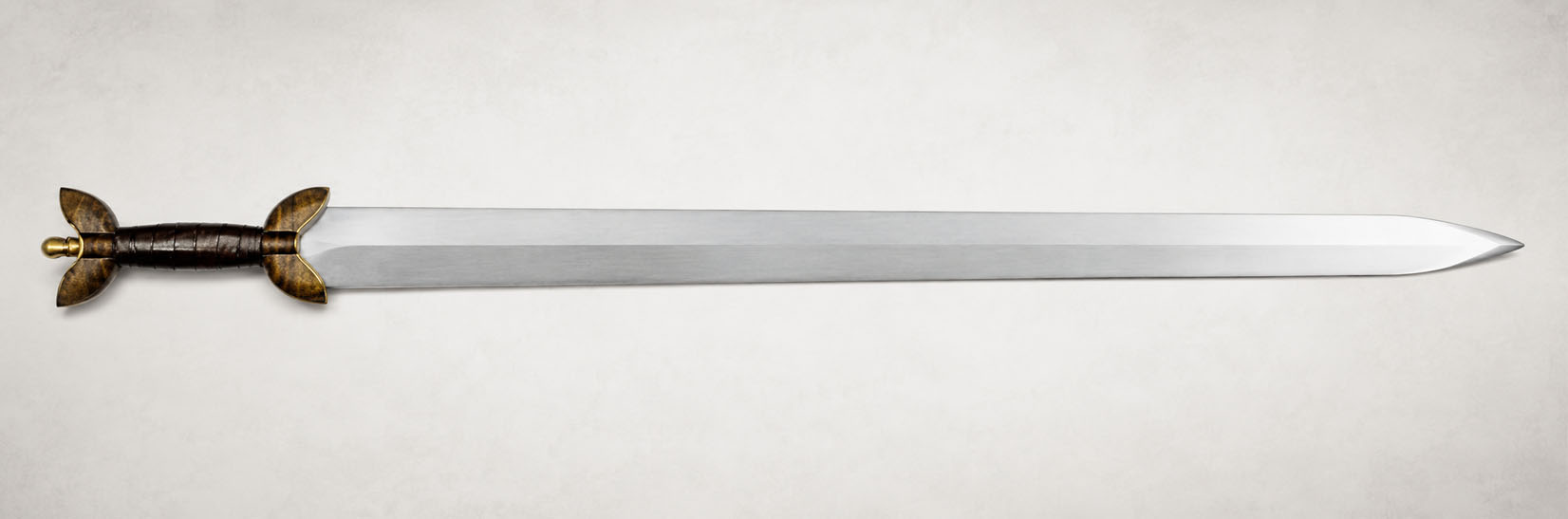
The short version: a "Celtic sword" almost always means a sword of the La Tène culture, the Iron Age civilisation that spread across Central and Western Europe from roughly 450 BC until the Roman conquest. These were not the leaf-shaped bronze blades of an earlier age, nor the short stabbing gladius of Rome. They were broad, straight, double-edged slashing swords with organic hilts of wood, horn, bone or bronze — and they are some of the most striking weapons the ancient world produced.
The La Tène Culture — A Quick Timeline
The European Iron Age is usually split into two great phases, both named after the Swiss and Austrian sites where their artefacts were first studied:
The La Tène site itself gives the whole culture its name. When you read about a La Tène B sword or a Gaulish sword, you are reading about weapons from this world — the Celts of Gaul, Britain, the Alps and the Danube, whose smiths turned iron into both tools of war and symbols of status. A finely fitted sword marked a warrior of standing, and many were buried with their owners or deliberately bent and offered into rivers and lakes.
How Celtic Swords Were Forged
The Celts were exceptional ironworkers. By the height of the La Tène period their smiths were producing long, springy, well-balanced blades that Roman writers respected (and sometimes mocked, claiming they bent in battle — an exaggeration that says more about Roman propaganda than Celtic metallurgy).
The blade. A classic La Tène sword is straight and double-edged, with a long taper to the point. Many have a lenticular cross-section — lens-shaped, thickest down the centre line, with no fuller — which keeps the blade strong and full through the cut. The earlier bronze leaf-shaped blade had given way to this straighter iron form.
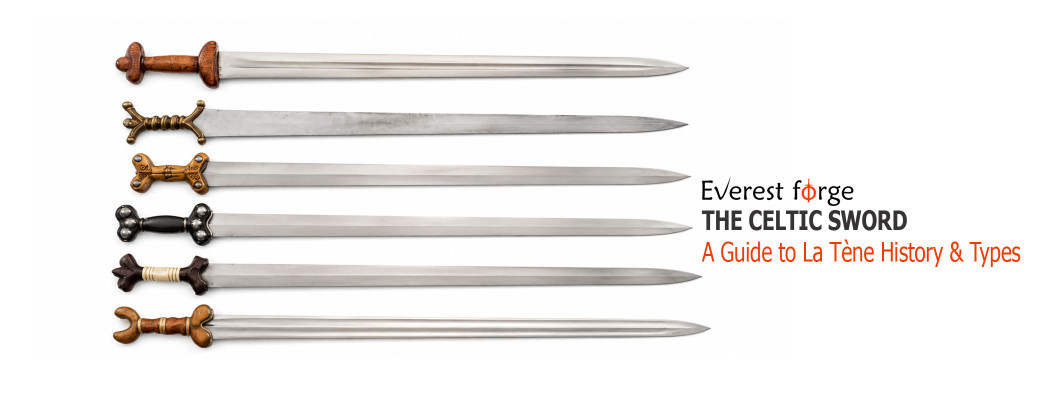
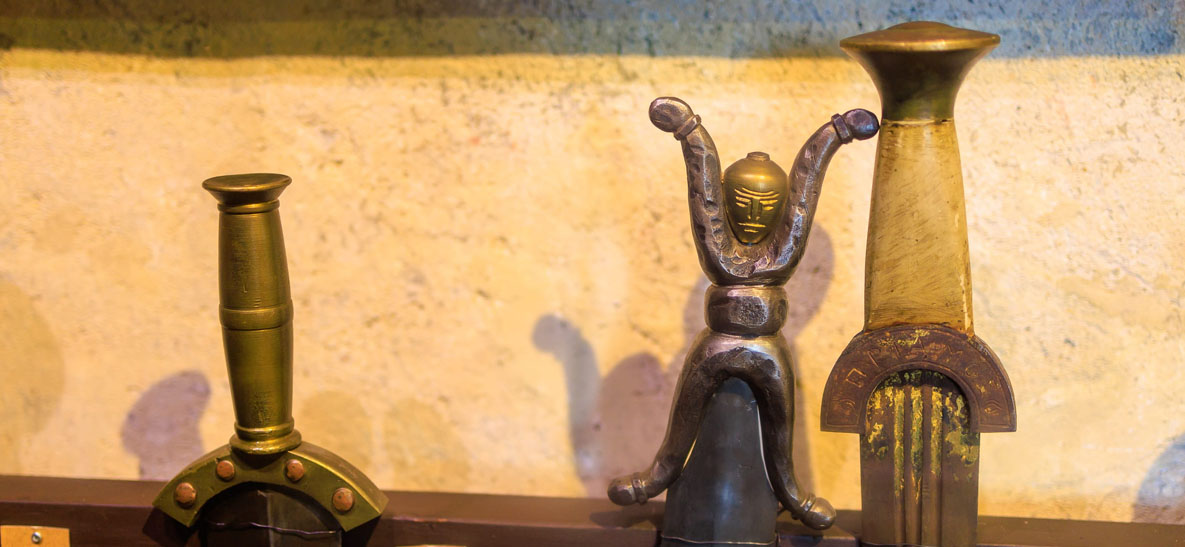
The hilt. This is where Celtic swords show their personality. Grips, guards and pommels were shaped from wood, horn, bone and bronze, and the pommel especially became a canvas: flared fans, crescents, and the famous antennae and anthropomorphic hilts with their forked or human-figure tops. Two swords with near-identical blades could look completely different in the hand.
We forge our blades from reclaimed 5160 high carbon spring steel — recycled truck leaf-spring stock, water-quenched and tempered, full-tang — the same steel and standards we use for our combat-grade Roman gladii and Nepalese kukris. It is a modern steel rather than ancient bloomery iron, which is the honest way to build a sword that is actually meant to be used today.
Everest Forge — Custom Forge Service
Want a Celtic sword built to your own design?
If you have a specific La Tène blade, hilt style, antennae pommel, or museum piece in mind, our smiths can forge it to your exact specification — blade length, profile, fittings, and engraving. Send us your idea and we will quote it.
Request a Custom Forge → Ask a Question →Types of Celtic Swords
There is no single "Celtic sword." The La Tène world produced a family of blades that vary by phase, by region, and above all by hilt. Here are the main types you will meet — and the hand-forged version of each in our La Tène collection.
So when someone searches for a celtic greatsword, a celtic longsword, or simply an iron age sword, what they are usually after is one of these La Tène forms — and the right one for them is mostly a question of which hilt speaks to them.
Celtic vs Bronze Age vs Roman — Clearing Up the Confusion
Three ancient European blades get mixed up constantly. Here is the honest distinction:
The Bronze Age leaf sword came earlier. Its blade swells in the middle into a leaf shape and was cast in bronze, not forged in iron. If you want that look specifically, it is a different weapon — see our Bronze Age swords. A true La Tène Celtic sword is straight, not leaf-shaped.
The Roman gladius was the Celts' great rival on the battlefield. It is a short, broad stabbing sword built for tight formation fighting — the opposite philosophy to the long Celtic slashing blade. You can compare directly with our Roman gladius.
The Celtic La Tène sword sits between them in time and apart from both in design: longer than the gladius, straighter than the leaf blade, and built to cut rather than thrust. That straight double-edge profile is the single most reliable way to recognise a genuine Celtic sword.
The Celtic Warrior and the Sword
To the Gauls and other Celtic peoples, a sword was far more than a weapon. It was an heirloom, a status symbol, and often a sacred object. Warriors were buried with their blades; others were ritually "killed" — bent or broken — and cast into water as offerings. The thousands of weapons pulled from the La Tène site itself were almost certainly such offerings.
On the battlefield, the Celtic warrior fought in a loose, aggressive style suited to the long slashing sword: a powerful opening charge, individual duels, and room to swing. The sword's reach and cutting power were the whole point. When that style met the disciplined Roman shield wall and short gladius, the two opposing sword philosophies — cut versus thrust, reach versus formation — defined some of the ancient world's most famous battles.
Owning a Celtic Sword Today
A hand-forged Celtic sword is one of the most rewarding pieces a collector can own — provided you buy a real one. The market splits into two very different products:
Decorative wall-hangers: stamped or cast stainless steel, hollow or rat-tail tangs, no real edge. They photograph well and fail at everything else.
Hand-forged functional swords: real spring steel, full-tang, water-tempered, sharpened, and customisable. Built to be drawn, handled, displayed with pride, and — if you wish — actually cut with. Every blade in our La Tène collection is the second kind, forged to order in Kathmandu and available in seven blade lengths from 18 to 30 inches, with free engraving.
Whether you want the classic La Tène B form, an antennae hilt, brass fittings, or an all-wood grip, there is a version in the collection — and if there isn't exactly what you picture, we will forge it.
Everest Forge — Hand-Forged in Nepal
Find Your Celtic Sword
Browse the full hand-forged La Tène collection, or commission a bespoke Celtic blade built to your own specification. Worldwide tracked shipping, duties and taxes prepaid.
Browse La Tène Swords → Request a Custom Forge →Frequently Asked Questions
What is a Celtic sword?
A Celtic sword almost always means a La Tène sword — a straight, double-edged iron slashing blade made by the Celtic peoples of Iron Age Europe between roughly 450 and 50 BC. They are recognised by their straight blade, long taper, and organic hilts of wood, horn, bone or bronze.
What is the La Tène culture?
The La Tène culture is the later phase of the European Iron Age, named after a site on Lake Neuchatel in Switzerland where thousands of iron weapons were found. It is the civilisation of the Celts of Gaul, Britain, and Central Europe, and the source of the classic Celtic sword.
Were Celtic swords leaf-shaped?
No. Leaf-shaped blades belong to the earlier Bronze Age. A true La Tène Celtic sword is straight and double-edged, built to cut. The leaf shape is a reliable way to tell a Bronze Age sword apart from a Celtic Iron Age one.
What is the difference between a Celtic sword and a Roman gladius?
The Celtic La Tène sword is long and straight, built for slashing with reach. The Roman gladius is short and broad, built for thrusting in tight formation. They represent two opposing sword philosophies — cut versus thrust — that met on the battlefield.
What is an antennae or anthropomorphic hilt?
These are distinctive Celtic hilt styles where the pommel is shaped into forked "antennae" or a stylised human figure. They are among the most recognisably Celtic features of a La Tène sword, and a popular choice for collectors today.
What steel are your Celtic swords made from?
We forge from reclaimed 5160 high carbon spring steel — recycled truck leaf-spring stock — water-quenched, tempered, and full-tang. It is a modern, tough, functional steel rather than ancient bloomery iron, which is the honest way to build a sword meant to be handled and used today.
Are your Celtic swords functional or decorative?
Functional. They are live, full-tang, sharpened steel, suited to collecting, display, and cutting practice, and built to the same standards as our combat-grade gladii and kukris. A blunt display edge is available at no extra charge if you prefer.
Can you make a custom Celtic sword to my own design?
Yes. Through our Custom Forge service we can build a bespoke Celtic or La Tène blade to your specification — blade length and profile, hilt style, antennae or fan pommel, fittings and engraving. Send us your idea and we will quote it.