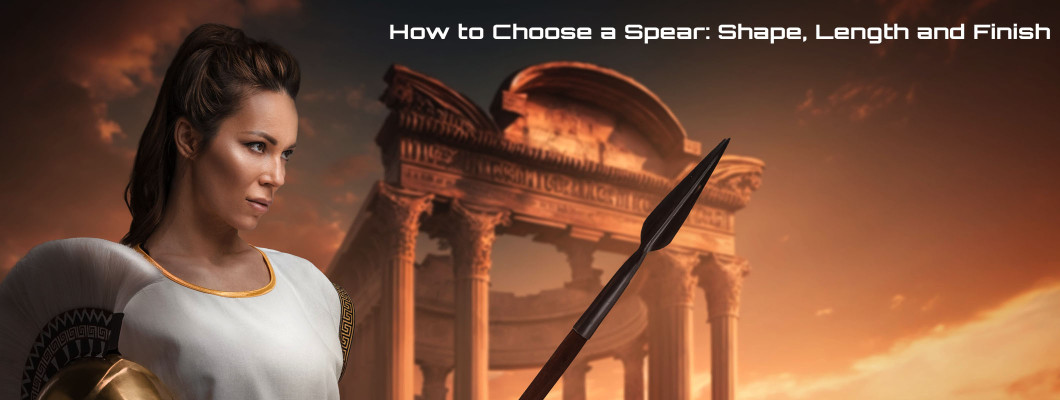
How to Choose a Hand-Forged Spear: Shape, Length and Finish
Almost every spear buying decision comes down to three things: the shape of the blade, how long it is, and how it is finished. Get those right and the rest — handle wood, fittings, scabbard colour — is preference. Get them wrong and you end up with a beautiful object that does not do the job you bought it for. This guide works through each decision in order, explains what changes in the hand when you move between them, and matches the answers to what you actually intend to do with the spear.
Start With What You Will Actually Do
Everything downstream depends on this, so be honest about it rather than aspirational.
Hunting. You want a broad blade that cuts on the way in and on the way out, enough weight behind the point to drive it, and a handle you can hold securely with wet hands. Where legal, this is the most demanding use and the one with the least margin for a wrong choice.
Throwing practice. Different requirements entirely. You want forward balance for stable flight, a blade that will survive repeated hard landings, and a total weight you can throw consistently for an hour without your form falling apart.
Bushcraft and camp work. A compact, tough spear that doubles as a heavy knife. Blade shape matters less than robustness and a handle that works in gloves.
Historical and reenactment. Here the form is the requirement. A Greek spear, a Norse spear and a Roman spear are different objects, and getting the profile right matters more than any performance consideration.
Display and collecting. Presence is the point. Longer blades, more finish work, more visual character — and none of the compromises the working uses impose.
Decision One: Blade Shape
Shape decides what the spear does. Everything else adjusts how well it does it.
Leaf. The broad, symmetrical double-edged blade that swells in the middle and tapers to a point. It is the most-used spear shape in human history for a reason: it penetrates well because of the point, and it cuts on withdrawal because of the edges. If you are unsure what you want, this is the shape to want.
Piercing and pike profiles. Narrow, thick, built around one job. Less cutting, far more penetration, and considerably more rigid at the point. Choose it if you want a thrusting weapon rather than a hunting blade.
Broad war profiles. Wider still than a leaf, with more cutting edge and more mass forward. Impressive in the hand and in a display, heavier to control at length.
Clip point. A knife profile on a spear, giving a fine point with a usable belly behind it. Suits the buyer who wants one object that behaves like a heavy field knife on a handle.
Skeletonized and fantasy profiles. Cut-outs and slots that remove weight and change how the blade looks and balances. Genuinely lighter, and visually striking. A working choice as well as an aesthetic one, though the cut-outs are what you are paying for.
Winged and lugged forms. Projections at the base of the blade. Historically these stopped a charging animal running up the shaft, and on a display piece they read immediately as a hunting or war form. Covered properly in our guide to how spears are hafted.
Decision Two: Blade Length
This is the choice buyers agonise over least and should agonise over most, because it changes the weapon more than anything except shape.
Our spears run from 8 inches of blade as standard up to 16 inches, and moving up that range does four things at once. It adds cutting edge and penetration depth. It adds weight — all of it forward of your hands. It shifts the balance point further from the grip, which makes the spear slower to start and slower to stop. And it adds presence, which matters if the spear is going on a wall.
8 inches is our standard and our bestseller, and that is not an accident. At around 990 grams total it sits in the sweet spot where the spear is quick in the hand, throws predictably, and still has enough blade to be a serious weapon. If you cannot decide, take the 8.
10 to 12 inches adds reach and cutting edge without a punishing weight penalty. This is the range most buyers choose when the spear is genuinely for throwing or hunting rather than general use, and 12 inches is the next most popular length after the standard.
14 to 16 inches is for collectors, reenactors and anyone who wants maximum blade presence. It looks magnificent. It is also noticeably more nose-heavy, and it is a less forgiving thing to throw.
The rule of thumb: longer for looking, shorter for using. If the spear will be handled often, the shorter blade will make you happier than the longer one.
Decision Three: Finish, Handle and Fittings
Now the preferences, which genuinely are preferences — with two exceptions worth knowing.
Polished versus raw forged finish. A bright polished blade shows the geometry and looks finished; a raw, hammer-marked finish shows how it was made and hides handling marks far better. Neither is stronger. Raw finishes are more forgiving over years of use and polished ones photograph better.
Handle material. Rosewood is dense, heavy and beautiful. Leather-wrapped handles give better grip in wet or cold conditions, which is the first exception: if the spear will be used outdoors in weather, take the leather.
Bolsters and fittings. A brass bolster at the base of the blade adds a little weight where it helps and finishes the transition into the handle. Largely aesthetic, and it looks the part on a hunting form.
A striking pommel at the butt is the second exception. It is a functional feature, not decoration — it gives the spear a second working end and it protects the butt from splitting when grounded.
Decorative inlay and etching. Turquoise accents, etched line-work along the blade. Purely visual, and they do not affect performance.
Weight, Balance and What 990 Grams Feels Like
Numbers on a page do not translate well, so here is the practical version.
Around a kilogram is a substantial object. It is roughly the weight of a heavy chef's knife and a large hammer combined, concentrated in something you hold in one or two hands. It has real authority in a thrust and it is not tiring to hold.
Where that mass sits matters as much as how much of it there is. Weight forward of your hands gives penetration and throwing stability but makes the spear slower to redirect. Weight back toward the grip gives control and speed but takes power out of the thrust. Historical spears solved this with a butt spike acting as a counterweight, which is exactly why the Greek sauroter existed.
For a short spear used in one hand, balance closer to the grip is generally what you want. For throwing, forward balance is not optional.
Matching Use to Specification
| Use | Blade shape | Length | Priorities |
|---|---|---|---|
| Hunting | Broad leaf or clip point | 10–12" | Cutting both ways, secure wet grip |
| Throwing practice | Leaf, moderate width | 8–12" | Forward balance, durability on landing |
| Bushcraft and camp | Clip point or leaf | 8–10" | Toughness, compactness, gloved grip |
| Historical and reenactment | Period-correct form | Per the form | Accuracy of profile over everything |
| Display and collecting | Whatever you like most | 14–16" | Presence, finish, character |
| General, undecided | Leaf | 8" | Balance across all uses |
The Scabbard
Easy to overlook and worth thinking about. A hand-stitched leather sheath protects the edge, protects you, and makes a spear far easier to transport lawfully — a cased blade in transit reads very differently from a bare one.
One caution from our display guide: leather holds moisture against steel and its tanning chemicals are acidic. A scabbard is for carrying, not for long-term storage. Display the blade out of it.
What Not to Choose On
- Do not choose on blade length alone. It is the most visible number and the one most likely to lead you wrong. Longer is not better; it is different.
- Do not choose a working spear on looks. Buy the shape that does the job, then pick the finish you like within that shape.
- Do not assume heavier means stronger. All our spears are the same 5160 spring steel, full tang, whatever the blade size. A 16-inch blade is not a stronger construction than an 8-inch one — it is a longer lever on the same joint.
- Do not buy a full-length spear expecting to make one. Our spears are complete short spears with the tang running through the handle; they cannot be re-hafted onto a shaft. If you want full length, commission it.
When to Go Custom
Commission rather than choose from the range when you need something the catalogue cannot give you: a full-length spear on a shaft, a specific historical form we do not currently make, a particular blade length or weight, langets, a butt spike, or a scabbard to your own specification.
Before asking, decide the overall length, the blade pattern and length, what it is for, and whether you want a shaft supplied or a head built to fit one you already have. Then send it through custom forge and we will confirm every dimension in writing before forging.
Nineteen Spears, or One Built for You
Hunting, throwing, tactical, historical and fantasy spears — all forged from 5160 spring steel, full tang, with blade lengths from 8 to 16 inches and a hand-stitched leather sheath. Or commission something the range does not cover.
Browse Hand-Forged Spears →Frequently Asked Questions
What blade length should I choose for a spear?
Eight inches suits most buyers and is our bestseller, sitting in the balance point where the spear is quick in the hand, throws predictably and still has serious blade. Ten to twelve inches adds reach and cutting edge without a heavy weight penalty, and suits genuine hunting or throwing use. Fourteen to sixteen inches is for collectors and reenactors wanting maximum presence, at the cost of being noticeably nose-heavy.
What is the best spear blade shape?
The leaf shape, for most purposes. It is the most-used spear profile in human history because it penetrates well thanks to the point and cuts on withdrawal thanks to the symmetrical double edge. Narrow piercing profiles trade cutting for penetration and rigidity; broad war profiles add cutting edge and forward mass; clip points behave more like a heavy field knife on a handle.
What is the difference between a hunting spear and a throwing spear?
Balance and blade width, mainly. A hunting spear wants a broad blade that cuts on entry and withdrawal, with enough mass to drive the point, and a grip that stays secure when wet. A throwing spear wants forward balance for stable flight, a blade that survives repeated hard landings, and a total weight you can throw consistently. Our separate guide on thrusting versus throwing designs covers the distinction in depth.
How heavy is a hand-forged spear?
Our standard 8-inch spear is around 990 grams in total, which is a substantial object — roughly a heavy chef's knife and a large hammer combined, in something you hold in one or two hands. Longer blades add weight, and all of it sits forward of your hands, which shifts the balance point away from the grip and makes the spear slower to start and stop.
Should I choose a leather-wrapped or wooden handle?
Take leather if the spear will be used outdoors in wet or cold conditions, since it grips far better than bare wood when your hands are wet or gloved. Rosewood is denser, heavier and more beautiful, and suits a spear that will mostly be handled indoors or displayed. For a working field spear the grip is not an aesthetic decision.
Does a longer blade make a stronger spear?
No. Every spear we make uses the same 5160 spring steel and the same full tang construction regardless of blade size, so a 16-inch blade is not a stronger build than an 8-inch one. If anything it places a longer lever on the same joint. Choose blade length for reach, cutting edge and presence, not for strength.
Can I get a spear on a full-length shaft?
Not from the standard range. Our spears are complete short spears with the tang running through a fitted handle, so there is no socket or joint to mount on a shaft, and cutting one down to re-haft it would ruin a good blade. Full-length spears are built to commission through custom forge, where we can make them socketed or tanged, with langets and a butt fitting if you want them.
What is a striking pommel on a spear for?
It is functional rather than decorative. A metal pommel at the butt gives the spear a second working end and protects the shaft end from splitting when the spear is grounded, which happens constantly in use and in storage. Historically the same role was filled by a ferrule, or on Greek spears by a sauroter, which additionally counterweighted the head.