Why the Spear Beat the Sword — in Almost Every Real War
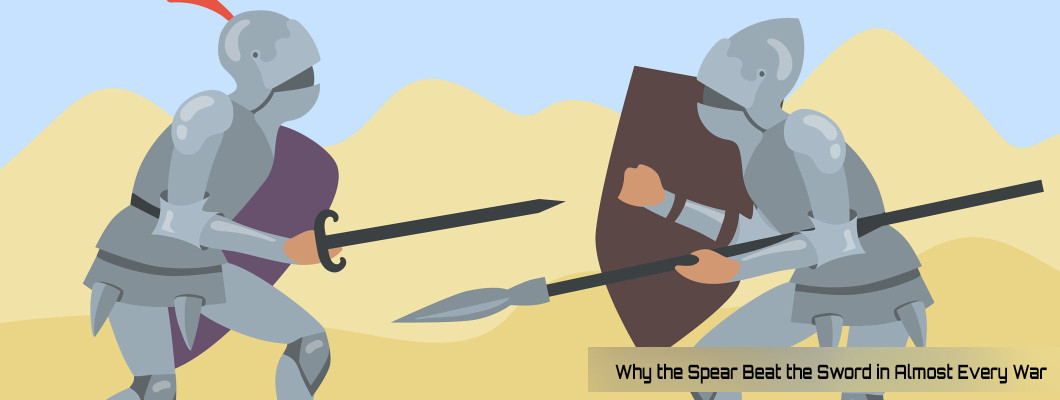
For most of human history, men fought with spears and wore swords. Dig a Viking cemetery and you find spearheads by the dozen and swords by the handful. Read a Greek account of a battle and the fighting is done with the dory; the xiphos comes out when things have gone wrong. Look at any medieval muster roll and the pole weapons vastly outnumber the blades. The spear won on reach, on cost, on training time and on formation — four arguments it wins decisively. And yet it is the sword that gets the name, the legend and the place above the fireplace. This is why both of those things are true.
What the Evidence Actually Shows
The clearest signal comes from graves, because people were buried with what they owned.
Across Viking-age Scandinavia, spearheads appear in furnished warrior burials far more often than swords do. The same holds in Anglo-Saxon England — the spear is so ubiquitous that it becomes a marker of free status in itself, and it embeds in the language, where a great many personal names are built on the word for spear.
Greek warfare makes the point differently. The hoplite is defined by shield and spear; the dory is the weapon of the phalanx, and the xiphos on his hip is what he reaches for when the spear is gone. Alexander's Macedonians pushed the logic further with the sarissa, a pike so long it made the sword nearly irrelevant in formation.
Medieval European battlefields were dominated by pole weapons through to the age of gunpowder — pikes, bills, halberds, and the plain spear that never went away. The sword is present throughout, and it is present as a sidearm.
Rome is the interesting exception, and worth naming rather than glossing over: the legionary threw his pilum and then closed with the gladius as his primary melee weapon. It is the one major military system built around the sword, and it worked because Roman tactics, drill and shield use were built around it too.
Reach
The simplest argument and nearly the whole of it.
A spear lets you strike a man who cannot strike you. Two metres of reach against one is not a small advantage; it is the difference between fighting and being fought. Every fencing system ever devised spends much of its effort on the problem of closing distance against a longer weapon, and every one of them describes it as difficult and dangerous.
Reach also protects the least defended thing you have, which is you. A swordsman's hands are at the front of his attack. A spearman's hands are behind two metres of shaft.
Cost
A spearhead is a small piece of steel. A sword blade is a long one, and it needs several times the material, several times the forging time, and heat treatment across an entire metre of steel — where a warped or cracked blade is a total loss rather than a minor one.
In periods where steel was expensive and smiths were few, that difference decided who carried what. A community could arm every man with a spear. It could arm perhaps one man with a sword.
The economics have not changed as much as you might think. A hand-forged spear takes meaningfully less steel and less time at the anvil than a hand-forged sword, and the price difference still reflects it. What has changed is that nobody's survival now depends on the choice.
Training Time
A spear can be made useful in days. Keep the point toward the enemy, thrust, recover, stay in line. The basic action is one most people already understand, and it is close to what a body does naturally with a long object in its hands.
A sword is a years-long study. The blade cuts on a plane, so edge alignment matters; the guard positions are not obvious; the distance is short enough that mistakes are immediately punished. Every historical fencing manual we have exists because swordsmanship needed teaching in a way that spear use largely did not.
For anyone raising an army from farmers in a season, that difference alone settles the question.
Formation
Put a hundred swordsmen shoulder to shoulder and they get in each other's way — a sword needs lateral space to swing, and the man beside you is standing in it.
Put a hundred spearmen shoulder to shoulder and they become something new. Spears thrust forward along a single axis, so a formation can be tight, and a tight formation with overlapping shields and a hedge of points is one of the most effective military structures ever devised. The phalanx, the shield wall and the pike block are all the same insight.
This is the argument that most decisively ends the debate. The spear is not just better in the hands of one man; it is collectively better in a way the sword can never be.
Versatility
A spear hunts. Boar, deer and large game were taken with spears across the world for millennia, and the same weapon that fed a household could defend it. A sword hunts nothing.
A spear can be thrown, if it is built for it. A spear doubles as a staff on the road. In much of the world it was simply a tool that happened to be a weapon, which is a large part of why it was everywhere.
So Why Does the Sword Get the Glory?
Here is the part that makes this interesting, because the sword's prestige is not a mistake or a myth. It follows directly from everything above.
The sword was expensive, and that was the point. A weapon that costs ten times what a spear costs and does a narrower job is a statement about the man carrying it. It says he can afford it, that someone armed him, that he belongs to a class that fights as a profession. Prestige attaches to scarcity, and the sword was scarce precisely because the spear was better value.
You can wear a sword. This matters more than it sounds. A sword goes on a belt, indoors, at court, at a feast, on a journey, and stays with you all day without occupying your hands. A spear has to be carried, and it has to be put down. So the sword became the weapon people were seen with, and being seen with it is how a weapon becomes a symbol.
The law and the culture followed. Across many societies, the right to wear a sword was formally tied to rank. Knighthood was conferred with one. It appears on effigies, seals and coats of arms because it signified status, not because it was what the man on the effigy actually killed people with.
Stories name swords. Excalibur, Durendal, Joyeuse, Gram. Almost no named spears survive in European legend — though Odin's Gungnir is a real exception and a telling one, since it belongs to a god rather than a hero. Literature names what is rare and personal, not what is issued in bulk.
The sword, in other words, is celebrated for exactly the reasons it lost the battlefield argument. It was rare, expensive, personal and portable. Those things make a poor mass-issue weapon and a magnificent heirloom.
Where the Sword Genuinely Won
The spear does not win everywhere, and pretending otherwise would be as one-sided as the usual story.
- Confined space. Indoors, in a corridor, in a stairwell, below decks — a long shaft is a liability. Boarding actions at sea are why the cutlass existed.
- When the spear is gone. Shafts break and spears get dropped, and a man with a sidearm keeps fighting. This is the sword's actual battlefield job and it is not a small one.
- Roman tactics. An entire military system built around the short sword, and it conquered the Mediterranean.
- Civilian carry and duelling. Nobody walked to town with a pike. The rapier and the smallsword exist because a weapon you carry through daily life has to be portable, and that is a competition the spear cannot enter.
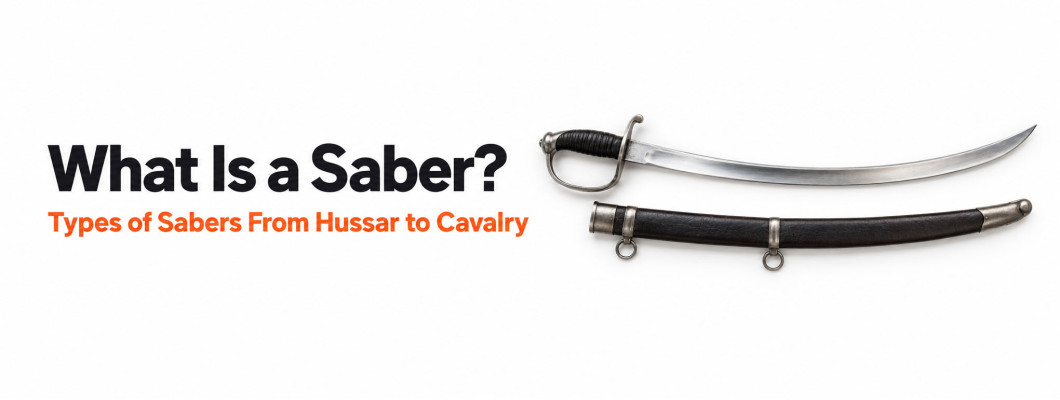
- Cavalry, later on. The lance had its own logic, but the sabre outlived it, because a mounted man in a melee needs something he can use in every direction.
The Comparison
| Spear | Sword | |
|---|---|---|
| Reach | Decisive advantage | Must close to fight |
| Cost to make | Low — a small head | High — a long blade |
| Training time | Days to be useful | Years to be good |
| In formation | Better together | Needs space to swing |
| Confined space | A liability | Clear advantage |
| Carried daily | Impractical | Worn on a belt |
| Other uses | Hunting, throwing, staff | Almost none |
| Battlefield role | Primary weapon | Sidearm and status |
What This Means If You Are Buying One
Not much, honestly — and that is worth saying, since most people reading this are collectors rather than combatants.
But it does reframe things. A hand-forged spear is not the poor relation of a sword. It is the weapon that actually decided most of history, and a good one is a serious object with a serious pedigree. It is also, for the same reasons it always was, the more affordable way into owning something genuinely hand-forged.
And a sword is not diminished by any of this. It was always the rarer thing, always the personal thing, always the one that got a name. That is exactly why people still want one on the wall a thousand years later, and it is a better reason than "it was the best weapon" would have been.
If you want both, the historically honest pairing is a spear and a sidearm — which is what a Viking, a hoplite and a medieval man-at-arms all actually carried.
Spear, Sword, or the Pair They Actually Carried
We forge both in Kathmandu from 5160 spring steel — hunting and war spears, historical and fantasy swords, and custom commissions built to your specification. Tell us what you want and we will confirm every dimension before a hammer touches steel.
Request a Custom Build →Frequently Asked Questions
Was the spear better than the sword?
As a battlefield weapon, yes, on four counts: reach, cost, training time and use in formation. A spear lets you strike someone who cannot reach you, uses a fraction of the steel, can be taught in days rather than years, and works better shoulder to shoulder rather than worse. The sword's advantages were portability, use in confined space, and its role as a sidearm when the spear was gone.
If spears were better, why is the sword so famous?
Because the sword was expensive, portable and personal, and those are the qualities that create prestige rather than battlefield dominance. A weapon costing ten times a spear's price said something about the man carrying it. It could be worn on a belt all day, so it was the weapon people were seen with. The right to wear one was often tied formally to rank, and stories name what is rare and personal rather than what is issued in bulk.
Did Vikings use spears more than swords?
Yes, considerably. Spearheads appear in furnished Viking-age warrior burials far more often than swords do, and the pattern is similar across Anglo-Saxon England, where the spear was so universal it became a marker of free status and embedded itself in personal names. The Viking sword was a high-status object owned by a minority, and the spear was what most men actually fought with.
Why did Roman legionaries use short swords instead of spears?
Rome is the significant exception. The legionary threw his pilum to disrupt the enemy formation and shield wall, then closed with the gladius as his primary melee weapon. It worked because the whole system supported it — drill, the large shield, and tactics built around fighting at close quarters in disciplined units. It is the one major military system organised around the sword rather than the spear.
Is a spear easier to learn than a sword?
Considerably. The basic spear action — point toward the enemy, thrust, recover — is close to what a body does naturally with a long object, and a soldier can be made useful in days. A sword requires edge alignment, guard positions that are not obvious, and fighting at a distance where mistakes are punished immediately. The existence of a large historical literature of fencing manuals reflects a skill that needed teaching in a way spear use largely did not.
Why are spears better in formation?
Because a spear thrusts forward along one axis while a sword needs lateral space to swing, and in a tight line that space is occupied by the man next to you. Spearmen can therefore stand shoulder to shoulder and present an unbroken hedge of points behind overlapping shields. The phalanx, the shield wall and the pike block are all versions of the same insight, and it is the argument the sword cannot answer.
When was a sword actually the better choice?
In confined space, where a long shaft is a liability — indoors, in corridors, and in boarding actions at sea, which is why the cutlass existed. As a sidearm when the spear had broken or been dropped. In the Roman tactical system. And for civilian carry and duelling, where portability is the whole requirement and the spear cannot compete at all.
Are there any famous named spears?
Very few in European legend, compared with dozens of named swords. Gungnir, the spear of Odin, is the notable exception, and it is a telling one — it belongs to a god rather than to a mortal hero. Legends name what is rare, expensive and personal, and spears were none of those things. That absence is itself evidence for how common the weapon was.