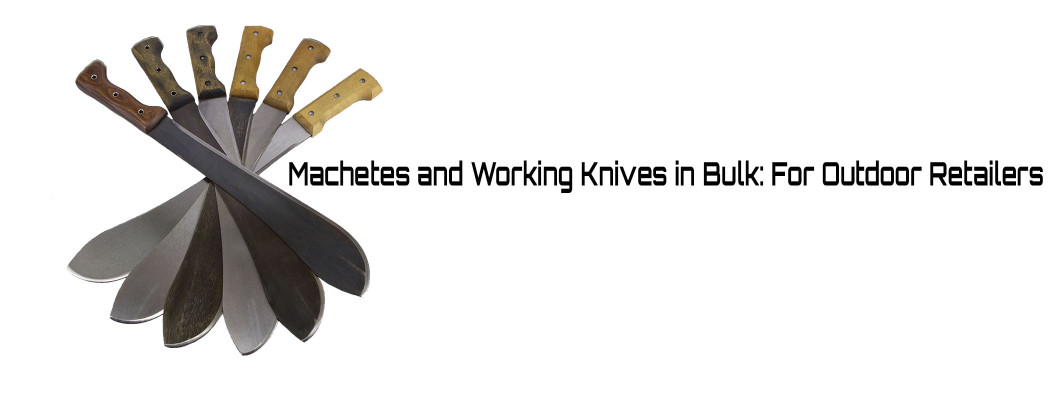
Machetes and Working Knives in Bulk: A Guide for Outdoor Retailers
Outdoor is the one blade category where your customer finds out. A decorative sword can hang on a wall for a decade without anyone discovering it is soft steel on a rat-tail tang. A machete gets swung at a hardwood sapling in the first week. Whatever you stocked, you will hear about it.
That single fact should drive every decision a bushcraft, camping, hunting or agricultural retailer makes about wholesale machetes and working knives. This guide covers what actually fails in the field and why, the hardness question nobody in bulk supply publishes, which working blades sell in which kind of outdoor shop, and what to specify before your first bulk order.
Why Outdoor Retail Is Different From Every Other Blade Category
Most blade categories are forgiving of a bad supplier. Outdoor is not, and the reason is use.
A collector inspects a sword and puts it on a stand. A cosplayer carries a piece for a weekend. But a machete buyer takes it into vegetation within days, and a bushcraft knife gets batoned through wood by someone who watched a video about it last night. Every weakness in the steel, the heat treatment or the tang surfaces almost immediately.
Commercially that cuts both ways. A working blade that fails generates a return, a public review and a customer who does not come back. A working blade that performs generates the most valuable thing in outdoor retail, which is a recommendation from someone who used it hard. This is a category where stocking well compounds.
It also means the specification matters more than the photograph. Outdoor buyers ask about steel, hardness and tang, and they know what the answers should be. A supplier who cannot give you those numbers is one you will be answering for.
The Hardness Question Nobody in Bulk Supply Answers
This is the most useful technical section in this guide, and it is worth understanding before you compare any two wholesale machete quotes.
A machete cannot be uniformly hard. Hard steel holds an edge and chips under impact. Soft steel absorbs impact and takes a permanent bend. A blade that is hard all the way through will chip on a knot; a blade that is soft all the way through will fold. Neither customer comes back.
The answer is differential hardness — hard where it cuts, progressively softer toward the spine. Our machetes are heat treated to a measured gradient.
| Part of the blade | Hardness | What it does |
|---|---|---|
| Edge | 58 to 60 HRC | Holds a working edge through hardwood and vegetation |
| Belly | 45 to 46 HRC | Transition zone; resists chipping behind the edge |
| Spine | 22 to 25 HRC | Soft and tough. Absorbs shock and flexes rather than cracking |
Ask any wholesale machete supplier for these three numbers. Most cannot supply them, because volume-produced machetes are typically uniform through the blade at a middling hardness — hard enough to hold an edge briefly, soft enough not to chip immediately, and optimal for neither. That is a legitimate product at a price, but it is not the same product, and your customers who use their blades will know within a season.
Steel: Why Leaf Spring Rather Than a Harder Alloy
Every blade we make is 5160 high-carbon spring steel reclaimed from vehicle leaf springs, and the choice is deliberate rather than economical.
5160 exists because industry needed a material that flexes under load, repeatedly, without fatiguing and breaking. That is exactly what a working blade does — a machete stores and releases energy on every swing and takes impact at unpredictable angles. Toughness and fatigue resistance are the properties that matter; edge retention is a distant third.
The honest limitation: 5160 will not hold a razor edge as long as a hard powder steel, and for a kitchen slicer that would matter. For a blade that gets hit, buried in a stump and sharpened in the field with whatever is available, it is the right trade. Our guide to why 5160 suits working blades covers the metallurgy.
For an outdoor retailer that is a straightforward selling point: a blade your customer can sharpen on a stone at camp, that survives the abuse they will give it, and that can be re-handled and re-ground for decades rather than replaced.
Which Working Blades Sell in Which Outdoor Shop
Outdoor is not one market either. A bushcraft specialist and an agricultural supplier want almost opposite things from the same category.
| Blade | Sells well in | Notes for a buyer |
|---|---|---|
| Parang and jungle machetes | Bushcraft, survival, tropical and subtropical markets | Weight-forward balance concentrates force at the tip. The best-selling working pattern we make |
| Compact machetes to 15 in | Camping, hiking, general outdoor | The length people actually carry. Easier first purchase than a full-size chopper |
| Big machetes 16 to 20 in | Land clearing, agricultural, smallholding | Volume-led and price-sensitive. Buyers replace rather than treasure |
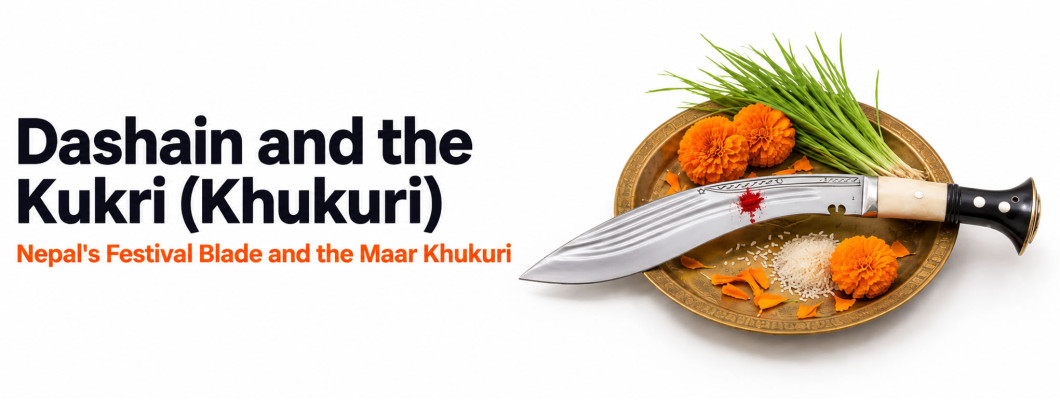
| Kukris and khukuris | Bushcraft, militaria, outdoor crossover | Forward cant out-chops a longer machete. See our wholesale khukuri guide |
| Bushcraft knives, 4 to 6 in | Bushcraft and survival specialists | The most knowledgeable buyers on this list. Expect grind and steel questions |
| Hunting and skinning knives | Hunting, game and country stores | Seasonal. Order ahead of your season, not into it |
| Camp cleavers and choppers | Camping, overlanding, campsite cooking | Growing segment. Photographs well for online listings |
| Axes and hatchets | Bushcraft, camping, smallholding | Natural companion sale to any machete or kukri |
Starting an outdoor blade line is usually best done with a compact machete, one parang, one bushcraft knife and one kukri. That spans the practical and the enthusiast ends of your customer base and shows you within a season which way they pull.
Length: The Mistake Almost Every Buyer Makes
Longer machetes photograph better and sell worse, and it is worth knowing why before you fill a purchase order with them.
A long thin machete works in soft growth — grass, cane, light vine — where it is sweeping rather than chopping. In dense or woody vegetation it catches on exactly the material you are trying to cut, and it tires the arm. A shorter, heavier blade does more work with less effort in almost every temperate and mixed environment.
There is also a forging point that matters here. A hand-forged machete is thicker in section than a stamped one, so it should generally be one length band shorter than the thin factory machete a customer is used to. Sixteen inches of forged leaf spring does the work of a longer stamped blade. Our machete size guide works through it by vegetation type, and is worth pointing your own customers at.
Sheaths, Sharpness and the Details That Drive Returns
Three specification points that cause more trade complaints than steel ever does.
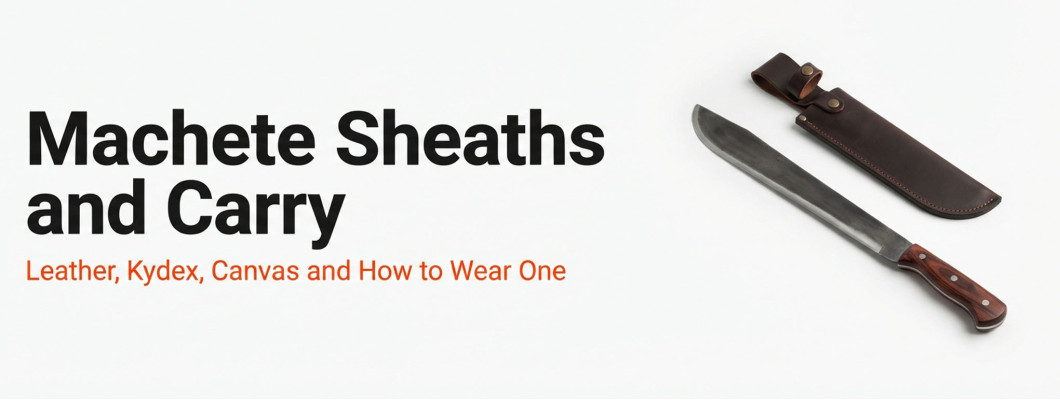
The sheath. Outdoor blades are carried, and a sheath that does not retain the blade or wears through in a season is the commonest complaint in this category. Ask what the sheath is made of and how it is constructed before you order. Ours are cottonwood core wrapped in leather, which is the traditional Nepali construction and holds up.
Sharp out of the box. Working blades should arrive ready to use, and an outdoor customer receiving a blunt machete assumes the product is cheap. We sharpen as standard. If you need blunt for a market with import restrictions, say so at the point of order.
Handle security. Full tang with rivets, not a partial tang in a glued handle. This is where a working blade fails under load, and it is the thing a knowledgeable outdoor buyer checks first.
Your Own Brand on a Working Blade
Engraving is free on every blade and you can supply your own logo, which for an outdoor retailer is more useful than it sounds.
Working blades get carried, lent and handed down. A machete with your shop's name on the blade is still advertising you in ten years, in the hands of someone who was not the original buyer. It also puts you outside price comparison, because a customer cannot find your marked blade cheaper on another site.
There is no private-label tooling, minimum run or setup charge for this. If you want to go further than a mark, own patterns are quoted through custom forge and the specification is held so repeat batches match.
Wholesale Lead Times, Minimum Orders and Seasonality
We hold no stock. Every blade is forged after the order is placed, and for outdoor retail that has one specific consequence worth planning around.
Outdoor is seasonal, and made-to-order does not absorb a rush. Hunting, camping and clearing all have seasons, and a supplier forging to order cannot compress a lead time the way a warehouse can. The answer is simple but it has to be deliberate: order ahead of your season rather than into it, and tell us the date you need stock landed rather than the date you want to place the order.
What you get in exchange is no warehoused inventory, no dead capital in a pattern that did not suit your climate or your customers, and the ability to test a blade at low volume before committing. For a shop adding a blade line to an existing outdoor range, that is a far smaller risk than buying a pallet.
There is no single minimum across the range — it depends on the patterns and the model. Tell us rough volume, whether it repeats, and your season, and we will quote it.
What to Agree Before a Bulk Machete Order
Whoever you buy from, get these in writing. Our guide to buying blades in bulk from Nepal sets out the full list; these are the ones that matter most for working blades.
Hardness, as three numbers. Edge, belly and spine. A supplier who quotes one figure for the whole blade is telling you it is uniformly heat treated.
Steel and tang. Which alloy, and full tang or partial. For a chopping blade this is not a detail.
Sheath construction. Material and how it is made, not just that one is included.
Edge condition on arrival. Sharpened or blunt, decided per market.
Tolerance. Hand-forged blades vary. Ask by how much, in writing.
Lead time against your season. Not a general figure — the date stock will land.
Incoterms, payment and claims. Most Nepali quotes are FOB Kathmandu, which excludes freight, insurance, handling and clearance. A quote without the Incoterm stated is not comparable to one that has it.
Wholesale Machetes and Working Knives, Forged to Order
Tell us your company and country, which patterns interest you, rough volume, your market and your season. We will come back with a quote and an honest answer about whether we suit you. Free logo engraving on every blade, sharpened as standard.
Frequently Asked Questions
Can I buy machetes wholesale direct from the manufacturer?
Yes. Everest Forge supplies outdoor retailers, distributors and dropshippers on trade terms directly from our workshop in Kathmandu. Buying direct removes the trading house and importer margins, but customs, shipping and lead times become yours rather than a distributor's. For a seasonal category like outdoor, the lead time is the part to plan around.
What hardness should a machete be?
Not one number. A machete cannot be uniformly hard — hard steel holds an edge and chips under impact, soft steel absorbs impact and bends. The answer is a gradient: our blades run 58 to 60 HRC at the edge, 45 to 46 through the belly, and 22 to 25 at the spine, so the edge cuts and the spine flexes rather than cracking. Ask any supplier for all three numbers.
Why is 5160 leaf spring steel used for working blades?
Because it is spring steel, designed to flex under load repeatedly without fatiguing. A machete stores and releases energy on every swing and takes impact at unpredictable angles, so toughness and fatigue resistance matter far more than maximum hardness. The trade-off is honest: 5160 will not hold a razor edge as long as a hard powder steel, but it survives what would chip one and it sharpens in the field on a simple stone.
What length machete should a retailer stock?
Shorter than instinct suggests. Long thin machetes work in soft growth where they sweep rather than chop, but in dense or woody vegetation they catch and tire the arm. A hand-forged machete is also thicker in section than a stamped one, so it should generally be a band shorter than the factory machete a customer is used to — sixteen inches of forged leaf spring does the work of a longer stamped blade.
Which working blades sell best in outdoor shops?
It depends on the shop. Bushcraft and survival specialists move parangs, kukris and 4 to 6 inch bushcraft knives, and those buyers ask detailed questions about grind and steel. Camping and general outdoor stores do better with compact machetes under 15 inches and camp cleavers. Agricultural and land-clearing buyers want big machetes and are price-led. Hunting knives are seasonal and must be ordered ahead of the season.
Do wholesale machetes arrive sharpened?
Ours do, as standard. Working blades should arrive ready to use, and an outdoor customer who receives a blunt machete assumes the product is cheap. If your market has import restrictions that make a blunt edge easier, say so at the point of order and we will grind them that way instead — it costs no more either way.
Can I get my shop's logo on wholesale machetes?
Yes, and engraving is free with no tooling, minimum run or setup charge. For working blades this is worth more than it looks: machetes get carried, lent and handed down, so a blade with your name on it is still advertising you in ten years in the hands of someone who was not the original buyer. It also puts the product outside price comparison.
How do I plan bulk orders around a season?
Order ahead of it rather than into it. A supplier forging to order cannot compress a lead time the way a warehouse can, so a rush at the start of hunting or clearing season cannot be absorbed. Tell us the date you need stock landed rather than the date you want to order, and we will work backwards from it.
What is the minimum order for wholesale working blades?
There is no single figure across the range, because it depends on the patterns and the model. Dropshipping has no minimum in the usual sense, since blades are forged individually. Wholesale orders are quoted on volume, and a repeating seasonal order is often more useful to a forge than one large one-off. Tell us what you are planning and we will tell you whether it works.