What Is a Kothimora Khukuri (Kukri)?
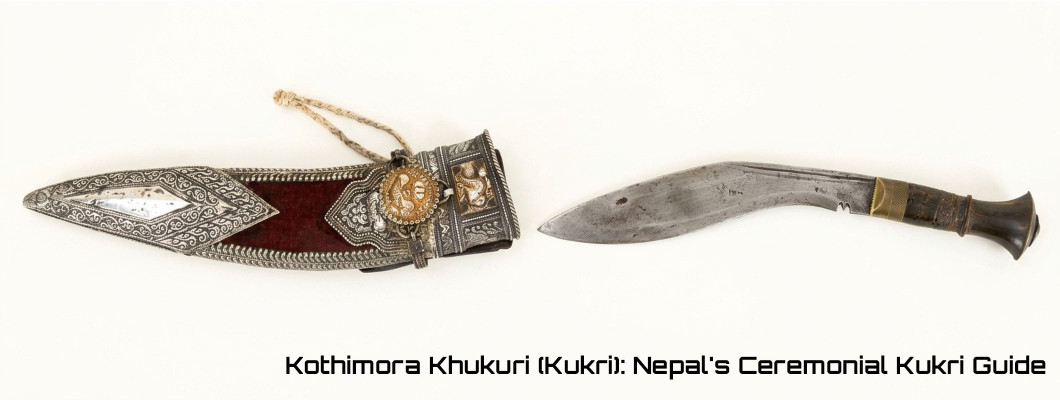
A kothimora is the ceremonial form of the Nepali khukuri (kukri): a hand-forged khukuri whose scabbard is covered in velvet and mounted with decorated silver or white-metal plates at the throat, along the body and at the tip. It is the highest-status khukuri in Nepali tradition. Rather than being carried for work, a kothimora is presented — at military retirements and commissions, promotions, weddings and other formal honours — and kept as a mark of respect, rank and family pride. Gurkha soldiers and veterans are among those most often honoured with one.
Quick Answer: The Kothimora at a Glance
- What it is: the ceremonial, presentation form of the khukuri (kukri).
- How to recognise one: a velvet-covered scabbard with decorated silver or white-metal mounts, often with a centre badge.
- What it is for: honouring retirements, commissions, promotions, weddings and other milestones, and passing down as an heirloom.
- The blade: a real hand-forged khukuri blade, usually polished and often engraved, sized for presentation.
- How it differs: a service or village khukuri is built to be used; a kothimora is built to be given and displayed.
- Care: dry silver cloth on the mounts, a soft brush on the velvet, a light coat of oil on the blade.
Key Terms
- Kothimora
- The ceremonial khukuri with a decorated, metal-mounted scabbard. In Nepali, kothi means the chape and mora means cover, so the name describes the metal-covered scabbard.
- Dap
- The khukuri scabbard. On a kothimora it has a wooden core covered in velvet.
- Throat mount
- The decorated metal plate at the mouth of the scabbard.
- Chape (kothi)
- The decorated metal cap protecting the tip of the scabbard. Kothi is the Nepali word for it.
- Repoussé
- Metalwork in which a design is hammered up from the back of a thin sheet; a traditional way of decorating kothimora mounts.
- Karda and chakmak
- The small utility knife and honing steel carried on the back of a traditional khukuri scabbard.
What Does a Kothimora Look Like?
A kothimora is recognised by its scabbard: velvet over a wooden core, with decorated metal mounts at the throat, the tip and often the centre. The name says as much — in Nepali, kothi is the chape at the tip of the scabbard and mora means cover. The khukuri shape inside is the same forward-curved blade with its cho notch, but everything around it is finished for ceremony.
- The scabbard. A shaped wooden core, the same construction as a working dap, but covered in velvet — deep red is the classic colour, with black and other colours also used.
- The mounts. Metal plates at the throat and the chape, often with a pierced or embossed panel along the body. Designs are raised from the back of the metal and finished by hand.
- The badge. Many kothimoras carry a centre badge: crossed kukris, a regimental emblem, a national emblem, or a motif chosen for the occasion.
- The handle. Usually horn or fine hardwood, with metal fittings that match the scabbard.
- The blade. A hand-forged khukuri blade, typically polished to a bright finish, and often engraved.
- The companions. Many traditional kothimoras carry a karda and chakmak with matching fittings.
Where Does the Kothimora Tradition Come From?
The kothimora grew out of the khukuri's place as Nepal's national blade: the more important the occasion or the person, the more finely the scabbard was dressed. For centuries the khukuri has been a working tool, a weapon and a symbol at once. Decorating its scabbard in silver turned it into something that could be offered to honour a person, much as a presentation sword is in Europe.
Nepal has a long tradition of fine metalwork, and the embossed and pierced mounts of a kothimora draw on it. The origin of the kukri explains how the blade itself developed, and The Kukri/Khukuri in Military and Paramilitary Badges shows how the crossed-khukuri symbol became an emblem of service.
When Is a Kothimora Given?
A kothimora marks a milestone: it is given to honour a person, a service or a new beginning. The most common occasions are:
- Military retirements, when a soldier's service is recognised by the regiment or by family.
- Commissions and promotions, marking a new rank or responsibility.
- Weddings, where the khukuri is part of the ceremony in several Nepali communities.
- Dashain and family occasions, where the khukuri holds a respected place.
- Honours and thanks to guests, partners, dignitaries and long-serving colleagues.
- Heirlooms, handed down so the next generation keeps the family's story.
How Is a Kothimora Different From Other Khukuris?
The kothimora uses the same blade shape as other khukuris, but it is finished to be presented, not carried and used.
| Kothimora | Service kukri | Village khukuri | |
|---|---|---|---|
| Purpose | Presentation, display, heirloom | Military issue and field use | Farm, forest and household work |
| Scabbard | Velvet over wood, decorated metal mounts | Plain leather over wood | Plain leather over wood |
| Blade finish | Polished, often engraved | Plain, working finish | Plain or satin working finish |
| Handle | Horn or fine wood, metal fittings | Wood or horn, plain fittings | Wood or horn |
| Size | Usually compact for display | Service length | Varies by job and region |
| Carried for work? | No | Yes | Yes |
For the working patterns, see The Official Issue Kukri and our complete kukri and khukuri guide.
Is a Kothimora a Real, Usable Blade?
Yes — the blade is hand-forged like any other khukuri, but using it for work would spoil the finish and the scabbard. The polished blade scratches easily, and chopping puts strain on the handle fittings and the metal mounts. Treat a kothimora as a functional blade that is kept for ceremony. If you want a khukuri to carry and use, choose a working pattern, and let the kothimora stay on display.
How Do You Choose a Kothimora?
Choose by the occasion first, then the size, the mounts, the badge and the engraving.
- The occasion. A regimental retirement suits a service-style badge; a wedding or family gift suits a traditional motif.
- The size. Compact blades suit a desk or display case; longer blades make a stronger statement on a wall or stand.
- The metal. Mounts come in silver or white metal, sometimes with gold-plated badges. Check the product description, and ask us if it is not stated.
- The badge and motif. Crossed kukris, national emblems and traditional designs are all common. Pick one that means something to the person receiving it.
- The engraving. A name, rank, unit, date or short message on the blade turns the kothimora into a record of the occasion.
- The display. A wooden display stand shows the kothimora properly and protects the mounts from being knocked.
- The timing. Every piece is forged to order. Allow seven to ten days at the forge and a further seven to ten days for shipping, and order early for a fixed date.
A note on badges. Regimental and national emblems carry real meaning for the people who served under them. If you are ordering a kothimora for a veteran, check which badge they would want, and tell us if a particular design matters.
How Do You Care for a Kothimora?
Keep the mounts dry and polished gently, brush the velvet, and keep the blade lightly oiled.
- Metal mounts: wipe with a dry, soft silver cloth. Use polish sparingly and keep it off the velvet. Never use abrasive cleaners.
- Velvet: brush gently with a soft brush to lift dust. Keep it out of direct sun, which fades the colour.
- Blade: handle it by the handle, not the polished flats, and wipe on a thin coat of oil every few months.
- Storage: keep it somewhere dry, ideally with an anti-tarnish strip nearby. Damp air tarnishes the metal and rusts the blade.
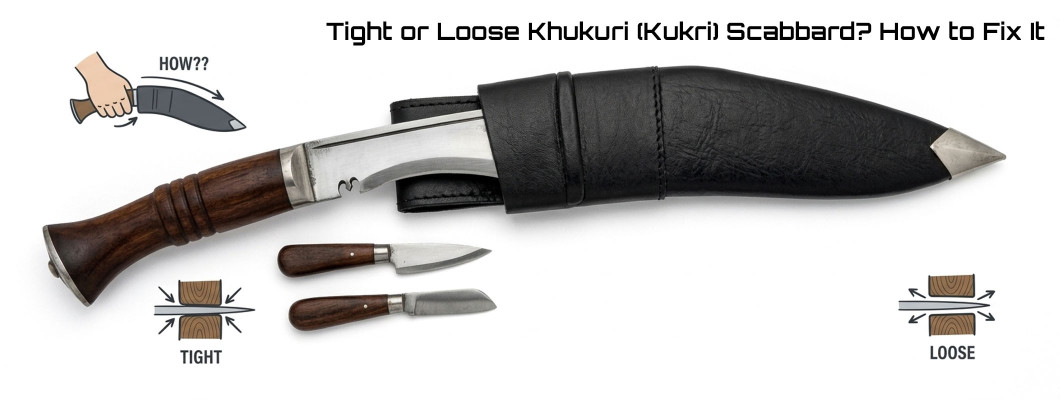
- Fit: if the khukuri sticks or slips in its scabbard, our tight or loose scabbard guide applies to a kothimora too.
Full blade and handle care is in the khukuri (kukri) maintenance guide.
How Are Kothimoras Made at Everest Forge?
Each kothimora is forged to order in our Kathmandu workshop, with the blade, handle and decorated scabbard made for the piece. The blade is hand-forged and heat-treated by our smiths in the same way as our working khukuris, then polished for presentation. The scabbard is built on a wooden core, covered in velvet, and fitted with its mounts and badges. Because nothing is made for stock, the blade, badge and engraving can be chosen for your occasion.
Browse the Kothimora ceremonial khukuri collection, including the Flying Eagle kothimora and the kothimora with gold-plated kukri cross badges.
Presenting a Kothimora for a Special Occasion?
Tell us who it is for, the occasion, the badge and the engraving, and we will forge a kothimora khukuri/kukri to mark it.
Request a Custom Kothimora →Explore More Kukri & Khukuri Guides
Frequently Asked Questions
What is a kothimora khukuri?
A kothimora is the ceremonial form of the Nepali khukuri (kukri). It has a hand-forged blade like any khukuri, but its scabbard is covered in velvet and mounted with decorated silver or white-metal plates. It is given and displayed to mark honour, rank and important occasions rather than carried for work.
What does kothimora mean?
In Nepali, kothi means the chape, the metal cap at the tip of the scabbard, and mora means cover. The name describes the decorated, metal-covered scabbard that sets a kothimora apart from every other khukuri.
Is a kothimora khukuri sharp?
The blade of a kothimora is a real hand-forged blade and can be used, but the piece is made for presentation and display. Chopping with it would damage the finish and the scabbard mounts. Ask when ordering if you want the edge sharpened or left unsharpened.
What is a kothimora given for?
Kothimoras are traditionally presented at military retirements and commissions, promotions, weddings, anniversaries and other formal honours, and are kept as family heirlooms. Gurkha soldiers and veterans are among the people most often presented with one.
Is the scabbard real silver?
It depends on the piece. Kothimora mounts are made in silver or in white metal, sometimes with gold-plated badges. Check the product description for the exact material, and ask us if it is not stated.
Can a kothimora be personalised?
Yes. Names, dates, ranks, units and short messages are commonly engraved on the blade, and the centre badge or motif can be chosen for the occasion. Contact us with what you need before ordering.
How do I clean a kothimora scabbard?
Wipe the metal mounts with a dry, soft silver cloth, keeping polish off the velvet. Brush the velvet gently with a soft brush. Keep the blade lightly oiled, and store the khukuri somewhere dry, ideally with an anti-tarnish strip.
What is the difference between a kothimora and a service kukri?
A service kukri is a working and military-issue blade with a plain leather scabbard, built to be carried and used. A kothimora uses the same khukuri shape but is finished for ceremony, with a velvet scabbard, decorated metal mounts and usually a polished or engraved blade.