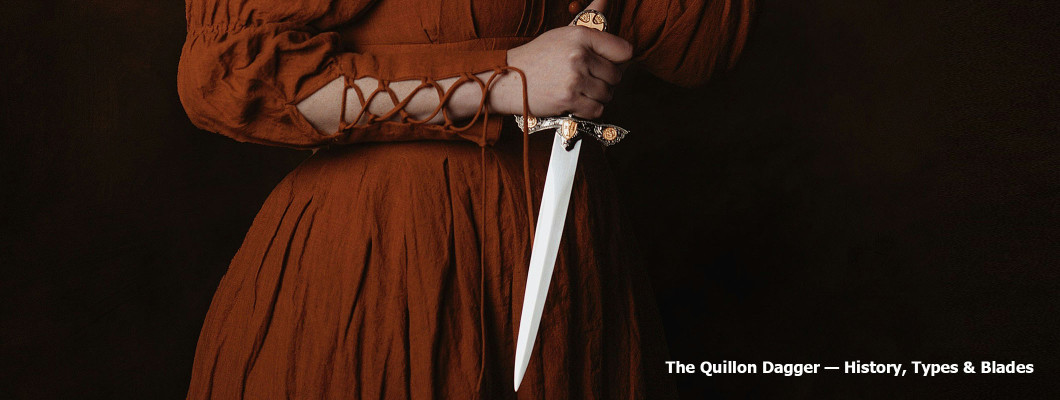
The Quillon Dagger — The Knight's Sidearm, Built Like a Sword in Miniature
A quillon dagger is the medieval dagger that looks like a small sword: a straight blade, a cruciform cross guard, and a pommel to balance it. The name comes from the quillons — the two arms of that cross guard. It is the type carried at a knight's hip from roughly the thirteenth century onward, and among the four main families of medieval European dagger it is the one whose hilt echoes the arming sword it was worn beside.
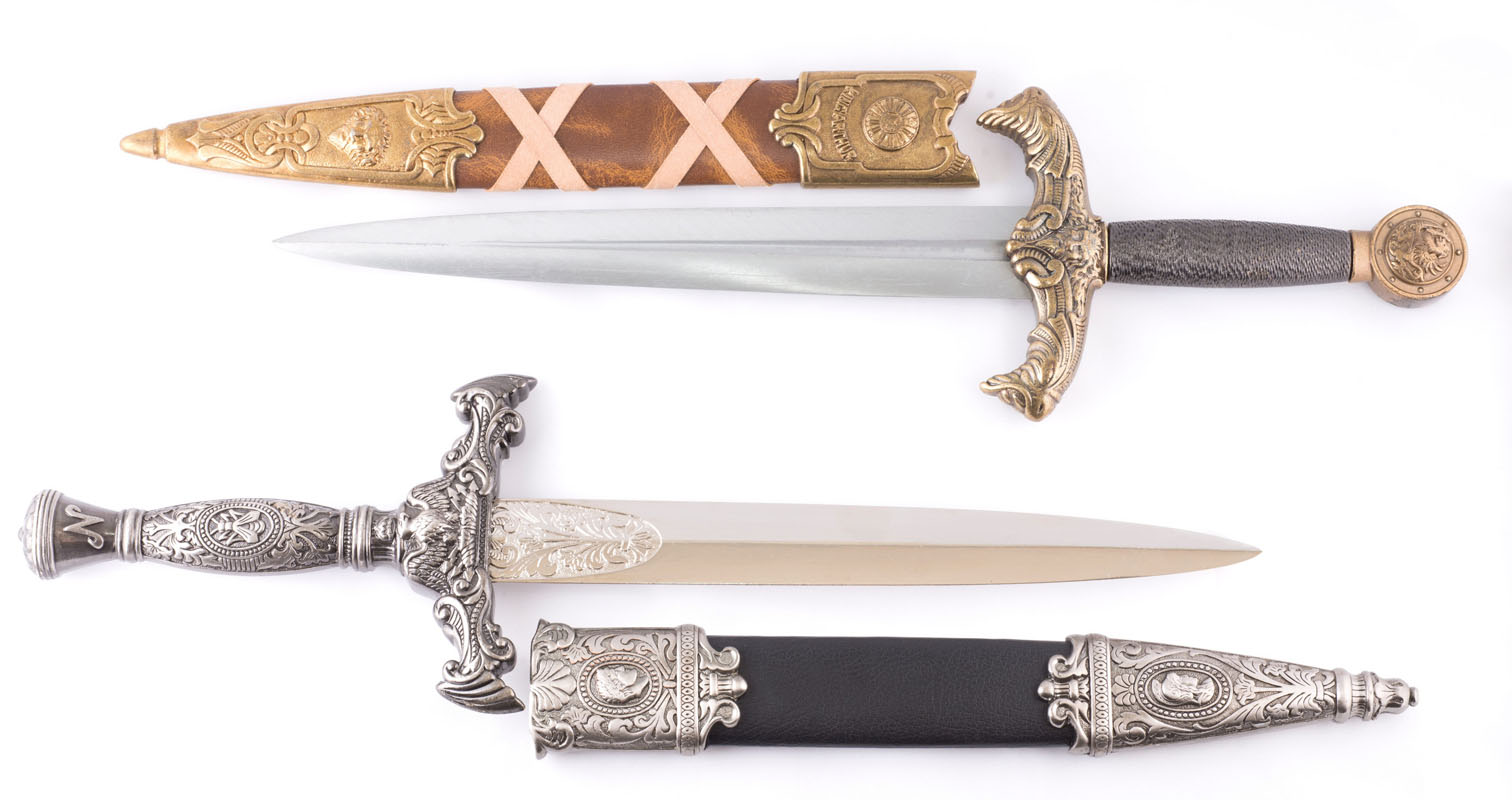
If you have seen effigies of medieval knights, you have seen the quillon dagger — it is the blade hanging at the belt opposite the sword, the companion weapon for the press of close combat where a sword had no room to swing. This guide covers what defines the type, where it sits in the family of medieval daggers, how it was used, and how to choose one, whether for display, reenactment, historical fencing or a collection.
Everest Forge has expanded its quillon dagger range considerably, and every piece below is hand-forged in Tokha-3, Kathmandu, Nepal from 5160 high-carbon spring steel, oil-tempered, full tang, with a fitted scabbard.
Where the Name Comes From
The word is precise, and worth getting right. A quillon is one of the two transverse arms that project from the guard of a sword or dagger to form the crossguard — the bar that protects the hand and, historically, could catch or bind an opponent's blade. The plural, quillons, is often used for the crossguard as a whole.
A dagger built around that cruciform guard is therefore a quillon dagger. The name describes the defining feature — the cross — rather than the blade or the region, which is why the type appears across all of medieval Europe under local names but the same underlying form. When a museum catalogues one of these, the cross is the diagnostic detail that places it.
The Quillon Dagger in History
The quillon dagger emerged as the knightly sidearm of the high and late Middle Ages. As a companion to the arming sword, it filled the gap the sword could not: the moment when two armoured men closed to grappling distance and a cutting weapon became useless.
Two roles defined it. The first was the thrust into the gaps of armour — the eye slots, the armpit, the groin, the join at the visor — where a stiff, acute point could reach what an edge could not. This is the role that in its most specialised form became the misericorde, the mercy-dagger used to end a fallen opponent. The second was half-swording and close work, where the dagger was a natural extension of the same fighting system as the longsword, used in the off hand or drawn when the sword was lost or too long.
Because it was worn every day by men who also carried swords, the quillon dagger evolved alongside sword fashion — its pommels, guards and grip forms tracking the arming swords of each period. That is part of its appeal to collectors: a quillon dagger is a small, wearable piece of the same design language as the great medieval swords.
How the Quillon Dagger Differs From Other Medieval Daggers
Medieval Europe produced four principal dagger families, and they are told apart by the hilt, not the blade. Understanding the distinction is the difference between naming a piece correctly and guessing.
- Quillon dagger — a cruciform crossguard, a single-hand grip and a pommel. The sword-in-miniature. The type described here.
- Rondel dagger — flat discs (rondels) above and below the grip in place of a cross, giving a stiff, thrust-oriented weapon favoured for punching through mail.
- Ballock dagger — a grip with two lobes at its base rather than a guard, a distinctly civilian and later Renaissance form.
- Baselard — an I-shaped or H-shaped hilt, a flat bar pommel matched by a flat bar guard, blurring the line between dagger and short sword.
For the full family across every culture — from the Roman pugio to the Scottish dirk to the Arabian jambiya — see our guide to the types of daggers around the world. And if the baselard interests you as the quillon dagger's close cousin, we have written it up separately in the baselard, from battlefield to collection.
Anatomy of a Quillon Dagger
Within the type there is real variation, and it is where the character of an individual piece lives. When choosing one, these are the features that distinguish one quillon dagger from another.
The blade
Most quillon daggers carry a double-edged blade, and the cross-section tells you what it was built to do. A diamond section — a raised central ridge running the length of the blade — gives a stiff, thrust-optimised profile that resists bending when driven into a hard target. A broad flat blade with a wide triangular profile favours the cut alongside the thrust. A raised medial ridge is the same idea expressed as a spine of strength down the centre.
The ricasso and ecusson
Where the blade meets the hilt, better quillon daggers show a squared ricasso — an unsharpened block at the base of the blade — or a shaped ecusson, the shield-shaped step where blade transitions to guard. These are marks of a properly resolved historical form rather than a blade simply pushed into a handle.
The quillons
The cross arms themselves vary. Straight quillons are the plain, functional medieval standard. Curved quillons — sweeping toward or away from the blade — appear in later and more decorative pieces and add both visual movement and a degree of hand protection.
The pommel
The pommel counterbalances the blade and finishes the piece, and it is often where a quillon dagger shows the most individual character. Common forms include the disc pommel, the ring pommel, the barrel pommel, and decoratively worked forms such as a knotwork pommel. The grip between guard and pommel may be rosewood, bone, or cord-wrapped over the full tang.
The Quillon Daggers We Forge
Our range covers the principal historical variations of the type. Each is double-edged unless noted, full tang, and forged from 5160 spring steel with a fitted scabbard.
Two close relatives in the same crossguard tradition are worth a look alongside these:
See the whole collection on the traditional and historical daggers page, or the complete range of hand-forged daggers.
Owning and Collecting a Quillon Dagger
A quillon dagger is bought today as a collector's piece, a reenactment or living-history sidearm, a historical European martial arts training tool, or a display piece that carries real craftsmanship and real history. Ours are functional blades, not wall-hanger castings.
One point of genuine importance, and we would rather you hear it from us before you order. Quillon daggers are double-edged, and a double-edged blade is treated far more strictly by knife law than a single-edged one — in the UK, Australia, Germany and elsewhere, double-edged daggers face the tightest carry rules and, in Australia especially, they are restricted for import without a permit. In most countries a quillon dagger is legal to own for display, collection and lawful use, but the specifics vary and cross-border shipping can be affected. Before ordering, please read our guide to whether knives are legal, country by country, and if you are unsure how the rules apply where you live, contact us first — we would rather help you order the right piece, or advise on a single-edged alternative, than have a blade held at your border.
Commission Your Own Quillon Dagger
The quillon form is one of the most rewarding to have made to your own specification, precisely because so much of its character lives in details that are personal — blade length and section, straight or curved quillons, the pommel form, the grip material, and etching or engraving on the blade. If you are recreating a specific museum piece, matching a dagger to an existing sword, or designing something original within the historical idiom, that is exactly what the custom forge is for.
Have a Quillon Dagger Forged to Your Design
Specify the blade length and section, the quillon and pommel form, the grip material, the scabbard, and any etching or engraving — or send a sketch, a reference photograph or a museum plate. Every custom dagger is hand-forged in Nepal from 5160 spring steel, full tang, oil-tempered and sharpened. Most custom dagger orders take around 5 to 7 days, and we reply to every request within 24 to 48 hours with a free quote.
Request a Custom Dagger →We also offer free personalisation on stock pieces — a name, initials, a date or a short inscription engraved on the blade or handle at no extra cost, which suits a commemorative or gift dagger particularly well.
Frequently Asked Questions
What is a quillon dagger?
A quillon dagger is a medieval European dagger built like a small sword: a straight blade, usually double-edged, with a cruciform crossguard and a pommel. It is named after the quillons, the two arms of that crossguard. It was the knightly sidearm carried alongside the arming sword from roughly the thirteenth century onward.
What does the word "quillon" mean?
A quillon is one of the two transverse arms that project from a sword or dagger guard to form the crossguard. The plural, quillons, is often used for the crossguard as a whole. A dagger defined by that cruciform guard is therefore a quillon dagger.
How is a quillon dagger different from a rondel or ballock dagger?
By the hilt. A quillon dagger has a cross guard; a rondel dagger has flat discs above and below the grip; a ballock dagger has two lobes at the base of the grip instead of a guard; a baselard has an I-shaped hilt. The blade alone does not tell you the type — the guard does.
Were quillon daggers used in real combat?
Yes. The quillon dagger was a knight's close-combat sidearm, used to thrust into the gaps of an opponent's armour where a sword could not reach, and in half-swording and grappling at close quarters. Its most specialised thrusting form became the misericorde.
Are your quillon daggers functional or display pieces?
Functional. Every one is hand-forged from 5160 high-carbon spring steel, oil-tempered, full tang, and sharpened, with a fitted scabbard. They are built as working historical blades, not cast wall-hangers, and are equally suited to display, reenactment and collection.
Are quillon daggers legal to own?
In most countries, owning one for display, collection or lawful use is legal. However, quillon daggers are double-edged, and double-edged daggers face the strictest carry and import rules — Australia in particular restricts their import without a permit. Check your local law, read our country-by-country knife-law guide, and contact us before ordering if you are unsure.
What blade length is a quillon dagger?
Most sit between about 12 and 14 inches of blade. Larger examples shade into the knight's arming dagger, which bridges the gap between a long dagger and a short arming sword. Because the type is defined by the hilt rather than the length, the cross form is what makes it a quillon dagger, not the size.
Can you forge a custom quillon dagger?
Yes. Blade length and section, straight or curved quillons, the pommel form, grip material, scabbard and any etching are all specifiable, and you can send sketches, reference photographs or museum plates. Submit a custom dagger request for a free quote within 24 to 48 hours; most orders take around 5 to 7 days.
Shop Hand-Forged Quillon Daggers
The Knight's Sidearm, Hand-Forged in Nepal
Six historical variations of the quillon dagger and its crossguard cousins, forged from 5160 spring steel, full tang, oil-tempered and fitted with a scabbard. Built as functional historical blades for collectors, reenactors and students of the sword.
Browse Traditional & Historical Daggers →