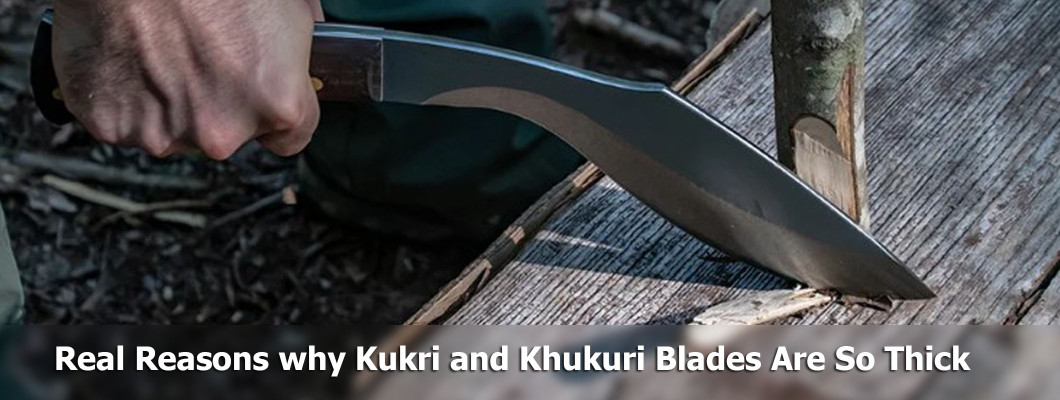
Why Kukri / Khukuri Blades Are Thick – The Real Reason Behind the Thick Spine
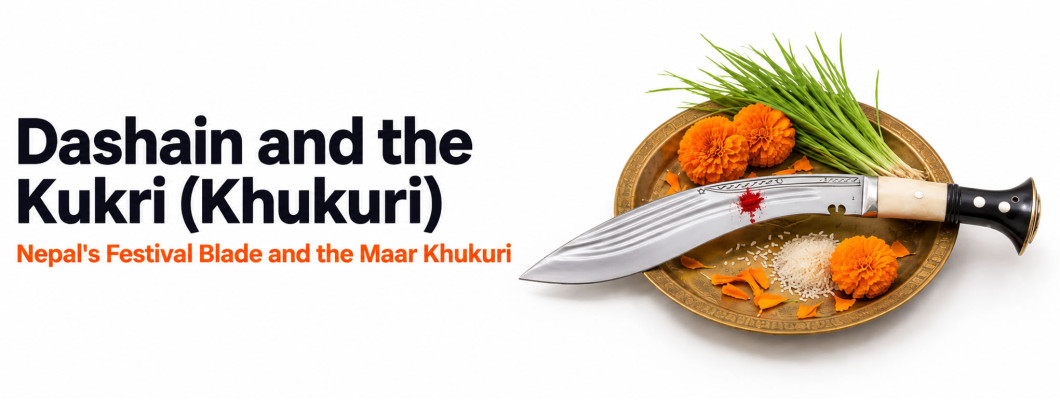
The thick spine of a kukri (khukuri) is one of its most defining characteristics. For many first-time buyers, this thickness can appear excessive when compared to knives, machetes, or even swords. In reality, the thick spine is not a flaw or an outdated design choice. It is the foundation of the kukri’s performance, durability, and identity.
To understand why kukri and khukuri blades are thick, it is necessary to look beyond appearance and examine how the blade was historically used, how it is forged, and what problems the design was meant to solve.
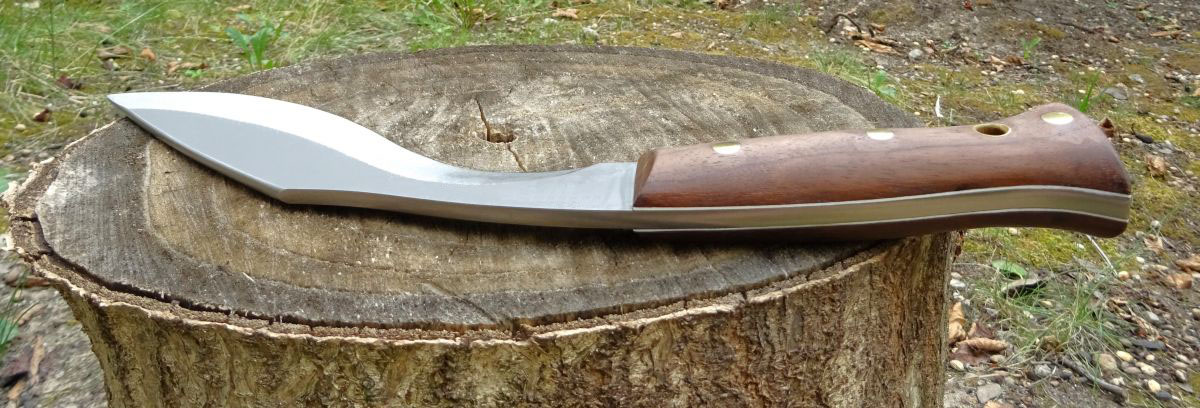
The Kukri Was Designed as a Heavy-Duty Working Blade
The kukri was never meant to be a thin slicing blade. It evolved in Nepal as a single tool capable of performing demanding physical work in mountainous and jungle environments. Farmers, villagers, and Gurkha soldiers relied on one blade for clearing vegetation, chopping wood, preparing food, processing meat, and surviving harsh conditions.
A thin blade cannot endure repeated impact against hardwood, bone, or dense brush. The thick spine gives the kukri the structural strength required for continuous heavy use without failure.
Thick Spine = More Mass and More Chopping Power
The primary reason kukri blades are thick is mass. Mass creates momentum, and momentum is what allows the kukri to chop efficiently.
When a kukri swings, its curved shape and thick spine concentrate weight forward. This forward mass drives force into the cut, allowing the blade to penetrate deeper with less effort. This is why a properly forged kukri often outperforms longer or thinner blades when chopping wood or bone.
The spine does not make the kukri slow. It makes the blade work harder so the user does not have to.
Forward Balance Is Engineered Through Thickness
Kukri blades are not uniformly thick. Traditional khukuris are thickest near the shoulder and gradually taper toward the tip. This distal taper is deliberate.
The thicker spine near the base shifts the balance forward, increasing cutting power while maintaining control. This design reduces wrist strain and allows the kukri to function almost like a compact axe, while still being versatile enough for fine tasks.
Shock Absorption and Impact Resistance
One of the most overlooked reasons for kukri thickness is shock absorption. Hard-use blades fail when they cannot absorb repeated impact.
The thick spine of a kukri allows controlled flex during heavy strikes. Instead of cracking or chipping, the blade disperses energy along the spine. This is critical for tasks such as batoning wood, chopping knots, or striking dense material where thin blades often fail.
Thickness Supports Traditional Heat Treatment
Many traditional kukris are differentially tempered. This means the cutting edge is hardened for sharpness, while the spine remains slightly softer to absorb shock.
A thick spine is essential for this process. It supports a hard edge without making the blade brittle and greatly reduces the risk of catastrophic breakage. This combination of edge hardness and spine toughness is one of the reasons kukris can last for generations.
Evolution Shaped the Kukri’s Thick Spine
The kukri did not evolve in theory. It evolved through real use.
In Nepal’s terrain, a blade that failed meant lost labor, lost food, or lost safety. Over centuries, designs that were too thin disappeared. The thick-spined kukri remained because it worked reliably in every condition.
The thickness seen in traditional kukris today is the result of practical evolution, not decoration or exaggeration.
Different Kukri Styles Use Thickness Differently
All true kukris have a thick spine, but the way thickness is distributed varies by style:
- Sirupate Kukri – Slimmer profile with reduced visual thickness, designed for speed and agility while retaining strength.
- Bhojpure Kukri – Broader blade with a heavier spine, optimized for powerful chopping and utility work.
- Angkhola Kukri – Very thick spine with fullers, offering exceptional strength, balance, and durability.
In every case, thickness remains essential. Only its distribution changes to suit the task.
Thick Kukris Still Cut Cleanly
A common misconception is that thick kukri blades are crude or poorly cutting. In reality, the spine carries the mass, while the edge geometry is forged thin where it matters.
This allows a kukri to combine clean cutting performance with heavy chopping ability. When properly forged, a thick kukri feels balanced, responsive, and controlled rather than heavy or clumsy.
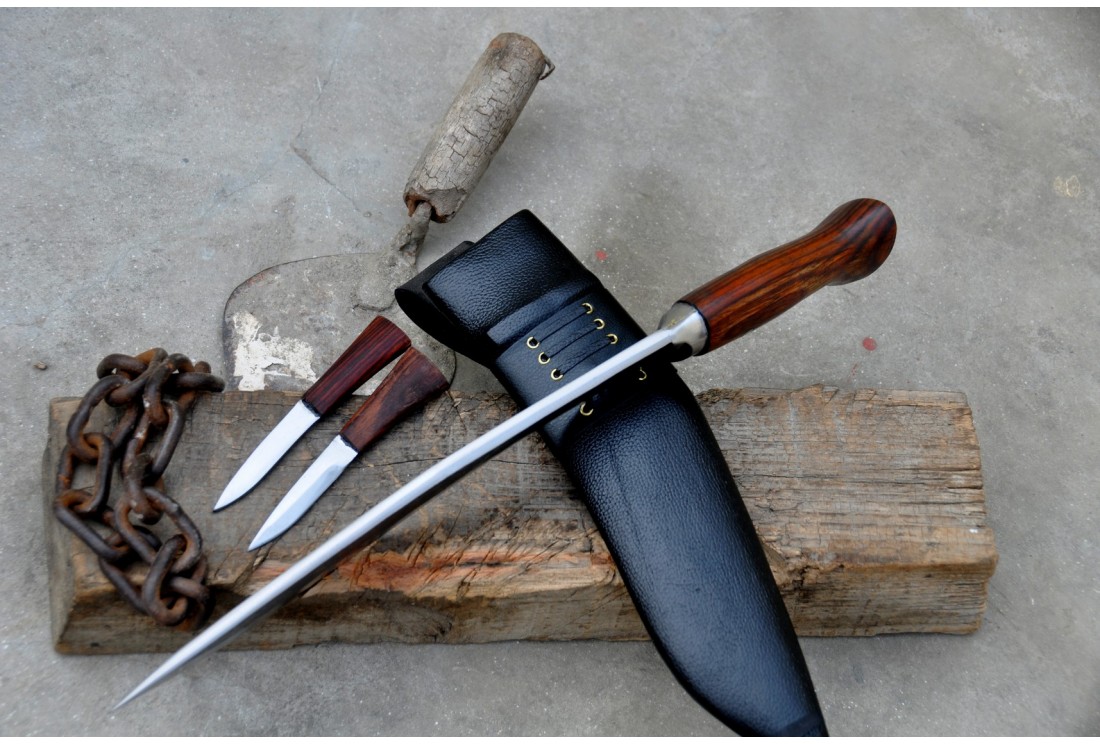
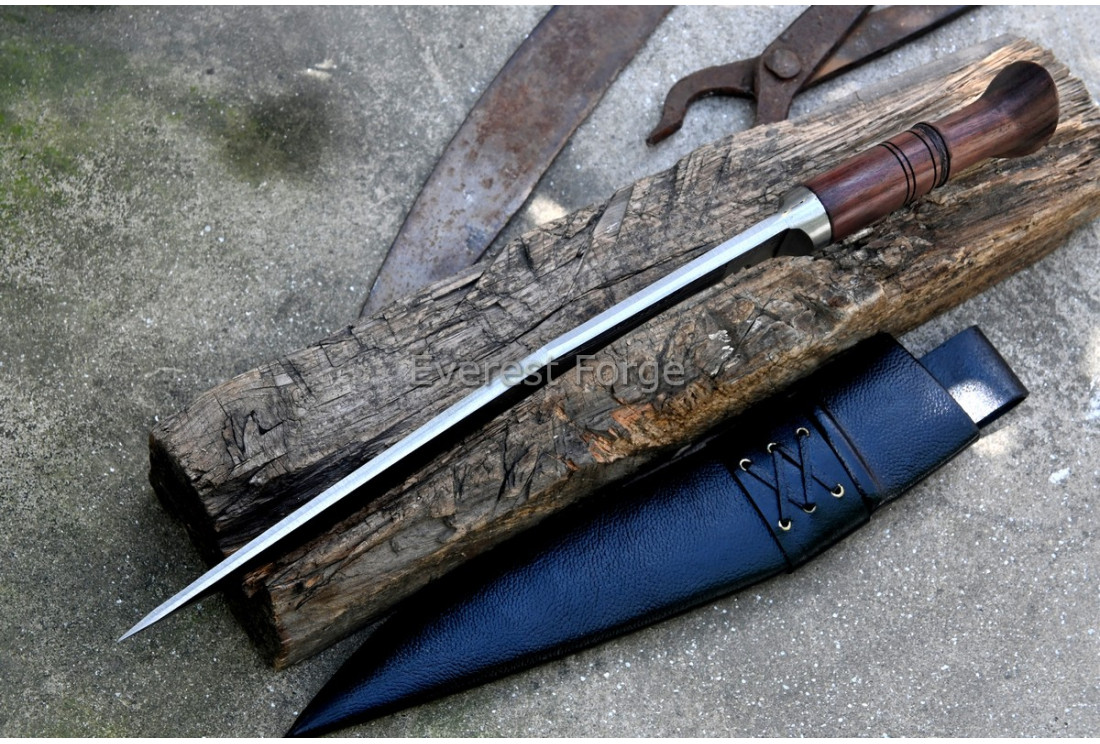
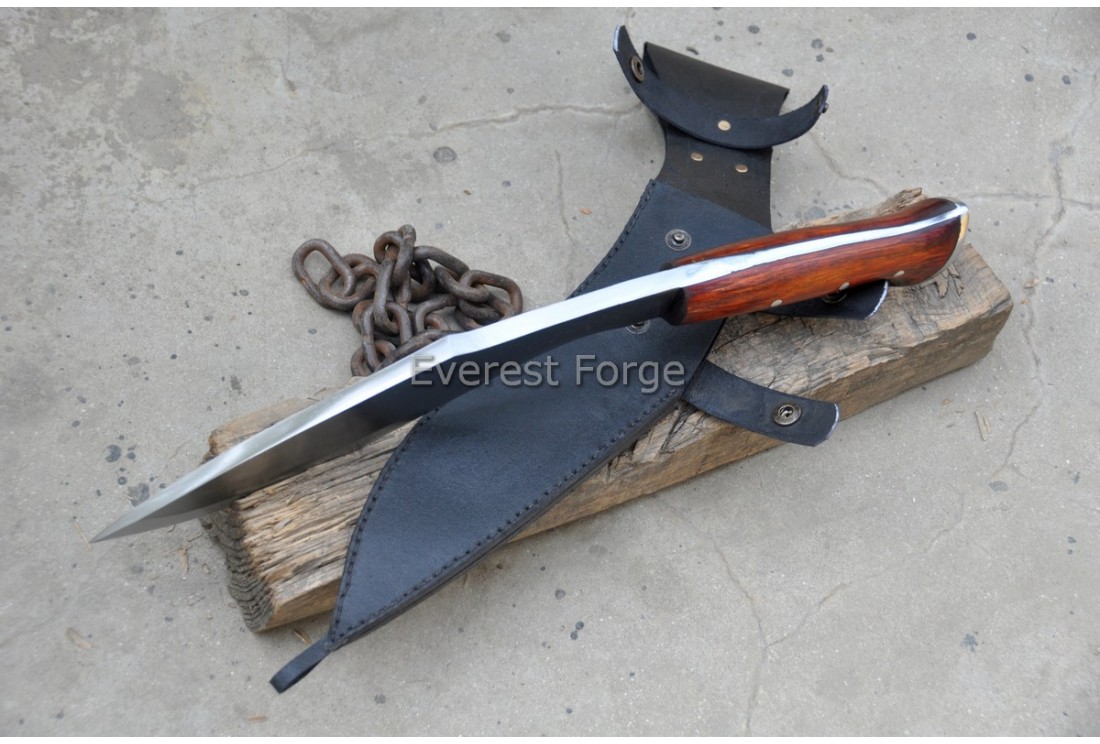
The Real Reason Kukri Blades Are Thick
The thick spine of a kukri is not excess metal. It is intentional engineering shaped by centuries of survival, labor, and combat.
Kukri blades are thick because they must strike hard, absorb shock, endure abuse, and continue working where thin blades fail. Remove the thick spine, and the kukri loses the very qualities that define it.
Want Your Exact Spine Thickness for a Kukri / Khukuri?
Request the spine thickness you want—thin and fast, or extra thick for heavy-duty chopping. We’ll forge it to your specs.
Request Custom Forge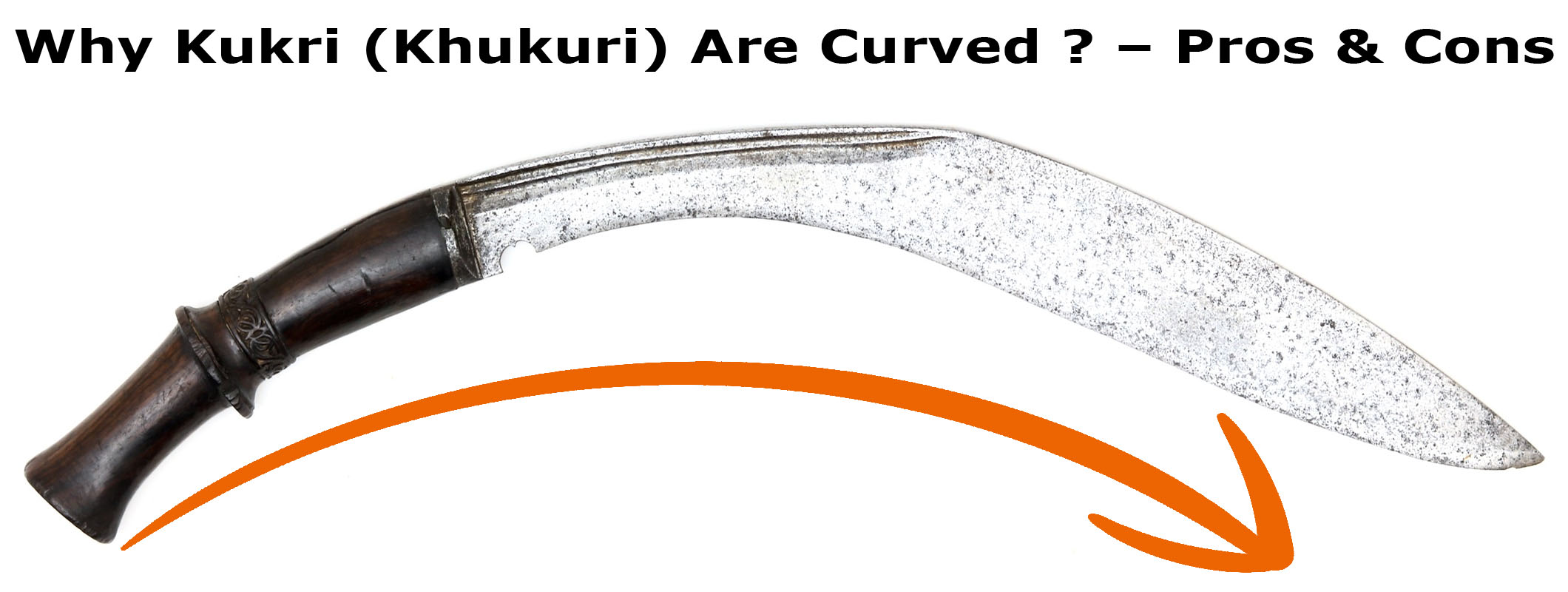
Read Blog: Why Kukri (Khukuri) Are Curved – Pros & Cons
Explore the real reasons behind the kukri’s curved blade design, including performance advantages, balance, cutting power, and practical trade-offs.
Read the full article →