Unlocking the Secrets of the Messer Sword: The Ultimate Medieval Weapon

The Messer sword is a kind of European sword that gained popularity in the late Middle Ages, especially in Germany. The term "Messer" is the German word for "knife," and the Messer is typically called the "big knife" due to its one-sided cutting edge and user-friendly design. Most swords of the era were made in a totally different style from the Messer, which looked as if it was made intentionally like a big knife with a wooden grip, fixed in a place for stability and practicality.
People from the city, soldiers, and peasants were the major users of the weapon as it was less costly and less complicated to make compared to other knightly swords. The Messer was a cheap yet very efficient weapon. It was a clever combination of the cutting capacity of a sword and the control of a knife, which made it very versatile for both slashing and thrusting. That is why the weapon was completely useless for any type of fighting, but still, it was a common self-defense tool for the daily life of people.
While fighting, the Messer was famous for its advantages and fast movements. At the time, Fencing masters even wrote guides and instructions on the methods of using the Messer in the fight. Nowadays, the Messer has got the spotlight among collectors, martial artists, and historians as a practical yet fascinating weapon that represents the life and wars of the Middle Ages.
How the Messer Sword Shaped Medieval Warfare
The Messer sword significantly influenced the way of medieval fighting. It started to be widely used in the late Middle Ages because it was more convenient for the user than the heavy double-edged swords. In that manner, it was not merely a weapon, but also a tool that people from the non-noble class, like townspeople and military personnel, could use.
On the battlefield, the Messer gave the infantry a greater fighting capacity. The single-edged blade was lighter, which contributed to the fact that cutting and stabbing were done in a shorter time and with less effort. In contrast to the larger swords that required strong swings, the Messer allowed fast, accurate moves. Hence, it was very effective in hand-to-hand fighting as well as in limited spaces.
The Messer was also a great weapon for self-defense and street fighting. Since streets and towns were the places that were narrow, people had to have a weapon that was easy to carry. The majority of them choose to use custom forged Messers because they can be designed just perfectly for one's own self, with the ideal balance, length, and grip.
In general, the Messer revolutionized the medieval fighting scenes by making a dependable, multifunctional weapon available to a broader user. It facilitated the fight to become faster and more practical, both in wars and daily life.
Essential Fighting Techniques for Messer Sword Users
Messer sword has unique fighting ways that make it powerful for both attack and defense. The core movements of the Messer sword are cutting, thrusting, and parrying. The cuts are usually done with the sharp edge to slash, while thrusting uses the tip of the sword to poke an opponent. Parrying can be used not only for blocking or deflecting but also for quickly engaging a counterattack as well.
Using the edge as well as the back of the blade is a must. The edge will be for your strong slashes, while the back can be used to push, block, or control the fight. The opponent will find it difficult to predict your moves if you keep changing between them.
Old German fencing manuals, Fechtbücher, depict a great amount of Messer techniques. They provide instructions for the different guards, strikes, and movements. For instance, the holding of the Messer high allows bringing cuts down quickly, while a low position might be able to catch the opponent off guard with upward strikes. Along with this, the balance and the control of the middle line in fighting are also the main points in these manuals.
The guard and grip are equally important. A firm grip allows control over the sword, and the proper guard keeps the body safe, as well as being a support for the attacks. Some of the simple moves that the opponent may not expect are cutting off the arms or legs of the opponent, thrusting the chest, and blocking, followed by striking. Messer users can fight well and at the same time defend themselves by combining cuts, thrusts, parries, and the clever use of both the edge and back.
How Messer Sword Design Affects Combat Performance
The design of the Messer sword is the primary factor that determines its efficiency in a battle. Moreover, its single-edged blade is one of the main features. One sharp edge makes cutting and splitting easier and more powerful. Besides, it also makes the sword lighter and easier to handle.
The hilt and guard are there to protect the hand. A lot of Messers have a small cross or knuckle guard that stops the strikes of the enemies and avoids hitting the hand. This enables the fighter to block from a safe place while still holding onto the grip firmly.

The length and weight of the sword are balanced to allow easy movement. It is long enough to reach the opponent but light enough to be swung quickly. Also, the grip that fits the hand well gives more control and power in both attacks and defense.
Some Messer blades are not completely straight but slightly curved. This curve makes the cutting smoother and efficient, allowing the sword to cut through the target with less effort. Messer’s design makes it strong, fast, and easy to use in both attacking and defending.
The Evolution of the Messer Sword Through Centuries
The Messer sword has been through a lot of changes and still has a long history that dates back to the times of the Middle Ages. The first of these swords was introduced in Europe in the 14th century. The initial version of Messer was single-edged and simple, which was widely used by townspeople and soldiers. They were mostly in the form of multipurpose tools that could be used for work and fighting as well.

By various changes in the blade forms, sizes, and materials, they were quite different from each other. For instance, some blades become longer and thinner for thrusting purposes, while others are still wide for strong cutting. The quality of steel used keeps improving. Thus, the swords become stronger and more durable. Furthermore, to protect the hand better and get more control, the designs of the hilt and the guard also changed.
Due to changes in fighting styles, short Messers named Kurzmessers became well-known. Not only were they lighter, but they were also swifter in tight spaces. Besides the changes in combat styles, changes in armors and tactics greatly influenced the transformations. The use of heavy armor resulted in the production of stronger and sharper blades, while lighter weapons became more handy in city fights or duels.
In the seventeenth century era, the Messer was still alive but less used on the battlefield. The introduction of firearms and other new kinds of weapons made the use of large swords outdated. Nonetheless, the Messer was still used as a domestic weapon for self-defense in duels or as a daily tool. Practical, easy-to-carry, and efficient for cutting, slashing, and thrusting were the main reasons why it stayed in fashion. Currently, it is still a fascination of collectors, martial artists, and historians as a symbol of medieval European life.
The Unique Fighting Style of Messer Sword Warriors
The fighters of the Messer had a totally different style from those of the longsword. It was possible to use the Messer in one hand, and therefore the movements were quicker and more flexible. The fighters employed a combination of cuts the thrusts, and they gripped the blade with one hand for close fighting, which was called half-swording.
Most of the fighters carried the Messer, often a Grosse Messer, together with a small shield, a buckler, or a dagger in the other hand. The person on the guarding side held the shield up to stop the attack, which at the same time could be struck by the opponent. The attention of the style was more on being quick, moving well, and hitting their target rather than just using brute strength. The ancient German martial arts manuals, or Fechtbücher, are very instructive on how to fight using the Messer, including the Grosse Messer. They narrate all the possible positions, attacks, blocks, and counters. These techniques were very practical in both duels and battles. Basically, Messer fighters counted on their clever moves, speedy attacks, and solid defense. Their style was easy to understand, but it was very practical and efficient, thus making the Messer, and especially the Grosse Messer, a very dependable weapon for fighting and self-defense.
Traditional Forging Techniques Behind Messer Swords
Traditional Messer swords were constructed from various steels of very high quality, optimized for both the sturdiness and the sharpness of the sword. One of the most common ways craftsmen usually prepare metals is the so-called hammer forging, which is the process in which a steel in its hot condition is hammered by hand until the desired form is reached. There were also some blades that were made by layering methods, folding the metal to achieve higher strength and flexibility. At the same time, the sword became both resistant and efficient in severing.
Another important point is the fire treatment. The piece was brought to high temperature and then underwent quenching, frequently in water or oil, in order to be made hard. The procedure is important in that the edge of the blade is made capable of holding the sharpness, whereas the blade is given the toughness necessary to be used in occurrences of impacts.
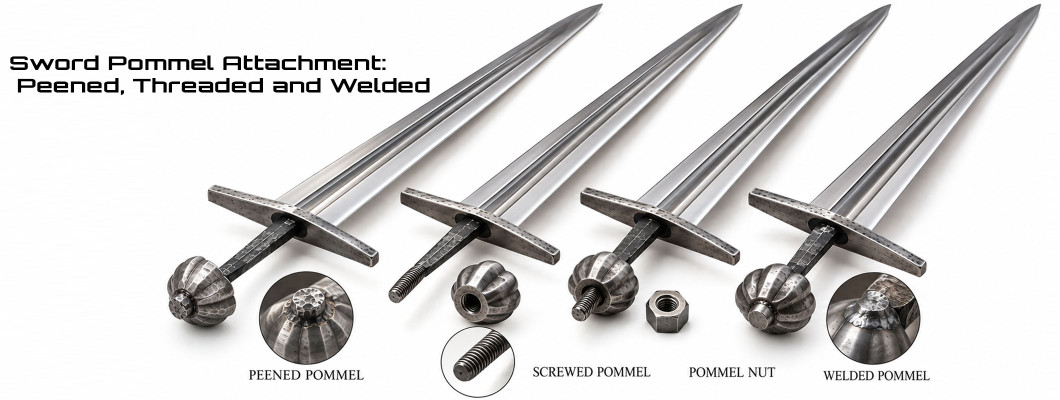
The skill of the artisan is also significant in the creation of the hilt and guard part. The wooden grip is placed around the tang and fixed with rivets, and the nail is installed for hand safety.
At this point, some of the modern blacksmiths are using the same traditional skill and care as they did in the past and are thus reconstructing Messers with the same methods and skill as the Messer makers of the past.
Why the Messer Sword Was the Preferred Blade in Germany
The Messer became one of the most loved weapons in late medieval times in Germany due to a combination of cultural and practical reasons. The design of the weapon made it effective and accessible at the same time, hence its extensive use.
- Appeal of Culture and Practice: Messer was a perfect example of mastery and an excellent shield in times of danger. Its feasible and handy design made the sword more popular among the people, and thus in combat situations.
- Accessibility and Versatility: The Messer was not just a weapon of the soldiers, but the civilians could also use it, as it was unlike bigger swords, thus making it more user-friendly. It was light, easy to carry, and effective in various fighting situations.
- Fechtbücher Promotion: The Fechtbücher, or German fencing manuals, contained the descriptions of various knife techniques, including the Messer. This facilitated the dissemination of its use in different areas.
- Urban Combat and Duels: The Messer is a perfect weapon for fighting in closed quarters in the cities and also for judicial duels. Its one-handed design allowed for quick attacks and effective defense in tight spaces.
- Regional Craftsmanship: Each region in Germany created its own resources and the style of the Messer weapon, which is proof of the masterly work on blade making, hilt design, and hand protection.
In summation, the usability, the versatility, and the cultural strength of the Messer made it the most outstanding blade of Germany for everyday use and combat.
How the Messer Sword Grip Enhances Control and Power

The Messer sword grip is thoughtfully designed to allow the user to have both control and power. Usually constructed from wood or with a wrapped material, the shape is often the hand's size and made for comfort. It is accompanied by a small guard called a nagel that protects the hand. The ergonomic design gives the possibility to make strong, controlled cuts, without the wrist getting tired. Fighters adopt grip methods to avoid the grip from becoming slippery, and as a result, the sword is kept steady during rapid or heavy blows. This is the point at which precision and control are increased to the utmost, when it comes to fencing or hand-to-hand combat. Modern custom forge designers recreate these historically authentic grips, blending with the historical design and their craftsmanship skills, to achieve that every Messer is the combination of power and accuracy in every move you make.
Advantages of Single-Edged Blades Like the Messer

Single-edged blades such as the Messer were in demand mainly because such blades were practical and easy to handle. Through these blades, fighters got safety, power, and command in the fight.
- More Security for the Offhand: Since the single edge was less likely to cut the other hand, it was safer, and therefore, a dagger or shield could be used with it.
- More Efficient for Cutting and Slicing: The sharp edge could both cut and chop strongly, better than many double-edged swords.
- Simple to Take Care of: The sword could be kept in good condition by a simple sharpening.
- Productive in Battle: The blade could be used for attacks as well as for blocks, thus being very practical in many situations.
Basically, single-edged swords such as the Messer were strong, safe, and flexible, thus being the first choice not only by soldiers but also by civilians.
Messer Sword in the Context of Other European Swords
The Messer sword was quite different from other European swords, such as longswords, falchions, sabers, and arming swords. It was somewhat lighter than a longsword, and because of that, it was possible to use it with one hand. Its straight, single-edged blade also allowed the user to make cuts and to thrust with less effort than with other swords. In addition, the small hand guard and the shaped grip that were part of a sword not only helped protect the hand but also gave better control.
Moreover, the Messer was a link between the medieval swords and those of the Renaissance period. Practically, on the battlefield, it was a weapon that could be used for chopping, slicing, or thrusting. However, in a town, it was very handy for duels or self-defense. With its simple, strong, and versatile design, the weapon was used by many as a very practical one for almost any situation.
How to Sharpen and Maintain the Messer Sword Edge
If you take good care of your tools, the cutting edge will be sharp for a long time, and the metal will not have any scratches. The main steps are:
- Sharpening Tools and Techniques: It is recommended that you use a sharpening stone, a sharpening steel, or a fine file. Strokes should be aligned evenly, and the work should be done slowly along the blade.
- Blade Angle and Sharpness: Firstly, you should always sharpen the blade at its original angle . This not only keeps the edge of your blade strong but also prevents it from chipping or getting dull.
- Cleaning and Oiling: Once the sharpening is done, the blade should be wiped with a clean cloth, and a small amount of oil should be applied to the surface to prevent rust.
- Storage Tips: The sword should be kept away from moisture in a dry place. A wooden scabbard is preferable to leather because leather tends to retain water.
- Mistakes to Avoid: An electric grinder should never be used; do not exert too much pressure, and always make sure the blade is clean and dry.
The sword Messer will be sharp, safe, and easy to use for a long time with regular sharpening, thorough cleaning, and taking good care of it.
Buying Authentic Messer Sword Replicas: What to Look For
If you decide to purchase an authentic Messer sword replica, you need to make sure that the work done is of high quality and that it is made with strong materials. Properly working replicas are made of the appropriate blade steel, solid hilt, and good balance, whereas decorative ones are only for the sake of the display. You should always inspect the item, starting with the steel used, the design of the hilt, and even the weight. Established makers, even modern custom forge workshops, commit themselves to being strong and historically accurate at the same time. There is typically a wide range of prices for functional swords; however, they are often more expensive and might come with a warranty. Everest Forge produces a variety of high-quality Authentic Messer sword replicas.
Conclusion
The Messer is a historically important weapon that is recognized for its unique design, adaptable application, and durable impact on European martial arts. Besides being a powerful weapon in war, the sword was also popular among the common people for use in self-defense. It was made of high-quality and strong materials. These days, high-quality replicas are made to continue the history of the Messer. Everest Forge provides a handmade combination of tradition, strength, and skills of contemporary custom forge makers.