Forging Through Time: The Story of Ramkumar Baraili and the Fading Craft of Nepali Blacksmiths
In the quiet lanes of Goldhap Bazaar, Jhapa, shops were just beginning to open one after another in the early morning. But from one corner shop, a different sound echoed — thak-thak, tok-tok — the steady ring of iron being hammered. Inside that old workshop, 70-year-old Ramkumar Baraili was still at his anvil, shaping hot iron with his hammer.
Though his body is weaker with age, his face still holds freshness, and his eyes still gleam. The reason: a lifelong bond with the anvil, the hammer, and the fire. Baraili was born in Pakhribas, Dhankuta, where he grew up watching anvils and hammers at work.
A Life Forged in Fire
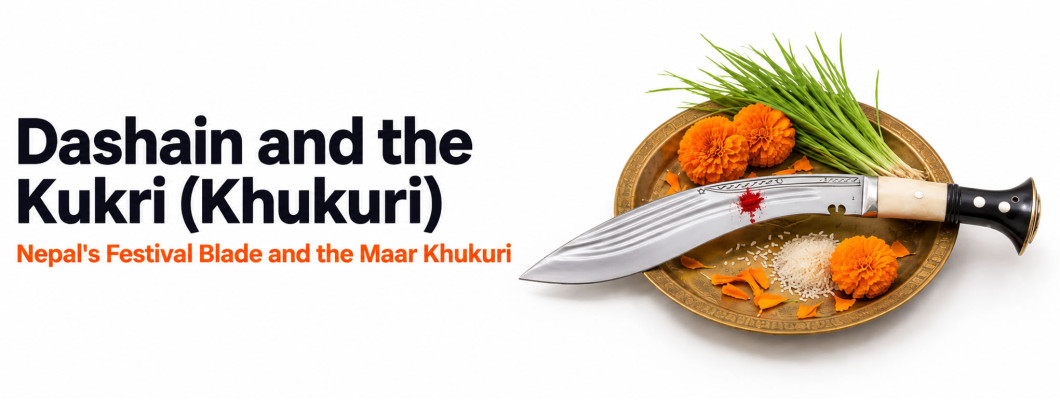
By 1977 (2034 BS), he had moved to Goldhap Bazaar and opened a small workshop named Durga Iron Repairing Center. There, he began producing the essential tools of daily Nepali life: kukris, axes, sickles, and household knives.
“During rice-planting season, farmers would come for sickles. During maize harvest, they asked for husking tools. If someone’s kitchen knife broke, they came to me for repairs,” recalls Baraili. His forge became a trusted place for the community.
Devotion to Craft
From the beginning, there was never a shortage of work. But now, at seventy, many of his peers have left the trade — some by choice, others by age. Yet Baraili still spends his days in the shop: sweeping in the morning, heating iron, and hammering tools into shape by hand.
He lives in Goldhap with his wife. His two daughters are married, one son serves in the Indian Army, and another works in Dubai. While his children are based in Birtamode, Baraili remains loyal to his shop.
“My life was spent at this anvil. This is my home,” he says with emotion.
A Vanishing Tradition
But there is a sadness. None of his children or grandchildren want to learn his craft. “Everyone dreams of the city or abroad. After me, this work will end,” he admits with sorrow.
This fear is not unique to him. Across Nepal, traditional artisans — blacksmiths, carpenters, woodworkers, and metalworkers — are vanishing. Modern machines and a shifting marketplace have displaced them. Yet men like Baraili stand as living inspiration: they embraced their ancestral professions, supported their families, and contributed to society through their skill.
Today, however, the ringing of hammers in his forge is slowly fading. Still, his devotion remains unshaken.
“I lived with this anvil, and I will die with it. But I wish this skill would live on, even after me,” he says.
His wish is more than a personal hope. It is a challenge for both society and the state:
will we preserve these ancestral skills, or will we let them vanish with the last generation of masters like Ramkumar Baraili?
Continuing the Legacy at Everest Forge
At Everest Forge, we deeply relate to the story of Ramkumar Baraili. The kukris, machetes, and swords we forge are not just products — they are a continuation of the same heritage he embodies.
Every strike of the hammer in our workshop carries forward the spirit of artisans like him, ensuring that the ancient skills of Nepali blacksmiths are not forgotten. While the world modernizes, we believe the craft of the anvil must remain alive.
We honor craftsmen like Ramkumar by keeping their legacy in every hand-forged blade we make.
Custom Forge Request
Want a blade made just for you? Send us your design idea and our craftsmen will forge it to perfection.
Request Now →