It All Starts With the Right Steel
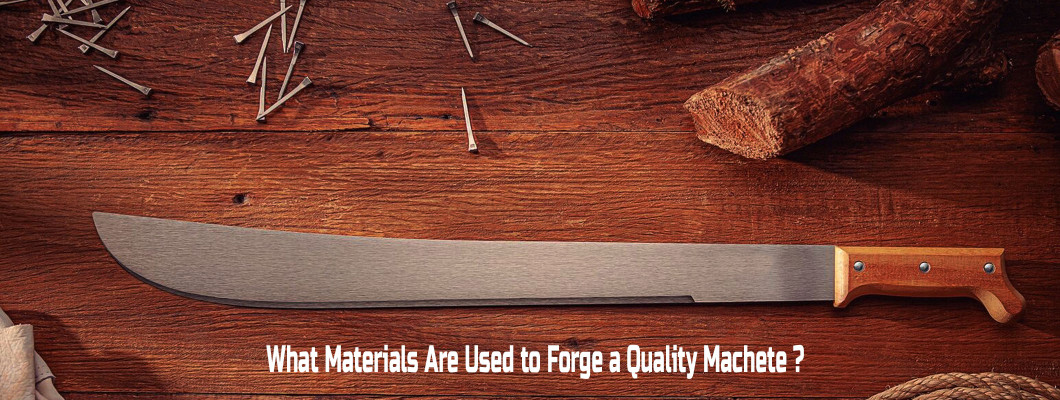
When forging a quality machete , everything begins with steel selection. A machete is not a decorative blade — it is a working tool designed for repeated impact. Whether clearing jungle, chopping hardwood, or working farmland, the steel must withstand shock without cracking or chipping.
For machetes, toughness matters more than extreme hardness. The blade must flex slightly under stress while maintaining edge performance. The wrong steel can make even a beautiful machete fail under real-world use.
Best Steel Options for a Quality Machete
5160 Spring Steel – Built for Heavy Impact
5160 spring steel is widely regarded as one of the best materials for serious working machetes . Originally developed for vehicle leaf springs, this steel was engineered to handle constant stress and repeated flexing.
- Excellent shock resistance
- Strong edge retention
- Resists chipping under heavy chopping
- Performs exceptionally well when oil tempered
For jungle use, bushcraft, survival, and demanding outdoor environments, 5160 remains one of the most reliable choices.
1095 High Carbon Steel – Sharp and Traditional
1095 steel contains higher carbon content, allowing it to take a very sharp edge. It is popular in agricultural machetes and field tools.
- Takes a fine, sharp edge
- Easy to sharpen in the field
- Affordable and widely used
However, it requires careful tempering. If hardened too much, it can become brittle. When heat treated correctly, it performs very well for medium-duty chopping tasks.
1055 Steel – Common in Factory Production
1055 medium carbon steel is often used in mass-produced machetes due to its flexibility and cost efficiency.
- Budget-friendly
- Good flexibility
- Lower edge retention compared to 5160
It performs well for light agricultural work but does not match the long-term durability of higher-grade spring steels.
What About Damascus Steel for Machetes?
Damascus steel is admired for its layered patterns and visual appeal. It is created by forge-welding multiple layers of steel together to produce a distinctive flowing design.
High-quality Damascus made from proper high carbon steels can be functional. However, a machete is a high-impact tool. If the layered steel is not forged and heat treated correctly, structural weaknesses may appear under heavy stress.
For collector pieces or medium-duty use, Damascus machetes can perform well. But for extreme jungle clearing or heavy hardwood chopping, a monosteel spring steel like 5160 typically offers greater reliability and shock resistance.
Heat Treatment: The Critical Factor
Even premium steel can fail without proper heat treatment. Forging shapes the blade, but heat treatment determines its real performance.
- Normalizing to relieve internal stress
- Oil quenching to harden the blade
- Tempering to restore toughness
For working machetes, the ideal hardness range is typically around HRC 55–57. This provides durability without making the blade brittle.
Full Tang Construction for Strength
A quality machete should use full tang construction, meaning the steel runs through the entire handle. This significantly increases structural integrity and improves balance during heavy chopping.
- Greater durability under impact
- Improved control and balance
- Reduced risk of handle failure
Handle Materials That Matter
The handle influences comfort, safety, and long-term usability. A secure grip reduces fatigue and improves control during extended chopping sessions.
- Hardwood (such as rosewood) for traditional strength and comfort
- Buffalo horn for durability and natural texture
- Micarta or G10 for modern weather resistance and strength
Are Paracord Handles Good for Machetes?
Paracord-wrapped handles are popular in survival knives and tactical blades. They offer a lightweight design and can provide emergency cordage if needed.
- Lightweight construction
- Emergency cord use in survival situations
- Minimalist full tang design
However, during prolonged heavy chopping, paracord can compress or become uncomfortable compared to solid handle scales. In wet conditions, it may also retain moisture.
For compact survival machetes, paracord can work well. For full-size heavy-duty machetes, structured handle materials generally provide better long-term durability and grip stability.
Why Stainless Steel Is Rarely Ideal
Most stainless steels are not ideal for heavy chopping tools. They are typically more brittle under repeated impact and harder to forge traditionally.
For serious outdoor work, high carbon and spring steels remain the preferred materials.
Customize Your Machete to Your Exact Needs
Want to Customize Your Machete?
If you would like to customize your machete — including blade length, spine thickness, steel type, handle material, engraving, or overall design — you can request a fully personalized build from our forge.
We specialize in hand-forged, oil-tempered functional blades made to your exact specifications.
REQUEST CUSTOM FORGEWhat Defines a Truly Quality Machete?
A dependable machete combines:
- High carbon or spring steel
- Proper oil tempering
- Full tang construction
- Secure, durable handle materials
When these elements come together, the result is not just a sharp blade — but a reliable working tool built for years of demanding use.