Understanding the Kukri’s Power and Versatility
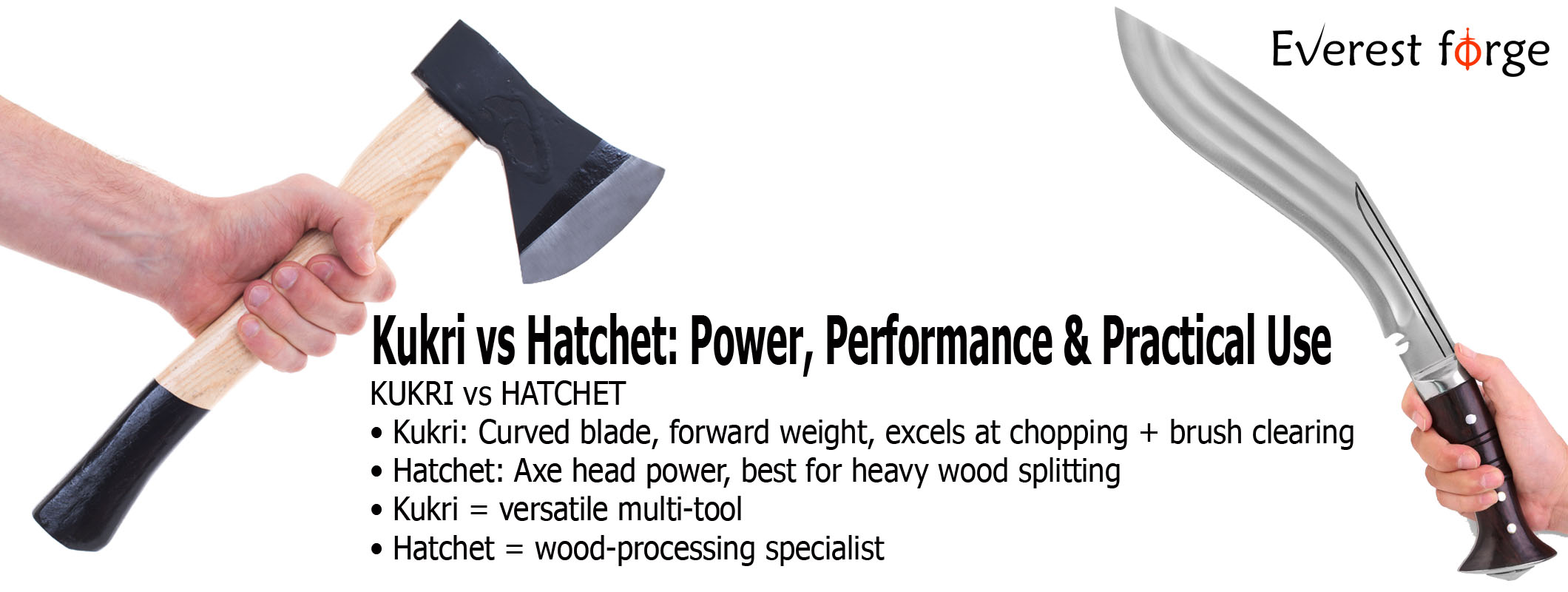
The Nepalese kukri has earned its reputation as one of the most practical outdoor blades ever made. Built for real work in the hills and jungles of Nepal, its curved blade and forward balance allow it to function as both a cutting tool and a compact chopper. This unique design often leads to one question: can a kukri realistically replace a hatchet ?
In many cases, yes. A well-forged kukri can handle a large portion of tasks usually assigned to a hatchet— and sometimes even outperform one. This guide breaks down how the kukri compares to a hatchet and when each tool is the better choice.
What Makes a Kukri Function Like a Hatchet?
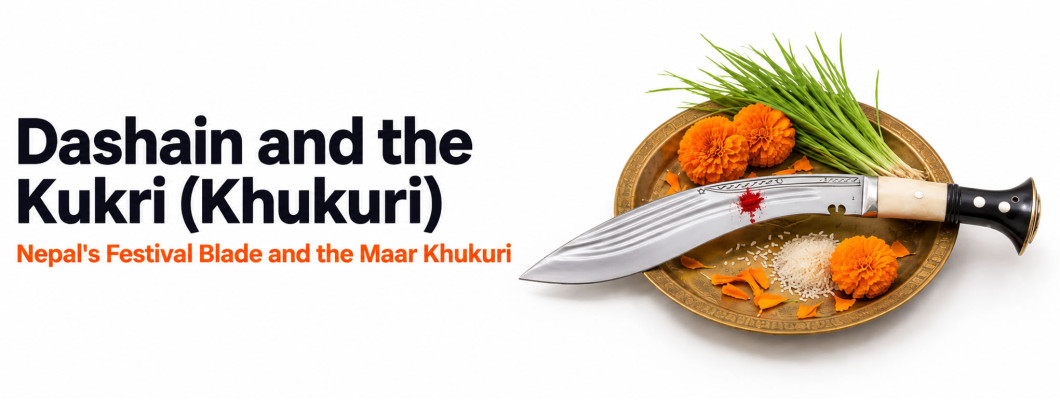
Although a kukri looks different from a hatchet, the power it generates is quite similar. Its cutting ability comes from its geometry rather than sheer weight.
A traditional kukri has:
- A forward-curving blade that pulls deeper into the cut
- A thick spine for strength during chopping
- A heavy belly that creates a natural “chopping sweet spot”
- A balance point shifted forward for increased striking power
These features allow the kukri to behave like a small axe while still functioning as a versatile knife.
Where a Kukri Performs Like (or Better Than) a Hatchet
Chopping Small to Medium Wood
The kukri excels at chopping branches, saplings, and firewood under 4–5 inches thick. Its curved belly bites deeply into wood, making it fast and efficient for campfire preparation.
Clearing Brush and Vegetation
This is an area where the kukri outperforms the hatchet completely. Its slicing motion allows it to clear:
- Brush
- Vines
- Grass
- Small saplings
A hatchet can chop brush, but it is not designed for continuous slicing or sweeping cuts.
Batoning and Splitting Small Logs
A strong full-tang kukri can baton through small logs, making it useful in wet environments where dry wood must be accessed from inside larger pieces.
General Camp and Survival Tasks
Beyond chopping, a kukri can handle:
- Cooking prep
- Carving and shaping wood
- Clearing campsites
- Self-defense in emergencies
A hatchet cannot match this level of versatility.
Kukri vs. Hatchet: Side-by-Side Comparison
| Feature | Kukri Knife | Hatchet |
|---|---|---|
| Chopping Small Wood | Excellent – deep bite from curved belly | Excellent – strong axe-style momentum |
| Clearing Brush | Superior – machete-like slicing | Poor – not designed for sweeping cuts |
| Splitting Logs | Good for small logs | Very strong for medium/large logs |
| Fine Camp Tasks | Very good – knife-like control | Limited – bulky axe head |
| Overall Versatility | High – knife, machete & chopper in one | Medium – wood specialist only |
| Portability | Light, compact, easy to carry | Heavier, bulkier, pack-dependent |
When a Kukri Is the Better Choice
A kukri is ideal if you want one blade that can do almost everything outdoors. Choose a kukri for:
- Trekking and backpacking
- Jungle and bushcraft work
- Trail clearing and field maintenance
- Survival kits and long-term preparedness
Its versatility makes it one of the most capable all-around tools ever designed.
When a Hatchet Makes More Sense
A hatchet is still the better tool when your primary tasks involve:
- Splitting medium–large logs
- Heavy overhead chopping
- Processing large amounts of firewood
For wood-only jobs, the hatchet remains more efficient.
Final Verdict: Can a Kukri Replace a Hatchet?
For most campers, trekkers, and survivalists—yes. A well-forged kukri can replace a hatchet for the majority of outdoor tasks. It chops, slices, clears, shapes, and handles countless camp chores, making it one of the most practical tools you can carry.
When crafted with proper heat treatment and Nepalese forging tradition, the kukri becomes a dependable, multi-purpose field tool capable of far more than a standard hatchet.
Request a Custom Forged Hatchet or Kukri
Want a hatchet or kukri forged exactly to your specifications? Our master bladesmiths can craft a fully customized piece— blade length, steel type, handle material, engraving, balance, and more.