Khukuri: a distinctive pride of Gurkhas
Khukuri is one of the recognisable types of knives of Nepal. It is a distinct inward curved blade. A lot of knives have a straight blade, but Khukuri have a curved blade which is curved inwards. It has a strong impact and is easy to handle. The shape of the blade helps you to cut deeper with less effort. Due to this Khukuri is one of the most significant and efficient combat and utility weapons, which can be used for both chopping wood and fighting on a war field. A traditional Nepalese Khukuri is about 10 to 15 inches in blade length. The ceremonial or cultural Khukuri may vary or can be larger. Depending on its purpose, the weight of a Khukuri is different. For example, a lighter one is suitable for fast and accurate work, while a heavier one can be used in war or for cutting wood.
Anatomy of Khukuri
Khukuri has a sharp point that is perfect for thrusting. The centre point of the khukuri is concave (curved). It gives it the most cutting power. Khukuris are made of thick and strong metal, which ensures their structural durability. There is a small notch on top of the khukuri. The handle styles of the khukuri are different.
The handcrafted khukuri, made from hardwood, buffalo horn, or bone, is typically crafted with brass or iron. The handle is designed in a specific way and type to ensure the blade's usage is balanced in the person's hand. This balance is necessary for the khukuri to be efficient in any kind of work. Khukuri is a combination of the power of different machetes and knives in one. It has the strength of an axe, the accuracy of a knife, and the adaptability of a machete.
Origins and History of the Kukri
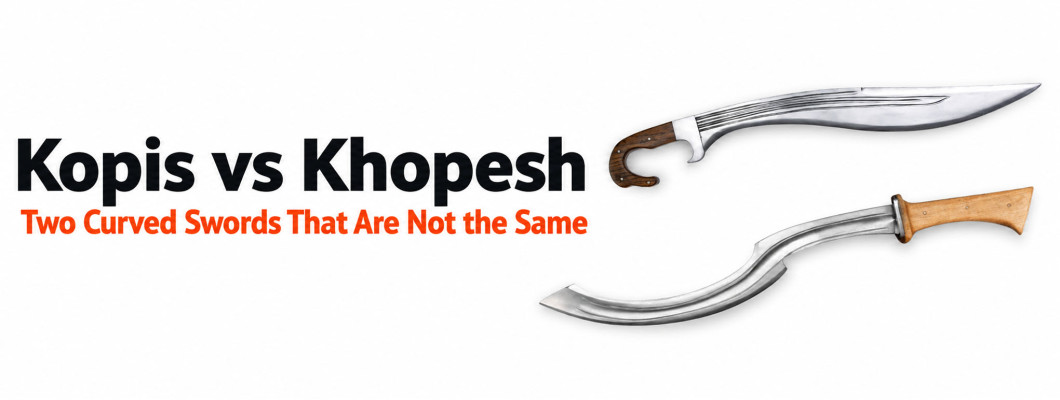
The kukri has a lesser-known history, but the early uses of the Kukri khukuri have been noted in Nepalese history. The history involves the use of the ancient kukri by the ancient hill tribe of Nepal. Also, many historians suggest that the use of the Khukuri has been influenced by Indo-Nepalese weapons such as the Indian Kopis. The Indian Kopis, also known as the Greek Kopis, was one of the weapons that originated in Greece. Over time, the Kukri is suggested to have evolved from the Kopis, and the Khukuri that we now see has a distinct Nepalese creation and is refined according to the needs of the people. By the medieval period, the Khukuri had become embedded in the lives of Nepal's hill tribes and warrior clans. It has served dual purposes, including farming and utility tools in daily life, and as a battlefield weapon.
The kukri has been influenced by local metallurgy and craftsmanship. With its evolution, it has been introduced and spread among Gurkhas. The prominence of the Khukuri rose when it was adopted by the Gurkhas as one of the weapons to be used on the battlefield. Before the British colonial period, the Khukuri was established as a national weapon and cultural icon. Following the Anglo-Nepalese War, the Khukuri had become inseparably tied to the identity of a Gurkha soldier. As a result, the Khukuri is now known as the pride of the Gurkhas and Nepal.
Role of the Kukri in Gurkha Military History

Gurkha holding a kukri in his hand
This kukri has been a symbol of bravery for the Gurkha soldiers. It has been raised as a military icon weapon. This journey began during the Anglo-Nepalese War, where the British forces first encountered Gurkhas. Despite many British soldiers on the battlefield, the Gurkhas and their skill using the kukri left a lasting impression on the British. After the war, throughout any other world events, the British decided to recruit Gurkhas into their army rather than fight against them. The major world crisis and phenomena like World War was the place where the kukri first rose as a battlefield symbol of the Gurkhas. In the war, the kukri was not just a combat weapon but also a survival kit. The kukri gave the Gurkhas the ability to outsmart their opponents during the war.
In the course of its existence, the kukri and Gurkha were bound together to become two units that were connected. From then it has always been a symbol of positive things like pride, loyalty, and courage. Even now, the Gurka soldiers are carrying the khukri as their main military weapon.
Kukri's Cultural Importance in Nepalese Tradition
Khukuri isn't just a weapon. It is the pride and tradition of Nepal.

Nepali man carrying a kukri (khukuri) on his belt
The Khukuri's presence has profoundly influenced the cultures of Nepal.
- A Symbol of Honor and Valor: The use of a kukri has traditionally been associated with bravery and pride. In Nepalese society, it represents the characteristics of being responsible and being willing to help.
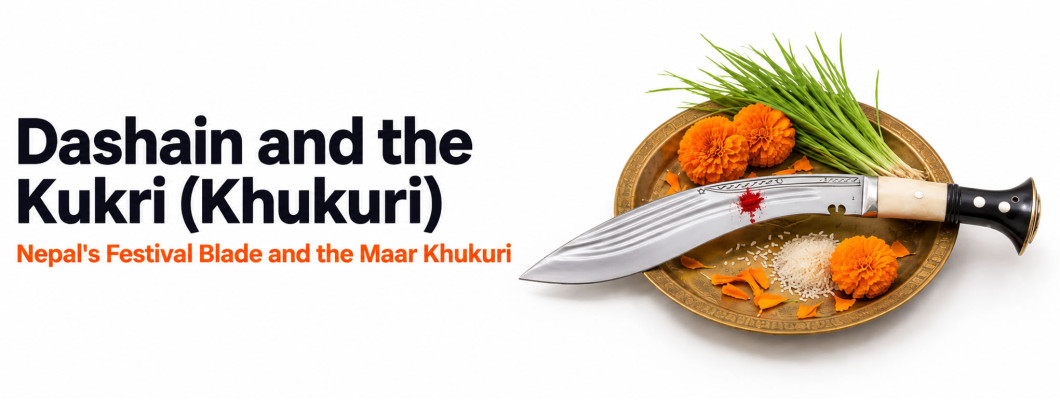
- Sacred Role in Rituals & Ceremonies: At the festival, the kukri is used to perform rituals. Before the blade is used, it is worshipped, indicating the spiritual value of the metal as a power and purity object rather than just a tool.
- Family Heirloom and Gift of Strength: Families cherish it as an heirloom that speaks of protection and responsibility. In weddings or other major life events, presenting a kukri is the way to give a blessing. Khukuri is passed down so that it will bring the owner strength, honor, and prosperity.
- Festivals and Performances: The kukri is also one of the featured items of the traditional dances and cultural displays, besides its use in rituals. These events talk to people about the strong warrior historical background of Nepal.
- Part of Nepal’s National Identity: Most importantly, the kukri is an absolute part of what Nepal is. Whether it be homes in which it is seen, soldiers trained with it, or ceremonies where it is displayed, it is the symbol that represents the strength, the pride, and the richness of the culture of the Nepalese people.
The Symbolism Behind the Great Gurkha Kukri
Gurkha Kukri is the powerful representation of identity. It marks the pride and heritage of Nepal. The Khukuri carries a meaning that is far more than a simple tool of war. It reflects the centuries of traditions passed from generation to generation. It symbolizes the spirit of Gurkhas worldwide. The meaning of Cho and Handle designs. Khukuri has a small notch at the base of the blade. It is also called Cho. It prevents any kind of liquid from reaching the handle. This signifies purity and protection. Khukuri marks the pride and identity not just in any war battles but also in many ceremonies of Nepal.
Different Khukuri Blade Styles and Their Uses
Khukuri has different forms. It varies in terms of the blade's structure, handle, and notch type. The blade type in Khukuri varies according to its use. The different types of blades used in Khukuri are given below:
- Bhojpure Khukuri: This type of khukuri has a fat look with a deeper curve. It has a wide blade and is heavier in comparison to other blades. This khukuri is especially used for domestic utility. It is perfect to cut the woods. It also holds the spiritual belief of protecting the home.
- Sirupate Khukuri: Sirupate khukuri is commonly used by Gurkhas. It is a long, elongated khukuri having an elongated blade. The structure of the Sirupate khukuri looks like the leaf of a Siru plant. It is lighter and has narrow eaves. It is often used for combat effectiveness. And it is famous for its precision and balance of agility and strength.
- Lampuwa Khukuri: A Lampuwa khukuri is deeply related to the cultures and heritage of the Limbu community of Nepal. It has a broad belly and a thick spine. Similarly, the blade has a forward curve. It is lighter compared to Bhojpure Khukuri. It is known for its dual use for both combat and practical use during daily life.
- Rolok Khukuri: Rolok kukri is popular in hilly regions. It is known to have a shorter blade with a subtle curve. It is a lightweight kukri that is perfect for daily household chores.
- Ang Khola Khukuri: Angkhola khukuri carries the history it is associated with British officers. The khukuri has two distinct blade features, where a heel shape is created around its blade. This distinction helps the khukuri to be lighter and allows for powerful strikes with the use of the khukuri. It is heavily used for combat. Due to its unique design, the khukuri is effective.
Top Makers and Brands of High-Quality Kukris
- Famous traditional kukri makers in Nepal: Khukuris are made with precision and craftsmanship. The structural formation of the Khukuri is a pure skill. In Nepal, the Khukuri is still based on local craftsmanship. The top famous khukuri makers of Nepal are Khukuri House (KH), Ex-Gurkha Khukuri House (EGKH), and Khukuri Palace. They hold a centuries-old blacksmithing tradition.
- Characteristics of high-quality craftsmanship: Khukuris require high-quality craftsmanship with centuries-old blacksmithing techniques. These techniques are deeply rooted in the heritage. While making a Khukuri, there should be distinct features that mark it as a Khukuri. Some of the distinct features include a sharp inward-curved blade, a notch, and a balanced grip on the handle. It requires fine detailing on the handle and proper weight distribution. Similarly, the Kukri shall be of high durability to mark it as premium.
- Modern vs traditional production methods: Traditionally, kukris are made with basic tools and techniques. The blacksmiths used centuries-old techniques to make a traditional kukri. But with the modern demand for kukri, the modern brands are adopting machinery for consistency. But still, the modern techniques use hand forging so that the kukris have more of a premium look. Traditional methods emphasize cultural authenticity, whereas modern methods focus on mass production of kukris.
- Price ranges and what justifies high value: The price of kukri depends upon different factors. The first factor is the quality of products used to make kukri. According to the different quality of steel, leather, and other pieces of metal used in kukri, the prices can go up. Similarly, the price can also range according to the utility purpose. If it is for basic utility, then the kukris are affordable. But if it is for ceremonies or for a collector's edition, then the price can be expensive. Similarly, the craftsmanship, historical design, and the amount of time that was put into creating the kukri can affect the price of the kukri.
How Weight Affects the Performance of a Kukri
The weight of the Kukri determines its use. Heavier Kukris are used for heavy-duty tasks like cutting or battlefield combat. It generates high striking power. But heavier Kukris can be tiresome to use as they require high power. A slimmer or lighter Kukris are used for basic utility tasks. It is used in household chores, farming, and precise cutting. It is easy to use, but the lack of impact may require but the lighter Kukris may lack the impact force. A perfect Kukri should have balanced weight distribution between the handle and blade. This ensures comfort and control. The uses of the Kukri depend upon weight, as it impacts the effectiveness and handling of the Kukri.
A Comprehensive Guide to Creating a Kukri
- Selection of raw materials: The process of creating a khukuri starts by choosing the raw materials for the khukuri. For a high-quality khukuri, a strong and durable steel is commonly preferred. The steel must be tough as well as flexible to endure heavy use without breaking.
- Heating and shaping the blade: After selecting the material for the blade, the steel is then heated. The traditional method of heating the steel is generally done in a large fire, and the steel is heated till it glows red hot.
- Creating the distinctive curved edge: After heating, the skilled smith changes the red-hot steel into the iconic Khukuri shape. The blade is given a curved shape, and the design is created according to the needs.
- Heat Treatment and Hardening Process: After a distinctive curved shape is given to the Kukri, it goes under a rapid cooling process called quenching. The shaped blade is cooled in water or oil. The edges are hardened while the spines are slowly cooled, which makes the khukuri flexible.
- Perfecting the Blade: After hardening, the blade is grinded. This is done to refine its edge and create the thickness that is wanted. After grinding, the blades are polished. This gives the khukuri a shine and smooth finish. Similarly, the decorative patterns are added according to need.
- Fitting the Handle and sheath: The handles are made of wood, buffalo horn, or metal. After creating the blade, the handles are carefully shaped and fitted to the blade. With this, a leather or wooden sheath is created. It helps to safely store the khukuri.
Differences Between a Kukri and a Machete
Both Kukri and Machete are powerful tools. Both have distinct uses and are quite different. The difference lies in its design, purpose, and cultural importance.
- Blade Shape: Both Kukri and Machete have a distinct blade structure. The Kukri has a curved blade, and it is bent forward with a wider belly near the tip. Whereas a Machete has a straight, long blade. It looks similar to a long knife but is smaller in size.
- Weight of the weapon: The Kukri is a heavier weapon. The weight of the Kukri is concentrated near the front. It helps to create more striking power when using a Kukri. Machetes are lighter and evenly balanced. Due to its light feature, it is easier to swing a machete many times without less use power.
- Purpose and Uses: The Kukri is both a weapon and a tool. It is used in both combat and domestic use. It has been used by Gurkha soldiers for centuries, as well as it has also been used in villages for basic daily use. The machete is mainly an agricultural tool. It is used in tropical countries to clear the paths and harvest the crops.
- Cultural Origin: Khukuri are deeply tied to Nepalese culture. It has cultural significance in the life of the Gurkhas. It carries history, heritage, and pride. Mashate belongs to Latin America, Africa, and Asia. More than its cultural significance, it is mainly seen as a farming and survival tool.
- Durability and Cutting Style: A kukri is built strong and thick. It is a flexible tool and perfect for heavy-duty work. It has long-lasting use and is generally passed from generation to generation. A machete is usually thinner. Due to its thin blade, it is good for fast-swinging activities. Compared to a kukri, a machete has less lasting use.
- Specialization: A kukri is a versatile tool. It is used in both domestic households and in combat. It is a weapon and a multi-use survival blade. A mashati is more focused on a general purpose. It is generally used for farming and clearing the vegetation.
How to Identify an Original Kukri
The kukri is a versatile tool. It is not just a knife. It is a cultural and historical symbol of Nepal and the Gurkhas. With the popularity of the kukri, there is a high demand for kukris in the market. Due to this, many fake or low-quality versions are easily available. The main ways to identify an original kukri are
- Physical signs: To identify an original khukuri, the blade of the khukuri can be examined. The blade is made of high-carbon steel. The steel should be strong and durable. A khukuri has a small notch near the base of the blade. It is called cho. It carries religious and practical significance. Similarly, the handles of the original khukuri are made of buffalo horn, wood, or bones. This helps to identify the real kukri.
- Markings and Certificates: The traditional khukuris are made by local craftsmen and blacksmiths. Original khukuris are well-known makers like Khukuri House. They often have a stamp or mark that helps to identify the authenticity. Similarly, the sellers of khukuri may provide authenticity certificates. This helps to prove the blade was handmade with local craftsmanship in Nepal.
- Common counterfeit kukris and how they differ: With the high demand for khukuris, many fake khukuris are mass-produced. These mass-produced khukuris use cheap steel, and the handles of the khukuris are made of plastic. The counterfeits may look shiny and decorative. Similarly, you can check the balance, weight, and strength of a real khukuri. Fake or counterfeit khukuri doesn't have a defined notch or may have glued handles instead of riveted ones.
- Testing the blade: The original Khukuri has the right balance of weight. It is neither too heavy nor too light. It should feel comfortable to hold and use. The Khukuri is balanced near the handle. The edge of the blade should be sharp so that it can create a higher impact with less power and force.
- Buying Khukuris from a Trusted Source: While purchasing a khukuri, make sure that you buy from well-known khukuri houses. There are many licensed sellers in Nepal who use local craftsmanship, traditional methods, and even custom forge techniques to produce authentic and original khukuris. Make sure you avoid street vendors or online sellers without proper guarantees. The well-known brands that sell khukuri provide warranties, marks, and certificates that help to identify whether the khukuri is authentic.
Conclusion
A Khukuri is not just a blade having a history as its backbone. It is a symbol of Nepal's history, pride, and strength. It is the estate and identity of the Gurkhas. It has been through the time test both as a handy instrument and a weapon of the fight. It expresses the faithfulness of the people of Nepal. The historical background is very strong in Nepalese culture. As time passes, it is always necessary to find authentic, skillfully made Khukuris, as this acknowledges the many generations of local artisans and blacksmiths who have put their passion into creating this unique tool. It marks the bravery, strength, and cultural identity. It carries the story of legacy and tradition. With every use of a khukuri, one should recognize, respect, and preserve khukuris for years to come.