Sharp Sword vs Blunt Sword: Which Should You Buy?
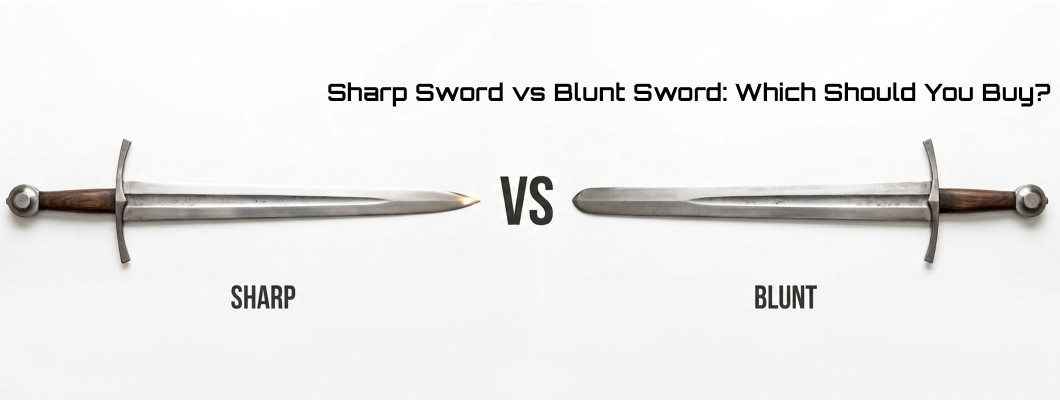
Buy a sharp sword if you intend to cut things with it — targets, cutting practice, a working blade. Buy a blunt sword if it will ever be swung near another person, carried in public, or handled by people who are not trained. For display, either works, and blunt is the safer choice in a home. The sword can look identical either way; what changes is the edge, the tip and what you can safely do with it.
This guide works through the sharp sword vs blunt sword decision by use: cutting practice, HEMA and stage combat, Renaissance fairs and cosplay, display and collecting, weddings and ceremonies. It also covers safety, the three safety tip types, whether a sharp sword can be ordered blunt, and which Everest Forge option suits each buyer.
The Short Answer: Which Sword for Which Buyer?
| You want it for | Edge | Tip | Everest Forge option |
|---|---|---|---|
| Cutting practice | Sharp | Sharp point | Battle-ready sharp sword |
| HEMA sparring | Blunt, rebated | Rolled or spatulated, plus a blunt | Custom forge to your club's specification |
| HEMA solo drills | Blunt or sharp | Rounded or sharp | Training blade, or a sharp sword for solo cutting |
| Stage combat | Blunt, rebated | Rounded | Any sword ordered to stage combat build |
| Renaissance fairs | Blunt | Rounded | Training blade or stage combat build |
| Cosplay | Blunt, if steel is allowed at all | Rounded | Training blade — check the event first |
| Display and collecting | Either | Either | Sharp sword, or any sword ordered blunt |
| Weddings and ceremonies | Blunt | Rounded | Any sword ordered blunt, with free engraving |
The rest of this page explains each row. Not sure which kind of blade suits you in the first place? The Blade Finder Quiz asks a few questions about how you will use it and points you to the right type.
Training Sword vs Real Sword: What Actually Differs?
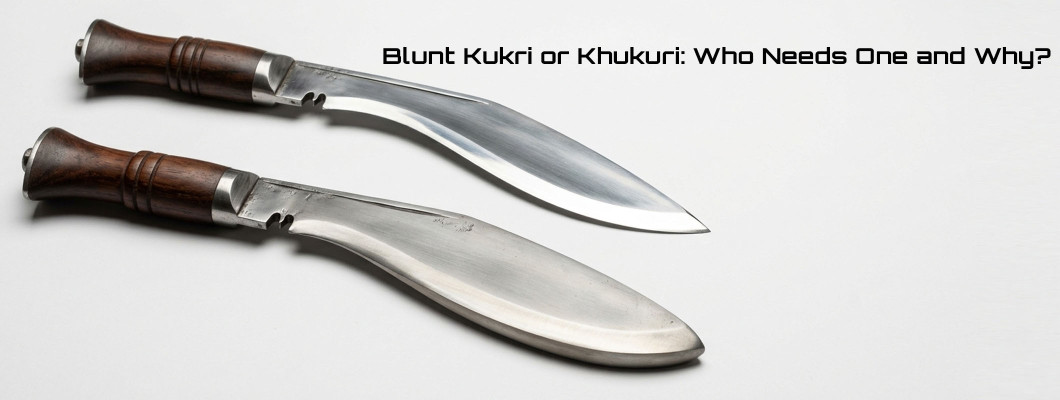
The edge. A sharp sword has an edge ground thin enough to cut. A blunt sword has an edge left thick — usually rebated, meaning deliberately rounded — so it cannot cut and does not chip into a burr that could. Our guide to rebated, blunt and unsharpened blades explains the three terms, which are often confused.
The tip. A sharp sword ends in a point. A blunt sword ends in a rounded, spatulated or rolled tip, depending on its purpose.
Sometimes, the blade itself. A dedicated HEMA sparring sword is also shaped to flex on a thrust. A sharp sword blunted to order keeps the stiffer blade of a cutting sword. That matters, and it is covered below.
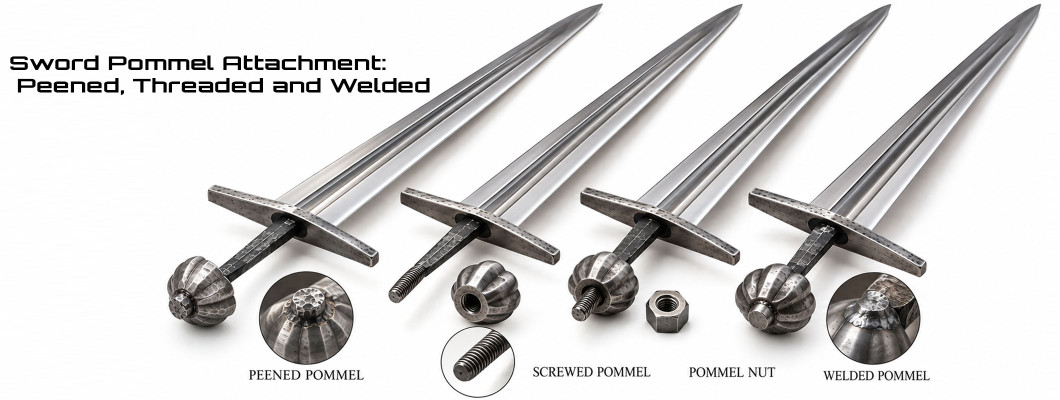
What stays the same. On a properly made sword, the steel, the heat treatment and the hilt construction do not change. A blunt sword still takes hard contact, so it needs the same full-length tang and secure pommel as a sharp one — see our guides to sword tang types and pommel attachment.
Should I Buy a Sharp Sword for Cutting Practice?
Yes. Cutting practice is the one use that needs a sharp sword. Test cutting — tatami, water bottles, pool noodles, soft targets — only works with an edge. A blunt sword will bounce, crush or fold the target and teach you nothing about edge alignment.
What to look for. A sharp sword for cutting should be battle ready in the real sense: a proper carbon steel, a correct heat treatment, and a tang that runs the full length of the grip. Our battle ready standard sets out what that means, and our guide on how to test a sword covers the checks before your first cut.
What to accept. A sharp sword needs a safe place to cut, clear space around you, a secure way to store it, and regular care — an edge rusts and dulls faster than a flat.
HEMA and Stage Combat: Blunt, but Not the Same Blunt
Both disciplines use blunt swords, and both have people swinging steel at each other. They still want different things.
HEMA sparring. Historical European martial arts sparring uses real thrusts at full intent, against a partner in a mask. A HEMA sparring sword needs a rebated edge, a wide safety tip — usually rolled or spatulated — and a blade that flexes on the thrust so the force does not all go into your partner. Clubs and tournaments set their own equipment rules, often including weight, flex and tip requirements.
An honest note for HEMA buyers. A sharp sword ordered blunt is a cutting blade with its edge and point made safe. It keeps the stiffness of a cutting sword, so it is generally not a substitute for a purpose-built sparring blade in free sparring. If you need a sparring sword, send your club's specification through custom forge and we will tell you plainly whether we can meet it. For solo drills and forms, a blunt training blade is fine, and for solo cutting, a sharp sword is the right tool.
Stage combat. Choreographed fighting does not use real thrusts at a partner, so flex matters less and a very secure, well-balanced sword matters more. The standard is a rebated edge and a rounded tip on a strong blade. Every Everest Forge sword can be ordered to that build, and our stage combat blades page sets out the standard. Our guide to why stage combat swords fail explains what to avoid.
Renaissance Fairs and Cosplay: Check the Rules First
Events decide, not you. Many fairs and conventions have weapons policies. Some ban real steel entirely, some allow blunt blades that stay sheathed or peace-tied, and some require every weapon to be checked at the gate. Read the event's rules before you order, not the week before you go. Our Renaissance Faire weapons guide covers peace-tying and what to bring.
Choose blunt. Where steel is allowed, a blunt sword with a rounded tip is the sensible choice. Crowds, children and drink do not mix with an edge, and a sharp sword on a belt is very easy to catch someone with.
Think about weight. You may be wearing it all day. A shorter or lighter pattern is kinder on a long costume day than a full longsword. Our guide on what size sword you need helps with that decision.
Cosplaying a specific character? Blades from anime and games are usually built to order. Our custom anime weapons request takes a reference image and can be forged blunt from the start.
Transport it properly. Carry it sheathed and wrapped between your car and the event, and follow local rules on carrying blades in public.
Display Sword vs Functional Sword: Do You Need an Edge on the Wall?
No — but it does not hurt either. A sword looks almost the same sharp or blunt from a metre away. Many collectors want a functional, sharp sword even for display, because they value knowing it is a real working blade.
Choose blunt if there are children in the house, the sword will be taken down and handled by guests, or it hangs somewhere people pass close by.
Choose sharp if you want a fully functional piece in the collection, or you may want to cut with it later.
Show it properly. A sword displayed on a stand is easier to see and safer than one leaning in a corner. We make a wooden blade display stand for exactly this.
A display sword should still be a real sword. The phrase "display sword" is often used to sell stainless wall-hangers that are unsafe to swing at all. An Everest Forge sword is hand-forged 5160 spring steel whichever edge you choose, so a blunt display piece is still a sound sword.
Wedding and Ceremonial Swords
Blunt is almost always the right choice. Ceremonial swords are handled in crowded rooms, passed between people and photographed at close range. A sharp edge adds risk and nothing to the ceremony.
Common uses. Sword arches, cake cutting, presentation gifts, retirement and commissioning ceremonies, and family heirloom pieces. A blunt edge will still cut a wedding cake cleanly enough. For more ideas, see our guide to blades as gifts.
Make it personal. Engraving is free on every Everest Forge sword — names, a date, a regimental crest or a family motto — with a preview for approval before anything is cut. See personalised blades for what can be engraved.
Plan ahead. Every piece is prepared at the forge in seven to ten days, and shipping adds a further seven to ten days. Orders to the USA and Canada travel with FedEx; everywhere else ships on a DDP service, so duties are settled before the parcel moves. Order well before the date.
Safety Considerations
A blunt sword is not a safe sword. It is a steel bar with weight and speed behind it. It can still break bones, and a blunt point can still cause serious injury. Treat every sword as dangerous.
A sharp sword needs a plan. Where it lives, who can reach it, how it travels and where you will cut with it. Store it sheathed or on a secure mount, out of reach of children.
Check the hilt, whatever the edge. Before any use, twist the grip and pommel against the blade and listen for a rattle. Stop the moment anything moves.
Use protective gear for any partner work. Mask, gloves and padding for sparring. No blunt edge replaces them.
Know the law. Ownership, carrying and transport rules vary widely, and some places treat sharp and blunt blades differently. Start with our sword laws by country guide, then check your local rules before you order.
Rounded, Spatulated and Rolled Tips
On a blunt sword, the tip matters as much as the edge, because a point concentrates the force of a thrust into a tiny area.
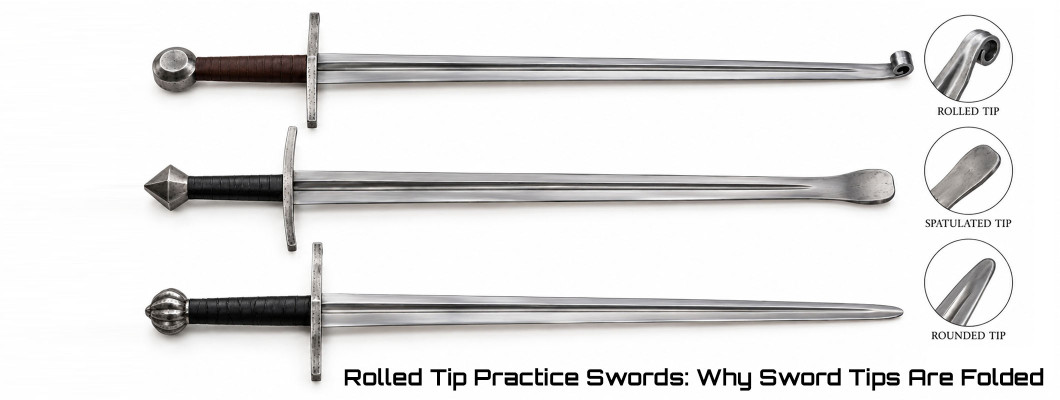
Rounded tip. The point is tapered and rounded off. It keeps the look of a real sword and is the standard on stage combat builds, where real thrusts are not made at a partner.
Spatulated tip. The end of the blade is forged out into a small flat pad. Wider than a rounded tip, with no fold to crack.
Rolled tip. The thin end of the blade is curled back into a closed loop. The widest of the three, and the one most associated with HEMA sparring swords.
Our guide to rolled tip practice swords compares all three in detail. A rounded tip comes as standard on a stage combat build; if you need a spatulated or rolled tip, ask through custom forge.
Can a Sharp Sword Be Ordered Blunt?
Yes. Any Everest Forge sword can be ordered blunt. Every sword is forged after the order is placed, so the edge is decided before it is ground, and ordering blunt costs nothing extra. Add this to the order note at checkout:
"Stage combat build — rebated edge, rounded tip."
We then forge the same sword with a rebated edge and a rounded tip instead of a sharp edge and point. The pattern, steel, hilt and engraving options stay the same. If you want something different — a spatulated or rolled tip, or a specific edge thickness — send it through custom forge instead.
Already own a sharp sword? You can blunt it yourself with care — our guide on how to blunt a knife, sword, kukri, machete or dagger covers the method. If you are buying new, ordering it blunt is simpler: the edge is ground to the right thickness at the forge from the start.
Can a blunt sword be sharpened later? Sometimes, by a professional, but a rebated edge is deliberately thick, so sharpening it means removing a lot of steel and changes how the sword handles. If you think you will want an edge one day, order it sharp. Our sharpening guide covers edge care for sharp blades.
Which Everest Forge Option Suits You?
You want to cut. Choose any sword from our hand-forged swords, which are forged sharp to our battle ready standard.
You want to train, perform or attend events. Browse our training blades, or choose any sword and add the stage combat order note.
You want a sparring sword to a club specification. Send the specification through custom forge.
You want a display or ceremonial piece. Choose any sword, decide sharp or blunt, add free engraving, and consider a display stand.
You are still not sure. Take the Blade Finder Quiz to narrow down the blade type first, then come back and choose sharp or blunt.
You want a design we do not list. Custom forge builds it from a sketch, a photograph or a written description, sharp or blunt.
Hand-Forged Swords, Battle Ready
Forged to order from 5160 spring steel in our Kathmandu workshop and sharpened for cutting. Free engraving on every sword.
Training Blades and Stage Combat Builds
Browse our training blades, or order any sword blunt by adding "Stage combat build — rebated edge, rounded tip." to the order note, at no extra charge. For a club specification, send it through custom forge.
Frequently Asked Questions
Sharp sword vs blunt sword: which should I buy?
Buy sharp if you intend to cut with it — targets, cutting practice or a working blade. Buy blunt if it will be swung near other people, carried at events or handled by people without training. For display, either works, and blunt is the safer choice in a home with children.
Training sword vs real sword: what is the difference?
A training sword has a thick, rebated edge that will not cut and a rounded, spatulated or rolled tip instead of a point. A dedicated sparring sword is also made to flex on a thrust. A well-made training sword uses the same steel and hilt construction as a sharp one, because it still takes hard contact.
Is a blunt sword safe?
Safer, not safe. A blunt sword is still a steel bar with weight and speed behind it and can break bones or cause serious injury, especially at the tip. Use protective gear for any partner work and check the hilt before every session.
Can I order a sharp sword blunt?
Yes. Every Everest Forge sword is forged after the order is placed, so any sword can be made blunt. Add "Stage combat build — rebated edge, rounded tip." to the order note at checkout. There is no extra charge. For a different tip or edge specification, send it through custom forge.
Does a blunt sword cost more?
No. Every Everest Forge sword is forged to order, and ordering it blunt with a rebated edge and rounded tip costs nothing extra. Add the order note at checkout. A custom tip or edge specification through custom forge is quoted separately.
Can a blunt sword be sharpened later?
Sometimes, by a professional, but a rebated edge is deliberately thick, so sharpening it removes a lot of steel and changes the balance. If you think you will want an edge later, it is better to order the sword sharp.
Is a blunted sword good for HEMA sparring?
Generally not for free sparring. A sharp sword ordered blunt keeps the stiff blade of a cutting sword, while a HEMA sparring sword is shaped to flex on a thrust and usually has a wide rolled or spatulated tip. It is fine for solo drills. For sparring, follow your club's equipment rules and send the specification through custom forge.
What sword should I bring to a Renaissance fair?
A blunt sword with a rounded tip, if the event allows steel at all. Read the fair's weapons policy first — many require blades to stay sheathed or peace-tied, and some ban real steel. Choose a lighter pattern if you will wear it all day.
Display sword vs functional sword: does a display sword need to be sharp?
No. A sword looks nearly the same sharp or blunt on a wall. Many collectors still prefer a sharp, functional piece. Choose blunt if children live in the house or the sword will be handled by guests.
Should a wedding sword be sharp?
Usually not. Ceremonial swords are handled in crowded rooms and passed between people, so a blunt edge and rounded tip are the safer choice, and a blunt edge still cuts a cake. Engraving is free on every Everest Forge sword, and you should allow seven to ten days of preparation plus seven to ten days of shipping.
What is the difference between rounded, spatulated and rolled tips?
A rounded tip tapers and rounds the point and is standard on stage combat builds. A spatulated tip forges the end into a small flat pad. A rolled tip curls the end into a closed loop and is the widest, common on HEMA sparring swords. Our rolled tip guide compares all three.