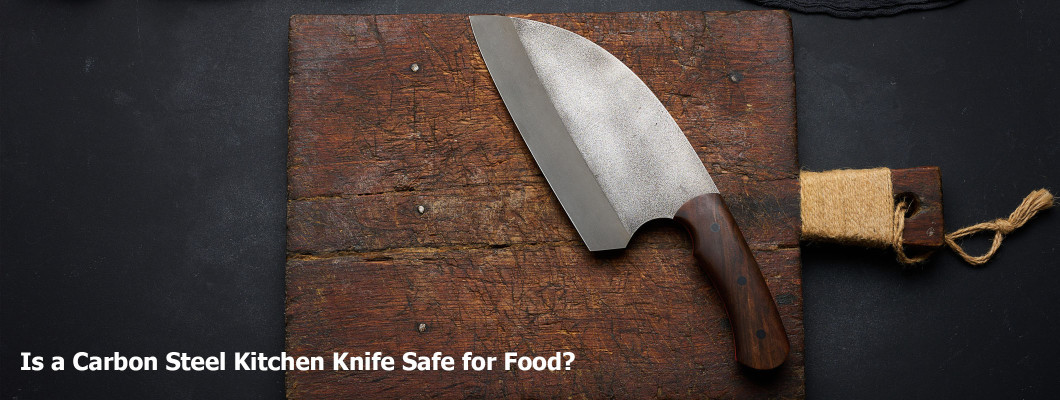
Is a Carbon Steel Kitchen Knife Safe for Food?
Yes — a carbon steel kitchen knife is completely safe to prepare and eat food with. Carbon steel is simply iron with a little carbon, no toxic alloying metals, and it has been the material of chef's knives and cooking knives for as long as steel has existed. All the things people worry about — the darkening blade, the patina, the odd rust spot — are cosmetic or easily managed, not health risks. This guide answers the food-safety question honestly and in full, so you can buy and use a carbon steel chef knife with complete confidence.
Everything below applies to any high-carbon kitchen or cooking knife, and specifically to the 5160 high-carbon steel chef and kitchen knives we hand-forge at Everest Forge.
Why People Worry — and Why They Needn't
The anxiety is understandable. A carbon steel kitchen knife behaves differently from the stainless steel most modern kitchens use: it darkens, it can spot with rust if neglected, and a brand-new blade can leave a faint metallic note on very acidic food. Those visible changes look, to a first-time owner, like something going wrong. They are not.
Here is the key fact that dissolves most of the worry: until stainless steel was produced in quantity in the early 20th century, every kitchen knife in the world was carbon steel. Cooks prepared their food with carbon steel kitchen knives for centuries without harm. The material is not merely acceptable — it is the original, and it remains the choice of many professional chefs precisely because it takes a sharper edge. Everything else is maintenance, not safety.
Is the Patina Safe to Eat Off?
Yes. The patina — the grey, blue or bronze tint that develops on a carbon steel blade with use — is completely food-safe. It is a stable layer of iron oxide that forms as the steel reacts with food and air, and it is chemically stable, meaning it stays put on the blade rather than coming off into your food.
Far from being a problem, the patina is doing you a favour. It is a passive, protective layer that actually shields the steel beneath it from the active orange rust that damages a blade — the culinary equivalent of a cast-iron pan's seasoning. A well-developed patina also makes the knife less reactive over time, so any tendency to tint or flavour food fades as the blade matures. Many cooks deliberately encourage a dark, even patina for exactly this reason. The simple rule: a stable grey or blue patina is good and safe; only flaky orange rust needs attention.
Is Rust on a Knife Dangerous?
This is the big fear, and the honest answer will reassure you: rust itself is not toxic. Rust is iron oxide, and iron is an essential dietary mineral — it is not a poison. Consuming the trace amount that might transfer from a lightly rusted blade poses no meaningful health risk; your body simply passes it through.
Two common myths are worth putting to rest directly:
- Rust does not cause tetanus. Tetanus is caused by a bacterium, Clostridium tetani, found in soil and dust — not by rust. The old "rusty nail" association is about dirty puncture wounds, not about the oxide itself, and it has nothing to do with a kitchen knife you eat from.
- You will not be poisoned by a rust spot. Iron oxide is poorly absorbed by the body and harmless in the incidental amounts involved. Only deliberately ingesting large quantities of iron would be a concern — which has nothing to do with a spot on a knife.
So why keep a carbon knife rust-free at all? For hygiene and performance, not toxicity. The real issue with rust is that if it is left to progress, it pits the surface — and a rough, pitted blade is harder to clean and can trap food residue, while the corrosion ruins the fine edge. You remove rust to keep the blade smooth, sharp and easy to clean, not because the rust would poison you. Surface rust wipes off easily; our full carbon steel knife care guide shows exactly how.
Does a Carbon Steel Kitchen Knife Change the Taste of Food?
Only slightly, only sometimes, and only when the blade is brand new. A fresh carbon blade without a patina can leave a faint metallic note on strongly acidic foods — cutting lemons, tomatoes or raw onions is where you might notice it. This comes from a tiny amount of iron reacting at the cut surface. It is harmless (iron is a nutrient), and it fades and disappears as the patina develops. Within a few weeks of normal use you will not notice it at all.
You may also see acidic foods discolour slightly at the cut — an apple or avocado browning a touch more, an onion greying. Again, this is a surface reaction, not contamination, and it is purely cosmetic. If you want to avoid it entirely on a new knife, wipe the blade clean between acidic ingredients, or force an even patina from the start — both are covered in our care guide.
The Food-Safety Habits That Actually Matter
Here is the honest perspective: with any kitchen knife, carbon or stainless, the real food-safety risks have nothing to do with the steel and everything to do with how you use and clean it. Three habits matter far more than blade material:
- Wash off the storage coating before first use. Hand-forged carbon steel kitchen knives, including ours, often ship with a light protective oil or coating to prevent rust in transit. Wash it off with warm soapy water before you first cut food — a simple, sensible first step.
- Wash between raw meat and other foods. Cross-contamination — using the same unwashed blade on raw chicken and then on salad — is the genuine food-safety hazard in any kitchen, and it is about hygiene, not steel. Wash and dry the blade when moving from raw proteins to ready-to-eat foods.
- Wash and dry after every use. For a carbon knife this does double duty: it keeps the blade hygienic and it prevents rust. Hand-wash, dry immediately, and the knife stays both food-safe and rust-free.
Do those three things and a carbon steel kitchen knife is every bit as safe as any blade in your kitchen — with a better edge to show for it.
The Two-Minute Care Routine
A carbon steel knife stays food-safe and rust-free with one simple habit: hand-wash, dry immediately, and wipe on a thin film of food-safe oil before storing. Our full care guide covers the daily routine, patina, rust removal, sharpening and storage in detail.
Read the Carbon Steel Care Guide →Carbon Steel vs Stainless — the Honest Trade-Off
If carbon steel is safe, why does stainless exist? Because it trades some performance for less maintenance. Stainless steel contains enough chromium to form an invisible, self-healing oxide layer that resists rust with no effort from you. Carbon steel leaves the chromium out — which is exactly why it can be hardened to a keener, longer-lasting, more easily sharpened edge. The cost of that better edge is a little attention: wash, dry, oil.
Neither is safer to eat from than the other. Both are food-safe. The choice is simply whether you want the sharper, more responsive kitchen knife that rewards a moment of care (carbon), or the lower-maintenance blade that gives up a little edge performance (stainless). For cooks who care about how a knife cuts, carbon steel's small upkeep is a price well worth paying — and now you know the food-safety worries behind it are unfounded.
The Carbon Steel Knives We Forge
Every kitchen knife we make is hand-forged from 5160 high-carbon steel in Tokha-3, Kathmandu, Nepal — full tang, oil-tempered, sharpened, and entirely safe for food. A few from the range:
Browse the full hand-forged chef & kitchen knife collection, learn why hand-forged chef knives outperform factory-made ones, or work out which kitchen knife you actually need.
Commission Your Own Carbon Steel Knife
Want a specific blade, length, handle or finish? Our smiths forge food-safe kitchen knives to your exact specification from 5160 high-carbon steel, full tang, with free engraving. Send a sketch or description for a free quote within 24 to 48 hours.
Order a Custom Kitchen Knife →Frequently Asked Questions
Is a carbon steel kitchen knife safe for food?
Yes, completely. Carbon steel is iron with a small amount of carbon and no toxic alloying metals, and it was the material of every kitchen knife until stainless steel arrived in the 20th century. The darkening, patina and occasional rust spot on a chef knife are cosmetic or easily managed, not health risks. Wash and dry it after use and it is entirely safe to cook and eat with.
Is the patina on a carbon steel knife food-safe?
Yes. The patina is a stable layer of iron oxide that forms with use. It is chemically stable, stays on the blade rather than coming off into food, and actually protects the steel from rust. It is food-safe and, like the seasoning on a cast-iron pan, generally something to encourage rather than remove.
Is it dangerous to use a knife with rust on it?
Rust itself is not toxic — it is iron oxide, and iron is a dietary mineral, so trace amounts are harmless. Rust does not cause tetanus either; that is a bacterium from soil, unrelated to a kitchen knife. You remove rust for hygiene and edge performance, because a pitted rusty surface is harder to clean and dulls the blade — not because it would poison you. Wipe surface rust off, dry, and the knife is fine.
Does a carbon steel kitchen knife make food taste metallic?
Only a new, un-patinated blade, and only with strongly acidic foods like citrus, tomatoes or onions — a faint metallic note from a tiny amount of iron reacting at the cut. It is harmless (iron is a nutrient) and it fades as the patina develops, disappearing within a few weeks of normal use. Wiping the blade between acidic ingredients avoids it in the meantime.
Why does my carbon steel knife turn onions or apples grey?
That is a harmless surface reaction between the reactive steel and the acids in the food — cosmetic only, not contamination. It is most visible on a new blade and on foods that brown easily, like apple and avocado. It lessens as the patina forms. Wipe the blade during prep if you want to avoid the discolouration.
Do I need to do anything before using a new carbon steel kitchen knife?
Just wash it. Hand-forged carbon knives often ship with a light protective coating or oil to prevent rust in transit, so wash it off with warm soapy water before first use. After that, use it normally, and dry and oil it after washing to keep it rust-free.
Is carbon steel or stainless steel safer for food?
Neither is safer — both are food-safe. The difference is maintenance versus edge. Stainless resists rust on its own but gives up some edge performance; carbon steel takes a keener, more easily sharpened edge but needs washing, drying and occasional oiling. The food-safety question is settled for both; the choice is about how the knife cuts and how much upkeep you want.
Shop Hand-Forged Carbon Steel Kitchen Knives
Food-Safe 5160 Carbon Steel, Forged in Nepal
Over 30 hand-forged chef knives, santokus, cleavers and more — full tang, keen-edged, entirely food-safe, with free personalisation and worldwide shipping. Buy the perfect blade or commission your own.
Browse Chef & Kitchen Knives →