Gladius Unveiled - A Detailed Guide to the Types, History, and Craftsmanship of Rome's Iconic Short Sword
The Gladius was definitely not only a sword; it was the symbol and the demonstration of the power and self-discipline, which were the basis of the glory of the Roman Empire, one of the most influential empires in history. For a very long time, this short and powerful sword was the loyal friend of the Roman legionaries, who used it in numerous battles and transferred a legacy that is still surprising for today's people. Despite its very simple design, it was incredibly efficient and was recognized as one of the most legendary weapons of history.
Eventually, the Gladius evolved through different variations, and each of them was characterized by particular unique features:
- The initial one was the Gladius Hispaniensis, which took the idea of the swords from the Iberian Peninsula
- Then, there was the Republican Gladius, which kept developing the design to be more efficient in battle
- The Mainz Gladius introduced a broader blade with a sharp point
- The Pompeian Gladius contributed a more uniform and functional design
The different types of swords are a reflection of the Romans adapting their swords to fulfill the requirements of the changing period and tactics.
The article aims to portray a simple yet complete image of the Gladius. This article will dive into its amazing history and present, explaining the major types of gladius in simple language that everyone can understand. Besides, it will also be a great buying guide for collectors, history lovers, and those who would like to have a replica of this legendary sword. You can be fascinated with the Gladius because of its history, its making, or as a decorative piece. Thus, gaining knowledge about it is like taking a step back to the Roman legion era.
What Is a Gladius? Anatomy and Function
The Gladius is the short sword that Roman legionaries used to attack the enemy. It wasn't large or luxurious; however, each of its parts were made to serve a purpose.
The cutting edge was small in size, on both sides, it was razor-sharp, and at the end, it gave off quite a strong point. This point allowed the sword to perform quick stabs, which were much more lethal in close fights. The guard was just a small metal piece between the blade and the handle. It prevented the hand from slipping onto the blade and also gave some protection against the rivals. In most cases, the handle was either wooden or made of bone so that the soldier's grip was solid even during prolonged fights. The pommel was at the bottom, that balanced the sword and kept it stable in the hand. The tang was the hidden part of the blade that provided the sword with the needed strength to prevent it from breaking.
The Gladius was primarily designed for stabbing. Roman soldiers engaged in hand-to-hand combat, with their shields held out in front. A long sword would have been difficult to swing but the short Gladius could penetrate the armor and shields of the opponent's troops with quick, powerful thrusts. This feature made it deadly and efficient. The Roman army was therefore one of the most powerful fighting forces in history.
Historical Origins of the Gladius
The Gladius is a weapon that had its origin outside of the city of Rome. Its main roots are from the Iberian Peninsula, known as Spain and Portugal today. Celtiberians, a fierce warlike tribe, were those who utilized short double-edged swords. The swords were very durable, easy to carry, and they could use it for cutting as well as thrusting.
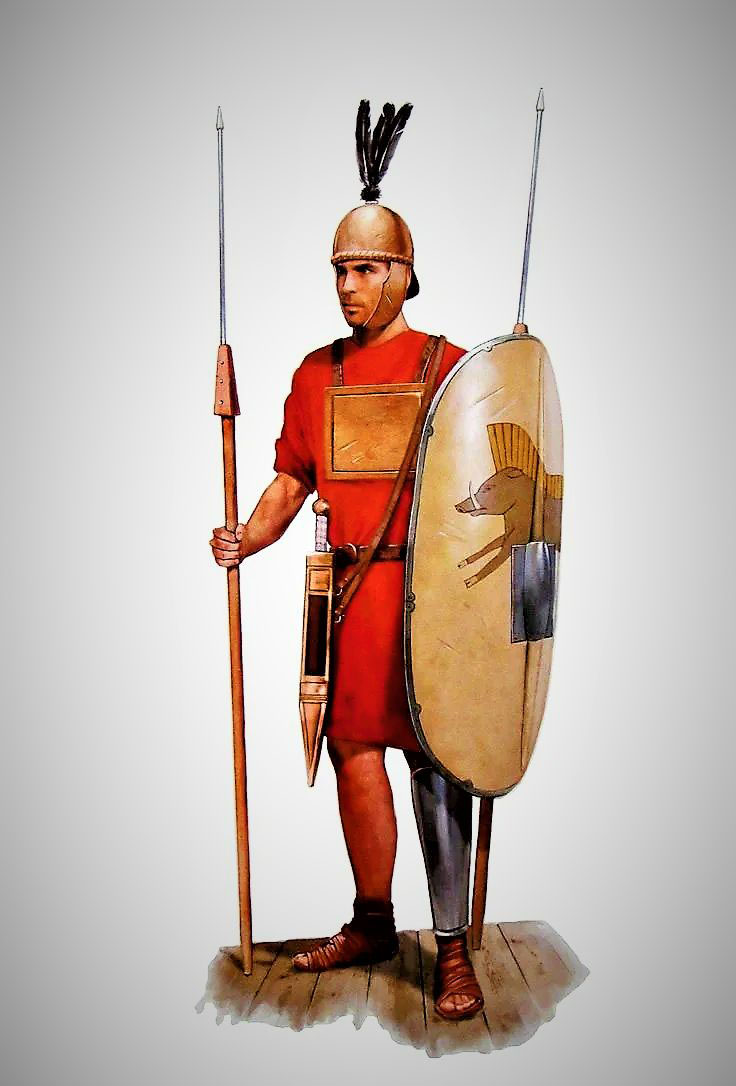
During the Punic Wars in the 3rd century BCE, Rome was involved in a series of wars in Iberia. The Roman soldiers met these Celtiberian swords face to face. They understood how good they were in hand-to-hand battle. The Romans admired the design and later took it as their own. The first model of Rome was called Gladius Hispaniensis which meant "Spanish sword".
The Hispaniensis was somewhat longer and heavier compared to the later types. Nevertheless, it already contained the elements that made the Gladius so unique. It was both sides had the cutting edges and the strong and pointed end. Roman soldiers found out that this weapon was very compatible with their fighting style. The Roman legions fought in close formation, following organized lines. Each soldier carried a shield for defense. A short sword that could thrust forward through small openings was far more practical than a long slashing weapon.
Gradually, the Romans altered the design further:
- The Republican Gladius was a little bit shorter and more user friendly
- After that, the Mainz Gladius came with a broader blade and a sharp, triangular tip that was very deadly
- Then came the Pompeian Gladius which was a little bit shorter, straighter, and more uniform
This model became the most popular in the empire and is widely held as the last stage of the Gladius.
The transformation of the Gladius from a Celticiberian weapon to a Roman masterpiece truly demonstrates Rome's ability to adapt. Roman engineers did not come up with the Gladius, yet it was them who made it better. The weapon not only changed by its brutality but also became the symbol of Roman order, talent, and might. It had a very long history of ruling the wars and spreading a heritage that still attracts people now.
The Main Types of Gladius

Gladius Hispaniensis
The Gladius Hispaniensis was the first model of the Roman Gladius. Its name means 'Spanish sword' as it was a product of the Iberian Peninsula (present-day Spain). The Roman soldiers first came across it during the Punic Wars in the 3rd century BCE while they were battling with the likes of the Celtiberians. After being stunned by its efficiency, they took it up for their own use.
This sword used to be longer than the ones made later, its length was about 24 to 27 inches. Its blade was shaped like a leaf; the widest part was in the middle, and it tapered towards the tip. Such a design made it possible to be used both for cutting and stabbing making it a multi-purpose weapon. The point was always sharpened so it was deadly in close combat.
The Hispaniensis was a bit heavier compared to the later Gladius models. However, it was very well balanced with the Roman style of fighting. The soldiers would usually be in close ranks and be guarded by their shields. Using the Gladius, they would stab at the enemies. The weapon's extra length gave it the advantage of extra reach, which could have made it easier in the fight.
This sword was the first of the Gladius lineage in Rome. Though subsequent variations went shorter and lighter, the Hispaniensis remained as the first model of one of the most famous weapons in history.
Republican Gladius
The Republican Gladius emerged after the Hispaniensis, during the period of the Roman Republic (approximately 3rd–1st century BCE). By then, Rome had discovered the usefulness of shorter, more practical swords for tightly packed battle scenarios. Usually, a blade of 20 to 24 inches in length was chosen to make the Republican Gladius just a bit shorter than the Hispaniensis.
The design was less curved and more compact. It still possessed the double edges, yet the blade had a less leaf-like shape and was of more uniform width. Since the tip of the sword stayed thrusting was the primary attack method. As it was lighter and smaller, soldiers were able to handle it more easily during lengthy combats without getting exhausted too quickly.
This was a sword that represented Rome's increasing military discipline. The legions battled in tightly packed ranks, where soldiers thrust through the small gaps between the shields. A shorter sword was safer and quicker in this case. Cutting was less frequent, but still could be done due to the double edges.
The Republican Gladius was not so well-known as the Hispaniensis or Mainz types, but it signified the change to a more distinct weapon. It prepared the ground for the next developments. At the same time, it gives an insight into Rome's cleverness to be compatible with its different fighting tactics.
Mainz Gladius
Mainz Gladius was one of the most iconic Roman swords which originated in roughly the 1st century BCE. The name is derived from the city of Mainz, Germany, where several examples have been found.
Mainz Gladius was smaller in length compared to the Hispaniensis but it had a unique design. The blade was commonly about 18 to 22 inches long. Its width was larger near the handle, decreasing in the middle and increasing again before the sharp triangular point was formed. This made it easy to have a strong thrusting action. The triangular point was durable enough to go through armor and shields.
The aspect that made the Mainz so special was the fact that it used both the cutting and the thrusting. The wide blade was great for slashing and the tip was deadly for thrusting. It was weighted towards the base so the strikes could be combined with the additional momentum. For Roman soldiers fighting in close formation, this offered adaptability without losing thrusting attack efficiency.
The Mainz Gladius became popular in the time of the early empire, and is very much depicted in Roman art and sculptures. Its architect shows the perfection of a weapon by Rome's hands. Soldiers hardly lost their confidence in it in any difficult battle scenario. Even though later models would get less complicated and shorter, the Mainz Gladius is still a very effective and one of the most famous versions of this legendary sword.
Pompeian Gladius
The Pompeian Gladius is usually termed the last model of the Roman Gladius. After being introduced in the 1st century CE it was named after Pompeii, where a lot of similar instances were found. During the peak of the Roman Empire this was the typical weapon with which Roman soldiers were armed.
The Pompeian Gladius was much shorter and straighter than the ones that came first. The blade was normally 17 to 21 inches long with parallel edges and a very strong and sharp point. It did not have the extremely thick leaf-like shape that the Mainz had. It was considered the simplest and most practical Gladius.
This form was a reflection of the Roman emphasis on thrusting as the main offensive tactic. The shorter blade was very handy and quick to operate in the narrow spaces of the legions. However, cutting was possible but not as effective as thrusting. Furthermore, the sword's simplicity led to production in large quantities which was significant for an empire that was in need of thousands of soldiers' armaments.
The Pompeian Gladius is notable mainly because Rome's power peaked when it was in use. It is found in most pictures of Roman soldiers, and several existing specimens have been found from archaeological sites such as Pompeii. Because of its practical and universal nature, it is one of the easiest to recognize versions.
Even though it was not as artistic as the Mainz, the Pompeian Gladius demonstrates that Rome was more concerned with effectiveness, discipline, and standardization. It reflects the Roman military's adoption to the most precise and orderly methods of combat.
Comparative Summary
- Gladius Hispaniensis was the very first type that was brought in from Spain. Usually 24 to 27 inches long, it had a leaf-shaped blade that was perfectly suitable for cutting as well as for thrusting
- The Republican Gladius came next, which was a bit shorter, 20 to 24 inches, with a more straightened blade making it easier to use in a tight formation
- The Mainz Gladius brought in a broad blade with a sharply pointed tip that allowed the sword to be very effective in thrusting while still being able to cut
- The Pompeian Gladius was known as the shortest sword with a length of 17 to 21 inches and a simple, straight blade mainly for thrusting and easy mass production
The Gladius was gradually shortened, lightened, and more targeted on thrusting abilities. While the initial models combined cutting and thrusting, the later ones were designed in a way that supported the Roman soldiers to make fast, straight forward attacks in tightly packed formation fighting style.
Combat Use and Techniques
The Gladius was mostly used for stabbing. A thrust was rapid, simple, and lethal, as the point of the weapon could go through the armor or find a way between the shields. The sword could also cut or slash, but it was not very effective. The cutting was slower, the soldier required more energy, and would be less protected from the attack.
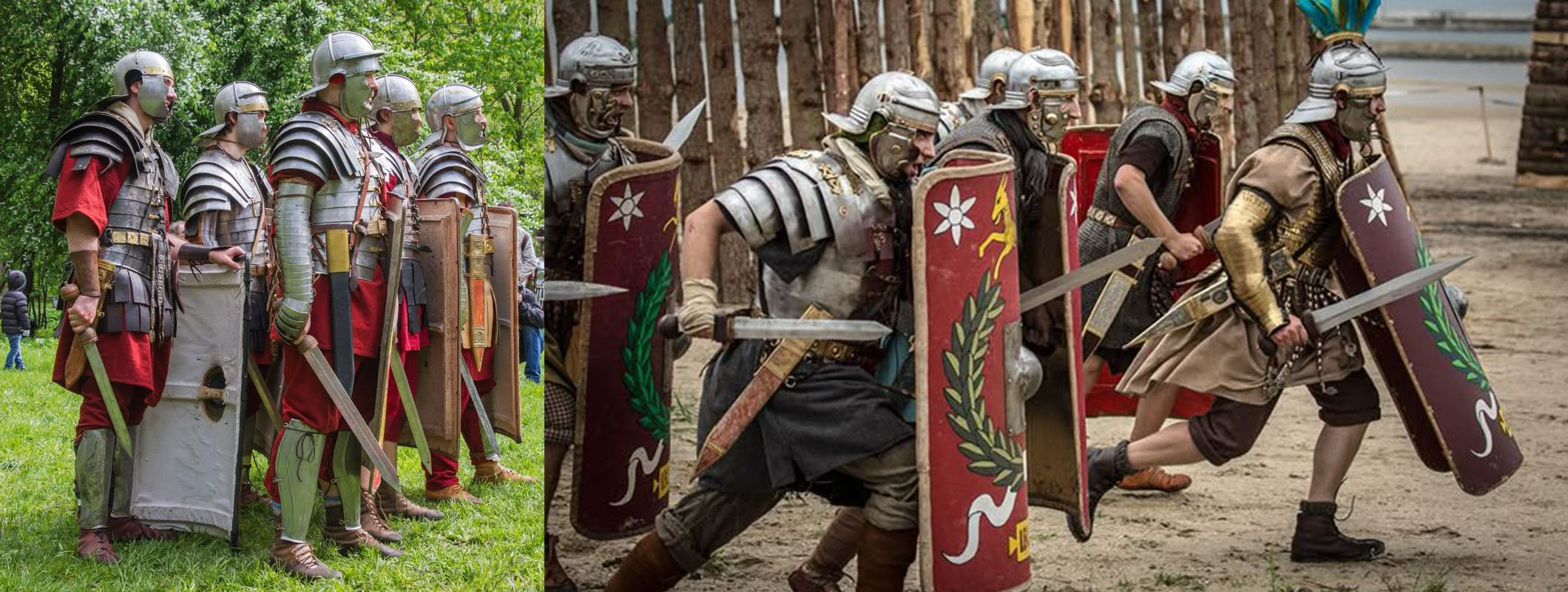
Most of the time, the Gladius was used in combination with the scutum, the big Roman shield. The shield absorbed the attacks of the enemies and formed little holes while being pushed forward. The soldier could then insert a sword through the shield. By this, the shield and the sword could work for both defense and an attack at the same time.
The Roman soldiers used different battle formations in the fight. They positioned themselves so close to each other that they were almost touching shoulders and shields overlapping to form a shield wall. Each soldier fought from behind the wall using short, controlled thrusts of the Gladius. The short length of the sword made it very convenient not to hit the soldier next to you when you are using it.
This technique was very effective in many ways. It enabled a large number of soldiers to attack simultaneously and at the same time, they could remain protected. Instead of the wild swings, the Romans put their trust in the combination of teamwork, discipline, and steady thrusts. The Gladius, when used along with the scutum, was the ideal weapon for this fighting style.
Materials and Construction
The ancient Gladius was originally built from iron and the first steel. The blacksmiths used to heat iron ore in basic furnaces, shape it by hammering, and add some carbon to make the metal harder. The tip was the most powerful area, ideal for piercing. Every blade was personalized with the application of fire and hammer. The grip was tightened to the blade with rivets, and the pommel was at the end to help keep it balanced.
Nowadays sword makers have access to the quality steels and the modern equipment. High-carbon steel is quite popular because it can be well hardened and sharpened. Modern forging uses the accurate use of heat, careful shaping, and unique cooling procedures to create the blade that is durable and tough. A custom forge can create a weapon that has the same feel as the antique Roman swords or is stronger for displaying and training purposes.
The handles of the past were made from wood, bone or horn. These materials not only provided a firm grip but could also be sculpted to match the shape of the hand. Presently, the makers blend those materials with modern materials like resins or synthetic grips. Whether old or new, the Gladius symbolizes a combination of robust steel and a firm handle making it long-lasting.
Manufacturing Replicas vs. Authentic Archaeological Reproductions
Not all Gladius swords made today are similar, as some are only decorative, while others are functional. A functional copy is built with durable steel, a solid tang, and a grip that can withstand real use. These swords are sharp or at least strong enough for cutting practice, training, or historical demonstrations. However, Decorative swords are lighter and often made of cheaper metals. They may still be attractive on display but are not safe or strong enough for any kind of combat use.
There are also differences between authentic archaeological reproductions and affordable replicas:
- Authentic reproductions are created to be almost indistinguishable from actual archaeological discoveries
- They even imitate length, weight, shape, and even the handle of swords discovered in places like Pompeii or Mainz
- Due to the precision and artistry involved, they are usually priced higher and are targeted at collectors or museums
- Affordable replicas are just simplified and cheaper models
- They may not be very accurate in terms of the historical details, but they can be easily purchased for display or as starter pieces
Both are valuable, depending on whether one is looking for a genuine product or simply a Roman Gladius look.
Collecting and Buying Guide
It is essential to be familiar with the characteristics of a high-quality sword when purchasing a Gladius. A blade that is solid, well-forged out of good steel, with a straight edge and a strong point is what you need to search for. The tang must be tightly secured, and the handle or hilt should provide you with a comfortable and firm grip. Make sure that the sword is balanced well and pommel and the guard both are tight and properly fitted.
The price of the swords differs depending on the material, the work of the craftsman, and the accuracy:
- Plain decorative replicas can be quite cheap, with prices sometimes less than $100
- Functional or authentic archaeological reproductions of the Gladius are more expensive, which can be from a few hundred to over a thousand dollars, depending on detail and forging quality
- The custom forges are possibly charging higher for a unique high-quality piece
On top of that, the legal side of things is equally significant. There are certain areas where swords are prohibited by law and it is illegal to carry them in public. It is always good to check with the local law before making a purchase. Collectors are allowed to keep the sword for display only or use it in training under strict conditions. Quality knowledge, price awareness, and rule compliance make the whole buying of a Gladius not only safe but also enjoyable.
Care, Maintenance, and Display
It is important to clean and oil a Gladius regularly to make it last a long time and look nice. You can use a soft cloth to wipe the blade after you have touched it to remove the dust and moisture. Light oil should be used to cover the metal and prevent rust.
It would be better if you store the sword in a place where it is dry and non-humid place. Do not let a leather sheath be your sword's home for long because leather is a keeper of moisture. A wooden scabbard or a padded display stand is safer.
Sharpening depends on the type of the Gladius replica:
- Decorative ones are not supposed to be sharpened
- Functional ones need to be sharpened with a sharpening stone or by a professional
- Wall mounts, stands, or glass cases are common for sword exhibitions
These not only safeguard the sword but also exhibit it as one of the most significant historical figures at the center of the exhibition hall. With simple care, a Gladius can remain tough and beautiful for a long time.
Re-enactment and Training Considerations
When a Gladius is used for re-enactment or drill, the first thing that is considered is the safety. People usually use sparring replicas which are made of wood, blunt steel or strong synthetic materials for their practice. These replicas look and feel similar to the real ones, however, they do not have sharp edges. They are safe to be used in drills, stage fights, and group training.
At events, the degree of authenticity is balanced with the level of safety:
- Some performers may have accurate steel replicas for exhibition, but during the performance of mock fights, they use blunted or wooden ones
- The rules usually require the tips to be rounded and the edges to be dull to prevent accidents
- This is the way the re-enactors can give an accurate Roman combat performance without risking the safety of all the participants
It makes history and safety work together.
EverestForge Spotlight
At EverestForge, we create every Gladius individually with our own special forge. Starting with top-grade steel, we apply heat and then shape it through the process of handcrafting. Each blade is hammered, polished, and balanced in a way that they both visually resemble the swords that were used by the Roman soldiers. Our intention is to make a Gladius that is both true to history and of great quality.
Our swords are distinguished by their manufacturing and the attention given to the smallest detail:
- The blades are solid, the handles are designed so that it is easy to hold and the pommels give the sword the necessary balance
- We make several types of Gladius such as Hispaniensis, Mainz, and Pompeian so collectors have a wide range of styles to choose from
- Every sword, no matter if it is for display, practice, or re-enactment, is a reflection of both the past and the present quality
At EverestForge, a Gladius is a thing of the past that has been brought to the present through a custom-made, unique experience.
Conclusion - The Gladius in Modern Hands
The Gladius is one of the most well-known swords of history, known for being the main weapon that contributed to building the Roman Empire. The easy and efficient design of the sword made it very suitable for fighting at close range. The Gladius is still alive through the eyes of fans, collectors, and experts. Some people see it as a historical artifact; others use copies for their practice or stage performances, while some simply admire its design. Having a Gladius is like having a direct link from today to the past, where you can keep history alive and pay tribute to the craftsmanship and custom associated with this famous Roman arm.
FAQs
-
What is the typical size of a Gladius?
The Gladius length depends on the type, however, majority of them fall within 17-27 inch range.
-
What material is Gladius made of?
High carbon steel was mostly used as it was quite strong and was able to hold a sharp edge. For some replicas, stainless steel is used which is basically for display purposes only.
-
Is it legal for me to have a Gladius?
Yes, you can own one for the sake of the collection or display in most areas except there might be some restrictions on carrying it in public.
-
Are all replicas safe for sparring?
Not really, only blunted or wooden counterfeits can be used without risk of injury. Sharp or authentic replicas are for display only.
-
How do I sharpen a Gladius?
Real swords can be sharpened either using a whetstone or by a professional. Those that are only for decoration should never be sharpened.
-
What is the difference between functional and decorative swords?
Functional swords have to be strong and balanced. On the other hand, decorative swords are designed to be lighter and mainly for the purpose of display.
-
How should I care for a Gladius?
After use, clean it with a cloth and put some light oil on it. Do not keep it in a place that is humid or in a leather case if you are not going to use it for a long time.
-
What materials are used for the handles?
Handles are generally made of wood, bone, horn, or new materials with properties of grip and durability.
-
What is the weight of a Gladius?
The normal weight of the Gladius is between 1.2 and 2.2 pounds. It is light enough to make a quick stab.
-
Can I display a Gladius safely?
Yes, you can use wall mounts, display stands, or glass cases.
-
What is a custom forge Gladius?
It is the one that is hand-made with a specific design and steel, most of the time it is only one and made for collectors.
-
Which type is best for collectors?
The Hispaniensis and Pompeian are acclaimed for their antique style and authenticity.
-
Are Gladius replicas accompanied by sheaths?
Generally, yes, a wood or leather, and in some cases a modern synthetic scabbard.
-
Is it possible to use it for re-enactments?
It is permitted if the replica is made of safe, blunted or wood.
-
What is the price of a Gladius?
The cost of decorative swords can be below $100. The price of functional or custom forged swords can be from several hundred to more than one thousand dollars.