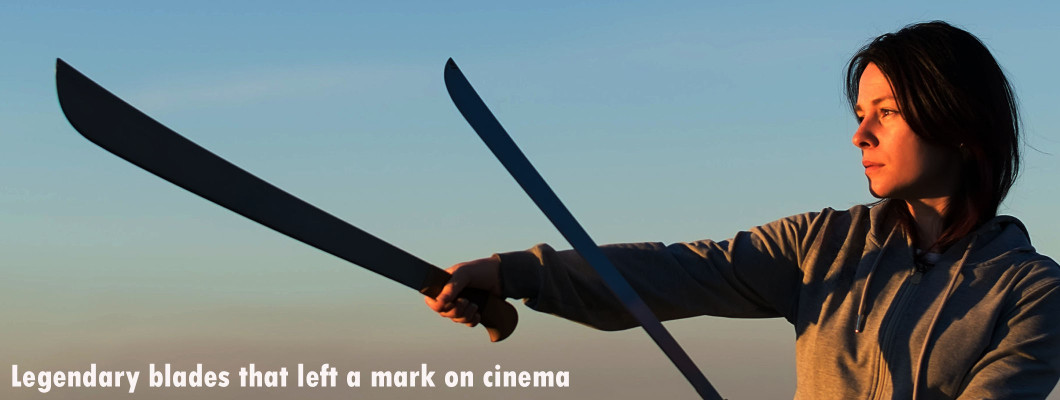
Legendary blades that left a mark on cinema
Some machetes in movies are elegant. Some are mythical. But when a machete appears on screen, it usually means the story has reached a breaking point — the moment when a character stops negotiating with the world and starts surviving it.
That’s what makes the machete so powerful in storytelling. It’s blunt, direct, and unforgiving. It doesn’t belong to knights or kings — it belongs to survivors, hunters, fighters, and people forced to act when there are no good options left. And because it looks like a real tool (not fantasy), the tension feels closer to home.
At Everest Forge , where functional blade design is rooted in real-world use rather than decoration, we pay close attention to how machetes are portrayed on screen — not as props, but as tools with purpose. Below is a deeper look at iconic machetes in film, ranked by recognition, cultural impact, and the way each blade shaped its own moment in pop culture.
1. Jason Voorhees’ Machete
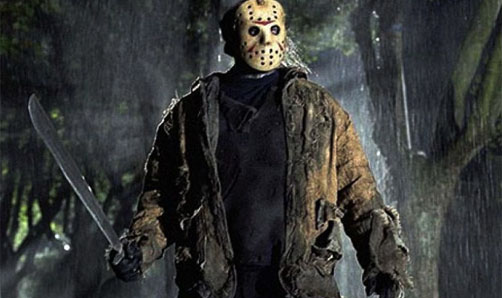
This is the machete that defined an entire genre. It’s the blade people picture instantly — even if they can’t name the exact movie scene.
What makes Jason’s machete so effective is how ordinary it looks. It doesn’t feel like a “movie weapon.” It feels like a real tool pulled from a shed, a campsite, or a workshop. That realism is exactly what made it terrifying, because it made the violence feel possible.
Over time, the machete became inseparable from Jason himself. Even without the mask, even without the character on screen, the blade silhouette alone signals danger. That kind of visual recognition is rare — and it’s why this machete sits at the top of cinematic history.
- It shaped the visual language of slasher films
- It’s recognizable across generations and cultures
- It turned a common tool into a symbol of fear
When people say “movie machete,” this is usually the one they mean.
2. Eli’s Skeletonized Survival Machete
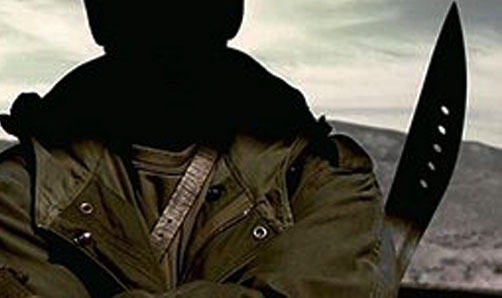
Eli’s machete feels like it was designed to be depended on — not admired. It’s one of those rare screen blades that looks believable even to people who actually use machetes.
The long profile and forward balance give it a survival-first character. The cutouts make the blade visually distinctive, but they also suggest weight reduction and practicality. The overall feel is stripped-down and purposeful, like a tool built for years of hard travel.
What made this machete culturally influential is that it didn’t look like fantasy. It looked like a realistic companion in a ruined world — a blade you’d carry because it earns its place every day.
- Feels practical rather than theatrical
- Inspired real-world custom machete designs
- Respected by serious blade enthusiasts
Among post-apocalyptic movie blades, this is one of the most grounded designs ever shown.
3. Alice’s Twin Combat Machetes
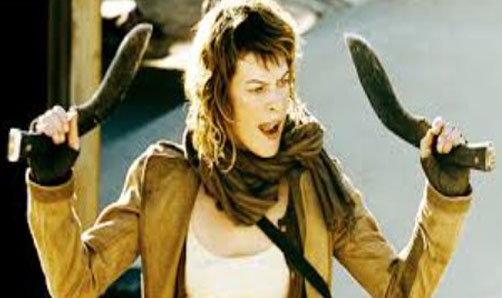
Alice’s twin machetes changed how curved machete-style blades were viewed in action cinema. They weren’t slow “choppers.” They were fast, aggressive, and used like extensions of movement.
The pairing matters. Two identical blades create rhythm in a fight scene — one strikes while the other recovers. That visual symmetry is part of why audiences remembered them. The forward-weighted shape also makes each swing look decisive, even when the choreography is rapid.
For many viewers, these machetes were a first introduction to curved, power-focused blade geometry presented in a modern setting. They became iconic not just because of the character, but because of how instantly recognizable the set looked on screen.
- Made dual-machete combat visually iconic
- Influenced games, cosplay, and pop culture
- Showed curved machetes as fast, agile weapons
4. Machete Cortez’s Signature Blade
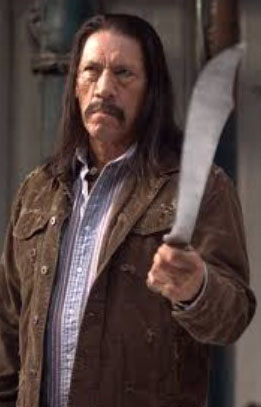
This is one of the rare cases where the weapon is the character. The machete isn’t a side detail — it’s the identity, the message, and the symbol.
Carried by Danny Trejo, this blade is bold and unapologetic. It represents direct action, grit, and rebellion. It doesn’t pretend to be refined, because the character doesn’t either. That honesty is why it stuck in pop culture.
And when a film is literally named after the weapon, the cultural impact becomes obvious. This machete turned into a recognizable icon far beyond its own scenes.
- The machete becomes the character’s identity
- A symbol of defiance and strength
- A cult-classic blade with lasting recognition
5. Dutch Schaefer’s Jungle Warfare Machete
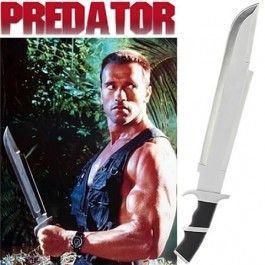
In Predator, the machete isn’t a horror weapon — it’s a survival tool. It’s the kind of blade you carry when the environment itself is the enemy.
Dutch’s machete is heavy, intimidating, and built for clearing space. The design echoes real jungle machetes: forward mass for chopping, straightforward handling, and a no-nonsense silhouette that looks believable in harsh terrain.
This is one of the most influential “jungle machete” portrayals in cinema, and it helped push the idea that a machete can be an essential survival tool, not just a weapon.
- Reinforced the machete as a survival essential
- Influenced modern tactical machete designs
- Perfectly matched the jungle setting
6. Rick Grimes’ Red-Handle Machete
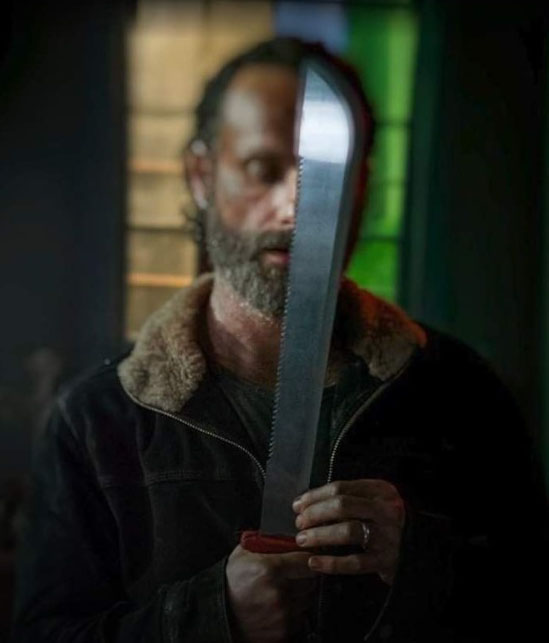
Few machetes on screen carry as much emotional weight as this one. It isn’t just about what it can do — it’s about what it means.
Rick’s machete became tied to promises, leadership, and brutal decisions. The red handle makes it instantly recognizable, and the worn look gives it credibility, like it has a history of hard use.
In a world filled with weapons, this machete stood out because it felt personal. It became a symbol of resolve more than a symbol of violence.
- One of the most emotionally significant machetes on screen
- Instantly recognizable by color alone
- Became a storytelling symbol, not just a weapon
7. Indiana Jones’ Rope-Bridge Machete
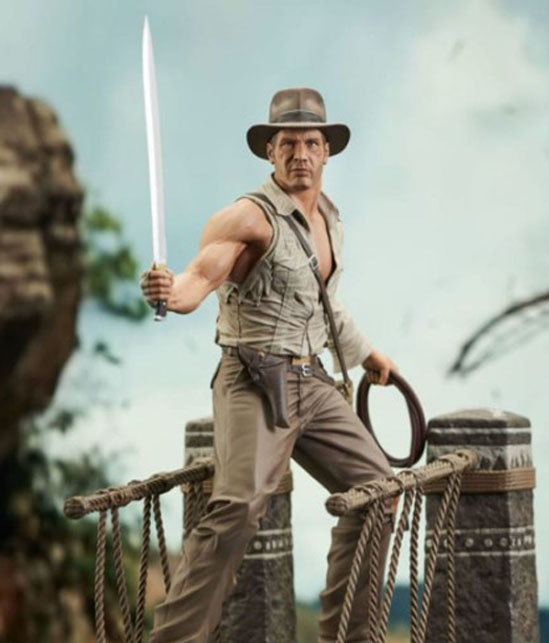
This machete is remembered for one decisive moment — the kind of scene that gets replayed in people’s minds for years.
Used to cut the rope bridge during the climax, the machete becomes the tool of consequence. It’s not about combat skill or intimidation. It’s about choice, timing, and sacrifice.
That’s why it’s iconic: it proves a machete doesn’t need to be flashy to be unforgettable — it just needs to be in the right moment.
- Central to one of cinema’s most iconic moments
- Shows how a machete can define a turning point
8. Selena’s Survival Machete
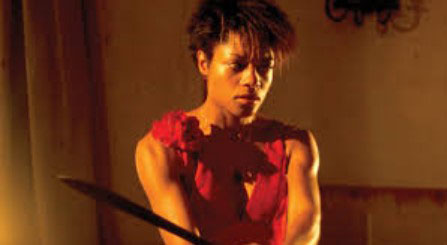
Selena’s machete is stripped of glamour. It’s not there to look cool — it’s there to keep people alive.
Fast, efficient, and brutally practical, it matches the film’s grounded survival tone. The machete feels like a believable choice for close-range defense in a collapsed city where hesitation can get you killed.
This portrayal helped cement the machete as a realistic survival blade in modern apocalypse storytelling — not exaggerated, not stylized, just effective.
- Grounded, realistic use
- Reinforced the machete as a true survival blade
9. Barney Ross’ Tactical Machete
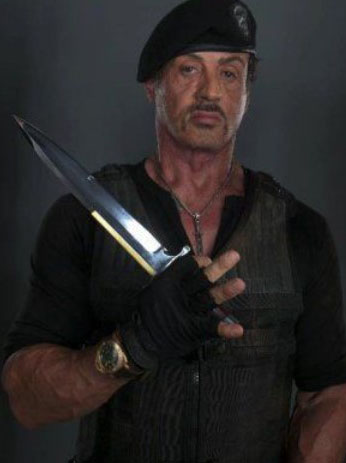
This blade represents the modern, militarized machete — thick spine, aggressive profile, and tactical styling built to look rugged on screen.
In action films, tactical machetes often function like a visual statement: “this character is prepared for anything.” Even when it doesn’t get as many iconic scenes as the classics, the design language influenced how modern machetes are portrayed in elite-gear storytelling.
It also helped reinforce the idea that machetes belong alongside modern loadouts, not only in jungles or horror films.
10. The Bride’s Curved Combat Machete
Often overshadowed by the katana, this curved machete appears briefly during the House of Blue Leaves fight. Blade enthusiasts noticed it immediately because the geometry looks practical and power-focused.
Its inclusion reflects Tarantino’s respect for global blade traditions and functional design — even when the weapon isn’t the star of the scene.
Why One Machete Continues to Stand Apart
Looking at all of these blades together, it becomes clear that the most memorable machetes aren’t the most complex or decorative. They’re the ones that feel real — believable silhouettes, honest wear, and purposeful design.
That’s why Jason Voorhees’ machete continues to stand apart. It isn’t legendary because of craftsmanship or rarity. It’s legendary because of what it represents — simplicity, inevitability, and fear. One ordinary blade, used without hesitation, became one of the most recognizable images in film history.
Each machete on this list earned its place for a different reason — survival realism, emotional storytelling, cultural symbolism, or sheer presence. Together, they show why the machete remains one of the strongest visual tools in cinema.
Everest Forge note: A machete doesn’t need to be complicated to be effective. It needs balance, intent, and purpose — on screen and in the real world.
Want a Movie-Inspired or Video Game-Inspired Custom Forged Machete?
If you’ve got a cinematic blade in mind — from a classic horror machete to a post-apocalyptic survival design — we can hand forge a functional machete built to your specs. The same goes for video game-inspired machetes: rugged, aggressive, and made for real-world use (not just display).
Tell us what you want and we’ll reply with practical options for blade shape, length, steel, handle material, balance, and finish, along with pricing and a clear build plan.
Request a Custom Forge