Understanding the Cho (Kaudi): The Symbolism and Function Behind the Khukuri Notch
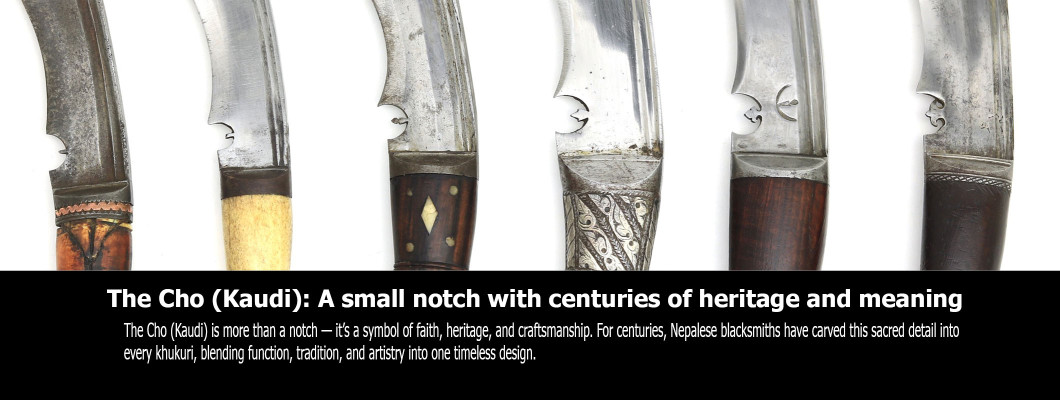
If you’ve ever looked closely at a khukuri, you’ve probably noticed a small notch right in front of the handle. That little cutout, called the cho or kaudi, might seem like a small detail—but it’s one of the most meaningful parts of Nepal’s national blade. For generations, it has inspired questions, myths, and admiration from bladesmiths and collectors around the world. Though simple in appearance, the cho carries layers of cultural symbolism and time-tested tradition.
What Is a Cho?
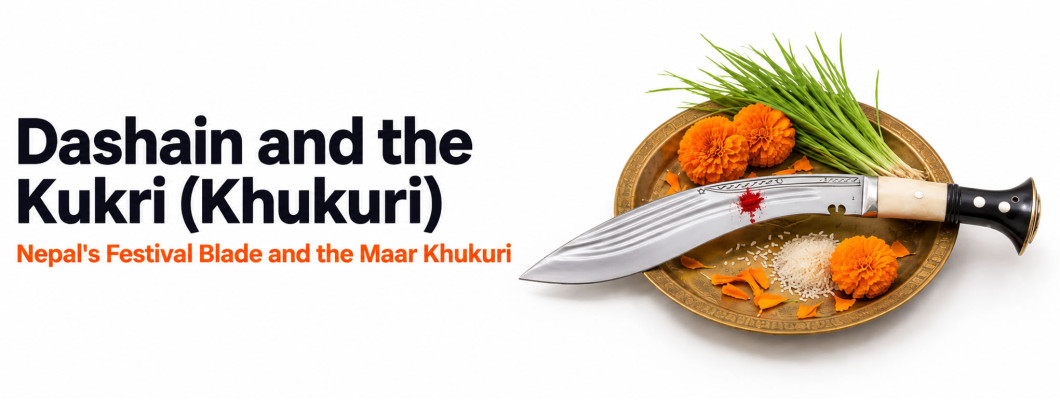
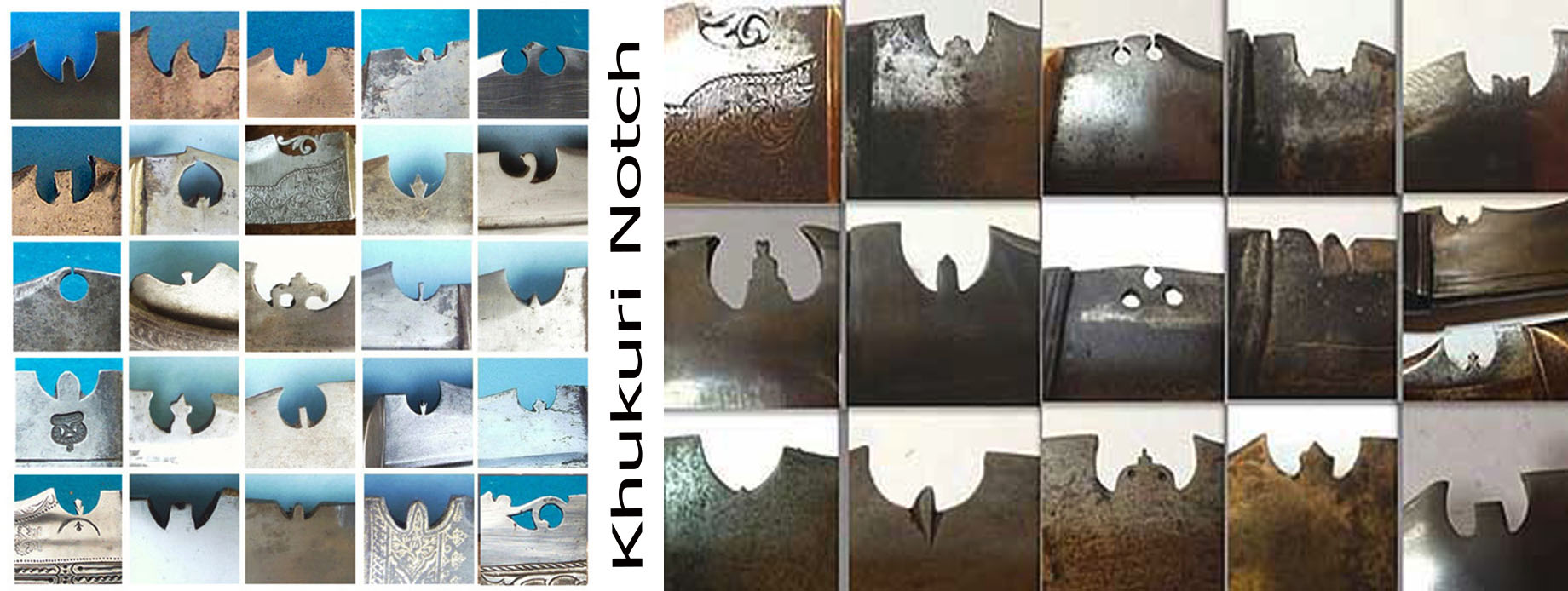
The cho is a small cutout placed just before the handle or bolster of the khukuri. It usually takes the shape of a semicircle with a tiny prong in the middle, though earlier khukuris featured shallower or wider designs. Some are shaped like miniature temples, while others are deeply curved. However it’s styled, the cho has always served as a hallmark of authenticity—a mark that instantly identifies a blade as a true traditional khukuri.
Two Major Types of Cho (Kaudi) in Khukuri
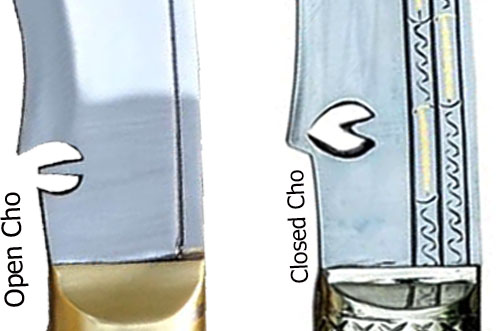
There are two major types of Cho, or Kaudi, found on khukuris — the Open Cho and the Closed Cho. While both share the same symbolic purpose, their shapes and uses reflect different traditions and craftsmanship styles within Nepalese blade-making.
Open Cho: This is the most common and practical form of the cho. It features a clear, open semicircular notch with a small central prong pointing downward from the edge. The open cho is easier to forge and is typically seen on working and military khukuris such as the Sirupate, Bhojpure, and Panawal types. It represents simplicity, balance, and a direct connection to the blade’s functional origins.
Closed Cho: Also known as a “hooded cho,” this style is more decorative and symbolic. Instead of an open semicircle, the design is enclosed or partially covered, often resembling a small temple or pagoda. The closed cho is usually found on ceremonial or presentation khukuris like the Chitlange style. It symbolizes artistry, spirituality, and protection — showcasing the maker’s craftsmanship and devotion to tradition.
In essence, the Open Cho reflects utility and straightforward craftsmanship, while the Closed Cho expresses refinement, devotion, and cultural pride. Both stand as timeless symbols of the khukuri’s blend of function and faith.
Why Does a Khukuri Have a Cho?
Ask ten different people and you’ll probably get ten different answers. Some will tell you it’s practical, others say it’s sacred, and a few claim it’s purely decorative. The truth lies somewhere in between. The cho likely began with cultural and spiritual meaning, and later took on small functional benefits that helped it survive through centuries of evolution in khukuri design.
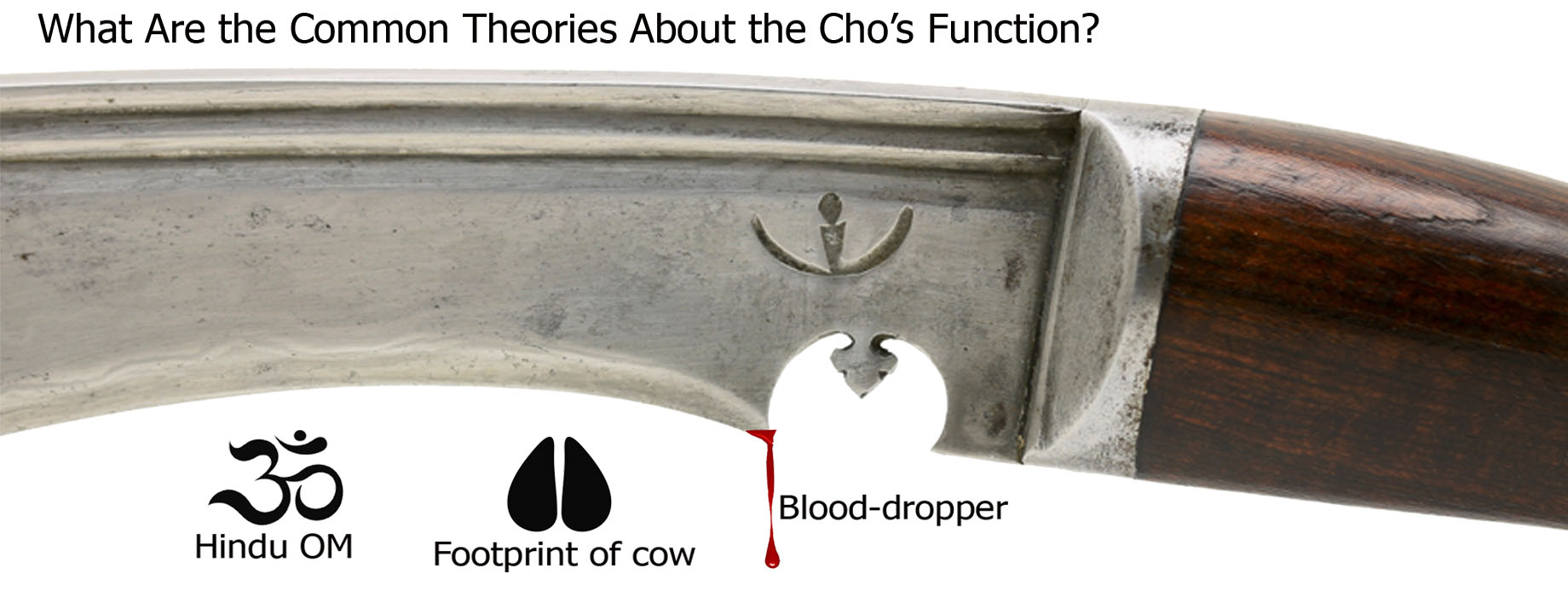
What Is the Religious or Cultural Meaning of the Cho?
1. A sacred symbol of faith: In Hindu tradition, which heavily influences Nepalese culture, the cho is thought to represent divine shapes such as the cow’s hoof (a sacred animal), the yoni-lingam (a symbol of creation and balance), or the tiers of a temple. These interpretations make the cho more than just decoration—it’s a blessing carved in steel, meant to protect the wielder and honor the divine.
2. A symbol of heritage: The cho also represents continuity. For hundreds of years, Nepalese blacksmiths have passed down the same design through their apprenticeships. Even as tools, steel, and polishing methods changed, the cho remained untouched. To most smiths, removing it would mean breaking a sacred link with their ancestors. It’s tradition for tradition’s sake—and that’s part of its beauty.
What Are the Common Theories About the Cho’s Function?
1. The blood-drip theory: One of the most common ideas is that the cho helps stop blood, sap, or moisture from running down to the handle. In reality, though, fluids can still flow along the blade’s sides, so this theory doesn’t hold up scientifically. It’s more of a poetic explanation than a practical one.
2. A finger guard or blade catch: Some believe the cho prevents the hand from slipping forward or can even catch another blade in combat. While this may work with some older, shallower styles, most khukuris don’t use the notch this way. Still, it’s easy to see why people might have assumed such a purpose.
3. A stress-relief feature: Modern bladesmiths sometimes describe the cho as a natural flex point. It might slightly reduce stress at the transition between the blade and the tang, making cracks less likely after years of chopping. This idea makes sense from a mechanical perspective but was likely an accidental benefit rather than the original reason for its creation.
4. A maker’s signature: Long before logos and stamps, blacksmiths personalized their work through subtle design cues. The cho may once have acted like a craftsman’s signature, allowing locals to recognize who made the blade based on its unique shape.
Do Other Knives Also Have a Cho?
While other blades around the world have notches near the handle, none are quite like the khukuri’s cho. Western knives often include a small sharpening cho—a groove at the base of the edge to make sharpening easier. However, that’s purely functional and lacks the deep symbolism of the khukuri notch. Some Indian and Southeast Asian swords feature decorative cuts or grooves near the hilt, but these are mostly ornamental. The khukuri stands alone in blending spiritual significance, cultural meaning, and practical design in one feature.
Does the Cho Weaken the Blade?
Technically speaking, any cutout can act as a stress point, but in a well-forged khukuri, it’s rarely an issue. In rat-tail tang blades, most of the strain happens farther back at the tang shoulder, not at the cho. For full-tang khukuris, the rigid handle might concentrate bending stress closer to the notch if used for prying or twisting—but under normal chopping, it’s almost never a problem. Modern bladesmiths also file the cho with smooth curves instead of sharp corners to distribute pressure more evenly, keeping it both strong and traditional.
Is the Cho Used for Sharpening?
Many first-time owners think the cho is a sharpening notch, but it isn’t. Traditional khukuris are sharpened with rods, files, or stones that easily reach the curved heel of the edge. The cho doesn’t help or hinder that process—it’s simply part of the design. However, keeping the area clean and smooth helps prevent rust and stress cracks over years of use.
Why Is the Cho Still Used Today?
The simple answer is: because it matters. The cho is tradition, identity, and artistry forged together. Even as some modern users request “no-cho” khukuris for technical reasons, most collectors and craftsmen refuse to part with it. It represents pride in heritage, respect for ancestors, and the soul of Nepalese craftsmanship. Without it, the khukuri would lose a piece of its story. To explore more heritage designs, visit our Traditional Khukuri Collection.
Conclusion
Whether you see it as a sacred emblem, a craftsman’s mark, or a touch of ancient engineering, the cho (kaudi) remains one of the khukuri’s most enduring features. It’s a reminder that function and faith can live side by side in design. While other knives might have notches for convenience, only the khukuri carries one that speaks of culture, spirit, and centuries of tradition passed from hand to hand. Browse our authentic khukuri blades to see how modern craftsmanship continues to honor this timeless detail.
Key Takeaways
• The cho (kaudi) is a distinctive notch symbolizing spirituality, craftsmanship, and heritage.
• Other knives have functional notches, but none carry the same cultural meaning.
• In high-quality, oil-tempered khukuris, the cho has little to no effect on strength.
• Its continued use connects every modern khukuri to Nepal’s rich blacksmithing legacy.
• The khukuri’s cho is not just a cut in steel—it’s a story carved by generations.
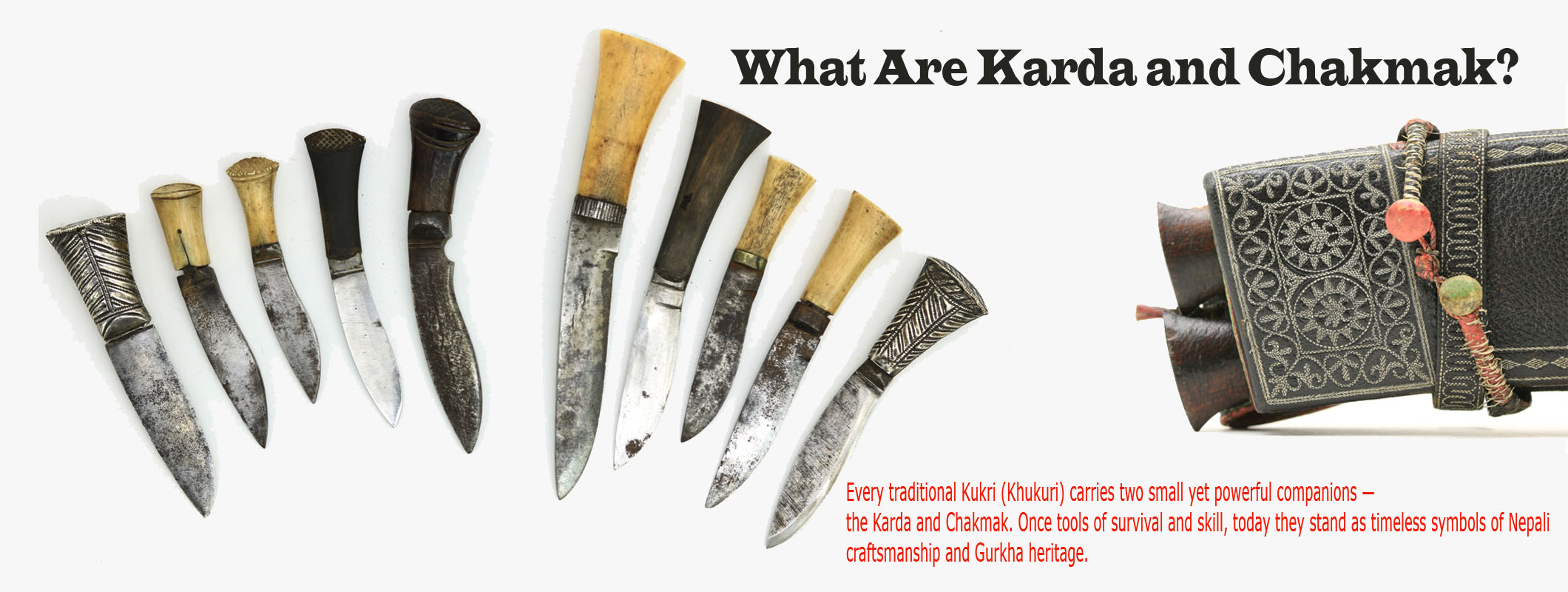
The Mystery Behind the Two Small Knives on a Kukri (Khukuri): Karda and Chakmak Explained
Read in Detail