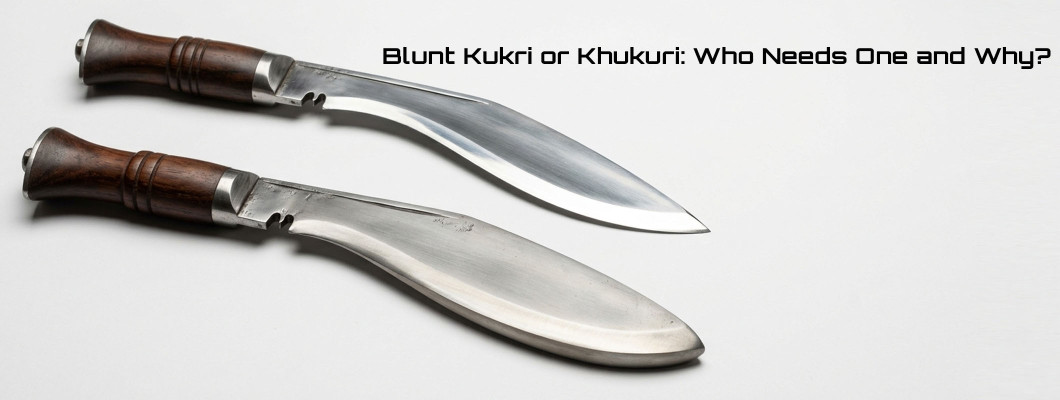
Blunt Kukri or Khukuri: Who Needs One, and Who Does Not?
A blunt kukri — or blunt khukuri — is the right choice for anyone who will handle it near other people, perform with it, train with a partner, present it at a ceremony or keep it where children can reach it. It is the wrong choice for anyone who wants to chop, clear brush or use it as a working tool, because a kukri exists to cut. The blade can look exactly the same either way.
This guide goes through who a blunt khukuri suits, who should buy it sharp, what changes on a blunted kukri, and how to order one from our forge in Kathmandu.
Who Needs a Blunt Kukri or Khukuri?
| Buyer | Blunt or sharp | Why |
|---|---|---|
| Stage, theatre and film | Blunt | Handled close to other performers, often repeatedly |
| Martial arts and partner drills | Blunt | Blade work with a partner needs a safe edge and tip |
| Cultural performances and events | Blunt | Crowds, children and close handling |
| Ceremonies, parades and presentations | Blunt | An edge adds risk and nothing to the ceremony |
| Cosplay and reenactment | Blunt, if steel is allowed | Events set their own weapons rules |
| Homes with children | Blunt | A kukri on display invites handling |
| Schools, museums and talks | Blunt | Passed around an audience |
| Gifts to non-users | Often blunt | The recipient may never need an edge |
| Collectors | Either | Personal choice — see below |
| Bushcraft, camping, farm and garden | Sharp | A kukri is a chopping tool |
| Cutting practice | Sharp | A blunt edge cannot cut a target |
Stage, Theatre and Film
The clearest case for a blunt khukuri. Performers handle blades close to each other, night after night, under lights and time pressure. A rebated edge and a rounded tip remove the cut while keeping the look audiences recognise.
The blade still has to be strong. A stage kukri takes knocks, drops and blade contact, so it needs the same construction as a working one — a well-fixed tang, a tight handle and a sound heat treatment. Our stage combat blades page sets out the standard, and our guide to kukri tang types explains which constructions hold up to repeated handling.
The fight director decides. Choreography, distance and blade choice are their call. Show them the blade before rehearsals start.
Martial Arts and Partner Training
Solo practice can use a sharp kukri. Partner work should not. Drills, flow work and any exercise where the blade comes near another person call for a blunt khukuri with a rounded tip.
Choose a blunt steel training kukri when you want the real weight and balance of the blade for training, rather than a wooden or rubber trainer that feels nothing like it.
Follow your instructor. Schools set their own rules on training blades and protective gear. Ask before you order.
Our guide to how to use a khukuri covers the cutting motions a trainer imitates, and the kukri handling guide covers safe grip and carry.
Cultural Performances, Ceremonies and Parades
The khukuri is a symbol as much as a tool. It appears at cultural programmes, community celebrations, parades, remembrance events, retirement and graduation ceremonies, and presentations to honour service. In almost all of these it is carried, raised or passed between people — never used to cut.
A blunt khukuri suits these perfectly. It looks the same in photographs, and nobody gets hurt when it is handed across a crowded stage or held up for a group picture.
Ceremonial pieces. Our kothimora ceremonial khukuris, with decorated silver-style scabbards, and our current issue military kukris are both popular presentation pieces, and either can be ordered blunt.
Make it personal. Engraving is free — a name, a date, a regimental crest or a message — with a preview for approval before anything is cut. See personalised blades.
Cosplay, Reenactment and Events
Check the event rules first. Many conventions and events limit or ban real steel, and some require blades to stay sheathed and peace-tied. Read the weapons policy before you order.
Where steel is allowed, choose blunt. A sharp kukri on a belt in a crowd is easy to catch someone with. For historical reenactment, our historical replica kukris can be forged blunt to the pattern you portray.
Carry it properly. Keep it in its scabbard and follow local rules on carrying blades in public.
Homes, Schools and Museums
A kukri on a shelf gets picked up. Its shape invites people to hold it. In a home with children, or anywhere visitors handle it, a blunt khukuri takes away most of the risk. Store it out of reach all the same, and consider a wooden display stand.
Teaching and talks. Schools, museums, libraries and community talks about Nepal and the Gurkhas often pass a khukuri around. A blunt kukri lets people feel its real weight and balance safely.
Gifts
Ask what the recipient will do with it. Someone who will hang it on a wall or keep it as a family piece has no need for an edge, and a blunt khukuri is the safer gift. Someone who camps, gardens or does bushcraft will want it sharp.
If you are not sure, a blunt kukri is the cautious choice, and our guide to blades as gifts has more ideas.
Collectors: Sharp or Blunt?
Either is valid. Many collectors want a sharp khukuri because it is a real working blade, and a kukri is traditionally made to cut. Others prefer blunt because the pieces are handled by guests or live in a family home.
One thing to consider. A blunt kukri can be sharpened later, but a rebated edge is deliberately thick, so it takes a lot of grinding and changes the blade. If you might want an edge one day, order it sharp.
Who Should Not Buy a Blunt Kukri
Anyone who will use it as a tool. The kukri is one of the best chopping blades ever made — that is the point of its forward weight and curved belly. Bushcraft, camping, clearing brush, splitting kindling, farm and garden work all need a sharp edge. A blunt khukuri will bounce off wood.
Anyone who wants to practise cutting. Test cutting only works with an edge.
For those buyers, choose from our working kukris, and see our guide to what size kukri you need.
What Changes on a Blunt Khukuri?
The edge. Instead of being ground thin, the edge is left thick and rounded — rebated — along the whole length, including the belly where a kukri does most of its cutting. Our guide to rebated, blunt and unsharpened blades explains the difference between those terms.
The tip. The point is rounded off so a thrust or a fall does not puncture.
The cho stays. The notch near the base of the blade is kept, so the kukri still looks exactly right. Our kukri terminology guide explains the cho and the other parts.
Everything else stays the same. Same 5160 spring steel, same heat treatment, same handle construction, same scabbard. A blunt khukuri still takes knocks, so it is built as strongly as a sharp one.
The companion knives. Some kukris come with a karda, a small sharp utility knife, and a chakmak, which is already blunt by design. If you order a blunt khukuri for safety reasons, say in your order note whether you want the karda blunted too.
Blunt Is Not Harmless
A blunt kukri is still a heavy steel blade. Its forward weight is what makes it chop, and that same weight can break bones. Treat it with the same care as a sharp one.
Check the handle before use. Twist the handle against the blade. No movement, no click. Stop the moment either appears.
Keep it cared for. A blunt khukuri rusts exactly like a sharp one. Our kukri maintenance guide covers cleaning and oiling.
How to Order a Blunt Kukri or Khukuri
Any kukri we make can be ordered blunt, at no extra charge. Every khukuri is forged after you order, so the edge is decided before it is ground.
Step 1. Choose any kukri from our kukri and khukuri range, or browse our training blades.
Step 2. At checkout, add this to the order note: "Stage combat build — rebated edge, rounded tip." Add whether you want the karda blunted too, if one is included.
Step 3. We confirm the build by email and start forging. Preparation takes seven to ten days.
Step 4. Your khukuri ships tracked and arrives a further seven to ten days later. Orders to the USA and Canada travel with FedEx; everywhere else ships on a DDP service, so duties are settled before the parcel moves.
Want something the catalogue does not list? A specific pattern, size or ceremonial design can be forged blunt through our custom kukri forge.
Already own a sharp kukri? Our guide on how to blunt a knife, sword, kukri, machete or dagger covers blunting one yourself, including working around the cho.
Any Kukri or Khukuri, Forged Blunt to Order
Choose any pattern, add "Stage combat build — rebated edge, rounded tip." to the order note, and we forge it blunt from 5160 spring steel in Kathmandu. Free engraving on every khukuri.
Frequently Asked Questions
Who needs a blunt kukri or khukuri?
Anyone who will handle it near other people or where safety matters more than cutting: stage and film performers, martial artists doing partner drills, cultural performers, ceremonies and parades, cosplayers, schools and museums, and homes with children. Anyone who will chop, clear brush or use it as a tool should buy it sharp.
Can I order a kukri blunt?
Yes. Every Everest Forge kukri is forged to order, so any khukuri can be made blunt at no extra charge. Add "Stage combat build — rebated edge, rounded tip." to the order note at checkout.
Does a blunt khukuri look different?
Barely. The edge is thicker and rounded, and the point is rounded off, but the shape, the cho notch, the handle and the scabbard stay the same. In photographs and on display it looks like any other khukuri.
Is a blunt kukri safe?
Safer, not safe. A kukri is heavy and forward-weighted, and a blunt one can still cause serious injury. Treat it with the same care as a sharp blade, check the handle before use, and store it out of reach of children.
Can a blunt kukri still chop wood?
Not usefully. A rebated edge is deliberately thick and rounded, so it bounces off wood rather than biting in. If you want a kukri for bushcraft, camping or garden work, buy it sharp.
Can a blunt khukuri be sharpened later?
It can be done, but a rebated edge is thick, so sharpening removes a lot of steel and changes the blade. If you think you may want an edge later, order the kukri sharp.
What about the karda and chakmak?
The chakmak is already blunt — it is a burnishing tool, not a knife. The karda is a small sharp utility knife. If your kukri includes one and you are ordering blunt for safety, say in the order note whether you want the karda blunted too.
Is a blunt kukri good for ceremonies and presentations?
Yes. Ceremonial khukuris are carried, raised and passed between people, not used to cut, so a blunt edge suits them. Kothimora and military-pattern kukris are popular presentation pieces, and engraving is free.
Is a blunt kukri legal where a sharp one is not?
Not necessarily. Many places regulate blades by type, length or how they are carried rather than by sharpness, so a blunt kukri may be treated the same as a sharp one. Check your local laws before ordering or carrying one.
How long does a blunt kukri take to arrive?
The same as any Everest Forge khukuri: seven to ten days of preparation at the forge, then seven to ten days of shipping. Orders to the USA and Canada go with FedEx; everywhere else ships on a DDP service with duties settled in advance.