Why People Cut Water Bottles with Swords ?
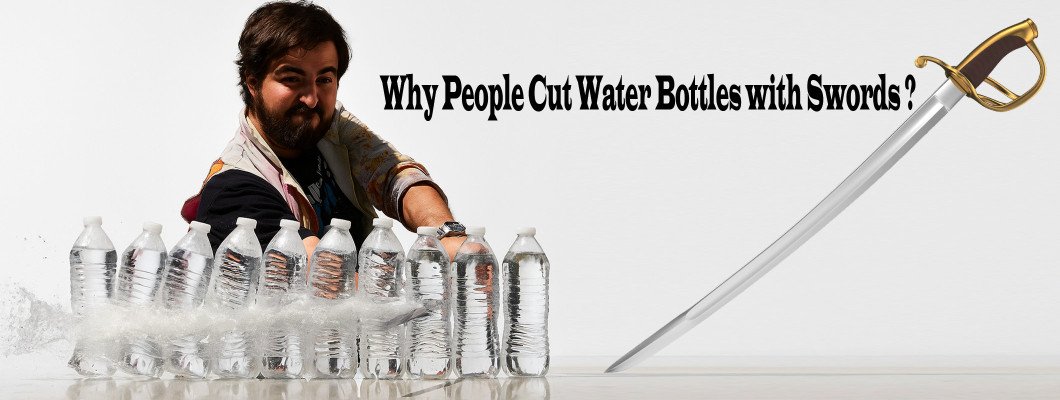
If you’ve ever seen someone slice a water bottle cleanly in half with a sword and wondered why, the answer blends ancient martial traditions with modern craftsmanship. Cutting water bottles is not just a trend — it’s a safe, effective way to test a sword’s sharpness, balance, and technique.

A Safe and Practical Cutting Medium
Plastic water bottles are affordable, easy to find, and safe to use. They offer immediate feedback — a clean slice means perfect edge alignment, while a crushed or toppled bottle suggests the angle or swing was off. Compared to traditional tatami mats or bamboo targets, bottles are a convenient and low-cost alternative.
Testing Sharpness and Edge Alignment
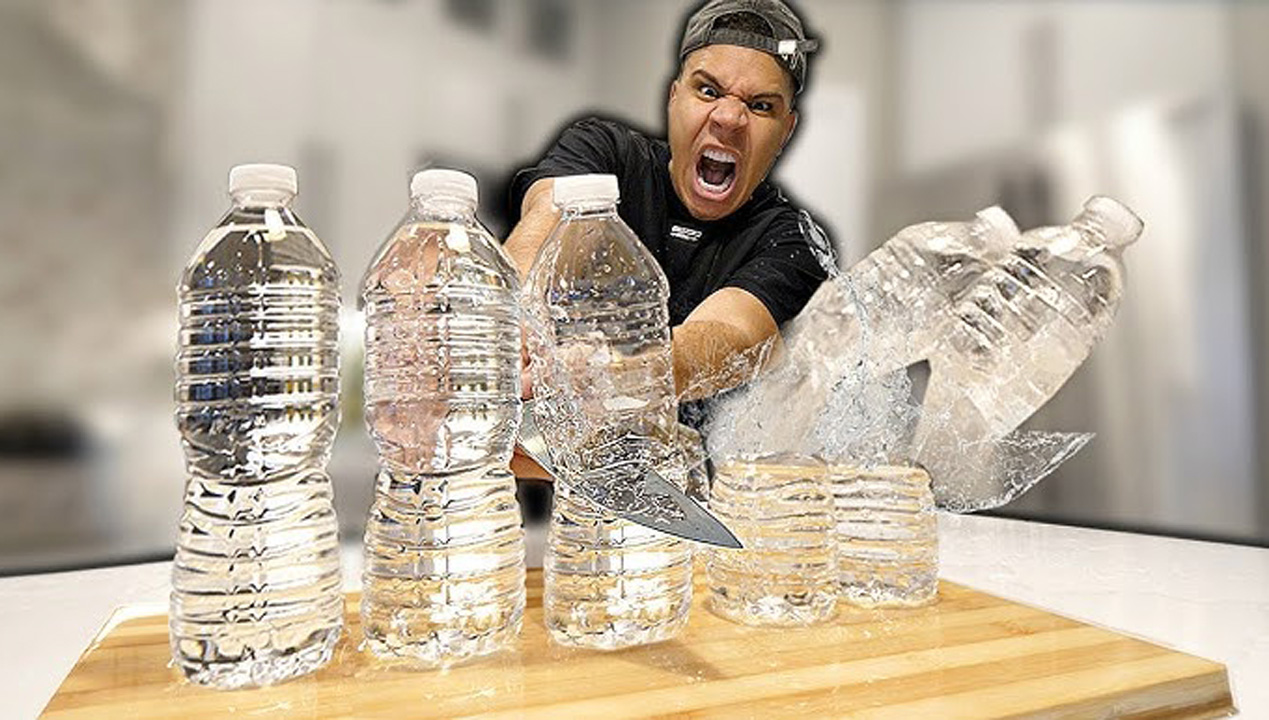
Many sword enthusiasts cut bottles to evaluate their blade’s geometry, sharpness, and balance. A clean horizontal cut through a filled bottle shows the sword is properly sharpened and the user’s edge alignment is correct. If the bottle folds instead of slicing, it’s a sign that the wrist angle or cutting motion needs adjustment.
Skill, Precision, and Control
Cutting bottles is an excellent way to practice coordination, timing, and accuracy. It teaches grip control, wrist alignment, and follow-through. Each swing should be smooth, not forceful — the goal is to let the blade’s sharpness do the work, not brute strength.
Aesthetics and Satisfaction
Watching a sword glide through a bottle, leaving the top half suspended for a moment before sliding off, is incredibly satisfying. It represents the perfect balance between sharpness, skill, and control — a moment where craftsmanship meets physics.
Demonstrating Functional Swords
In a world full of decorative blades, bottle cutting proves a sword’s functionality. A blade that slices cleanly demonstrates proper heat treatment, balance, and geometry. Every sword from Everest Forge is oil-tempered and hand-forged to deliver real cutting performance, not just display beauty.
The Global Cutting Community
Across the world, sword enthusiasts share bottle-cutting videos to celebrate craftsmanship and technique. From Nepalese Kukris to Japanese Katanas and European Longswords, each represents a tradition of mastery and respect for the blade.
Techniques for Cutting Bottles
Safety first: Always clear your area, use a stable stand, and wear eye protection. Avoid decorative blades — only use properly tempered, functional swords.
Stance: Keep your feet shoulder-width apart, front foot forward, and knees slightly bent.
Grip: Hold firmly but not tightly — let the blade flow naturally.
Posture: Relax your shoulders, lead with your hips, and complete the cut smoothly.
And What We Find
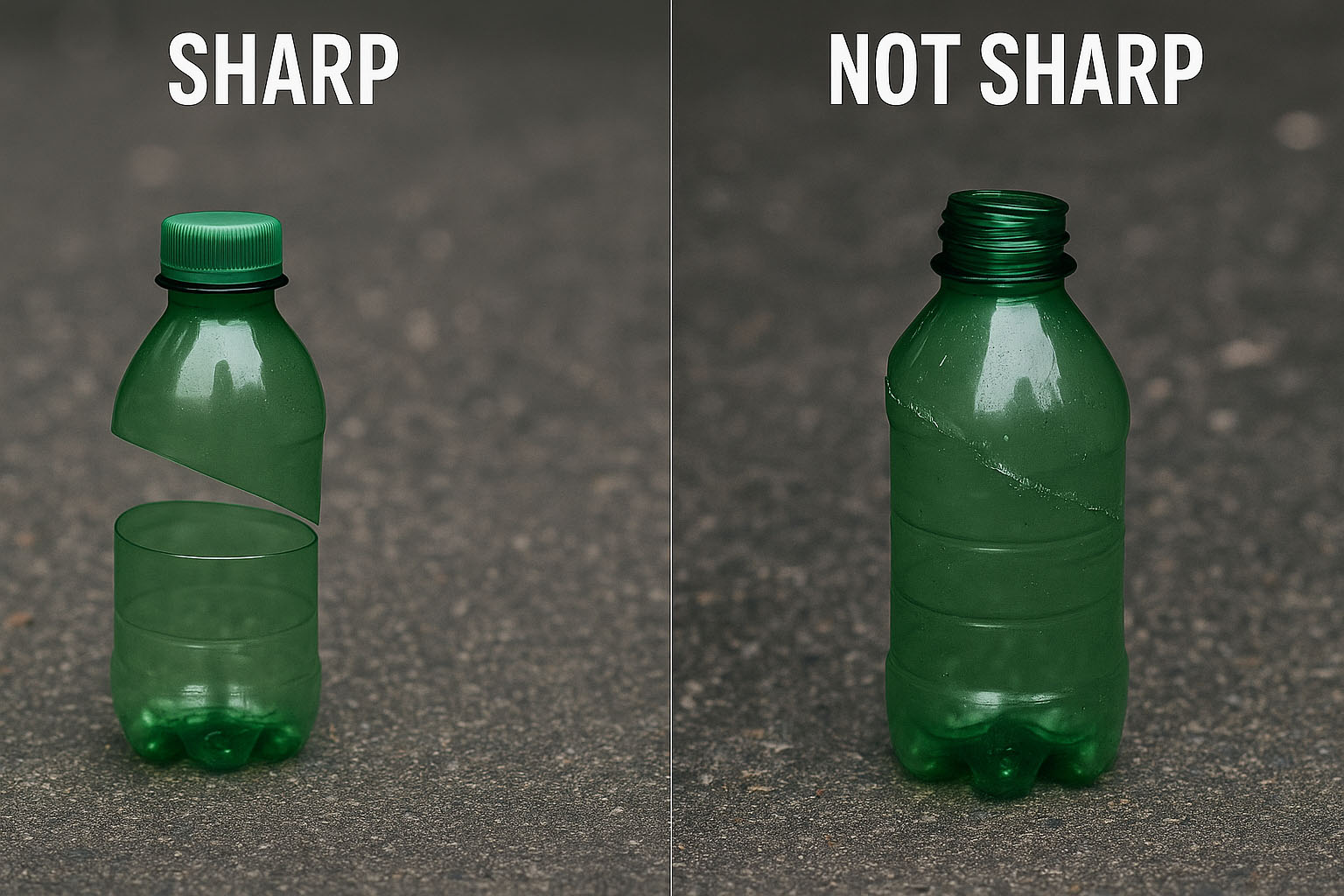
Every cut reveals something about your technique and sword:
- Clean slice: Excellent alignment and follow-through.
- Bottle crushed: Wrong edge angle or too much force.
- Jagged edge: Dull blade or shaky motion.
- Balanced top half: Perfect precision and control.
- Repeated misses: Adjust stance and grip before blaming the sword.
- Edge chips: Stop and inspect — resharpen if needed.
Cutting Fundamentals
Keep the edge angle shallow — slice, don’t chop. Visualize your cutting line before the swing and maintain consistent wrist alignment. Remember: speed comes from control, not power.
Drills to Improve Skill
- Start with empty bottles to practice alignment.
- Progress to half-filled, then full bottles.
- Vary your angles — horizontal, diagonal, vertical.
- Record in slow motion to analyze wrist movement and follow-through.
Common Mistakes
- Bottle slides: Wrong edge angle — slice through, don’t push.
- Bottle bursts: Too much power — relax and focus on accuracy.
- Uneven cut: Wrist rotation mid-swing — keep grip steady.
- Blade chips: Hitting the stand or cutting with a dull edge — inspect after every session.
Blade Care After Cutting
After each session, wipe your blade dry and apply a thin coat of oil to prevent rust. Check for nicks or dull spots and resharpen as needed. Oil-tempered blades like those from Everest Forge handle repeated cutting well, but regular maintenance keeps them razor-sharp.
Comparing Water Bottle Cutting vs Other Sword Sharpness Tests
| Testing Method | Description | Advantages | Limitations |
|---|---|---|---|
| Water Bottle Cutting | A modern, accessible way to test sharpness and edge alignment by slicing through filled plastic bottles. |
• Safe and inexpensive • Easy to find materials • Provides instant visual feedback • Tests both edge geometry and user control |
• Limited resistance compared to real targets • Cannot measure edge retention long-term |
| Tatami Mat Cutting (Tameshigiri) | Traditional Japanese test using rolled wet straw mats that mimic the density of bone and muscle. |
• Historically authentic • Realistic resistance • Excellent for advanced edge alignment and power training |
• Expensive and time-consuming • Difficult to prepare and dispose of • Requires considerable skill |
| Bamboo Cutting | Tests blade power and heat treatment by slicing through natural bamboo stalks — a tough, fibrous material. |
• High challenge level • Excellent for testing blade strength and temper |
• Can damage softer blades • Risky for beginners • Requires strong technique |
| Paper Cutting | Checks micro-sharpness by slicing through thin paper sheets without tearing. |
• Quick and simple • Reveals fine edge polish • No mess or setup needed |
• Doesn’t test strength or geometry • Not suitable for large swords |
| Free Hanging Rope Test | Measures cutting efficiency by slicing through a suspended rope in a single motion. |
• Excellent for testing control and bite • Simulates realistic cutting motion |
• Requires high precision • Unsafe if done incorrectly |
Summary: Among all these methods, water bottle cutting remains the most popular modern test for sword sharpness and technique. It’s affordable, safe, and visually clear, making it ideal for both beginners and seasoned practitioners. While traditional methods like tameshigiri and bamboo cutting provide deeper insights, bottle cutting offers a perfect balance between realism, accessibility, and safety.
Conclusion
Cutting water bottles with swords isn’t just a viral challenge — it’s a reflection of centuries of craftsmanship, control, and respect for the blade. Every perfect cut tells a story of balance, skill, and tradition continuing in modern form.
Explore our collection of functional swords and hand-forged kukris designed for real performance and timeless craftsmanship.
Frequently Asked Questions
1. Why do people cut water bottles with swords?
It’s a safe, affordable way to test a sword’s sharpness, edge alignment, and the user’s cutting technique. Bottles give clear feedback on control and precision.
2. Is cutting bottles bad for a sword?
Not if you’re using a properly heat-treated, functional sword. Decorative blades, however, should never be used for cutting. Always clean and oil your blade afterward.
3. What’s the best type of sword for cutting bottles?
Any well-balanced, oil-tempered sword or kukri works well. Popular options include functional swords and Nepalese kukris made for real cutting performance.
4. How do I know if my sword is sharp enough?
A clean, smooth slice through a filled bottle without resistance indicates excellent sharpness and edge alignment.
5. Is it dangerous to practice bottle cutting?
It can be if done carelessly. Always use a clear area, stable stand, and wear eye protection. Proper technique and awareness ensure safe practice.