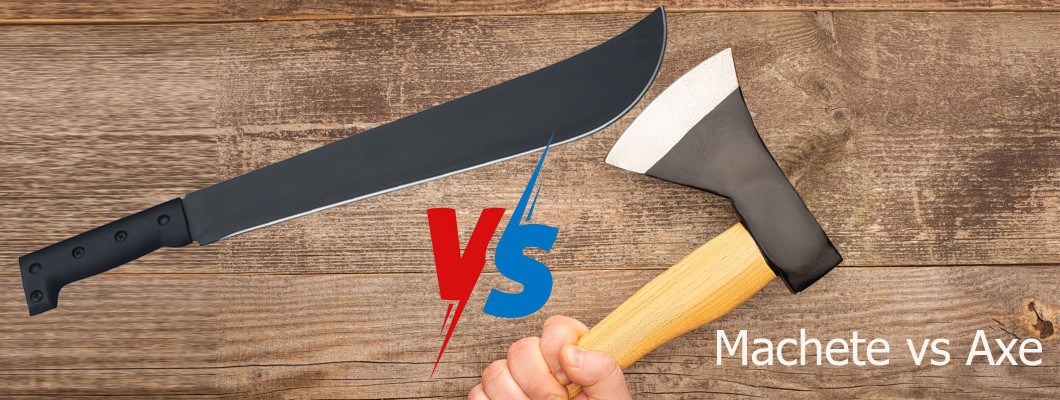
Machete vs Axe: Which Tool Is Better for Bushcraft, Camping, and Real Outdoor Work?
If you’ve ever stood in front of thick brush, overgrown land, or a pile of firewood and asked yourself whether to bring a machete or an axe, you’re asking the right question. These two tools are often compared, but they are designed for very different types of work.
At Everest Forge , we approach tools the same way we approach forging: every shape, weight, and balance exists for a reason. A machete and an axe are both essential outdoor tools, but using the wrong one for the job wastes energy, increases fatigue, and can even become unsafe.
The Core Difference Between a Machete and an Axe
The simplest way to understand this comparison is to look at how each tool delivers force.
A machete relies on speed, reach, and repeated slicing motion. An axe relies on mass, momentum, and deep impact. This difference explains why each tool excels in certain environments and struggles in others.
When a Machete Is the Better Tool
A machete is first and foremost a clearing tool. It is designed to move quickly through vegetation that is flexible, green, and tangled.
Best uses for a machete
- Clearing brush, vines, tall grass, and weeds
- Opening and maintaining trails
- Farm and land maintenance work
- Cutting bamboo, reeds, and green branches
- Fast cutting over long distances with less fatigue


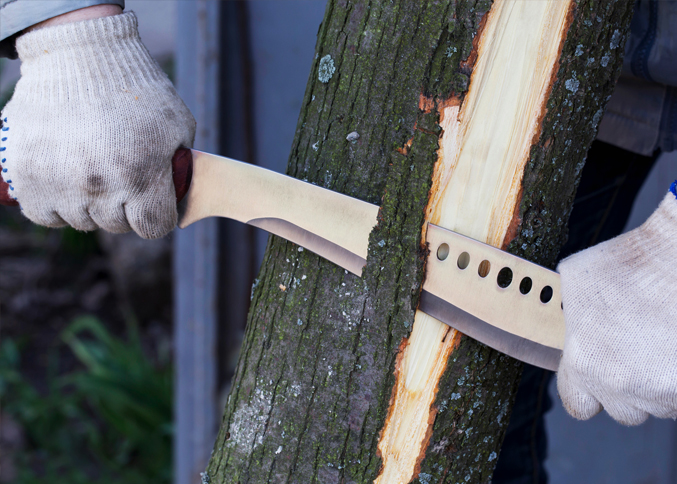
Because machetes are relatively lightweight and long, they allow extended use without exhausting the user. This makes them ideal for jungle edges, farmland, hills, and bush environments where vegetation grows aggressively.
When an Axe Is the Better Tool
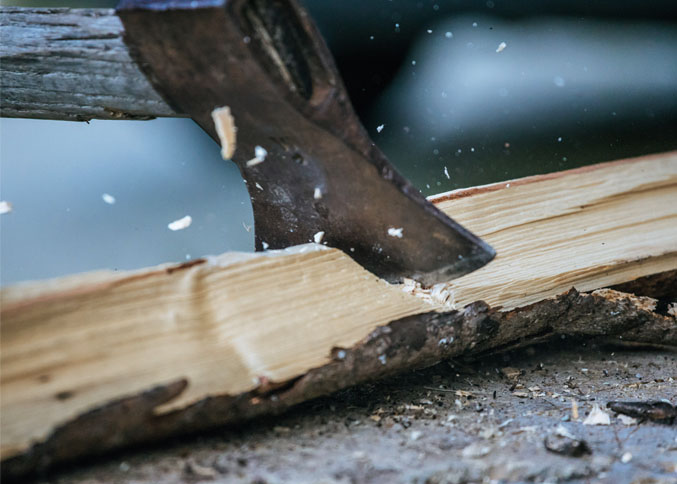
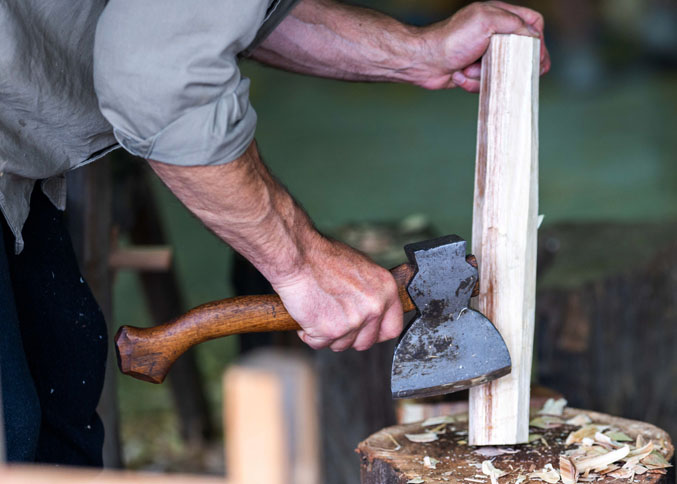
An axe is designed for processing wood, not clearing vegetation. Its weight and head geometry allow it to drive force deep into dry, thick timber.
Best uses for an axe
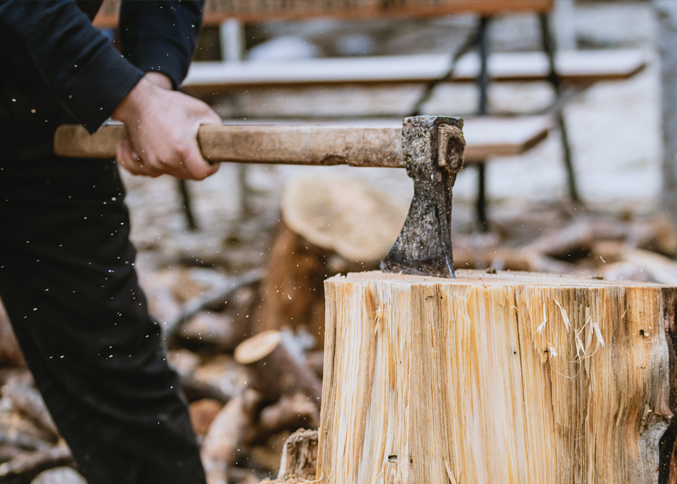
- Splitting firewood efficiently
- Chopping thick hardwood and large branches
- Felling trees with proper technique
- Processing logs for shelters and camp structures
- Cold-climate camping where firewood is essential
Machete vs Axe: Side-by-Side Comparison
| Category | Machete | Axe |
|---|---|---|
| Primary function | Fast slicing and vegetation clearing | Heavy impact and wood splitting |
| Best environment | Brush, jungle, trails, farms | Forests, camps, cold regions |
| Weight & carry | Light, easy to carry all day | Heavier, tiring over distance |
| Fatigue over time | Lower | Higher |
| Wood splitting ability | Limited to small pieces | Excellent |
| Brush clearing | Excellent | Poor and inefficient |
Can a Machete Replace an Axe?
A machete can handle light chopping and small branches, but it is not an efficient replacement for an axe. Regular firewood processing with a machete increases fatigue and risk while reducing tool life.
Can an Axe Replace a Machete?
An axe struggles in dense vegetation. Vines, tall grass, and flexible brush do not respond well to impact tools. In overgrown terrain, a machete is far more effective.
The Most Practical Outdoor Setup
A machete clears. An axe or hatchet processes.
- Machete for trails, brush, and fast cutting
- Small axe or hatchet for splitting and camp work
Choosing the Right Tool for the Work
The machete vs axe debate is not about which tool is better overall. It is about matching the tool to the terrain and the task.
If vegetation is your main challenge, a machete will save time and energy. If firewood and thick timber are your priority, an axe is the correct choice. The most efficient approach is understanding what you actually do outdoors and choosing tools designed for that work.
FAQ
Is a machete better than an axe for survival?
In vegetation-heavy regions, a machete is often more useful for daily survival tasks. In cold climates where firewood is critical, an axe becomes more important.
Can I split firewood with a machete?
You can split small pieces in an emergency, but it is not efficient or safe for regular firewood use.
What is better for bushcraft, a machete or an axe?
A machete is better for clearing and fast cutting. An axe is better for wood processing and camp construction.
What size machete is best for trail clearing?
Mid-length machetes offer the best balance of control and efficiency, while longer blades provide extra reach but require more control.
Explore Everest Forge Machetes
Built for real outdoor work, Everest Forge machetes are designed for clearing brush, trails, and vegetation with balance, reach, and control.
View MachetesDiscover Hand-Forged Axes
From bushcraft to firewood and timber work, Everest Forge hand-forged axes deliver power, balance, and durability for serious outdoor use.
View Axes