How a Timeless Nepalese Blade Continues to Evolve
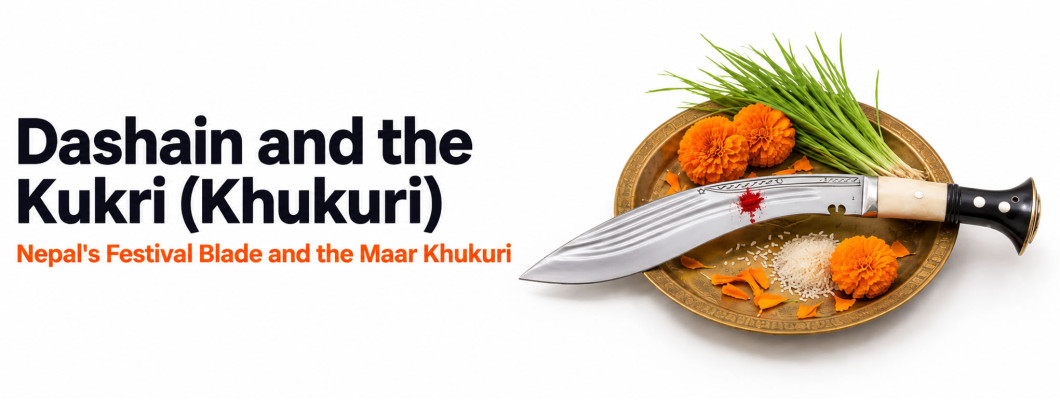
For centuries, the khukuri has evolved alongside the people of Nepal. Long before modern knife design existed, this blade was refined through daily work, survival, and warfare. Its form was not engineered in a factory — it was shaped by real use.
Today, the same blade is widely known as the kukri, especially outside Nepal. While the name has shifted, the essence of the blade remains unchanged. What has evolved are the materials, construction methods, and supporting features that adapt the kukri to modern expectations.
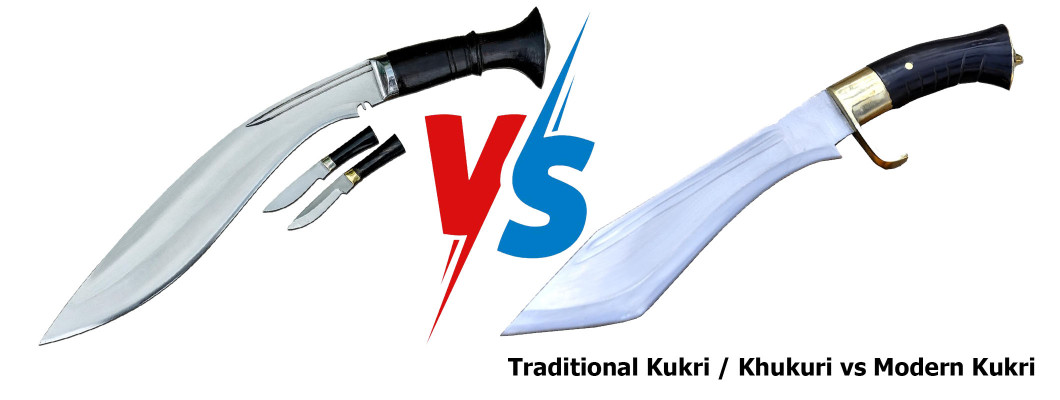
Understanding the difference between a traditional khukuri and a modern kukri is essential for anyone who values authenticity, performance, and craftsmanship.
Traditional Khukuri: Forged by Heritage
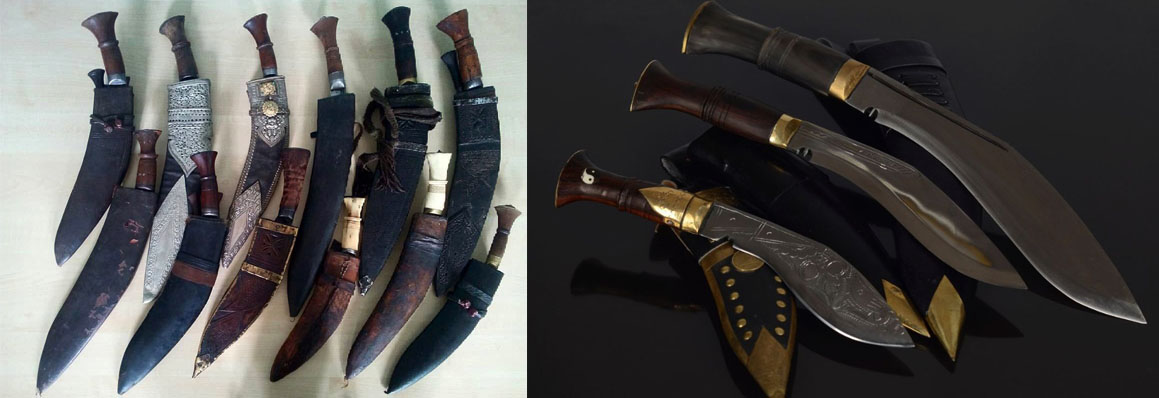
A traditional khukuri is the product of generations of practical knowledge passed down through Nepalese bladesmiths. These blades were shaped by farming, forestry, household work, and battlefield demands — not by trends or modern knife design.
Traditional khukuris are hand-forged from high carbon steel and heat-treated using time-tested methods. The emphasis has always been on balance, cutting efficiency, and reliability rather than added mechanical features.
What Defines a Traditional Khukuri
- Hand-forged high carbon steel blade
- Traditional heat treatment for durability and edge retention
- Rat-tail tang peened securely into the pommel
- Blade-forward balance designed for powerful chopping
- Minimal modern features, relying on skill and experience
Traditional Materials and Construction
Handle Materials in Traditional Khukuri
In traditional khukuris, handle materials were selected based on availability, durability, and long-term comfort:
- Rosewood for strength and stability
- Buffalo horn for shock absorption and grip
- Occasionally walnut or other native hardwoods
These handles were shaped to sit naturally in the hand, without finger choils or guards. Control came from blade balance and user familiarity rather than mechanical safety aids.
Kajo Bolster in Traditional Khukuri
Traditional khukuris typically feature a kajo bolster — a simple metal bolster placed between the blade and the handle. The kajo is not designed as a guard. Instead, it reinforces the blade-to-handle junction while preserving traditional handling characteristics.
Kaudi Cho in Traditional Khukuri
Most traditional khukuris feature a kaudi cho, the classic inward-curved notch at the base of the blade. It helps relieve stress at the blade base, controls runoff during cutting, and carries symbolic and cultural meaning rooted in Nepalese tradition.
Traditional Khukuri Scabbards, Karda, and Chakmak
Traditional khukuri scabbards were practical and purpose-built:
- A carved wooden core shaped precisely to the blade
- Wrapped in leather or rawhide for protection
- Commonly paired with karda and chakmak
The karda is a small utility knife used for fine cutting tasks, while the chakmak is traditionally used for honing the blade or striking sparks. Together, they make the traditional khukuri a complete working system rather than a single tool.
Established Traditional Khukuri Forms
Traditional khukuris are best understood as established forms shaped by function, blade geometry, and historical use — not strictly by region alone.
- Bhojpure Khukuri – heavy-duty with a wide belly for powerful work
- Sirupate Khukuri – slim, fast, and agile
- Angkhola Khukuri – deep fuller for strength and balance
- Dhankute Khukuri – ornate and often ceremonial
- Panawal Khukuri – strong and dependable for field use
- Chitlange Khukuri – refined, elegant, and functional
- Chainpure Khukuri – simple and practical utility design
- Budhune Khukuri – compact with inward curvature
- Tin Chira Khukuri – triple fuller design for durability
- Limbuwan Khukuri – distinct curve with deep cultural roots
Modern Kukri: Tradition Adapted for Contemporary Use

A modern kukri retains the iconic blade shape of the khukuri but adapts it for modern users. These kukris are designed for bushcraft, outdoor work, and survival, incorporating materials and ergonomics familiar to contemporary knife users.
Modern kukris do not replace traditional khukuris — they represent an evolution shaped by new environments and expectations.
Modern Materials and Design Evolution
Handle Materials in Modern Kukri
Modern kukris commonly adopt synthetic handle materials for consistency and weather resistance:
- G10 for rigidity and dependable grip
- Micarta for durability and traction
- Composite or rubberized materials for demanding conditions
Guard on Modern Kukri
Unlike traditional khukuris that use a kajo bolster, many modern kukris replace this with a guard. The guard provides physical hand protection, preventing the hand from sliding forward during heavy chopping or thrusting.
Finger Cho on Modern Kukri
In place of the traditional kaudi cho, many modern kukris incorporate a finger cho or finger choil. This allows the user to choke up on the blade for greater control during detailed or precision tasks.
Scabbards and Accessories in Modern Kukri
Modern kukris typically move away from traditional wooden scabbards and accessory tools:
- Kydex scabbards for secure retention and modular carry
- Western-style leather sheaths for compatibility with modern outdoor gear
Unlike traditional khukuris, many modern kukris do not include karda and chakmak. These accessories are often omitted in favor of simplified carry systems and modern maintenance tools.
Modern Knife Features
- Jimping on the spine for improved thumb control
- More neutral balance for repeated cutting tasks
- Reinforced tips for precision and control
Traditional Khukuri vs Modern Kukri
| Feature | Traditional Khukuri | Modern Kukri |
|---|---|---|
| Handle | Rosewood, horn, natural wood | G10, Micarta, composites |
| Bolster / Guard | Kajo bolster (no guard) | Protective guard |
| Cho / Choil | Kaudi cho (traditional notch) | Finger cho (choil) |
| Scabbard & Tools | Wooden scabbard with karda & chakmak | Kydex or western leather, often no tools |
Choosing the Right Kukri or Khukuri
A traditional khukuri is ideal for those who value heritage, symbolic details like the kaudi cho, and the complete system of blade, karda, and chakmak. A modern kukri suits users who prefer modern ergonomics, guards, finger cho, and simplified carry systems.
Many Everest Forge customers choose a hybrid approach — traditional blade geometry combined with modern handles, guards, or scabbards — blending heritage with modern performance.
Custom Kukri and Khukuri Forging at Everest Forge
At Everest Forge, tradition and innovation are treated with equal respect. Whether you want a historically accurate traditional khukuri or a modern kukri designed for real-world use, custom forging allows you to shape a blade that reflects your purpose.
If you have reference photos, sketches, or a specific idea in mind, you can submit your request through our Custom Forge page and let us craft a kukri or khukuri rooted in heritage and built to perform.