Rebated, Blunt or Unsharpened? What a Stage Combat Blade Actually Means
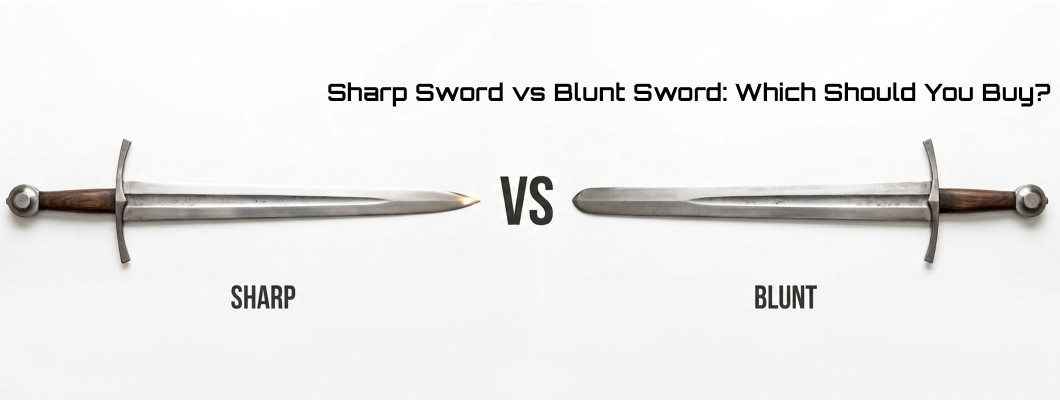
These three words are not synonyms, and treating them as though they are is how people get cut. An unsharpened blade has simply never been given an edge — it is still thin, still hard, and still carries burrs from the grinder. Blunt is a loose umbrella term that sellers apply to both safe and unsafe blades. A rebated blade is the only one of the three that describes actual work done to make a blade safe for combat with another person. This guide defines each term properly, explains how an edge is genuinely rebated, and gives you the one test that settles it.
The Three Terms, Defined
Unsharpened
An unsharpened blade is one that has been ground to its final geometry but never taken to a sharpening stone. That is all the word means. It is a description of something that was not done, not of anything that was done.
Here is the problem. When a blade comes off the grinder, the edge is thin — often well under a millimetre — and it is hard, and along its length it carries burrs: tiny ragged flags of steel that the abrasive has pushed over rather than removed. A burr is functionally a series of small blades pointing sideways. It will open a hand during a bind, and it will do it without the performer noticing until afterwards.
Unsharpened does not mean safe. It is the single most common misunderstanding in this subject, and it is why a blade advertised as "not sharpened" should never go into choreography without being examined first.
Blunt
Blunt is a plain-English word that sellers use for anything without a cutting edge. It covers properly rebated combat blades and it equally covers a blade that was simply never sharpened. The word does not distinguish between them.
That is not necessarily dishonesty on the seller's part — "blunt" is genuinely how most people ask for this, and most listings are written to match how people search. But because the word carries no information about what was actually done to the edge, a listing that says only "blunt" is a listing you have to ask questions about.
Rebated
Rebated is the precise term, and it describes real work. To rebate an edge is to deliberately take it back to a rounded, even profile along the full length of the blade, and then dress that profile smooth by hand until there is nothing left to catch skin.
Two things separate it from unsharpened. First, material is removed on purpose to widen and round the edge, rather than the edge being left at cutting geometry. Second, and more importantly, the edge is dressed — every burr is worked off, and the surface is finished rather than merely shaped.
The word comes from woodworking and building, where a rebate is a stepped recess cut into an edge. In blade terms it has meant a deliberately blunted combat edge for a very long time, and it is the word fight directors and equipment officers use because it is the only one of the three that means something specific.
How an Edge Is Actually Rebated
Most sellers cannot describe this because they buy in finished blades. Here is what it involves at the bench.
The blade is forged and heat-treated exactly as any other, then ground to its blade geometry. Where a cutting blade would go on to have that geometry narrowed to an apex, a stage blade goes the other way. The edge is taken back to a flat of consistent width, and then the two shoulders of that flat are worked over until the cross-section through the edge is a rounded shape rather than a wedge.
Consistency matters as much as width. An edge that is nicely rounded for most of its length and thins out over the last few inches toward the point is a blade that will surprise somebody, because the last few inches are the part that moves fastest.
Then it is dressed. This is hand work with progressively finer abrasive, running along the edge rather than across it, until the burr is gone rather than folded over to the other side. Folding a burr back and forth is what happens when this stage is rushed, and it produces an edge that looks finished and is not.
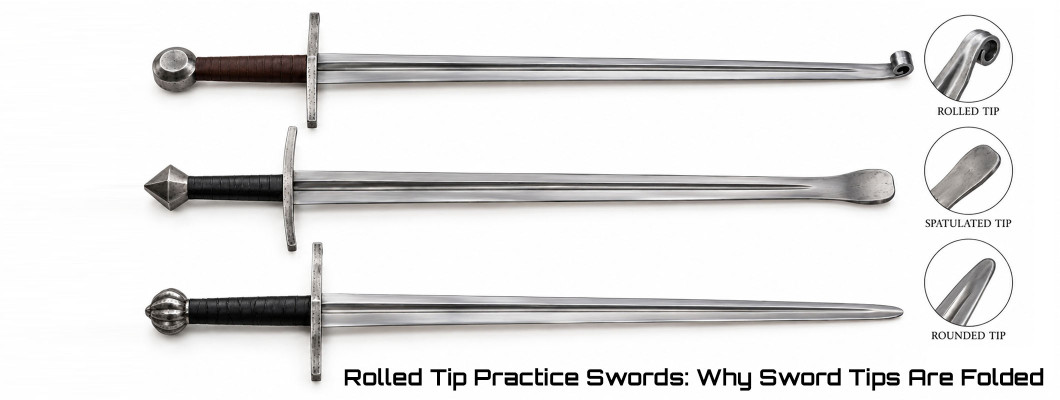
The tip is a separate operation. On a stage blade there is no acceptable point under any circumstances, so the tip is taken back to a rounded, spatulate profile and dressed the same way as the edges. Some fight directors specify a ball or button termination instead, which is a different shape but the same principle.
Finally the balance. A blade being rebated is usually also being rebalanced, because a blade built to stop precisely on a mark wants its mass distributed differently from one built to drive through a target. That, along with a softer temper, is covered on our stage combat build standard.
The Bare Hand Test
There is one test, it takes ten seconds, and it settles the question regardless of what the listing said.
Run a bare hand slowly along the blade — both edges, and over the tip. Firm contact, moving along the length rather than across it. If anything catches, snags or feels gritty, the edge is not finished, whatever it was sold as.
It feels alarming the first time and it should not be. A properly rebated edge feels like the rounded back of a butter knife. If you find yourself hesitating to do it, that hesitation is itself the answer, and the blade needs work before anyone rehearses with it.
Do this when the blade arrives, before it goes anywhere near a rehearsal room, and repeat it before every call once the run starts — nicks raise fresh burrs as they accumulate.
The Terms Compared
| Term | What it actually means | Safe for contact work? |
|---|---|---|
| Sharpened | Edge taken to a cutting apex | No — never for choreography |
| Unsharpened | Never given an edge; still thin, hard and burred | No — not without being rebated first |
| Blunt | Umbrella term; carries no information about the work done | Unknown — you have to ask |
| Rebated | Edge widened, rounded and dressed smooth by hand | Yes, to the relevant spec |
| Rounded tip | Point removed and finished as a spatulate profile | Required alongside a rebated edge |
Other Terms You Will Meet
Once you start reading equipment specs, a handful of neighbouring words turn up. They are worth knowing so you can tell when a seller is using them precisely and when they are decorating.
- Practical. Usually means a functional blade sold without a finished edge, aimed at training. It tells you about intent, not about the edge — treat it the way you treat "blunt" and ask.
- Waster. A training weapon in wood or synthetic, not steel. Common in early HEMA training and in some rehearsal work before steel is introduced.
- Feder. A steel HEMA training sword with a distinctive flared schilt and a flexible blade, built for longsword sparring. It is a specific historical type, not a general word for a blunt sword.
- Schaukampfschwert. German for "show combat sword" — the blunt, wide-edged blade used in European reenactment and show fighting. Effectively the continental equivalent of a rebated stage blade, and worth knowing if you buy from European suppliers.
- Peace-tied. Nothing to do with the edge. It means the blade is secured in its scabbard so it cannot be drawn, which is what most Renaissance Faires require of blades carried by the public.
Note that edge thickness is where most organisations put their actual requirement. Reenactment and stage combat bodies commonly specify a minimum thickness across the rebated edge — a couple of millimetres is a figure you will see quoted — but the number differs between organisations and it changes. Take it from your own governing body's current published spec, never from a supplier.
Which Term Applies Where
Different disciplines want different things, and the same blade is rarely right for two of them.
Stage and screen combat. Rebated edge, rounded tip, balance set for control. Choreographed, performed close to other people and to an audience, and the requirement is set by the fight director. This is the strictest case for tips, because thrusts land near bodies.
HEMA. Federations set their own equipment standards and they are detailed. Sparring uses purpose-built blunts such as feders with specified flex and tip characteristics; cutting practice uses sharp blades on targets, never against a partner. A stage blade is not a sparring blade and should not be substituted for one.
Reenactment and living history. Groups typically specify a minimum edge thickness and a blunted tip for combat, with their own inspection process. Standards vary considerably between societies.
Renaissance Faires. The usual requirement is peace-tying rather than blunting, though some faires additionally require blades to be of stage combat grade if any edge or point is exposed. Check the individual faire.
LARP. Generally foam or latex rather than steel for anything involving contact. Steel appears as costume only, carried and not swung.
Collecting, display and cutting. Sharpened, tempered harder, balanced forward. This is what most of our catalogue is and what our battle ready standard describes.
What to Ask When a Listing Just Says "Blunt"
Most listings you will encounter use the vague word. These four questions turn it into something you can act on, and a maker who cannot answer them clearly is telling you what you need to know.
- Is the edge rebated and dressed, or simply left unsharpened? The two are not the same and only one is finished.
- How thick is the edge, and is it consistent to the point? The last few inches are the ones that matter most.
- Is the tip rounded, and how? Spatulate, ball, or button — and if the answer is that the tip is "not very pointed", that is not a rounded tip.
- Was the blade tempered differently from your cutting blades? A stage blade should be softer, so it takes a set rather than chipping. If the temper is the same, only the edge has changed.
What can go wrong when these questions are not asked is covered in detail in why stage combat swords fail — the pommel, the tang and the temper account for more real incidents than the edge does.
Rebated by Hand, Not Just Left Unsharpened
Any blade we forge — sword, spear, machete, kukri or dagger — can be built to stage combat specification: edge rebated and dressed by hand, tip rounded, balance set for control. Hand-forged in Kathmandu from 5160 spring steel. Send us your fight director's spec and we will confirm every dimension before forging.
Read the Stage Combat Standard →Frequently Asked Questions
What does rebated mean on a sword?
A rebated sword has had its edge deliberately taken back to a rounded, even profile along the full length of the blade, then dressed smooth by hand so nothing catches skin. It is the precise term for a blade made safe for contact work with another person, as distinct from a blade that was simply never sharpened. The word comes from woodworking, where a rebate is a stepped recess cut into an edge.
Is a rebated blade the same as a blunt blade?
Not necessarily. Blunt is an umbrella term sellers apply to anything without a cutting edge, and it carries no information about what work was actually done. Rebated is specific: the edge was widened, rounded and dressed. Every rebated blade is blunt, but plenty of blades sold as blunt have not been rebated. If a listing says only blunt, ask which it is.
Is an unsharpened sword safe for stage combat?
No, not without being rebated first. Straight off the grinder an unsharpened edge is still thin, still hard, and still carries burrs — small ragged flags of steel that will open a hand during a bind. Unsharpened describes something that was not done rather than work that was done. A blade advertised as not sharpened should be examined and finished before it goes into choreography.
How do I test whether a blade is properly rebated?
Run a bare hand slowly along the blade, both edges and over the tip, moving along the length rather than across it. If anything catches, snags or feels gritty, the edge is not finished regardless of how it was sold. A properly rebated edge feels like the rounded back of a butter knife. Do this when the blade arrives and again before every call once a run starts, since accumulating nicks raise fresh burrs.
How thick should a rebated edge be?
It depends entirely on which organisation's standard applies to you. Stage combat, reenactment and HEMA bodies each publish their own minimum edge thickness, a couple of millimetres is a figure commonly quoted, and those requirements differ between organisations and change over time. Take the number from your fight director or governing body's current published specification rather than from any supplier, including us.
What is the difference between a rebated blade and a feder?
A feder is a specific type of steel HEMA training sword with a flared schilt and a flexible blade, built for longsword sparring under federation equipment rules. A rebated stage blade is built to look like the weapon a character carries and to stop precisely on a mark for an audience. They are not interchangeable — a stage blade is not a sparring blade, and a feder does not read correctly on stage.
Does a rebated blade need a rounded tip as well?
Yes. A rebated edge with a point on it is still a thrusting weapon, and thrusts in choreographed combat land close to the body. On a stage blade the tip is taken back to a rounded, spatulate profile and dressed the same way as the edges. Some fight directors specify a ball or button termination instead, which is a different shape serving the same purpose.
Can a rebated sword be sharpened later?
In principle the geometry could be reground, but it is a poor idea in practice. A blade built for stage work is tempered softer than a cutting blade so it absorbs impact and takes a set rather than chipping, and that temper does not change when the edge does. You would end up with a sharp blade that holds an edge badly. If you want both, order two blades rather than converting one.