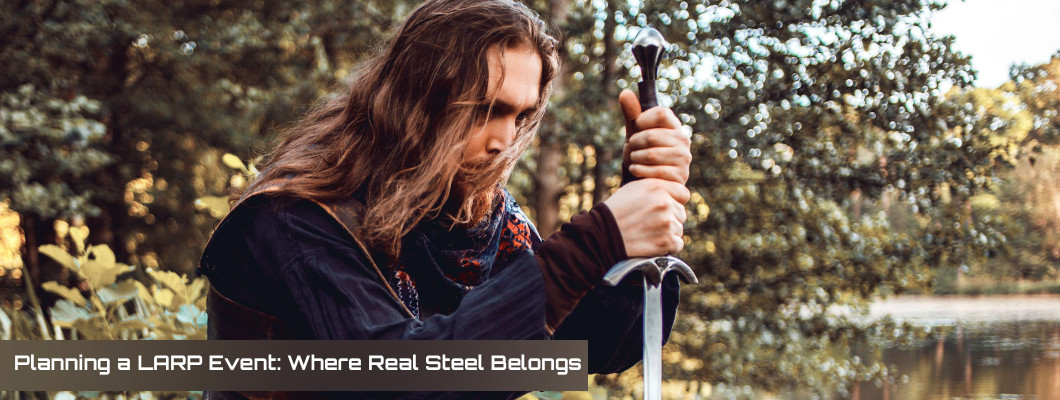
Planning a LARP Event: Where Real Steel Belongs
Steel has a real place at a live action role-playing event. It is not in the fight. Every LARP contact system in the world runs on latex and foam, and no hand-forged blade should ever be swung at a player. What steel does at a LARP is everything the foam cannot: the plot object nobody can fake, the oath sworn on a real edge, the camp that looks lived in, the prize that outlasts the weekend.
This is an organiser's guide rather than a player's one. It covers what your weapons policy has to say, how check-in and peace-tying actually work on the gate, where a real sword, spear, knife, machete or kukri earns its place at your event, and how far ahead to commission if you want something made for it.
Steel or Foam: What Goes Where
| Role at your event | What it takes | Notes for the organiser |
|---|---|---|
| Player combat, any contact at all | Latex or foam only | No exceptions, no "careful" steel, no blunt steel |
| Costume carry between scenes | Steel, sheathed and peace-tied | Checked at the gate, tie stays on all weekend |
| Plot object or relic | Steel | The one prop players will actually believe in |
| Oath-swearing, coronation, knighting | Steel, blunt edge | Handled by many people, so specify blunt |
| Camp and tavern dressing | Steel, static and secured | Racked, chained or supervised, never left loose |
| NPC and merchant set pieces | Steel, blunt | Reads correctly at three feet, foam does not |
| Choreographed display or demo | Blunt training blades | Trained performers, roped area, marshal present |
| Prizes, awards, referee gifts | Steel, engraved | Engraved with the event name and year |
| Photography hour | Steel, blunt, supervised | Booked slot, one handler, no drinking beforehand |
The line in that table never moves. If it touches a person, it is foam. If it is looked at, held, sworn on, awarded or photographed, steel is what makes it convincing.
Write the Weapons Policy Before You Sell a Ticket
Your policy is the document your insurer, your site owner and your marshals will all rely on, and it is much harder to introduce once people have already booked.
State the six things every policy needs. That combat weapons must be latex or foam and pass a marshal's check. That steel is permitted only sheathed and peace-tied, or under supervision in a designated non-combat role. That every blade entering the site goes through weapon check-in. That steel is never drawn in a play area. That under-18s may not carry steel, and what your rules are for them at all. That anyone who has been drinking does not handle steel, full stop.
Say what happens when someone breaks it. A policy without a consequence is a suggestion. Removal of the item to secure storage for the rest of the event is the usual answer and is easier to enforce than ejection.
Check it against your insurance, not the other way round. Most event policies have conditions about edged items, and finding out afterwards is the expensive version.
Weapon Check-In and Peace-Tying
This is a fifteen-minute job per hundred players if it is set up properly and a two-hour bottleneck if it is not.
Run check-in at the gate, not at the field. Every weapon, foam and steel, is inspected once on arrival. Foam gets the usual safety check for core, padding and thrust tip. Steel gets sheathed, tied and tagged.
Peace-tying means the blade cannot be drawn. The sheathed blade is secured to its scabbard or belt with a cable tie or cord in a way that has to be visibly cut to remove. Coloured ties by day, or a tag with the event logo, lets a marshal see compliance from across a field without stopping anyone.
Log what came in. Owner, item, tie number. It takes seconds and it means a found blade goes back to a person rather than into a lost property box.
Have secure storage. A locked box or a stewarded tent for anything that gets removed, plus for players who travelled with steel for the photo hour and do not want it in a tent all weekend.
Where Steel Earns Its Place
Foam is the correct answer for the fight and the wrong answer for almost everything else. These are the roles where a real blade changes the event.
The plot object. A relic the players are questing for, a sword that carries a curse, a blade that has to be returned to a family. Everyone at your event can tell a foam prop from a forged one at a glance, and belief is the whole product you are selling. One real blade in a plot arc does more than a dozen good props.
Ceremony. Knightings, oaths, coronations, a monarch's sword of state, a faction's founding blade. These are the moments people photograph and remember, and they are all non-contact. Order these blunt: they will be handled by dozens of people who have never held a blade.
Set dressing that reads. A tavern wall, a smith's stall, an armoury tent, a war camp. Steel racked and secured behind a table does more for your site's atmosphere than any amount of bunting. It also gives your merchant and craft NPCs something real to work with.
Prizes and awards. An engraved dagger or knife for best roleplay, best costume, the referee team, or your long-serving crew is the single best-value item on this list. It costs less than most trophies, it carries the event name and year, and it stays on a wall for twenty years reminding someone that your event exists.
The photography hour. A booked slot, one handler, blunt blades, and your photographer gets the shots that fill next year's ticket sales. Foam does not photograph — the light reads wrong and everyone can see it.
Choreographed Display and Demonstrations
If you want a steel display at your event — a duel between trained performers, a smithing demonstration, a martial arts group — treat it as a separate production, not a scene.
Use blunt training blades. Our training blades are forged blunt in swords, kukri/khukuri and machete forms for exactly this. Blunt steel is still steel and still injures — it is safer, not safe.
Rope the area, brief the crowd, put a marshal on it. Distance from the front row, a named person who can stop it, and no player participation from the audience.
Only trained performers. A choreographed display is a rehearsed routine with people who do this. It is not two enthusiastic players who have watched a lot of film.
Which Blades Suit Which Settings
Once you know the role, the type follows from your event's world.
Swords for anything with a monarch, an order, a knighthood or a founding legend. A Viking or medieval sword for northern and dark-age settings, an arming sword or falchion for high fantasy and medieval Europe, a fantasy sword where your world is its own. Pick by silhouette — players read the shape from across a field long before they read the detail.
Spears are the most underused prop in the hobby. A forged spear standing at a gate, carried by a guard NPC or racked in a war camp does more visual work than a sword, because almost nobody brings one. For a militia, a guard post or a hunting culture, it is the correct weapon anyway.
Knives and daggers are the workhorses: gate guard, merchant, thief, cook, ritual, and the practical answer for prizes because they are small enough to post and to keep. Browse traditional and historical daggers or tactical and fantasy daggers depending on your setting.
Machetes suit jungle, post-apocalyptic, colonial and survival settings, where a clean historical sword looks wrong. A forged machete reads as used rather than ceremonial, which is exactly the note those worlds need.
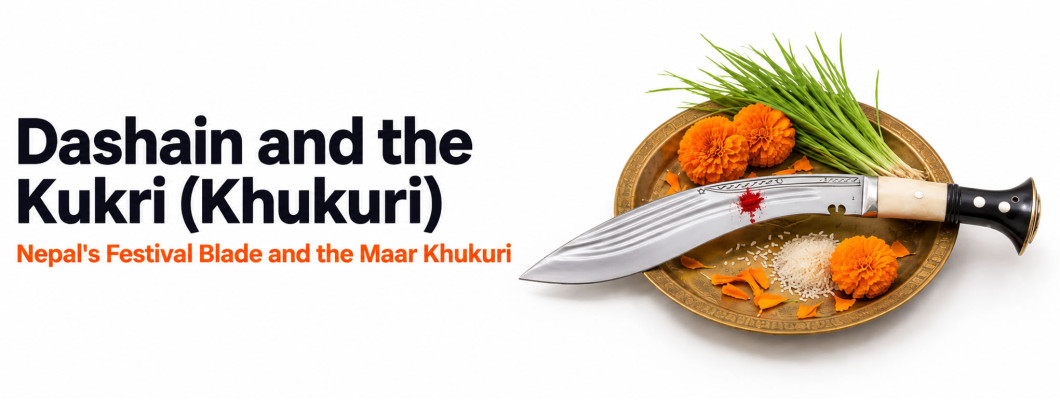
Kukri and khukuri carry their own history and fit mercenary companies, mountain cultures, scouts and any faction you want to feel foreign and competent. The kukri/khukuri range covers everything from small EDC sizes to long, narrow kukri swords.
Commissioning Something Made for Your Event
We hold no stock — every blade is forged after the order is placed — which is a problem if you forget and an advantage if you plan.
A one-off plot blade. Send us the concept, a drawing or a reference image and we forge it. It becomes an object that exists nowhere else, which is the entire point of a relic. Start at custom forge.
Matched sets for a faction. Six identical daggers for an order, a guard unit or a crew have to be forged together to one specification. Matching a seventh to a set made last year is far harder than forging all seven at once.
Engraving is free. Event name, year, faction motto, a winner's name. It costs nothing and it is what turns a prize into something kept. It also adds a step before forging, since we confirm the artwork with you first, so engraved orders need more lead time rather than less.
Ask for blunt. For anything that will be handled by players, sworn on, passed down a table or photographed, specify a blunt ceremonial edge. No extra cost, and nobody can tell by looking.
Work backwards from the event date. Forging, then engraving approval, then international shipping from Nepal. Tell us the date of the event rather than asking how long it takes, and we will tell you honestly whether it is achievable. If your event is in eight weeks, ask before you plan a scene around a blade.
Transport, Storage and the Site
Three things that catch organisers out, all of them easier to settle months ahead.
Get the site's position in writing. Scout camps, country parks, farms and heritage venues frequently have their own rules on edged items, and a verbal yes from whoever unlocked the gate is not a policy.
Check the law where the event is, including transport. Rules on carrying in public are separate from rules on owning, and the drive to and from the site is where people come unstuck. If players are travelling internationally to attend, tell them early — it is your job to warn them, not theirs to guess.
Plan storage before arrival, not on the day. Where does confiscated kit go, where do the ceremonial blades live between scenes, and who has the key. One named person with a locked box solves all three.
Blades Made for Your Event, Not for a Shelf
Plot relics, ceremonial swords, faction sets, NPC and camp pieces, blunt training blades and engraved prizes — hand-forged to order in Kathmandu in 5160 spring steel, full tang, with free engraving on every piece and blunt ceremonial edges at no extra cost. Send us the date of your event rather than a deadline and we will tell you honestly what fits.
Frequently Asked Questions
Can you use a real sword in LARP?
Not for combat. Every LARP contact system uses latex or foam weapons, and no steel blade — sharp or blunt — should ever be swung at another person. Steel belongs at a LARP in non-contact roles: costume carry while sheathed and peace-tied, plot objects, ceremonies, camp and NPC dressing, engraved prizes and booked photography. Write that division into your weapons policy before you sell tickets.
What is peace-tying and how do you do it?
Peace-tying means a sheathed blade is secured to its scabbard or belt so it cannot be drawn without visibly cutting the tie. A cable tie or cord through the guard and scabbard throat is the standard method. Do it at gate check-in, log the owner and item, and use a coloured tie or an event-branded tag so marshals can confirm compliance from a distance without stopping anyone.
What should a LARP weapons policy say?
Six things: combat weapons must be latex or foam and pass a marshal's check; steel is permitted only sheathed and peace-tied or in a supervised non-contact role; every blade entering the site goes through weapon check-in; steel is never drawn in a play area; under-18s may not carry steel; and nobody who has been drinking handles steel. State the consequence too — removal to secure storage for the rest of the event is easier to enforce than ejection. Check it against your insurance conditions.
Are blunt steel blades safe for LARP fighting?
No. Blunt steel is safer than sharp steel, not safe. It carries full weight and rigidity and can break bones and cause serious injury through padding. Blunt training blades belong in choreographed displays performed by trained people in a roped-off area with a marshal present, or in ceremonial handling — never in player combat, which remains latex and foam only.
What is the best use of a real blade at a LARP event?
A plot object. Players can tell a forged blade from a prop instantly, and one real relic in a quest arc buys more belief than a dozen good props. After that: ceremonial pieces for oaths and knightings, static camp and tavern dressing, and engraved prizes. A dagger engraved with your event name and year costs less than most trophies and stays on a wall for decades.
How far ahead should an organiser order blades for an event?
Work backwards from the event date, not forwards from today. We hold no stock — every blade is forged after the order is placed, then engraved, then shipped internationally from Nepal. Engraving adds a step before forging because we confirm artwork first, and matched faction sets take longer than single pieces. Tell us the date of the event and we will tell you honestly whether it fits.
Can we get matching blades for a faction or guard unit?
Yes, and they have to be ordered together. A set forged in one run to one specification will match; adding a seventh piece to a set made last year is considerably harder and the difference shows. Engraving is free, so a faction motto or a unit name on each piece costs nothing extra. Order sets before single items, because they take longer.
Should ceremonial blades for an event be sharp or blunt?
Blunt. Anything used in a knighting, an oath, a coronation or a hand-over will be held by dozens of people who have never handled a blade, and passed along a table in the dark by some of them. A blunt ceremonial edge costs no more, removes the risk, and nobody can tell by looking. Keep an edge only on pieces that stay in one pair of trained hands.
Which blade types suit LARP settings best?
Choose by silhouette, because players read shape from across a field. Viking, medieval and fantasy swords for anything with a monarch or an order; spears for gates, guards and hunting cultures, and they stand out because almost nobody brings one; knives and daggers for merchants, thieves, rituals and prizes; machetes for jungle, survival and post-apocalyptic worlds where a clean historical sword looks wrong; kukri and khukuri for mercenary companies, scouts and mountain factions.
Do we need to tell players about blade laws before the event?
Yes, and early. Rules on carrying in public are separate from rules on owning, and the journey to and from the site is where people run into trouble — particularly anyone travelling internationally to attend. Confirm your venue's own position in writing as well; scout camps, country parks and heritage sites often have their own rules regardless of what the law allows.