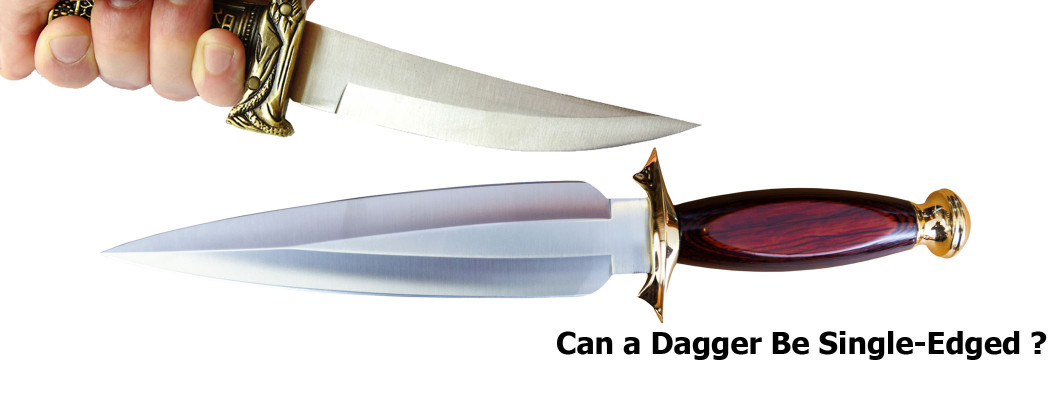
Are Daggers Always Double-Edged?
When most people imagine a dagger, they picture a short blade with two sharpened edges and a narrow pointed tip. This classic design appears in many historical weapons, museum collections, and military daggers. Because of this, it is easy to assume that every dagger must be double-edged.
In reality, that assumption is not correct. Throughout history, many dagger-style blades have been forged with a single cutting edge and a reinforced spine. These blades still function as daggers because they maintain the key characteristics of the weapon: a compact size, a sharp point, and the ability to be used effectively at close range.
The number of edges on a blade does not determine whether it is a dagger. Instead, the classification usually depends on the blade's overall design, size, and intended purpose.
What Defines a Dagger?
A dagger is generally defined as a short, pointed blade designed for controlled use at close range. Historically, daggers were often carried as secondary weapons alongside swords, providing a reliable backup when fighting at very close distances.
Most daggers share several common characteristics:
- A blade shorter than a typical sword
- A sharp, centered point designed for thrusting
- A compact design that allows quick handling
- A role as a sidearm or backup weapon
Because thrusting was an important function, many daggers were made with symmetrical double edges. However, bladesmiths in different cultures also developed single-edged daggers that offered additional durability and cutting performance.
Single-Edged Daggers in History
Single-edged dagger designs appear in many historical traditions. In some cases, the design improved the strength of the blade, while in others it allowed the dagger to function both as a weapon and as a practical tool.
Scottish Dirk
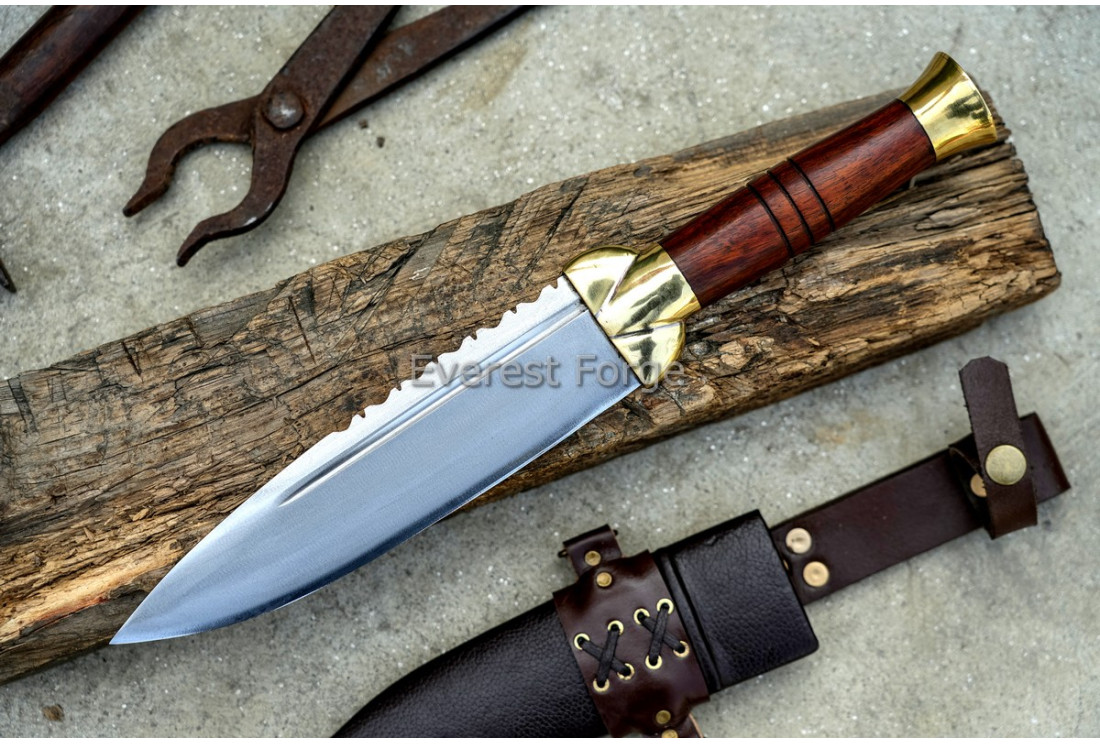
The Scottish dirk is one of the most well-known single-edged daggers. Carried by Highland warriors, the dirk features a long blade with a single cutting edge and a thick spine. While capable of thrusting, the blade also performs well for slicing tasks.
Seax-Inspired Daggers
The seax was a single-edged blade used by early Germanic and Viking cultures. Shorter versions of the seax behaved very much like daggers and were carried as practical sidearms.
Bowie-Style Daggers
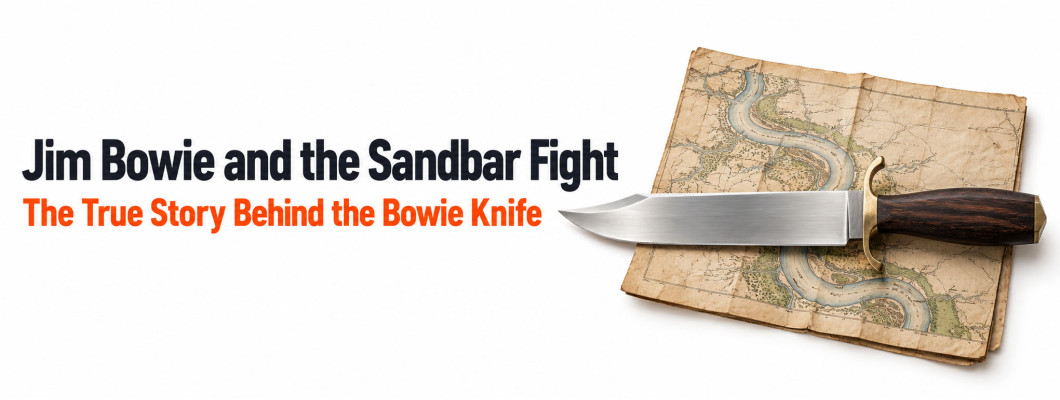
Some dagger-length Bowie knives can also fall into the dagger category depending on their proportions. These blades usually have one primary cutting edge and sometimes a sharpened clip point, combining cutting strength with a penetrating tip.
Why Some Daggers Use a Single Edge
There are several practical reasons why bladesmiths design daggers with only one sharpened edge.
Stronger Spine
A blade with one cutting edge can retain a thicker spine. This increases the structural strength of the dagger and improves durability.
Improved Cutting Ability
A single cutting edge allows the blade to be shaped with geometry that improves slicing performance.
Easier Maintenance
Sharpening one edge is simpler than maintaining two edges, making single-edged blades easier to care for.
Versatility
Single-edged daggers can serve both as effective fighting blades and practical utility knives.
Single-Edged vs Double-Edged Daggers
Daggers can be forged with either one or two sharpened edges. Both styles have existed throughout history, and each design offers different advantages depending on the intended purpose of the blade.
| Feature | Single-Edged Dagger | Double-Edged Dagger |
|---|---|---|
| Blade Edges | One sharpened edge with reinforced spine | Two sharpened edges with symmetrical blade |
| Blade Strength | Often stronger due to thicker spine | Can be thinner depending on design |
| Cutting Ability | Very good slicing performance | Moderate cutting ability |
| Thrusting Ability | Good | Excellent |
| Maintenance | Easier to sharpen | Requires sharpening both edges |
| Historical Examples | Scottish Dirk, Seax | Rondel Dagger, Stiletto, Pugio |
Explore Hand Forged Daggers
If you appreciate historical blades and practical craftsmanship, explore our collection of hand forged daggers. These blades are crafted using traditional forging techniques and designed for collectors and enthusiasts who value real working blades.
View Dagger CollectionRequest a Custom Forged Dagger
Looking for a dagger with a specific blade shape, handle material, or historical inspiration? Our custom forge service allows you to request a dagger made according to your preferred design and specifications.
Request Custom DaggerNo, Daggers Are Not Always Double-Edged
Daggers do not need two sharpened edges to be considered true daggers. While double-edged blades are common, many historical dagger styles were forged with a single cutting edge and a reinforced spine.
The defining features of a dagger are its compact size, sharp point, and ability to function effectively at close range. Because of this, both single-edged and double-edged daggers have existed for centuries.
Single-edged designs often offer stronger blade structure and improved slicing performance, while double-edged daggers excel at thrusting from multiple angles. Both styles remain important parts of blade history and continue to influence modern handmade dagger designs.
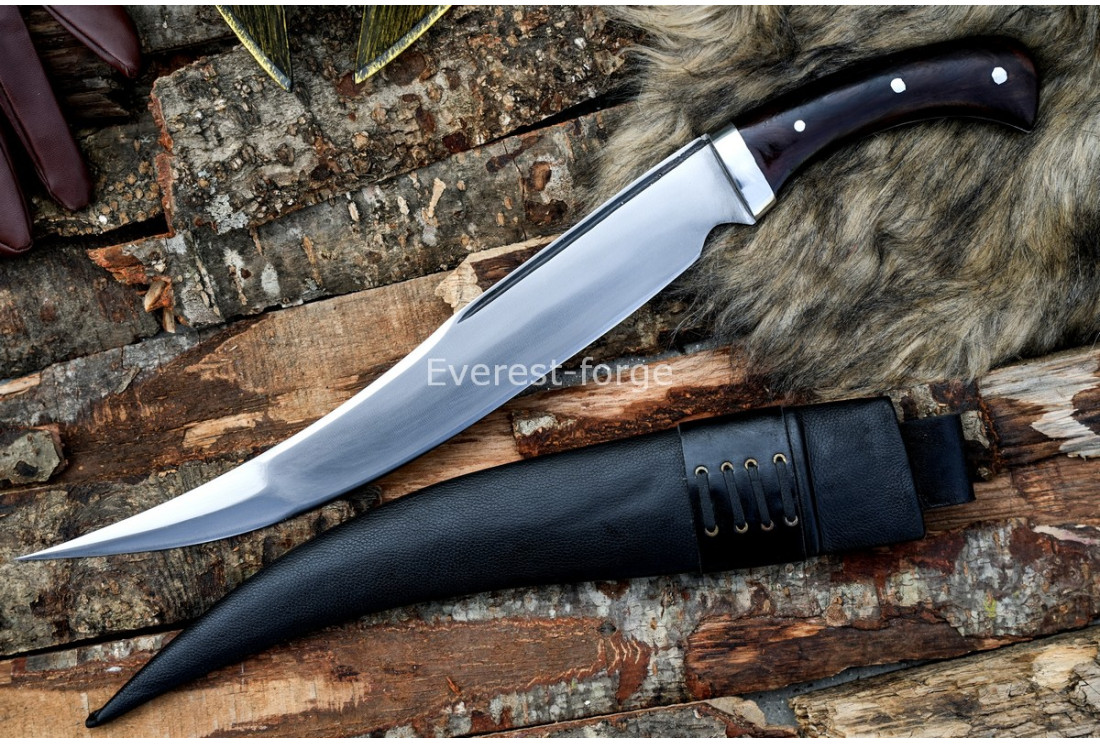
Single Edge Daggers from Everest Forge
Many historical daggers were forged with a single cutting edge and a reinforced spine. These blades combine strength, cutting ability, and a sharp penetrating tip. Below are several examples of single-edged dagger styles available from Everest Forge.