Some of the first swords ever made were not steel, not iron, but bronze — and many of them carried the same broad, leaf-shaped blade we still forge today. The Bronze Age was the moment humanity learned to pour metal into the shape of a weapon, and the swords that came out of it shaped warfare, ritual and status for nearly two thousand years. This guide walks through where these blades came from, how they were actually made, the main types archaeologists recognise, and why a modern Bronze Age sword is almost always forged in steel rather than cast in bronze.
Everest Forge — Ancient Forms, Hand-Forged
A field guide to the first metal swords
History, metallurgy, the famous Naue II, and how the leaf blade survives today — written by a working forge, not a museum gift shop.
When Was the Bronze Age?
The Bronze Age runs roughly from 3300 to 1200 BCE, though the exact dates shift by region. It is named for the alloy that defined it: bronze, made by mixing copper with around ten percent tin. That recipe mattered enormously. Pure copper is too soft to hold an edge, but adding tin produces a metal hard enough to take a point and a cutting edge while still being castable in a mould.
The earliest objects long enough to call swords appear remarkably early — a cache found at Arslantepe in modern Turkey dates to around the 33rd to 31st centuries BCE and was made from an arsenic-copper alloy, an early cousin of true tin bronze. From there the sword evolved gradually out of the dagger, growing longer as metalworkers learned to cast and work larger blades.
Tin was the catch. It is far rarer than copper and was often traded across enormous distances, which made bronze expensive and a finished bronze sword a genuine mark of wealth and rank. These were elite weapons long before they were common ones.
How Bronze Age Swords Were Actually Made
A bronze sword was cast, not forged the way a modern steel blade is. Molten bronze was poured into a mould — often stone or clay — in the rough shape of the blade and tang. Once cooled, the smith finished the edges by hammering them cold, which compresses and work-hardens the metal along the cutting edge to make it meaningfully harder than the body of the blade.
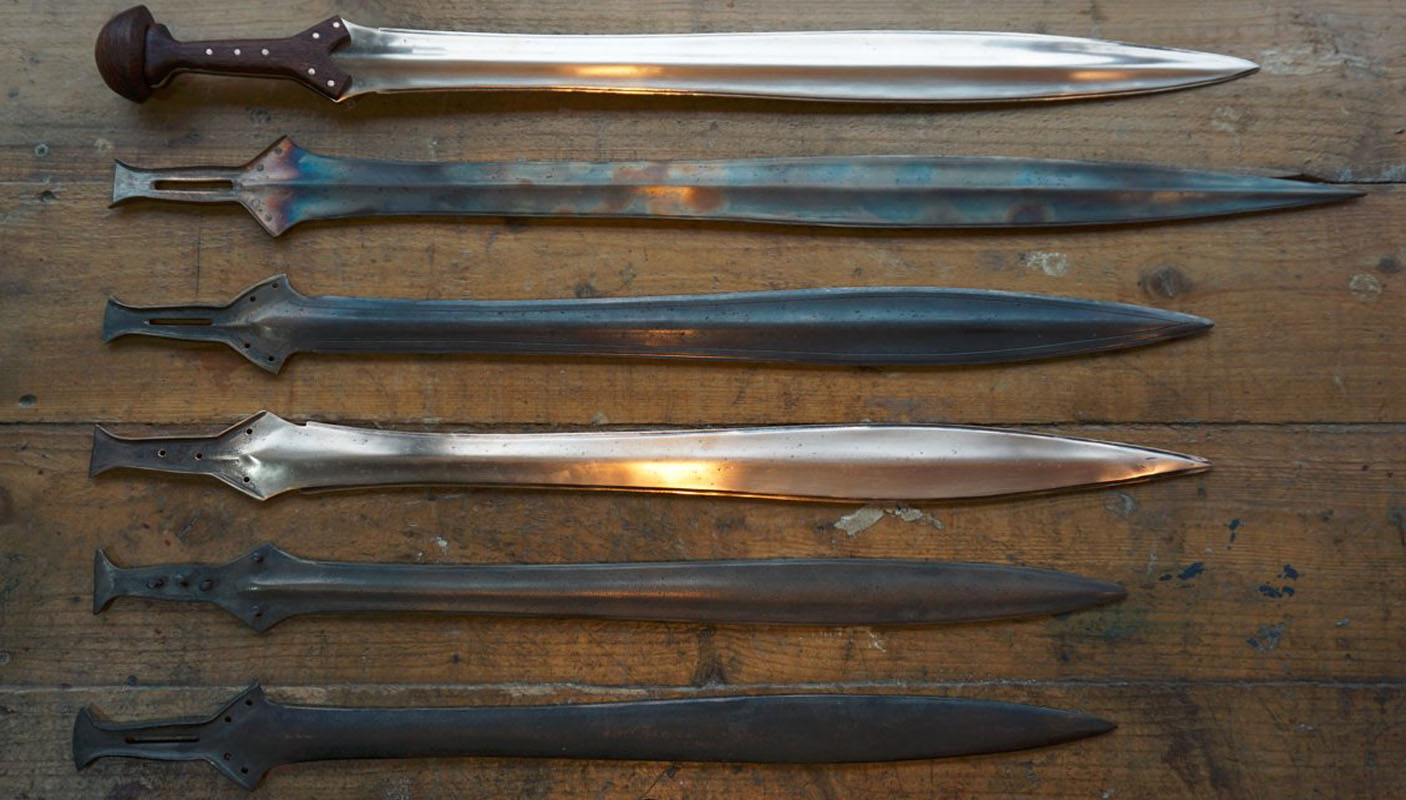
This is also where bronze shows its limits. Compared with the steel that came later, bronze is soft: it bends rather than springs back, and it dulls faster. Many surviving long Bronze Age blades show repeated repairs around the hilt, where they tended to crack or split under hard use. That single weakness drove much of the design history below — for a long stretch, shorter stabbing swords were simply more practical than long cutting ones, because a short blade is far less likely to bend.
It is worth being clear about one thing up front, because it matters for anyone buying a "bronze age sword" today: the blades we forge at Everest Forge are made from modern high-carbon steel in the shape of these ancient weapons. They are not cast bronze, and we say so plainly. More on why, further down.
The Leaf-Blade Shape, and Why It Mattered
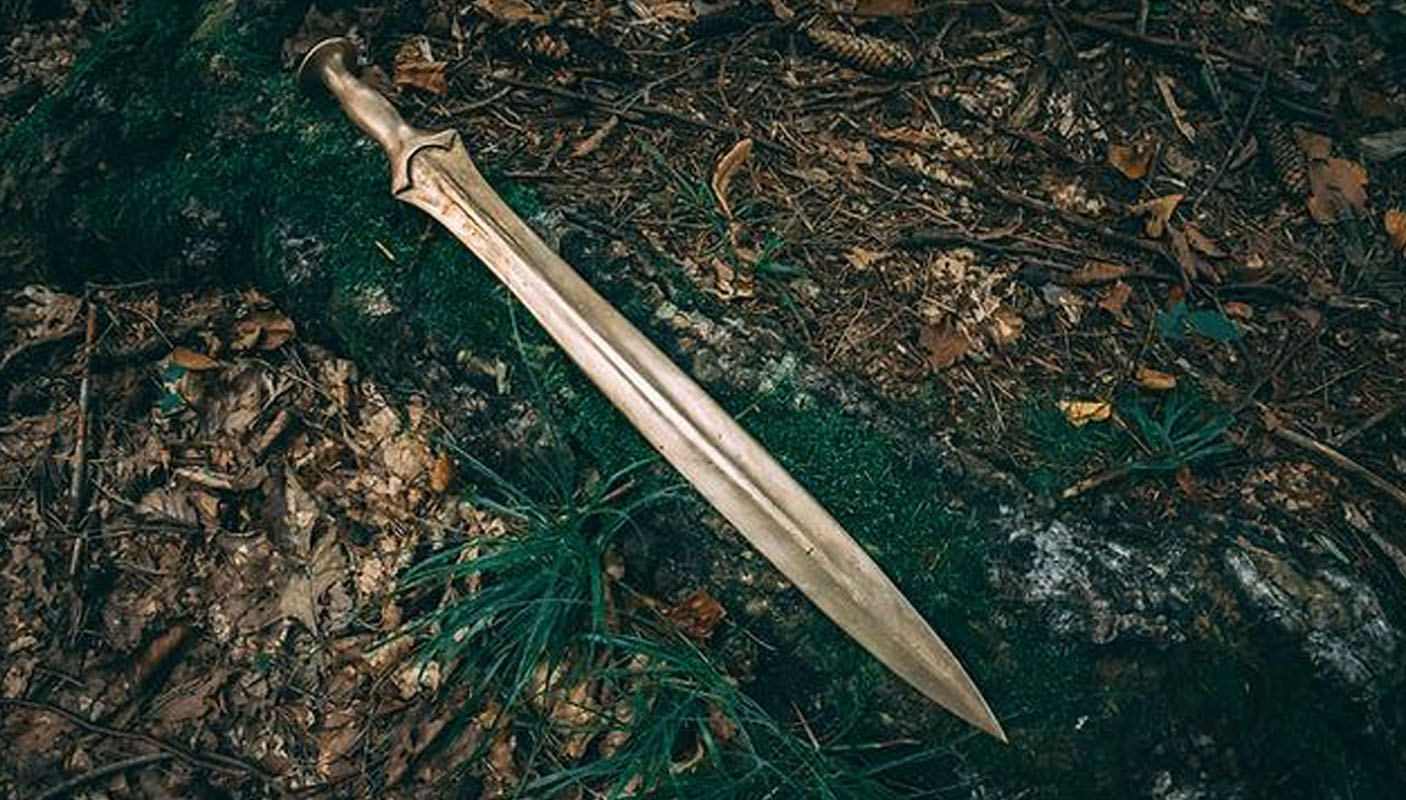
The signature silhouette of the age is the leaf blade — a blade that widens through the belly and then tapers back to the point, like the outline of a leaf. That shape is not decoration. Moving mass forward toward the wide belly puts weight behind a slash, giving a cutting blow real authority, while the taper preserves a usable thrusting point. On a metal as soft as bronze, that balance of cut and thrust was a genuine engineering achievement.
The leaf form proved so effective that it outlived bronze entirely, carried on by Celtic, Greek and later smiths. We trace that longer story in our companion guide to leaf blade swords and daggers. The faithful modern version of the early form is our Bronze Age leaf blade sword, which keeps the wide belly and tapering point with a simple carved-wood hilt.
The Main Types of Bronze Age Sword
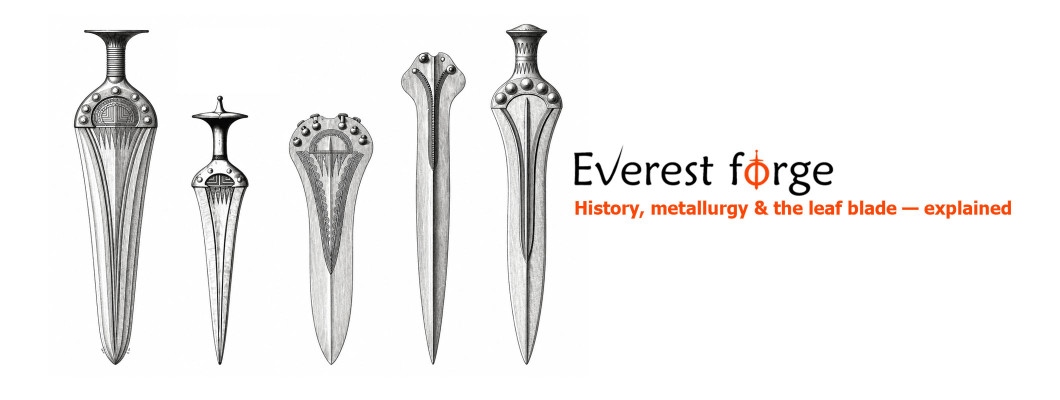
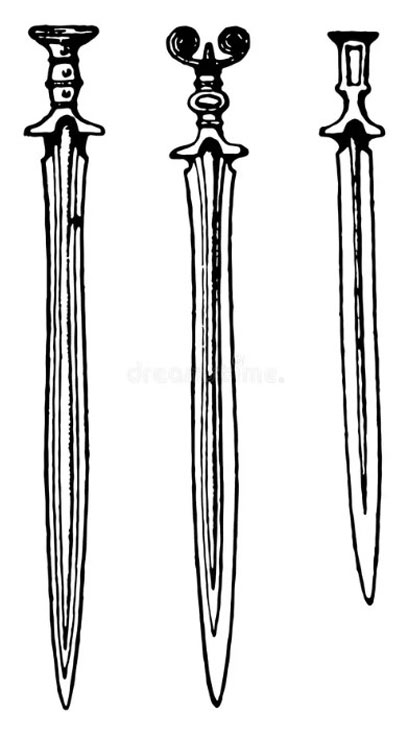
Most Bronze Age swords archaeologists study come from the Aegean — Minoan Crete and Mycenaean Greece — and from Central Europe. The Aegean blades were sorted into a lettered scheme, the Sandars typology (A through H), by the archaeologist Nancy Sandars in the early 1960s. It remains the standard framework, and it tells the story of the sword evolving under the constraints of bronze.
Running underneath the whole sequence is a clear trend: from long, fragile thrusting rapiers, toward shorter, stronger, stouter blades that could survive the battlefield. The culmination of that trend is the single most important sword of the late Bronze Age.
The Naue II — the Sword That Refused to Die
The Naue II, also called the grip-tongue sword or Griffzungenschwert, is named after the 19th-century scholar Julius Naue. It emerged in Central Europe — most likely among the Urnfield cultures of the Eastern Alps and Carpathian Basin — in roughly the 13th century BCE, and from there it spread astonishingly far, reaching the Aegean and as far as Ugarit on the Syrian coast by about 1200 BCE. More than eleven hundred examples are known across Europe and the eastern Mediterranean.
Two things made it special. First, its construction: instead of a cast hilt riveted on (a common weak point), the Naue II had a flat "tongue" of metal extending from the blade, with flanged edges, so the wooden or bone grip-plates riveted directly onto a continuous piece of metal — far stronger and more reliable. Second, its blade: parallel-sided cutting edges and a thick cross-section that resisted bending, letting it deliver real cutting power. In the words of the historian Anthony Snodgrass, it was the first true cut-and-thrust sword. Greek examples typically finish with a distinctive half-moon, or crescent, pommel.
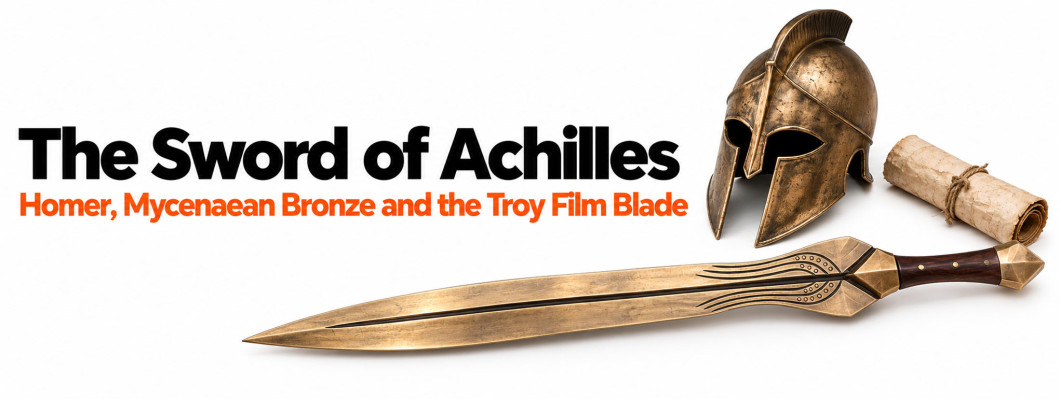
Its most remarkable feature, though, is its sheer staying power. The Naue II stayed in service for somewhere between five hundred and seven hundred years, carrying over from bronze into iron with barely a change in form — most bronze designs were abandoned or completely reworked when iron arrived, but this one simply changed material and continued. That crescent-guard, fullered look is exactly what we reinterpret in our Reborn Bronze Sword, which dresses the late Bronze Age form in a multi-fullered steel blade with a steel crescent guard.
Beyond the Aegean and Central Europe, the same broad story plays out in other regions — the Hittites of Anatolia, the smiths of the British Isles with their dirks, rapiers and later carp's-tongue swords, and across the wider Mediterranean trade network. Wherever bronze was worked, the sword followed a similar arc from short thrusting blade to balanced cut-and-thrust weapon.
Why Bronze Gave Way to Iron
Around the end of the Bronze Age, roughly the 12th century BCE, the eastern Mediterranean suffered a wave of collapse — palaces fell, trade networks broke, and the very long-distance tin supply that bronze depended on became unreliable. Some scholars have even linked the rapid spread of the Naue II directly to the upheavals of that collapse.
Iron, by contrast, was made from far more widely available ore and did not depend on scarce traded tin. As smiths learned to work it, iron — and eventually steel — gradually replaced bronze for weapons through the early first millennium BCE. The leaf-blade shape and the cut-and-thrust geometry survived the switch; only the metal changed.
Bronze Age Swords Today: Steel, Not Bronze
Here is the honest reality behind almost every "bronze age sword" you can buy now, ours included: it is not made of bronze. A faithful cast-bronze sword would be soft, would bend in use, and would dull quickly — exactly the limitations ancient smiths fought against. So a good modern maker keeps the historical form and upgrades the material.
At Everest Forge we hand-forge our Bronze Age blades from 5160 high carbon steel — the same tough, springy alloy used in vehicle leaf springs — so the blade keeps a real edge, flexes instead of bending permanently, and stands up to genuine cutting practice. The silhouette stays true to the ancient leaf blade; the steel is a deliberate, honest improvement. We never describe these as antiques or as cast bronze, because they are neither.
That approach runs across the whole Bronze Age Swords collection:
How to Tell a Real Hand-Forged Blade From a Wall-Hanger
If you are shopping for one of these swords, the single most useful skill is telling a genuine forged blade from a decorative casting. A few things to look for:
- Steel and tang: a real sword is forged from carbon steel with a full tang — one continuous piece from point to pommel. Decorative pieces are often soft stainless or pot-metal with a hollow or thin "rat-tail" tang that can snap.
- Edge: a functional blade can take and hold a real working edge; a wall-hanger usually has a blunt, rounded edge that was never meant to cut.
- Heat treatment: terms like oil-tempered or water-tempered tell you the steel was actually hardened; a casting has no meaningful temper.
- Honesty of description: a serious maker tells you the steel, the tang, the weight and the dimensions, and does not pretend a steel sword is "solid bronze" or an antique.
Every blade in our Bronze Age range is full-tang forged 5160 steel, oil- or water-tempered, with the specifications stated openly on each product page. That is the difference between a sword built to last decades and an ornament built to hang on a wall.
Everest Forge — Custom Forge
Design Your Own Bronze Age Sword
Want a specific blade length, an etched panel, a particular hilt or a one-of-a-kind leaf-blade design? Our smiths in Kathmandu forge bespoke blades to your specification, from a single sketch to a finished sword.
Request a Custom Forge → Browse Bronze Age Swords →Frequently Asked Questions
How strong were Bronze Age swords?
Effective for their time, but soft by modern standards. Bronze bends rather than springing back and dulls faster than steel, which is why many Bronze Age swords were short stabbing weapons and why long blades often show repairs at the hilt. A modern steel-forged version in the same shape is far stronger and tougher.
How were bronze swords made?
They were cast: molten bronze, an alloy of copper and roughly ten percent tin, was poured into a mould in the shape of the blade and tang. The smith then cold-hammered the edges to work-harden them, making the cutting edge harder than the body of the blade.
What is a Naue II sword?
The Naue II, or grip-tongue sword, is a flange-hilted cut-and-thrust sword that appeared in Central Europe around the 13th century BCE and spread across Europe and the eastern Mediterranean. It is considered the first true cut-and-thrust sword and was so successful that it carried on from bronze into iron with little change in form.
Why are Bronze Age swords leaf-shaped?
The leaf blade widens through the belly and tapers to the point. Moving mass toward the belly puts power behind a slash, while the taper keeps a usable thrusting point — an effective balance of cut and thrust on a relatively soft metal.
Are modern "bronze age swords" actually made of bronze?
Usually not, and a good maker will tell you so. Cast bronze would be soft and would bend in use. Reputable modern blades, including ours, keep the ancient leaf-blade shape but are forged from high carbon steel for real strength and edge retention.
What replaced bronze swords?
Iron, and later steel. As the Bronze Age trade networks that supplied scarce tin collapsed around 1200 BCE and smiths learned to work more widely available iron ore, iron gradually replaced bronze for weapons through the early first millennium BCE. The leaf and cut-and-thrust shapes survived the change of metal.
How long were Bronze Age swords?
Typical examples ran about 60 to 80 cm, though both shorter dirks and longer blades over a metre were made. The widespread Naue II usually fell in the 60 to 70 cm range. Our modern versions are offered across a range of blade lengths so you can match display or handling needs.
Can I order a custom Bronze Age sword?
Yes. Through our Custom Forge service you can specify blade length, etching, hilt materials and even a one-of-a-kind blade profile, and our smiths in Nepal will hand-forge it from steel to your specification.