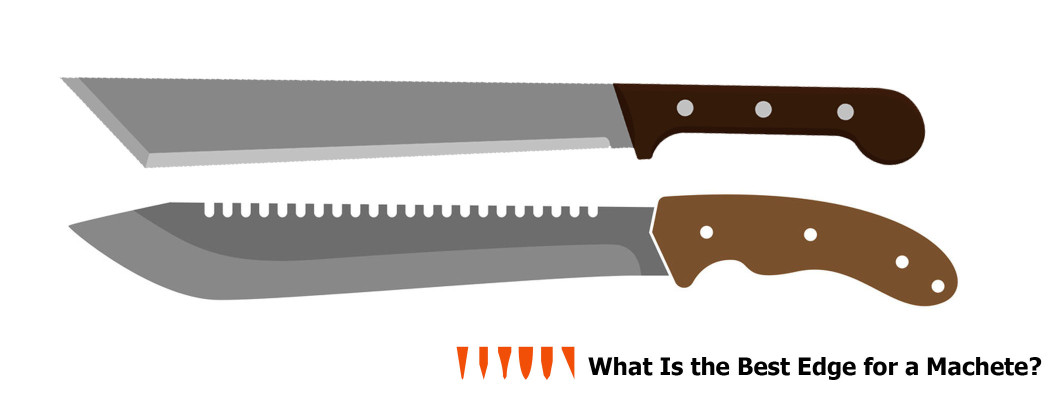
Why Edge Design Matters More Than Razor Sharpness
When people shop for a machete , they often focus on blade length, steel type, or overall shape. But the true performance of a machete is determined by something far more important — the edge geometry.
A machete is not a kitchen knife. It is not designed for delicate slicing. It is an impact tool. Every swing into brush, bamboo, hardwood, or thick vegetation sends shock directly into the cutting edge. If that edge is too thin or poorly supported, it will chip, roll, or dull quickly.
This is why the sharpest-looking edge is not always the best edge. What truly matters is how well the edge is supported and how it performs after repeated impact.
Understanding Grind Geometry: The Foundation of Strength
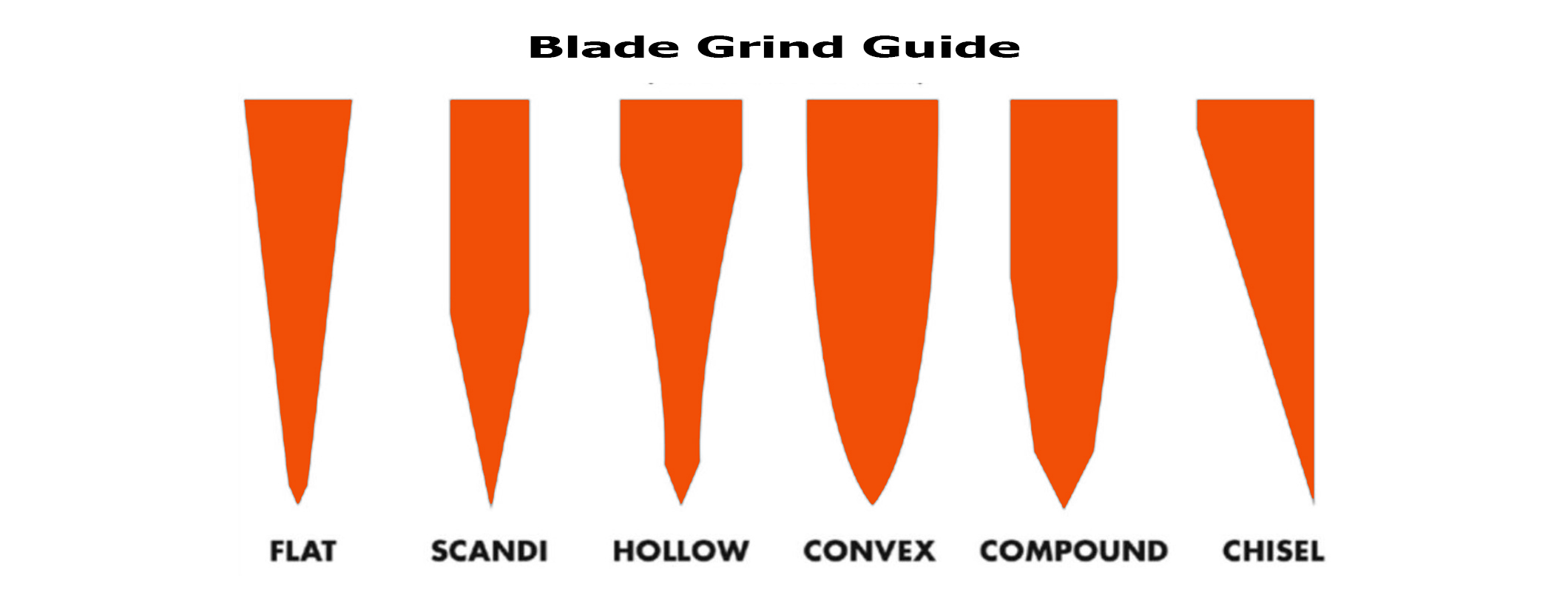
The grind refers to the cross-sectional shape of the blade near the cutting edge. If you sliced the blade vertically and looked at it from the front, the shape you see would be the grind. That shape determines durability, cutting efficiency, and long-term performance.
Convex Grind: Built for Real Chopping
A convex grind curves slightly outward toward the edge instead of forming a sharp “V.” This means there is more steel behind the cutting apex.
That extra support makes a significant difference in real-world use. A convex edge spreads impact force more evenly through the blade, helping it resist chipping and rolling when striking hardwood or dense vegetation.
For users clearing land, maintaining property, working in the bush, or relying on a machete in survival conditions, convex geometry consistently proves to be the most durable and dependable option.
It may not feel razor-thin out of the box, but it stays functional longer under heavy work — and that matters far more.
V-Grind (Flat or Scandi): Sharp and Easy to Maintain
A V-grind forms two straight bevels that meet at a defined cutting edge. This grind feels very sharp and slices efficiently, especially through softer vegetation.
It is also easier to sharpen compared to convex, which makes it attractive for casual users.
However, because there is less steel supporting the edge, it can chip or roll more easily during repeated hardwood strikes. For light brush, grass, and occasional use, it performs well. But for sustained heavy chopping, it lacks the durability of convex.
Concave (Hollow) Grind: Razor Sharp but Fragile
A concave grind — also known as a hollow grind — curves inward toward the cutting edge. This creates a very thin, razor-like profile.
While it offers impressive slicing ability, it is generally not ideal for heavy-impact machete work. The thin edge lacks structural reinforcement and is more vulnerable to damage when striking hard materials.
For light slicing tasks it can perform well, but for serious outdoor work, most users will find it too delicate.
Bevel Configuration: One Side or Two?
The bevel refers to how many sides of the blade are sharpened.
Double Bevel: Balanced and Practical
A double bevel means both sides of the blade are sharpened evenly. This creates a symmetrical edge that works equally well for right- and left-handed users.
Most Western and agricultural machetes use this configuration because it offers balanced cutting, easier maintenance, and predictable performance.
Single Bevel (Chisel Grind): Directional and Specialized
A single bevel blade is sharpened on only one side. This creates a more aggressive bite in one cutting direction.
While effective in controlled woodworking environments, it is often hand-specific and requires more sharpening skill. For general brush clearing or survival use, it is less versatile than a double bevel.
Plain Edge vs Serrated: What Works Best?
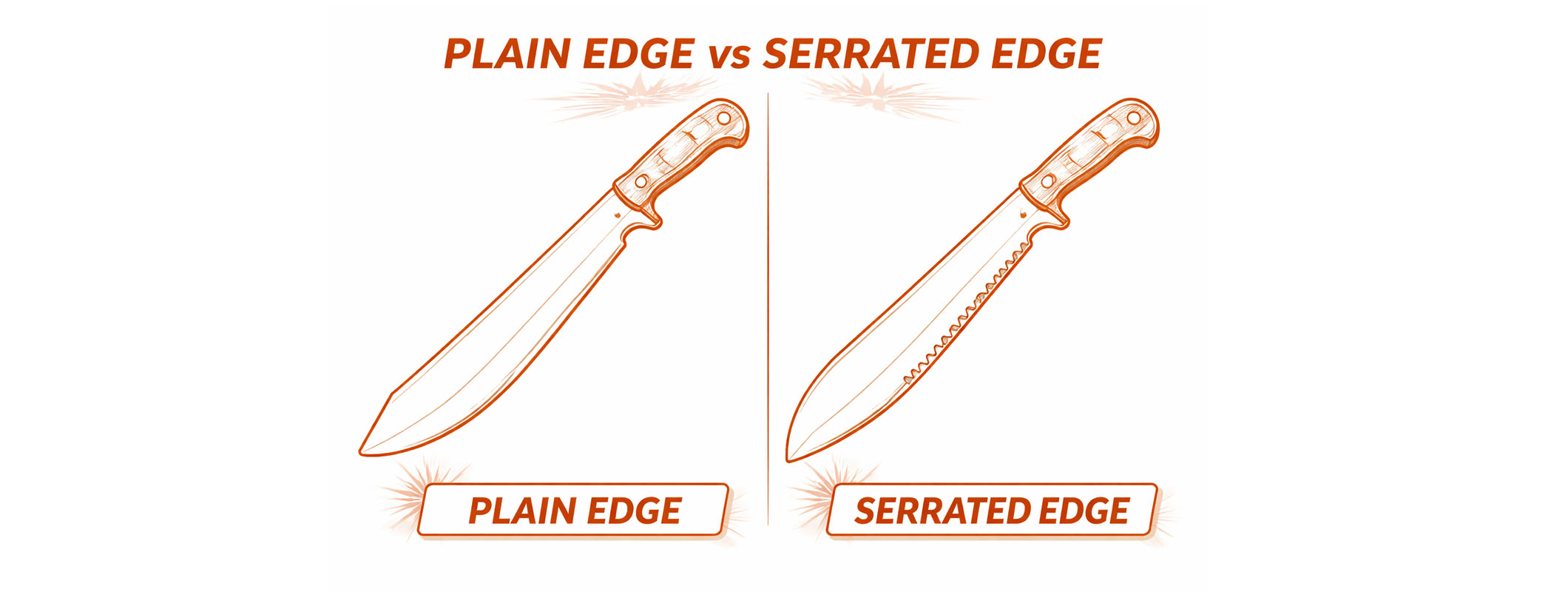
A plain edge is a smooth, continuous cutting surface. It is easier to maintain, more durable, and better suited to long-term outdoor use.
Serrations or saw backs may appear versatile, but they complicate sharpening and rarely outperform a dedicated saw. For most serious users, a strong plain edge remains the most practical choice.
So, What Is the Best Edge for a Machete?
When durability, impact resistance, and long-term performance are considered together, one configuration stands out:
Convex grind + Double bevel + Plain edge
This combination provides maximum edge support, balanced cutting control, and resistance to chipping under repeated impact. It may not advertise extreme razor sharpness, but it delivers dependable performance in real working conditions.
Choosing Based on Your Intended Use
If you primarily cut soft vegetation and light brush, a V-grind can perform well and will be easy to maintain.
If you are an experienced user seeking a directional woodworking tool, a single bevel may appeal to you.
But if you need a machete for hardwood, dense brush, agricultural work, or survival conditions, durability should be your priority. In those environments, convex geometry consistently proves to be the most reliable.
Want a Machete Forged for Your Exact Edge Preference?
Not every user works the same way. Some need reinforced convex geometry for heavy hardwood. Others prefer a thinner V-grind for lighter vegetation.
Instead of adjusting to a factory blade, you can have a machete forged specifically for your workload.
- Choose your grind type (Convex, V-Grind, or hybrid)
- Select single or double bevel configuration
- Adjust edge thickness for your intended use
- Customize blade length, steel, and balance
- Pick your handle material and finish
When performance matters, precision in edge design makes the difference.
Start Your Custom Forge RequestFinal Considerations Before Buying
Before choosing your machete , ask practical questions:
Will this edge withstand repeated impact? Can I maintain it easily in the field? Is it built for real work or just initial sharpness?
The best machete edge is not the one that feels sharpest on day one. It is the one that continues performing after hundreds of strikes.
Strength behind the edge is what separates a display blade from a true working tool.
Choose wisely, and your machete will serve you reliably for years.