Why This Comparison Matters
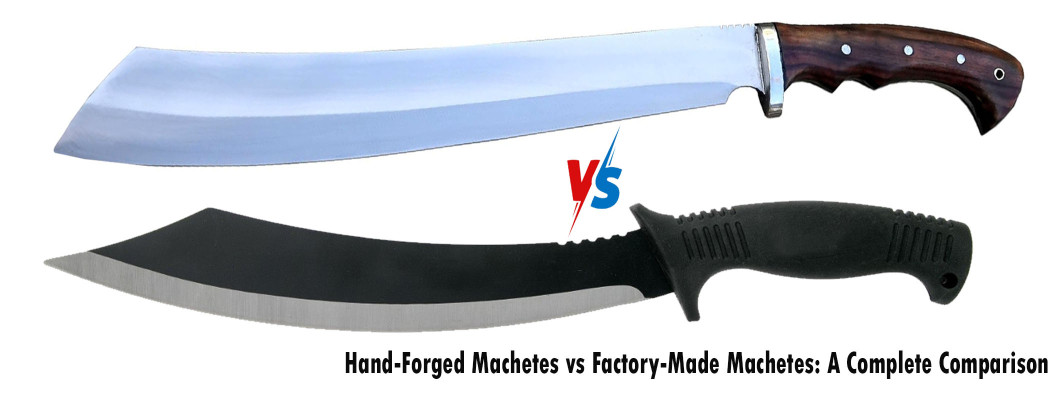
Machetes may look simple, but how they are made changes how they perform in real work. For light clearing, many factory-made machetes are perfectly fine. But when the job becomes tougher—dense brush, woody growth, repeated chopping—the differences between factory-made and hand-forged machetes become hard to ignore.
Everest Forge is visited by serious users: landowners, bushcrafters, outdoor professionals, and collectors who care about strength, balance, and long-term value. This guide breaks down the practical differences, including handles, thickness, finishing, sheath quality, and price.
Hand-Forged vs Factory-Made Machetes: Quick Comparison
| Category | Hand-Forged Machetes | Factory-Made Machetes |
|---|---|---|
| Blade Thickness | Typically thicker spine for strength and impact work | Generally thinner to reduce cost and weight |
| Handle Materials | Wood, horn, bone (often shaped by hand for comfort) | Plastic, rubber, polymer, composite (mass-produced grip shapes) |
| Sheath / Scabbard | Often leather, wood-core leather, or custom-built to fit the blade | Commonly nylon, plastic, or simple universal-fit covers (varies by brand) |
| Finishing | Hand-finished options (working finish, polished, custom detailing) | Machine finishing; coatings common for corrosion resistance |
| Etching / Markings | Custom etch, engraving, or maker’s marks available | Usually printed logos or simple factory marks |
| Price | Higher upfront; long-term value for heavy users | Lower upfront; replacement is easy |
What Is a Hand-Forged Machete?
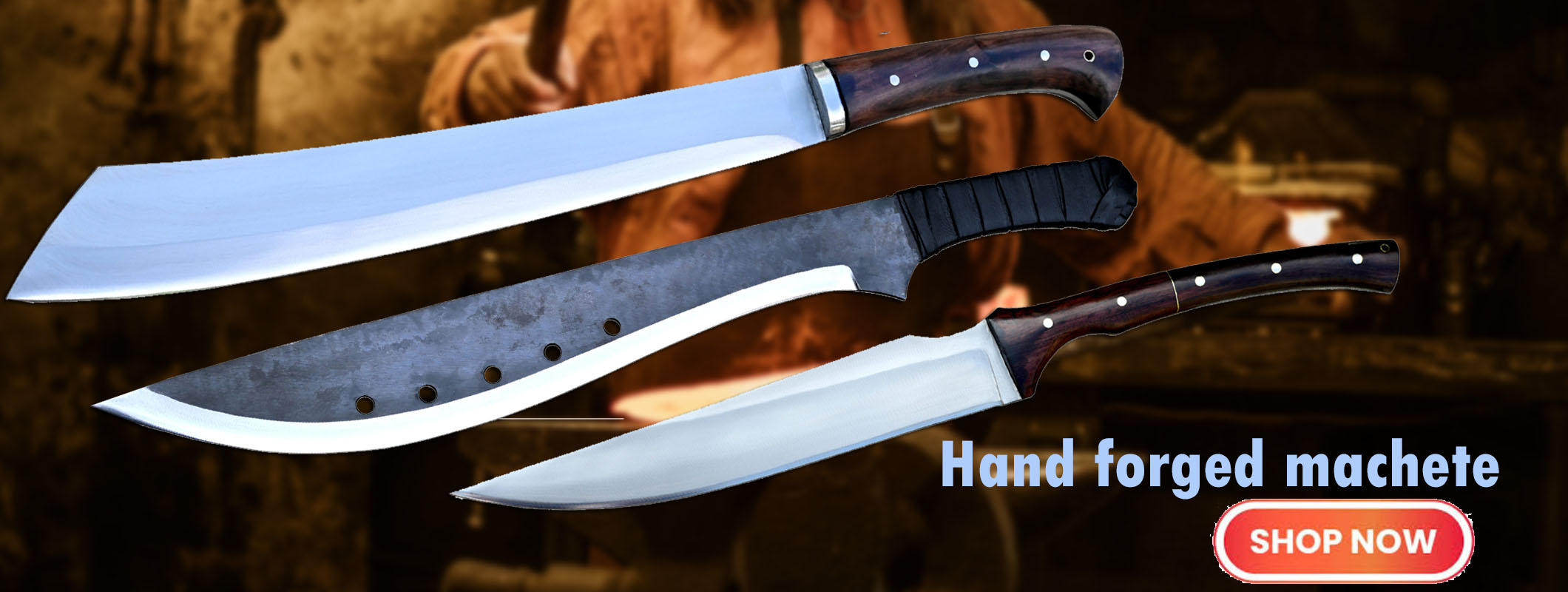
A hand-forged machete is shaped from heated steel under hammer. This gives the bladesmith control over thickness, profile, and balance. Hand-forged machetes are commonly built with a thicker spine to survive hard impact work without feeling fragile.
Another major difference is the “fit” of the tool. A hand-forged machete is not made to be the same as every other machete. It’s made to be right for a purpose—clearing, chopping, utility, or survival use.
What You’ll Commonly See in Hand-Forged Builds
- Thicker blade stock: stronger spine, better shock resistance during heavy chopping
- Natural handle materials: wood, horn, or bone—often shaped for a solid, comfortable grip
- Controlled heat treatment: hardened and tempered for toughness and edge stability
- Hand finishing: working finish or polished finish depending on how the tool will be used
What Is a Factory-Made Machete?
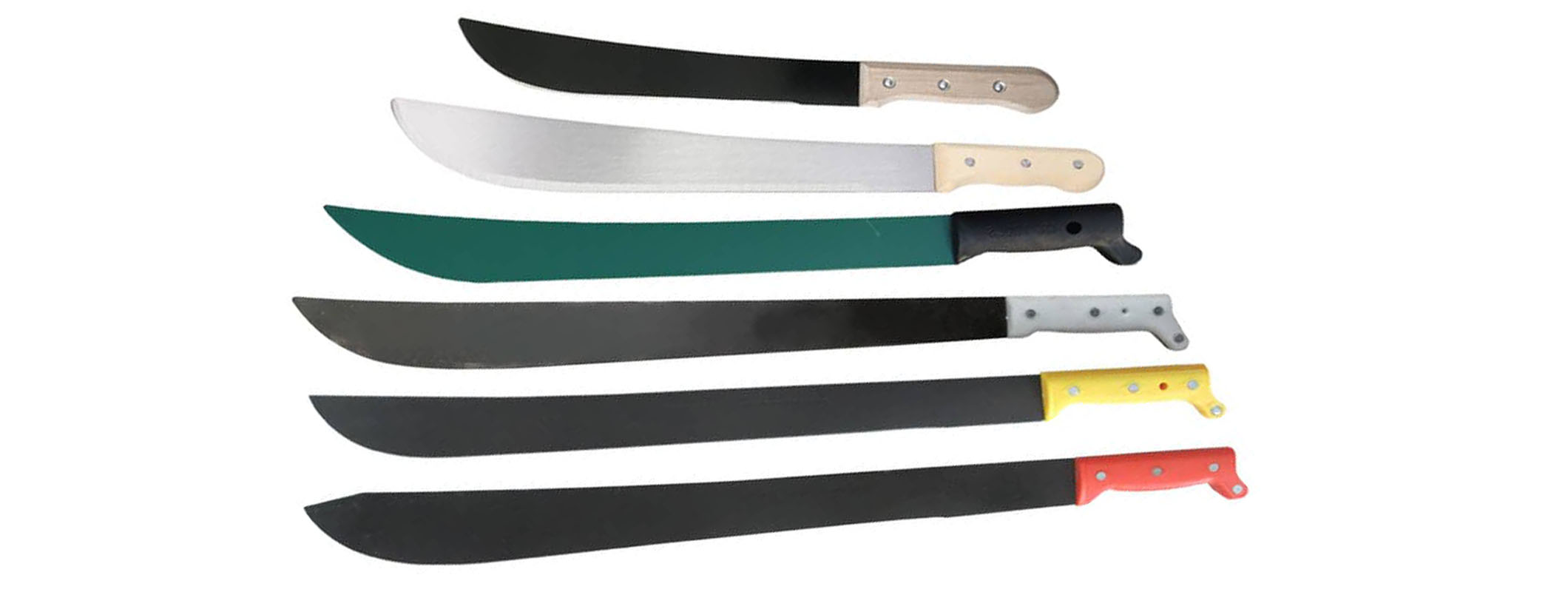
Factory-made machetes are mass-produced using standardized patterns. Many are cut or stamped from sheet steel, ground by machines, and heat-treated in batches. Their biggest advantage is predictability: you can buy the same model again and it will feel similar.
To keep costs down, factory machetes are often thinner and paired with plastic, rubber, or polymer handles. That makes them affordable and lightweight, but it can also limit strength and long-session comfort for heavier work.
What You’ll Commonly See in Factory Builds
- Thinner blades: lighter swing, lower material cost, but less mass for heavy chopping
- Plastic/rubber handles: durable, weather-resistant, consistent—but rarely personal in feel
- Standard finishes: machine grind lines, coatings, or paint to reduce rust
- Basic sheaths: many come with nylon or simple covers, not a fitted scabbard
Where the Differences Really Show in Real Use
1) Thickness, Strength, and Confidence in the Cut
A thicker machete carries more strength behind the cut. It also gives you confidence when striking into dense vegetation or woody growth. Hand-forged machetes are commonly built thicker because they are meant to endure impact work and long-term use.
Factory machetes are often thinner and lighter, which can be good for quick brush clearing, but they may feel less stable when the work becomes hard or repetitive.
2) Handle Comfort: Plastic vs Wood, Horn, and Bone
Factory handles are commonly made from plastic, rubber, polymer, or composite materials. They are weather-resistant, inexpensive, and consistent, but they are usually designed to fit “most hands,” not your hand.
Hand-forged machetes often use wood, horn, or bone handles. These materials feel solid, can be shaped with better ergonomics, and tend to provide a natural grip feel over long sessions. For many users, handle comfort is the difference between “a tool I can use for 20 minutes” and “a tool I can use for hours.”
3) Sheath and Scabbard Quality (Often Overlooked)
This is a detail many buyers forget—until they start carrying the machete regularly. Factory machetes often come with simple nylon sheaths or basic plastic covers. Some are fine, but many are built for low cost rather than long-term durability.
Hand-forged machetes frequently use better-fitting options such as leather sheaths, wood-core leather scabbards, or custom-built covers designed around the exact blade shape. A fitted scabbard carries better, protects better, and feels more secure.
4) Finishing Differences: Working Finish vs Machine Finish
Factory finishing is usually machine-based: consistent grind lines, coatings, and mass-production polish. That’s not a bad thing—many factory tools are designed to be practical and rust-resistant.
Hand-forged finishing can be chosen based on purpose. Some users want a tough working finish that hides scratches and looks honest after hard use. Others want a clean polish with more detail. The key is that hand-forged finishing is often done with intention, not just speed.
5) Etching, Marking, and Detail Quality
Factory machetes typically have a printed logo or a simple factory stamp. Higher-end brands may offer cleaner markings, but customization is limited.
Hand-forged machetes can include maker’s marks, custom etching, engraving, or personal details. For working users, this is not just decoration—it can help identify a tool, mark ownership, or create a blade that feels personal.
6) Price vs Value (The Honest Comparison)
Factory machetes are cheaper upfront and easy to replace. That’s their main advantage, especially for light work or occasional use.
Hand-forged machetes cost more because you are paying for skilled labor, controlled heat treatment, stronger blade stock, and better materials—especially in the handle and sheath. For serious users, that cost often makes sense because the tool lasts longer, performs better, and feels better in daily use.
Custom Hand-Forged Machetes by Everest Forge
Everest Forge does not sell factory-made machetes. We focus entirely on hand-forged machetes and custom forging for buyers who want a blade that matches the job.
Custom forging is not only about looks. It’s about building the blade thickness, balance, handle comfort, and sheath fit around the way you work—so the machete feels natural, controlled, and reliable in real conditions.
What You Can Customize
- Blade thickness and geometry for stronger chopping performance
- Length and curvature based on your terrain and vegetation
- Steel type and oil temper to match toughness and edge needs
- Balance point for power, speed, or precision control
- Handle material such as wood, horn, or bone for grip comfort
- Sheath/scabbard fit built around the exact blade profile
Maintenance and Ownership
High-performance machetes—especially hand-forged carbon steel blades—require basic care. Keep the blade clean and dry, and apply a light protective oil if the tool is stored for long periods or used in humid environments.
Factory machetes may come with protective coatings, but all working machetes benefit from cleaning and occasional sharpening. The main difference is how well the edge holds up and how confident you feel pushing the blade harder.
So, Which Type of Machete Makes Sense for You?
If you need an affordable tool for occasional clearing, a factory-made machete is often the simplest choice. It’s easy to replace and works well within its limits.
If you clear hard, work often, or want a blade that feels stronger, thicker, and more reliable under impact, a hand-forged machete is usually the smarter decision.
And if you want the blade thickness, balance, handle material, sheath fit, and finishing tailored to your exact needs, then custom forging is the next step.
That’s why Everest Forge exists—to build hand-forged and custom-forged machetes designed for real work, not disposable use.