Forge on Demand vs Stock Blades: What Actually Changes When You Buy
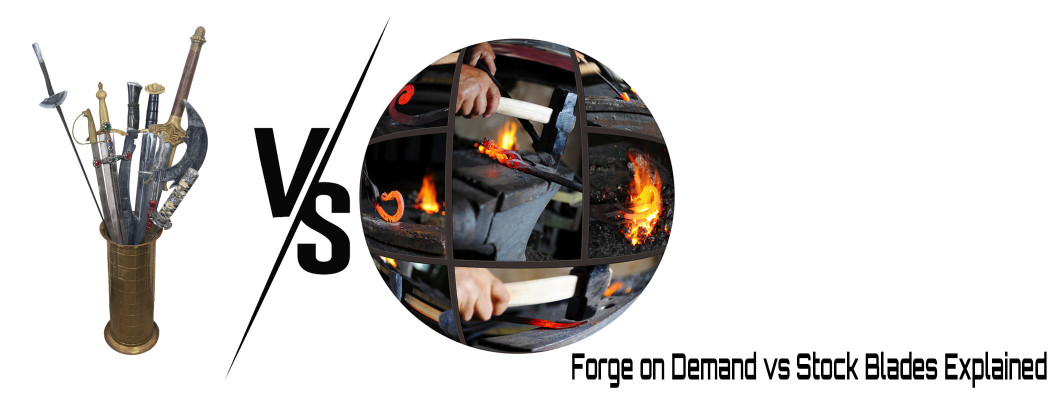
There are two ways to buy a blade, and almost every seller uses the first one. A stock blade already exists — it was made in a batch, it sits in a warehouse, and when you order it someone picks it off a shelf and posts it. A blade forged on demand does not exist when you click buy. The steel is still a bar, and it becomes your blade afterwards, to the specification attached to your order. That difference sounds like a technicality and it is not: it changes what you can ask for, what you pay for, what you can expect to receive, and what happens if you want something slightly different from what is on the page.
What a Stock Blade Actually Gives You
Worth saying properly rather than dismissing, because for some buyers stock is the right answer and pretending otherwise would be dishonest.
It exists. Somebody can photograph the exact item you are buying, weigh it, and tell you what it looks like, because it is sitting in front of them.
It ships immediately. If you need a blade for a specific date and that date is close, this is decisive and nothing else on this page competes with it.
Returns are simple. An unmodified stock item goes back into stock. There is no reason for the seller to make it difficult.
It is consistent. Batch production means the one you receive matches the reviews and the photographs closely.
If those things matter most to you, buy from stock. That is not a grudging concession, it is the correct advice.
What Forge on Demand Gives You
Nothing is ever out of stock. There is no stock to run out of. A blade cannot be discontinued because it did not sell, and you are never told a pattern is unavailable until next season.
Customisation is the default, not a favour. This is the big one. When a blade is being made anyway, changing the handle material or the blade length or adding an engraving is a line on the build sheet rather than an exception someone has to be persuaded into. A stock seller has to modify a finished object, which is why most of them simply will not.
Every piece is individual. Hand-forged work varies slightly — grain, figure, finish, weight. Your blade is not one of five hundred identical units.
You buy from the people who made it. There is a named workshop, named smiths, and someone who can answer a technical question about your specific piece without checking with a supplier.
What You Give Up
Three real costs, and any seller who does not name them is selling rather than explaining.
You wait. The blade has to be forged. Each product page states its own build time, because a full-length sword with a fitted scabbard is not the same job as a small knife.
There is nothing to photograph. We can show you the pattern, previous examples of the same piece, and — on configurable blades — a live preview of your combination. We cannot show you your actual blade before it exists.
Returns are narrower on anything personalised. A blade engraved with your name or built to your dimensions cannot go back into a catalogue. Standard pieces carry our normal terms; custom and engraved work does not. Our shipping and returns page sets out exactly where the line falls.
The Cost Hiding Inside a Stock Blade
Here is the part that rarely gets explained, and it is economics rather than salesmanship.
When a blade is made in a batch and held in a warehouse, its price has to carry more than the blade. It carries the warehouse. It carries the capital tied up in unsold inventory. It carries the units that never sold at all, and the discounts on the ones that eventually did. And if you are buying from a retailer rather than the maker, it carries a distributor's margin on top of that.
None of that is unreasonable — holding stock is a genuine service and someone has to pay for it. But it is in the price of every stocked blade whether you value it or not.
A blade forged on demand carries none of it. There is no warehouse, no dead inventory, and nobody between the anvil and your door. That is a substantial part of why hand-forged work from a working forge lands where it does on a price list, next to factory blades that were made a thousand at a time.
Which Should You Choose?
| If you... | Choose |
|---|---|
| Need it for a date that is very close | Stock |
| Want to see the exact item before buying | Stock |
| Want a name, date or dedication on it | Forged to order |
| Want a different length, handle or finish | Forged to order |
| Want a pattern nobody currently sells | Forged to order |
| Want the maker to answer your questions | Forged to order |
| Might want to return it unused | Stock, or an unpersonalised made-to-order piece |
| Care that it is genuinely one of one | Forged to order |
The Everest Forge Model: Four Ways In, One Forge
We hold no stock at all. Not a small amount — none. Every blade on this site, including the ones with photographs and prices and an add-to-cart button, is forged after somebody buys it. There is no warehouse in Kathmandu with rows of finished swords waiting for orders, and there never has been.
What that makes possible is a system with four layers, and they escalate by one thing only: how much of the blade you decide, versus how much we decided in advance. Everything else — the steel, the heat treatment, the smiths, the standard — is identical across all four.
Most buyers do not know which layer they need, and picking the wrong one wastes time on both sides. Here is how to tell.
Layer 1 — The catalogue
Hundreds of established patterns across swords, kukris, machetes, knives, bowies, daggers, spears and axes. Each one has a defined specification, a photograph of a previous example, and a price.
The thing to understand is that even this layer is made to order. Buying the standard version of a catalogue blade is not buying off a shelf — it is asking us to forge that pattern to its published specification. Nothing is ever out of stock, and nothing is ever discontinued because it did not move.
Use this when the design as listed is what you want.
Layer 2 — Customisation on any product page
Every product page carries its own options — blade length, finish, handle material, scabbard, engraving, whichever genuinely apply to that piece — plus an order note for anything else.
This is the layer most people miss, and it is the most useful one. Because the blade is being forged for you regardless, asking for a different handle wood or a name on the ricasso is a line on the build sheet rather than a special request somebody has to be talked into. A stock seller would have to modify a finished object, which is why most of them simply decline.
Use this when you like a catalogue piece but want it in your materials, at your length, or with something engraved on it. Free personalisation applies across the range — see personalised blades.
Layer 3 — Build Your Own Blade
Our newest route, and the one nothing else in this market offers. In the Build Your Own Blade collection you work down the option groups — blade, handle, fittings, sheath, engraving — and a live preview rebuilds on screen as you select, with the price updating alongside it.
You see the combination before you commit to it. You see what it costs before you commit to that either. No quote, no email exchange, no waiting to find out whether brass suits rosewood — you just look. When you are satisfied, you check out, and your configuration travels to the forge floor as a build sheet.
Use this when you want real control over the specification but you want to see it and price it yourself rather than describe it to somebody.
One honest note, which that page makes and is worth repeating: configurable does not mean modular. We are not screwing your chosen handle onto a blade pulled off a rack. The build sheet is written first and the blade is forged, ground, heat treated and fitted to it from the beginning.
Layer 4 — Request a Custom Forge
For a blade that does not exist yet, anywhere. Send a sketch, a photograph, a museum reference or a written description through Custom Forge and we quote it individually, because at this layer everything is open — dimensions, profile, construction, fittings, the lot.
Use this when you want a historical pattern nobody currently makes, your own design, an unusual size, a matched pair or set, or anything the option lists cannot reach. If you want a budget figure before sending a design in, the custom forge price estimator gives you a working range in a few clicks.
There is also a fifth door for makers: blank blades, forged and heat treated without handle or fittings, for people doing their own hilting.
Which Layer Do You Need?
| Layer | You decide | Best for |
|---|---|---|
| 1. Catalogue | Which pattern | The design as listed is what you want |
| 2. Product page options | Materials, length, finish, engraving | An existing design, made yours |
| 3. Build Your Own Blade | Full configuration, seen and priced live | Control, with no correspondence |
| 4. Custom Forge | Everything — you supply the design | A blade that does not exist yet |
| Blank blades | Blade only, no fittings | Makers doing their own hilting |
The commonest mistakes are people sending a full custom brief for something layer two would have covered in two minutes, and people trying to describe an entirely new blade in the order note of a catalogue product. If you are between layers, ask us — it costs nothing and it saves everybody a round of emails.
What People Commission, by Category
Some patterns come up again and again, and they are a useful guide to what is worth asking for.
Swords — historical forms we do not currently list, blade lengths matched to the owner's height, scabbard and fittings to a period specification, and pieces built around an engraving or dedication.
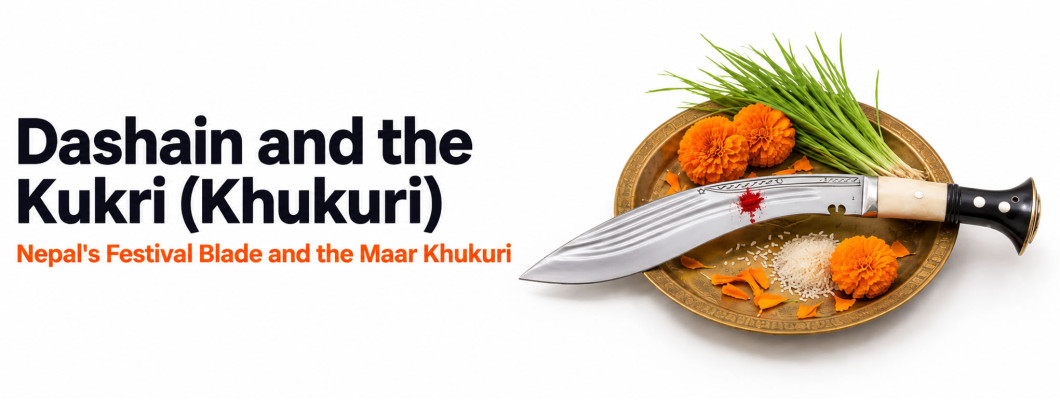
Kukris — regimental engraving, specific traditional patterns, chirra fullering, blade lengths outside the standard range, and whether the karda and chakmak companions are included.
Machetes — length and blade weight matched to the vegetation people actually cut, and handle shapes that work in wet hands.
Knives and bowies — handle material and shape to fit a specific hand, blade profile, and gifts carrying a name and date.
Spears — blade pattern and length, and full-length builds on a shaft, which are commission-only.
Axes — head weight and handle length matched to the owner's height, which are the two things that decide how an axe performs and the two a catalogue cannot personalise.
Engraving is covered across the range on our personalisation page.
What We Cannot Do
The section that makes the rest of this page believable.
- Stainless steel. We forge 5160 high-carbon spring steel. Stainless is the wrong material for the blades we make and we will not use it.
- Licensed replicas. We can forge a blade inspired by a film or game design. We cannot and do not sell official licensed reproductions.
- Geometry that will not work. Some designs cannot be built at the size requested and still function. We will say so before forging rather than after.
- Anything we cannot execute to the same standard. The option lists are deliberately limited to combinations our smiths can build as well as everything else we sell.
- Guarantee import legality. Rules on edged blades vary by country and sometimes by region. It is the buyer's responsibility to check before ordering — see our duties and import information.
The Standard Does Not Change
Whichever route you take, the build standard is the same. Every blade is hand-forged from 5160 high-carbon spring steel in Tokha-3, Kathmandu, oil-quenched, tempered, full tang and sharpened. There is no decorative tier and no upgrade fee for a functional one — the full argument is on our battle ready standard, and the process itself is set out in how your blade is forged.
Configuring a blade changes its materials and fittings. It never changes what the blade can do.
Nothing Exists Until You Order It
Configure a blade and see the price on screen, or send us a design and we will quote it. Every piece hand-forged in Tokha-3, Kathmandu from 5160 spring steel — full tang, oil-quenched, tempered and sharpened. Shipped worldwide.
Frequently Asked Questions
What does forge on demand mean?
It means the blade is made after you buy it rather than picked from a warehouse. Forge on demand, forged to order and made to order all describe the same arrangement. When you place an order your specific blade does not yet exist — the steel is still a bar, and it becomes your blade afterwards, to the specification attached to your order. It is a different thing from forged versus stock removal, which is about how a blade is shaped rather than when it is made.
Is a made-to-order blade better than a stock blade?
Not automatically — they suit different buyers. Stock blades exist now, can be photographed before purchase, ship immediately and return easily, and if you need a blade for a date that is close then stock is the right answer. Made to order gives you customisation as standard, an individual piece, no possibility of being out of stock, and direct contact with the people who made it. Choose by what you actually need.
Why can't I see a photo of the exact blade I'm buying?
Because it does not exist yet. We can show you the pattern, previous examples of the same piece, and on configurable blades a live preview of your chosen combination of materials and fittings. What we cannot show is your specific blade before it is forged. Hand-forged work also carries small natural variation in grain, figure and finish, so two blades built to the same specification are siblings rather than clones.
What is the difference between building my own blade and a custom forge request?
Building your own blade works from a defined list of options on an existing pattern, with a live preview and the price shown on screen, so you can order immediately with no correspondence. A custom forge request starts from a design you supply — a sketch, photograph, museum reference or description — and is quoted individually because dimensions, profile, construction and fittings are all open. Use the configurator if you like one of our patterns; use custom forge if the blade does not exist yet.
Does customising a blade change its quality?
No. Configuring a blade changes its materials and fittings, never its build standard. Every blade is hand-forged from 5160 high-carbon spring steel, oil-quenched, tempered, full tang and sharpened, whichever options are chosen. There is no decorative tier and no upgrade fee for a functional one, so choosing a polished finish or a decorative handle changes how a blade looks rather than what it can do.
Can I return a made-to-order blade?
It depends on whether it was personalised. Standard pieces carry our normal terms. A blade engraved with your name or built to dimensions you specified cannot go back into a catalogue, so custom and personalised work falls outside the standard returns window except where the blade is faulty. The full terms are on our shipping and returns page, and it is worth reading them before ordering an engraved piece.
Why isn't a hand-forged blade more expensive than a factory one?
Partly because a stocked blade's price carries things a made-to-order blade does not: the warehouse, the capital tied up in unsold inventory, the units that never sold, and a distributor's margin if you are buying from a retailer rather than a maker. None of that is unreasonable, but it is in the price whether you value it or not. Buying directly from a working forge removes all of it.
Can I ask for something the options don't cover?
Yes, through custom forge. The option lists are deliberately limited to combinations our smiths can execute to the same standard as everything else we sell, so they will not cover every idea. If what you want falls outside them — a different length, a shape we do not offer, your own design — send it through the custom forge request instead. We will tell you honestly whether it is something we can forge well before quoting.