Clay Tempering: Which Carbon Steels Can Actually Take a Hamon
Clay tempering works on shallow-hardening plain carbon steels — W1, W2, 1095 and their relatives — and it fails on almost everything else. But the grade number on the invoice does not settle it. The element that decides whether a steel will take a good hamon is manganese, and manganese content varies between mill batches of the same grade. That is why smiths who are serious about hamon buy specific low-manganese stock rather than trusting a label, and why two blades both honestly described as 1095 can behave completely differently in the quench. This guide covers which steels work, why manganese is the variable, the water-versus-oil trade, and the failure rate nobody advertises.
What Clay Is Actually Doing
Briefly, since the full sequence is covered elsewhere.
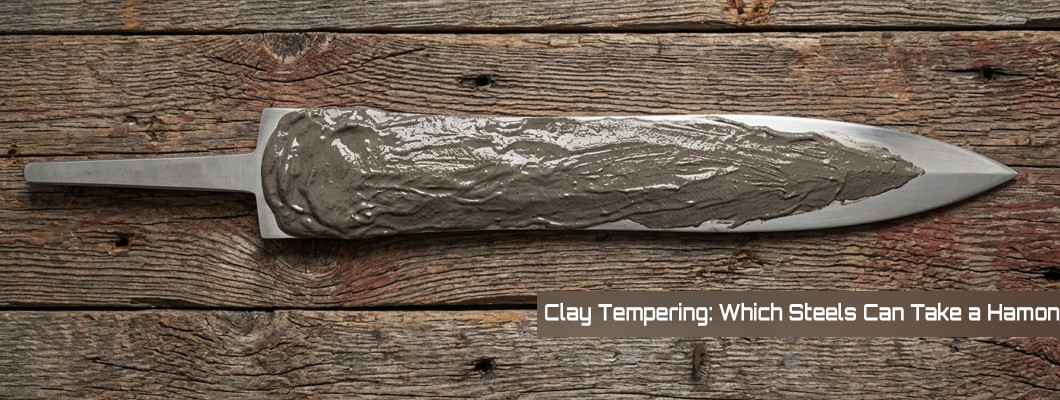
A refractory clay — commonly satanite or furnace cement — is painted onto the blade before it is heated: thick along the spine, thin or absent along the edge. In the quench, the bare edge is in direct contact with the liquid and cools fast enough to transform into hard martensite. The insulated spine cools more slowly and does not.
The hamon is the visible boundary between those two structures. It is a feature of the metal itself, not a surface effect.
And note the requirement hidden in that sentence: the technique only works if slowing the cooling actually prevents hardening. On a steel that hardens anyway at slower cooling rates, the clay achieves nothing. That single condition is what separates the steels below.
The Steels That Work
W2. The steel most associated with good hamon in modern Western bladesmithing. It is a water-hardening tool steel with a small vanadium addition that keeps the grain fine, and fine grain is what produces the wispy, active features collectors look for. If someone is chasing a dramatic hamon, this is usually what they reach for.
W1. W2's simpler cousin, without the vanadium. Shallow-hardening and reliable, producing a clean hamon with less of the fine activity.
1095. The classic and the most widely available. High carbon, low alloy, and it takes a hamon well — with the manganese caveat below, which matters more for 1095 than for anything else because so much of it is sold.
1084 and 1075. Will produce a hamon, with less carbon and correspondingly less contrast and activity. Often used for practice, since the blades are cheaper to lose.
26C3 and dedicated low-manganese stock. Modern Swedish and specialist steels sold specifically because their manganese is kept very low. They cost more and they behave predictably, which is what you are paying for.
Tamahagane. The traditional Japanese smelted steel, naturally low in manganese and highly variable in carbon. Everything about the Japanese method — the clay, the water quench, the differential hardening — evolved around a material that behaves this way.
The Steels That Don't
5160. Chromium and manganese, deep-hardening, and clay does very little on it. Bladesmiths have tested this properly — clay-coated blades, fully normalised, quenched in fast oil and etched, come out with smudging rather than a line. One maker reported more than fifty thermal cycles trying to lower the hardenability enough for clay to bite, with no useful result. We cover it in full in why 5160 blades don't have a hamon.
Alloy steels generally. Anything with meaningful chromium, molybdenum or nickel is hardening deeper than the technique can work around. The alloying is there to raise hardenability, which is precisely the property clay tempering needs to be low.
High-manganese batches of otherwise suitable grades. The awkward category, and the reason for the next section.
Stainless. Not a candidate for anything discussed here.
Manganese Is the Variable, Not the Grade Number
This is the part that surprises people who assume a steel designation is a specification.
Manganese raises hardenability. It is added to steel for good reasons — it helps with deoxidising during production and it improves hardening consistency in industrial use — and mill specifications for a grade like 1095 allow a range of manganese, not a single figure.
So two bars, both correctly sold as 1095, can sit at different ends of that range. The one at the low end takes a beautiful hamon. The one at the high end hardens deeper than the clay can prevent, and gives a disappointing, muddy result — from a smith doing everything else identically.
This is why experienced hamon smiths do not simply order "1095". They buy from suppliers who publish their manganese content, or they buy steels sold explicitly as low-manganese, and they stay with a known batch once they find one that behaves.
The practical consequence for a buyer: a maker who can tell you not just the steel but where they source it and why is telling you something real. A maker who is surprised by the question has probably not thought about it.
Water or Oil?
The other major decision, and it is a straight trade between beauty and survival.
Water and brine pull heat out fastest, which produces the sharpest distinction between hardened and unhardened steel and therefore the most dramatic, most active hamon. It is also where blades die. Cracking rates are genuinely high — smiths discussing this openly report losing a quarter to a third of blades even with experience, and considerably more while learning. Losses of four out of six in a session are not an unusual story.
Fast oil is far more forgiving. Blades survive. The hamon is real but tamer — less contrast, less activity, and the line sits differently relative to the clay than it would in water.
Neither is wrong. It depends on whether you are making an object where the hamon is the point, or a working blade that happens to have one.
Two related details worth knowing. Thin blade sections cool fast enough in oil to harden fully, so knives are more forgiving here than swords. And clay applied unevenly on the two sides will warp a blade, which is a separate failure mode from cracking and just as terminal.
What "Activity" Means
If you are buying a hamon blade you will meet this vocabulary, and it is worth knowing what is being described.
Nioi is the misty, cloud-like boundary itself, made of martensite particles too fine to resolve individually. Nie are larger crystals visible as bright points along or above the line. Ashi are the "legs" that reach down from the hamon toward the edge, and they serve a real function — they interrupt a crack that starts at the edge rather than letting it run.
The overall shape has names too: sugaha for a straight hamon, midare for an irregular one.
The relevant point for a buyer is that these features come from fine grain in a shallow-hardening steel, quenched fast. They cannot be added afterwards, and they cannot be etched on. When someone describes a hamon as "active", this is what they mean, and it is the clearest signal that you are looking at a real one.
The Failure Rate Nobody Advertises
Worth stating plainly, because it explains the price of these blades.
Clay hardening in water is among the highest-risk operations in bladesmithing. The blade has already absorbed all its forging, grinding and clay work before it goes into the quench, and a crack at that point is total loss — not a repair job, not a second attempt, scrap.
Rejection rates of a quarter to a third are commonly discussed among people who do this well. Every surviving blade therefore carries the cost of the ones that did not.
There is a further trap: a hardened, untempered blade can crack while simply sitting on the bench in the minutes after the quench. Blades go straight to tempering for that reason.
So when a genuinely clay-hardened blade costs several times what a through-hardened one does, that is not a premium for appearance. It is the arithmetic of a process that destroys a meaningful fraction of its own output.
Steels Compared
| Steel | Takes a hamon? | Why |
|---|---|---|
| W2 | Excellent | Shallow-hardening, vanadium keeps grain fine |
| W1 | Very good | Shallow-hardening, less fine activity |
| 1095 | Good — batch dependent | Low alloy, but manganese varies |
| 26C3, low-Mn stock | Excellent | Manganese deliberately kept low |
| 1084 / 1075 | Modest | Works, less contrast and activity |
| Tamahagane | Excellent | Naturally low manganese; the original |
| 5160 | No | Chromium and manganese, hardens too deeply |
| Alloy steels | No | Alloying exists to raise hardenability |
| Stainless | No | Wrong material for this entirely |
What This Means If You Are Buying
- Ask what steel, and where it came from. "1095" alone is an incomplete answer for a hamon blade. A maker who mentions manganese or names a supplier knows what they are doing.
- Ask whether it was water or oil quenched. Both are legitimate. The answer tells you what to expect from the line.
- Ask whether the hamon is hardened or applied. The single most useful question, and an honest seller answers it in one sentence.
- Look for activity, not just a line. Depth, cloudiness, features that shift as you tilt the blade. Flat and perfectly even is a warning.
- Expect to pay for it. A real clay-hardened blade carries the cost of the blades that cracked. A cheap one is telling you something.
- Match it to use. A differentially hardened blade has a soft spine that can take a permanent bend. For a blade that will be struck, that is a real consideration.
What We Do, and Why
We forge in 5160 spring steel, which is deep-hardening, so clay tempering does not work on it and we do not pretend otherwise. Our blades are through-hardened and tempered to a spring temper, so they flex along their whole length and return straight rather than having a hard edge on a soft back. For blades meant to be struck — swords, kukris, machetes, axes, spears — that is the better construction, and the reasoning is set out on our battle ready standard.
We also do not etch a fake hamon onto anything, which is the other way this question gets answered in our industry.
If you want a genuine clay-hardened blade, that means a shallow-hardening steel and a different process, and it is a conversation worth having openly rather than assuming either way. Ask through custom forge and we will tell you honestly what a given steel and treatment will and will not give you before anything is forged.
Ask What the Steel Can Actually Do
Hand-forged in Tokha-3, Kathmandu from 5160 high-carbon spring steel — oil quenched, through-hardened, tempered by hand, and never given a hamon it did not earn. Tell us what the blade has to do and we will tell you straight what the steel will give you.
Frequently Asked Questions
Does clay tempering work on carbon steel?
Yes — shallow-hardening plain carbon steels are the best steels for it. W1, W2, 1095, 26C3 and traditional tamahagane all take a hamon well, because they only harden where cooling is genuinely fast, so clay on the spine keeps it soft. It fails on alloy steels such as 5160, where chromium and manganese make the steel harden deeply enough that the clay achieves nothing.
Which steel is best for a hamon?
W2 is the usual answer in modern Western bladesmithing. It is shallow-hardening and its small vanadium addition keeps the grain fine, which produces the wispy activity collectors look for. W1 is a simpler alternative, 1095 is the widely available classic, and dedicated low-manganese steels such as 26C3 behave very predictably. Tamahagane is the traditional original and everything about the Japanese method evolved around it.
Why does manganese matter for hamon?
Because manganese raises hardenability, and clay tempering needs hardenability to be low. Mill specifications for a grade like 1095 permit a range of manganese rather than one figure, so two bars both correctly sold as 1095 can behave completely differently — the low-manganese one takes a beautiful hamon while the high-manganese one hardens deeper than the clay can prevent. Serious hamon smiths buy stock with published manganese content rather than trusting the grade number.
Should a hamon blade be quenched in water or oil?
It is a trade between beauty and survival. Water and brine cool fastest, giving the sharpest distinction between hardened and unhardened steel and the most dramatic, active hamon — and the highest cracking rate, with a quarter to a third of blades lost being commonly discussed even among experienced smiths. Fast oil is far more forgiving but produces a tamer line with less contrast and activity.
What does an "active" hamon mean?
It refers to the fine features along the line: nioi, the misty cloud-like boundary of martensite particles too small to resolve; nie, larger crystals visible as bright points; and ashi, the legs reaching down toward the edge, which also interrupt cracks that start there. These come from fine grain in a shallow-hardening steel quenched fast, cannot be added afterwards, and cannot be etched on — which makes activity the clearest signal of a genuine hamon.
Why are clay-hardened blades expensive?
Because a meaningful share of them are destroyed making them. Clay hardening in water is among the highest-risk operations in bladesmithing, and the blade has already absorbed all its forging, grinding and clay work before it goes into the quench, so a crack is total loss. Rejection rates of a quarter to a third are commonly discussed, and every surviving blade carries the cost of the ones that did not.
Can 1095 always take a hamon?
Usually, but not reliably, and the reason is manganese. Mill specifications allow a range, so one bar of 1095 may sit at the low end and take a beautiful hamon while another sits at the high end and hardens too deeply for the clay to matter. This is why smiths who care about hamon buy from suppliers who publish manganese content and stay with a batch once they find one that behaves.
Is a clay-hardened blade better than a through-hardened one?
Not better, different. A clay-hardened blade has a hard edge and a soft spine, which was a brilliant answer to inconsistent traditional steel — but the soft spine can take a permanent bend and the internal boundary between two structures is where cracks prefer to start. A through-hardened blade at a spring temper flexes along its whole length and returns straight, which is what a blade that gets struck needs.