Menu
Your Cart

Hand-Forged Kukri Knife, Bhojpure Pattern

Hand-Forged Kukri Knife, Bhojpure Pattern
$164.99
Ex Tax: $164.99
  • Model: Traditional Kukris / Khukuris
  • Product Code: ClassicBhojpure13
  • Location: Kathmandu, Nepal

Available Options

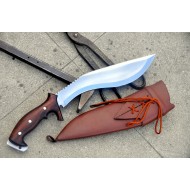
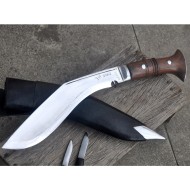
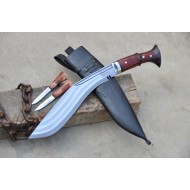
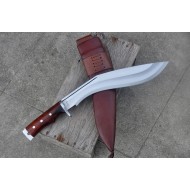
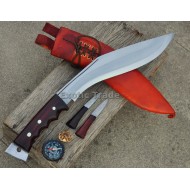
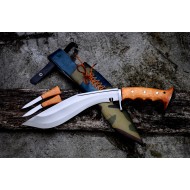
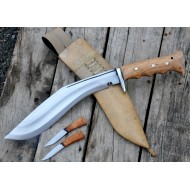
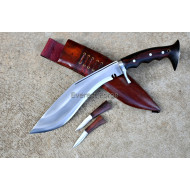
A Hand-Forged Bhojpure Khukuri With Brass Fittings, Horn Hilt and Both Companions

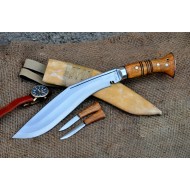
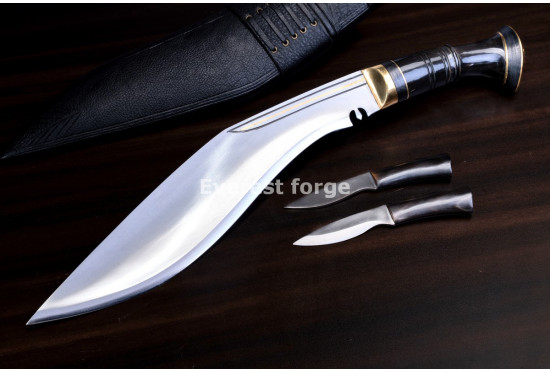
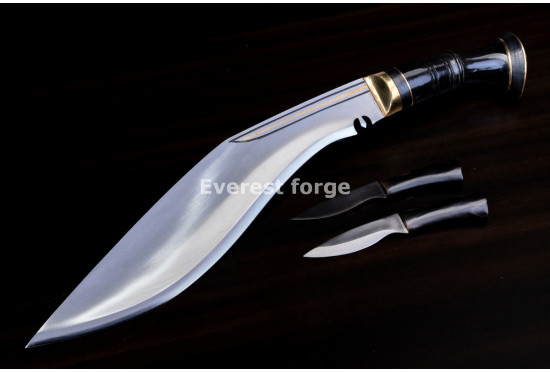
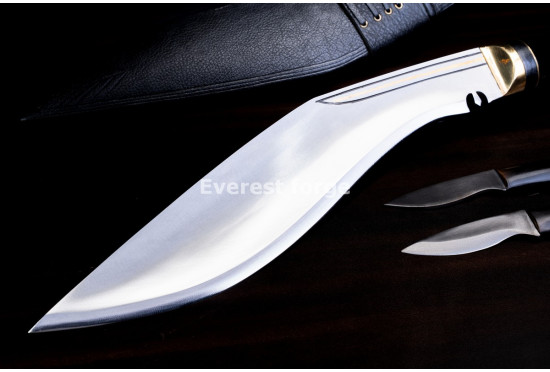
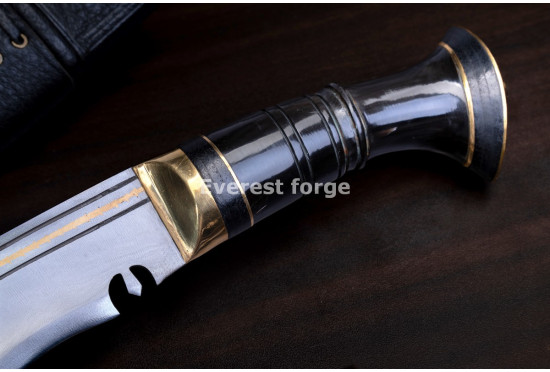
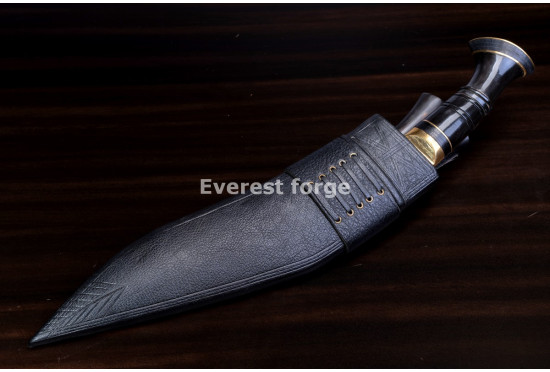
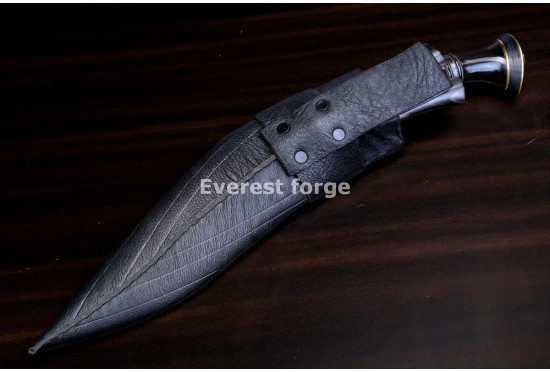
This is a 13 inch hand-forged bhojpure, the heavy working pattern of Nepali kukri named for the district in eastern Nepal where it was made. The blade is broad and deep through the belly with the classic forward drop, carries two fine decorative lines running along the spine side, and has the cho notch filed at the base of the edge. The hilt is polished water buffalo horn, turned with ring grooves and a flared butt, fitted with brass at the bolster, the mid band and the butt cap. Overall length is 18.5 inches, the kukri weighs approximately 680 grams, and it comes complete with the karda and chakmak in a black leather scabbard. Forged from 5160 high-carbon steel by our own kami in Tokha-3, Kathmandu.

An honest note. Bhojpure is a pattern defined by mass, and mass is decided by spine thickness rather than by blade length or by how deep the belly looks in a photograph. That measurement is the one thing almost no seller anywhere publishes, ours included until now, and it is the reason so many kukris sold as bhojpure are simply broad-looking blades of ordinary thickness. We are putting the spine measurement on our kukri listings from here on and we would encourage you to ask for it from anyone else you are considering. A blade that looks heavy in a photograph and arrives light is the most common disappointment in this whole category, and it is entirely avoidable with one number.

Made to your specification

Have This Kukri Forged Your Way

Blade length, spine thickness, pattern, hilt material and scabbard are all decided at the forge. Tell us what you are cutting and our kami will tell you what to order.

Start a Custom Forge Order →

Why This Kukri Is Built the Way It Is

Mass Where the Cut LandsThe bhojpure puts its weight forward in a deep broad belly, so the blade carries itself through seasoned wood instead of needing to be forced. It is the pattern you buy if the kukri has a job.
A Short, Stout HiltAt 5.5 inches this is the shortest handle in our range, and deliberately so. A short grip keeps the hand close to the balance point on a forward-heavy blade, which is what makes a heavy kukri controllable.
Complete, as It Should ArriveKarda, chakmak and scabbard, with all three hilts cut from horn in the same workshop so they match. A kukri was never a single object and we would rather not sell it as one.

Specifications

Blade Length13 inches
Handle Length5.5 inches
Overall Length18.5 inches
Blade Steel5160 high-carbon spring steel, oil-quenched and tempered
PatternBhojpure — broad and deep through the belly, the heavy working form
Blade ProfileForward-curved with a pronounced drop, edge on the inner curve
Blade DetailTwo fine decorative lines along the spine side, cho notch at the base of the edge
HiltPolished water buffalo horn, turned with ring grooves and a flared butt
FittingsBrass bolster, brass mid band and brass butt cap
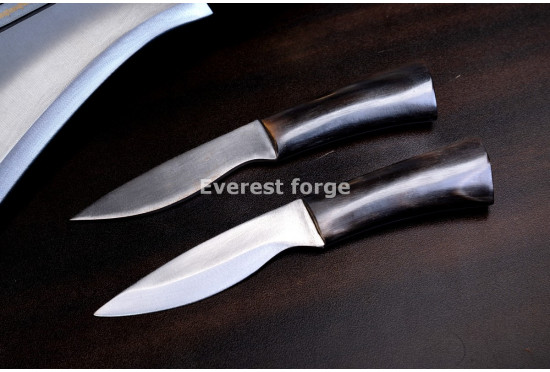
CompanionsKarda utility knife and chakmak burnisher, both with matching horn hilts
Standard BuildPolished blade, horn hilt — size, finish and hilt material are selectable above
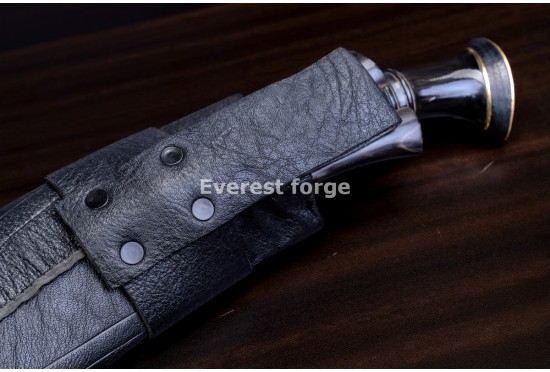
ScabbardBlack leather with tooled line detail, laced panel and companion pockets
WeightApproximately 680 grams for the kukri, 1040 grams complete
OriginHand-forged in Tokha-3, Kathmandu, Nepal

Build Options

Spine ThicknessThe single most useful thing you can specify on a bhojpure. Tell us what you are cutting and our kami will forge the spine to suit, heavier for seasoned hardwood and lighter if you want to carry it.
Blade LengthEleven to thirteen inches for a kukri you can wear and still chop with, or fifteen to eighteen for a dedicated wood tool where reach and mass both matter.
PatternBhojpure as shown for weight, sirupate for a slim fast blade, or budhume for a broad belly without the thick spine. These are different tools, not styling choices.
Hilt MaterialWater buffalo horn as shown, or rosewood if you live somewhere very dry and would rather not oil it. Both are traditional.
Hilt ConstructionThe turned hilt shown, or panawal, with scales riveted through a full-width tang, which is the stronger build for the hardest use.
FittingsBrass as shown, which is the traditional dress for this pattern, or polished steel if you prefer it plainer.

Is This the Right Kukri for You?

Buy This If You Want

  • The heavy working pattern, for firewood, limbing and real chopping
  • A complete kit with karda, chakmak and scabbard rather than a bare blade
  • Traditional brass dress and a horn hilt from a working Nepali forge
  • A short controllable grip on a forward-heavy blade
  • One kukri that will still be working in twenty years

Look Elsewhere If You Want

  • Reach and speed rather than mass — the sirupate is the slim pattern and it is a different tool
  • The lightest thing you can wear all day, since a bhojpure is meant to be heavy
  • A hilt material you never think about, which is rosewood rather than horn
  • A stainless blade needing no care, since 5160 is carbon steel and will rust if left wet
  • A clearing blade for green growth, where a machete is faster and less tiring
Our own craft, not someone else's

Ask Our Kami for a Spine Thickness

Every kukri we forge can be made heavier or lighter through the spine without changing anything else. Describe the wood you are cutting and the smiths will tell you the number to ask for.

Talk to the Forge →

How to Order

Choose your blade length, finish and hilt material from the options above the description.
Note your preferred spine thickness and hilt construction in the order comments.
We confirm the build by email and start forging. Custom work takes four to six weeks.
Your kukri ships tracked by DHL or FedEx and arrives in seven to fourteen business days.

Who This Kukri Is For

  • People who will chop with it — firewood, limbing, clearing, building
  • Smallholders and land managers who need a blade that takes daily use for years
  • Collectors of Nepali arms who want the working pattern in its traditional brass and horn dress
  • Anyone buying one kukri and wanting it to arrive complete rather than as a blade in a cover

What Is Included

  • One hand-forged bhojpure kukri, sharpened and ready to use
  • One karda companion utility knife with matching horn hilt
  • One chakmak burnisher with matching horn hilt
  • Fitted black leather scabbard with companion pockets
  • Certificate of hand-forging from the workshop
  • Everest Forge manufacturer warranty against defects in forging and heat treatment

Explore the Collection

Shipping, Returns and Care

Stock pieces are dispatched within two to three business days. Custom builds take four to six weeks at the forge before they ship. Everything travels tracked with DHL or FedEx and typically arrives in seven to fourteen business days. Every piece carries the Everest Forge manufacturer warranty against defects in forging and heat treatment.

Large fixed blades are restricted in some countries and in some states and provinces within them, and this set is three blades in one parcel, which some jurisdictions count separately. It is your responsibility to check that it may lawfully be imported and possessed where you live before ordering, because a parcel seized by customs cannot be returned to us and cannot be refunded. Ask us before you buy if you are unsure.

5160 is a high-carbon steel and will rust if left wet or stored damp. Wipe all three blades dry after use and keep a light film of oil on them. Do not store the kukri in the scabbard for long periods. Give the horn hilts a wipe of mineral oil two or three times a year, particularly if you live somewhere dry. The brass will dull to a warm tone over time, which any metal polish reverses if you would rather it stayed bright, though keep the polish off the horn.

Frequently Asked Questions

What makes a kukri a bhojpure?

Mass. The bhojpure takes its name from Bhojpur, a district in the eastern hills of Nepal, and it describes the heavy working form: a broad blade with a deep belly and, crucially, a thick spine. It is the kukri a hill farmer reaches for when there is real wood to cut. Everything about the pattern is arranged to put weight forward of the hand so the blade does the work, which is why the belly is deep and the drop is pronounced and why the handle on this one is only five and a half inches. The contrast that makes it clearest is the sirupate: same family, opposite priorities, slim and fast and built for reach rather than for force. Neither is better. If you are cutting seasoned hardwood, take the bhojpure. If you are clearing green growth and want a blade you are not fighting, take the sirupate. A great many people who use kukris seriously own both.

Why does spine thickness matter more than blade length?

Because it is what decides whether a kukri chops or merely looks as though it will. Length changes reach and it changes how a blade photographs; thickness changes how much steel is travelling into the cut. Two kukris with identical thirteen inch blades and identical outlines can differ by three hundred grams simply because one has a spine of five millimetres and the other eight, and in the wood the difference is not subtle. The problem is that thickness is invisible in a photograph. A blade shot from the side looks exactly as broad and exactly as deep-bellied whether it is thin stock or thick, which is why so much sold as a heavy working kukri arrives disappointingly light. It is also, remarkably, the one specification almost nobody publishes. Ask for it. Ask us and ask anyone else you are comparing us against, and if a seller cannot tell you the spine thickness at the bolster, they probably do not know what they are selling.

What are the two lines along the blade?

Decorative line work, cut and finished by hand along the spine side of the blade. Nepali kukris carry a whole vocabulary of this: fine parallel lines, chevrons, sun and moon marks, and inlaid contrasting metal on the better pieces. It is not structural, it does not affect the cut, and it is not the same thing as a chirra, which is a proper ground fuller with a depth to it. What line work does is mark a blade as something made with care rather than turned out in a hurry, and it is one of the details that separates a kukri from a village forge from one made for export by the thousand. Ours are put in by hand, which is why they are never perfectly parallel and never in exactly the same place twice.

Why is the handle so short?

Five and a half inches is the shortest hilt in our kukri range and it belongs to the pattern rather than being an oversight. A bhojpure is deliberately front-heavy, and the further your hand sits behind the balance point, the more that forward mass wants to twist and pull at the end of a swing. A short grip keeps the hand close in, which is what makes a heavy blade controllable rather than tiring. It is also the traditional proportion: village kukris intended for work generally have shorter, stouter handles than the longer grips seen on presentation and export pieces. If you have large hands and it feels cramped, we will forge the same blade with a six or six and a half inch hilt, and the only cost is that the balance moves very slightly rearward.

What are the two small knives?

The karda and the chakmak, the two traditional companions that ride in pockets behind the blade. The karda has a point and a sharpened edge and is a small utility knife for all the fine work a thirteen inch chopper cannot do. The chakmak is blunt, and deliberately so: it is a hardened steel burnisher drawn along the kukri's edge to push a rolled edge back true without grinding metal away, in the same way a butcher uses a steel, and traditionally its spine also struck a flint. Between them the three tools cover heavy cutting, fine cutting and maintenance. On a bhojpure the chakmak matters more than on most patterns, because a heavy blade meeting hard wood rolls its edge more often than it chips it, and a roll is fixed in seconds with a chakmak where it would otherwise mean a stone.

What is the notch near the handle?

The cho, also called the kaudi, filed by hand into the edge just ahead of the bolster. It arrests cracks running back out of the edge into the tang and keeps sap and fluid off the grip, and in Nepal it carries symbolic readings as well, variously a trident, a cow's hoof or a mark of the divine depending on who you ask. It is cut individually on every kukri we make. A kukri with no cho at all, or with a perfectly identical stamped cho across every example in a listing, did not come from a Nepali forge.

What steel is it, and how is the edge hardened?

5160 high-carbon spring steel, the same alloy family as the vehicle leaf springs Nepali kamis have forged kukris from for generations. The edge is hardened differentially rather than the blade being through-hardened, so the cutting edge is hard while the spine and belly stay soft and springy and absorb the shock. On a bhojpure that matters as much as on any pattern in the range, because this is the kukri that will actually be hitting things. It is not stainless, deliberately: the stainless grades that genuinely resist rust give up the toughness a chopping blade depends on.

Bhojpure or sirupate — which should I buy?

Answer one question: is the wood alive or dead? Green growth, cane, bamboo, saplings and undergrowth want a slim fast blade that slices and recovers quickly, which is the sirupate. Seasoned wood, firewood, standing deadwood and anything you have to drive the blade into wants mass behind the edge, which is the bhojpure. If you are doing both, the bhojpure is the safer single choice, because a heavy blade will cut green growth adequately while a slim one genuinely struggles in hard wood. If you are carrying it a long way rather than working from a camp, weight becomes the deciding factor and the sirupate wins. And if you already own one of them, buy the other rather than a second of the same, because they do not overlap as much as the photographs suggest.

Why brass fittings rather than steel?

Tradition and practicality together. Brass does not rust, which matters on a tool that lives in a leather scabbard in a monsoon climate, and it is softer than the horn and steel it sits against so it will not chew them up as the pieces work against each other. It also takes and holds a polish with almost no attention. Brass bolsters, bands and butt caps are the customary dress for a working village kukri and have been for a long time, which is why this pattern carries them where our more modern builds use steel. We describe them as brass because that is what our workshop buys and fits, though we do not hold certification of the exact alloy and will not claim a grade we cannot evidence. If you would prefer polished steel, that is a straightforward swap.

How sharp does it arrive?

The kukri and the karda arrive sharp and ready to work, finished on a stone by hand, with a working edge rather than a razor polish because a kukri meets wood, grit and bone. The chakmak is deliberately blunt and always will be, because a sharpened chakmak would damage the edge it exists to true. If you would prefer the kukri and karda shipped unsharpened — for display, for a gift, or because of the rules where you live — say so in the order comments and we will do it at no extra cost.

Can I baton with it?

Yes, within reason. The spine is thick, unsharpened and flat, which is exactly what you need to strike with a piece of wood, and the pattern is built for impact. The limit is the hilt: this one is a turned horn grip with the tang secured at the butt cap rather than panawal construction with riveted scales, and while that is perfectly strong for chopping it is the arrangement that eventually loosens under heavy repeated hammering. If batoning is going to be a regular part of what you do with it, order the same blade with a panawal hilt. Strike over the belly rather than out near the tip, keep the blade square in the cut, and use a wooden baton rather than a rock.

Who makes these?

Our own kami, in our own workshop in Tokha-3 on the northern edge of Kathmandu. Kami is the Nepali word for smith, and most of ours came from families that have forged blades for generations. Everest Forge has operated since 2010, and we forge, grind, heat treat, cut and polish the horn, fit the brass and make the scabbards in the same building. The bhojpure is the pattern where that matters most, because it is not a decorative shape but a working one, and getting the mass right is a judgement a smith makes by hand and by eye rather than by reading a drawing.

Specification
Blade: 13 inches. Hand forged from 5160 carbon steel
Total Length: 18.5 inches
Handle: 5.5 inches. Polished water buffalo horn with brass bolster, mid band and butt cap
Weight: approx 680g kukri, 1040g complete
Note: karda utility knife, chakmak burnisher, fitted leather scabbard Note: Some variation in weight, dimensions and finish may occur as each piece is hand forged. Keep the blades lightly oiled and the horn hilts oiled two or three times a year

Write a review

Note: HTML is not translated!
Bad Good
Captcha