- Model: Signature Kukri/Khukuri
- Product Code: SIGNATURE67
- Location: Kathmandu, Nepal
Available Options
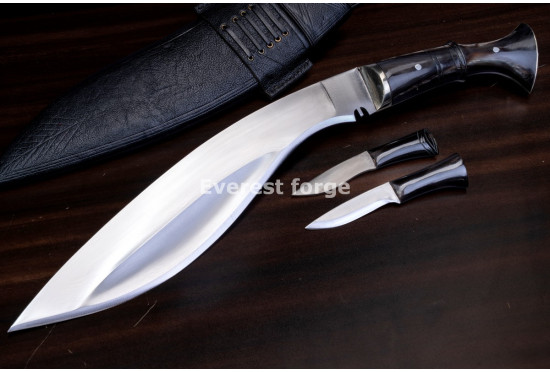
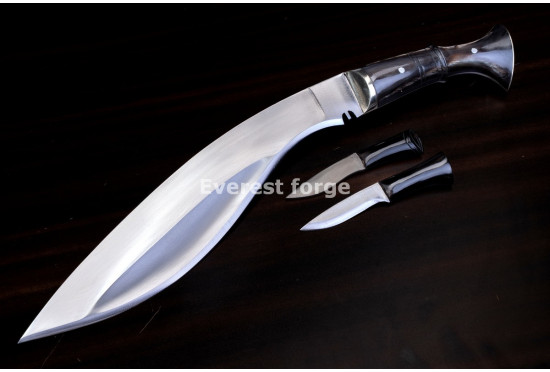
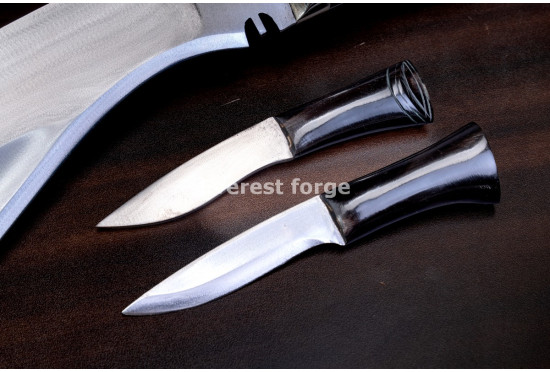
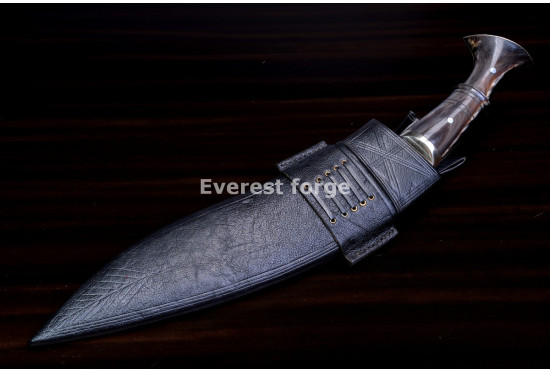
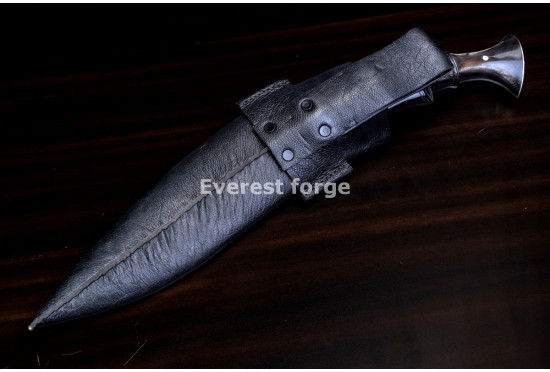
A Complete Hand-Forged Nepali Kukri Set With Karda, Chakmak and Horn Hilts
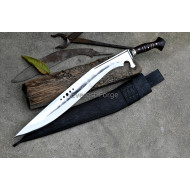
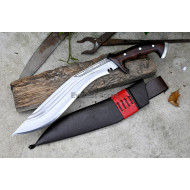
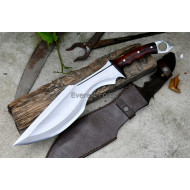
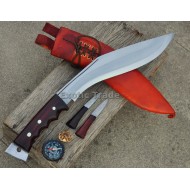
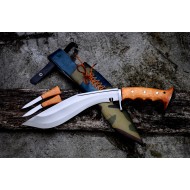
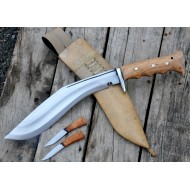
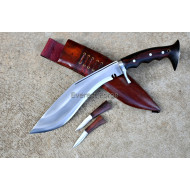
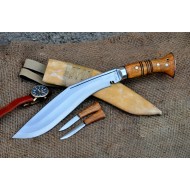
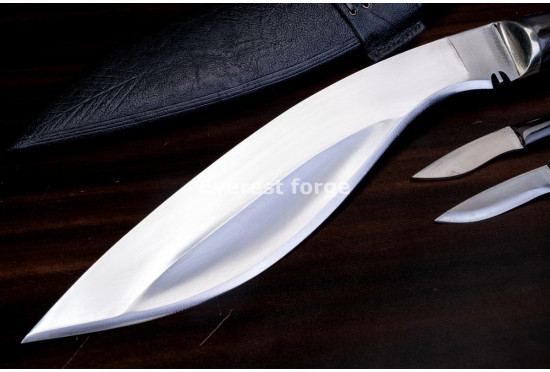
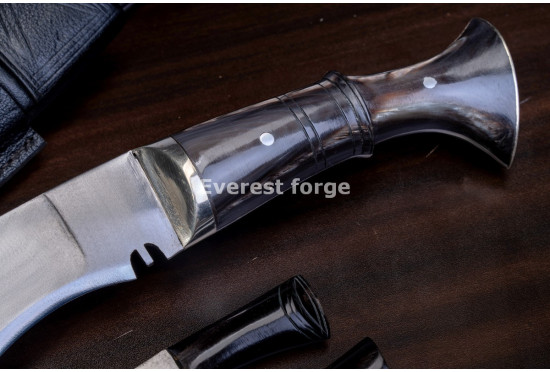
This is a 14.5 inch hand-forged kukri supplied as a complete traditional set: the kukri itself, the karda utility knife and the chakmak burnisher, all three with polished water buffalo horn hilts, riding together in a black leather scabbard. The blade is ground with a wide sweeping bevel that runs from high on the blade down to the edge, giving a thin cross-section behind a deep belly, and carries the cho notch at the base of the edge. Overall length is 21 inches and the kukri weighs approximately 950 grams, 1390 grams for the set complete. Forged from 5160 high-carbon steel by our own kami in Tokha-3, Kathmandu.
An honest note. One thing to know about horn before you order it. Water buffalo horn is the traditional hilt material for a Nepali kukri and it is beautiful, hard-wearing and cool in the hand, but it is an organic material and it responds to the air around it. Taken from Kathmandu to a very dry centrally heated house or a desert climate, horn can shrink slightly over months and occasionally develop fine surface cracks. It does not fail and it does not make the knife unusable, but it happens and we would rather you heard it from us. A wipe of mineral oil two or three times a year prevents almost all of it. If you live somewhere very dry and would rather not think about it, order rosewood scales instead and you lose nothing but the look.
Have This Set Forged Your Way
Blade length, pattern, grind, hilt material and scabbard are all decided at the forge. Tell us what the kukri is for and our kami will tell you what to order.
Start a Custom Forge Order →Why This Set Is Built the Way It Is
Specifications
Build Options
Is This the Right Kukri for You?
Buy This If You Want
- The complete traditional arrangement rather than a bare blade in a sheath
- A wide-bevel grind that cuts deeper for the same effort than a narrow-bevelled kukri
- Horn hilts on all three pieces, cut and matched in one workshop
- A gift that arrives looking like the object it is supposed to be
- One purchase that covers heavy work, fine work and edge maintenance
Look Elsewhere If You Want
- The lightest kukri you can carry; at 950 grams this is a working blade, not a walking one
- A hilt material you never have to think about, which is rosewood rather than horn
- The strongest hilt for daily heavy chopping, which is panawal construction
- A stainless blade needing no care, since 5160 is carbon steel and will rust if left wet
- A clearing blade for green growth, where a machete is faster and less tiring
Engraved for a Retirement or a Presentation
A kukri is the standard gift for a Gurkha retirement, a Dashain present and a mark of respect in Nepal. We cut names, dates and regimental numbers by hand. Tell us the occasion.
Talk to the Forge →How to Order
Who This Set Is For
- Gift and presentation buyers — retirements, milestones, anyone with a Nepali or Gurkha connection
- Collectors of Nepali arms who want the complete arrangement rather than the blade alone
- Campers and smallholders who will use all three tools rather than display them
- First-time buyers going straight to the real thing instead of buying a bare kukri and the companions later
What Is Included
- One hand-forged kukri, sharpened and ready to use
- One karda companion utility knife with matching horn hilt
- One chakmak burnisher with matching horn hilt
- Fitted black leather scabbard with laced throat and companion pockets
- Certificate of hand-forging from the workshop
- Everest Forge manufacturer warranty against defects in forging and heat treatment
Explore the Collection
Shipping, Returns and Care
Stock pieces are dispatched within two to three business days. Custom builds take four to six weeks at the forge before they ship. Everything travels tracked with DHL or FedEx and typically arrives in seven to fourteen business days. Every piece carries the Everest Forge manufacturer warranty against defects in forging and heat treatment.
Large fixed blades are restricted in some countries and in some states and provinces within them, and this set is three blades in one parcel, which some jurisdictions count separately. It is your responsibility to check that it may lawfully be imported and possessed where you live before ordering, because a parcel seized by customs cannot be returned to us and cannot be refunded. Ask us before you buy if you are unsure and we will tell you what we know about your destination.
5160 is a high-carbon steel and will rust if left wet or stored damp. Wipe all three blades dry after use and keep a light film of oil on them. Do not store the kukri in the scabbard for long periods; leather holds moisture against steel and a wooden-cored scabbard holds it longer than a flat sheath does. Give the horn hilts a wipe of mineral oil two or three times a year, and the leather an occasional conditioning.
Frequently Asked Questions
What is a wide bevel, and why does it matter?
It is where the grind starts. On most kukris the blade is left thick through the middle and a relatively narrow bevel is ground in near the edge, so there is a distinct shoulder partway down the blade. On this one the bevel starts high, close to the spine, and sweeps in one long curve all the way to the edge. Two things follow. First, there is far less shoulder to wedge in the cut, so the blade keeps moving through wood instead of stopping and bouncing. Second, the steel immediately behind the edge is thinner, which means it bites deeper for the same swing. The costs are real and worth stating: a wide bevel takes considerably more time at the grinder, and because there is less metal behind the edge it will take a little more care around nails, stone and frozen wood than a thick narrow-bevelled village kukri will. It is the better cutter and the slightly more delicate one.
What are the two small knives?
They are the karda and the chakmak, and they are not a pair of the same thing. The karda is the one with a point and a sharpened edge: a small utility knife for everything a 14.5 inch blade cannot do, which is most fine work. The chakmak is the one with the blunt squared tip, and it is not a cutting tool at all. It is a burnisher of hardened steel used like a butcher's steel, drawn along the kukri's edge to push a rolled edge back true without grinding any metal away. Traditionally its spine also struck a flint for fire, which is where the name comes from. Together the three tools cover heavy cutting, fine cutting and maintenance, which is why a kukri was carried as a set rather than as a knife. If you have only ever owned a bare kukri, the chakmak is the piece you will be surprised by.
Is water buffalo horn a good hilt material?
Yes, with one caveat we have put in the honest note above rather than buried here. Horn is dense, hard-wearing, warm to look at and cool to hold, it does not swell when wet the way some woods do, and it takes a deep polish that improves rather than wears off. It is also the traditional material for a Nepali kukri hilt, worked by heating it until it softens and then pressing and cutting it to shape, which is a skill in itself. The caveat is that horn is organic and responds to humidity: taken somewhere very dry it can shrink slightly over months and occasionally show fine surface cracks. Oiling it two or three times a year prevents nearly all of that. Rosewood is the alternative, equally traditional, and it asks nothing of you.
What is the scabbard made of?
Leather over a shaped wooden core, with pockets behind the blade for the karda and chakmak and a laced panel at the throat. The wood is what gives the scabbard its shape and its rigidity, and it is why a traditional kukri scabbard holds the blade securely without a strap while a flat leather sheath usually needs one. It is also the reason for the one care instruction that matters: do not store the kukri in it long term. A wooden core in a leather cover holds moisture against the steel for far longer than a flat sheath will, and a blade left in one through a humid season comes out marked. Store the kukri out of the scabbard, oiled, and use the scabbard for carrying.
Is this a good gift?
It is close to the standard one, which is why we mention it. In Nepal a kukri is given at Dashain, presented on retirement from Gurkha service, and used as a mark of respect and celebration generally — it is the national blade and it carries meaning far beyond being a tool. A complete set with both companions and a proper scabbard reads as a considered gift in a way a bare blade in a plain sheath does not, and it arrives looking finished rather than looking like a component. We cut engraving by hand for names, dates and regimental numbers, in Latin or Devanagari script, on the blade or the scabbard fittings. If you are ordering for an occasion, tell us the date you need it for before you order rather than after, because custom work runs four to six weeks.
What is the notch near the handle?
The cho, also called the kaudi, filed into the edge just ahead of the bolster. It arrests cracks running back out of the edge into the tang and keeps sap and fluid off the grip, and in Nepal it carries symbolic readings as well, variously a trident, a cow's hoof or a mark of the divine depending on who you ask. It is cut by hand on every kukri we make. If you are looking at a kukri anywhere with no cho, or with a perfectly identical stamped cho across every example in a listing, it did not come from a Nepali forge.
What steel is used, and how is the edge hardened?
5160 high-carbon spring steel, the same alloy family as the vehicle leaf springs Nepali kamis have forged kukris from for generations. The edge is hardened differentially rather than the blade being through-hardened, so the cutting edge is hard while the spine and belly stay soft and springy and absorb the shock of chopping. It is not stainless, deliberately: the stainless grades that genuinely resist rust give up the toughness a chopping blade depends on. The karda and chakmak are made from the same steel, with the chakmak hardened right through since it never needs to take an edge.
How is this different from your other kukris?
This is the only one we list as a complete set, and it is the only one with a wide-bevel grind. Our Panawal Hilt kukri is 13.5 inches with riveted rosewood scales and ships with the karda but not the chakmak. Our Ringed Hilt kukri is 12 inches at Nepali service size with a turned one-piece hilt and no companions. Our Double-Edged kukri is the same 14.5 inch blade length as this one but is ground with a working edge on the back as well. If you want one kukri and want it to arrive complete, this is the one. If you want the strongest possible hilt for hard daily chopping, take the panawal. If you want something light enough to wear all day, take the twelve inch.
Can I buy the karda and chakmak separately?
We would rather you did not, and the reason is not commercial. The three hilts on this set were cut from horn in the same workshop at the same time, so the colour, the figure and the polish match, and the two companions were made to sit in the pockets of this particular scabbard. Companions bought later from anywhere, including from us, will not match and may not seat properly. If you already own a bare kukri from us and want to add companions to it, tell us which kukri and we will make them to suit rather than sending stock ones. If you own a kukri from someone else, send a photograph and measurements of the scabbard pockets and we will tell you honestly whether it is worth doing.
How sharp does it arrive?
The kukri and the karda arrive sharp and ready to work, finished on a stone by hand, with a working edge rather than a razor polish because a kukri meets wood, grit and bone. The chakmak is deliberately blunt and always will be; that is what it is for, and a sharpened chakmak would damage the edge it is meant to true. If you would prefer the kukri and karda shipped unsharpened — for display, for a gift, or because of the rules where you live — say so in the order comments and we will do it at no extra cost.
How do I use the chakmak?
Hold the kukri edge upward with the spine resting on something solid, take the chakmak in your other hand, and draw it firmly along the edge at roughly the angle of the bevel, working from the cho toward the tip. Do a few passes on one side, then the same on the other. What you are doing is pushing steel that has rolled over back into line, not removing metal, so it takes seconds and can be done as often as you like without shortening the life of the blade. Do it after every session of real cutting and you will need an actual stone perhaps two or three times a year. Most people who own a kukri without a chakmak sharpen far more often than they need to and wear the blade down faster than the work does.
Who makes these?
Our own kami, in our own workshop in Tokha-3 on the northern edge of Kathmandu. Kami is the Nepali word for smith, and most of ours came from families that have forged blades for generations. Everest Forge has operated since 2010, and we forge, grind, heat treat, cut and shape the horn, and make the scabbards in the same building. We are firmer about this on kukri pages than anywhere else on the site for two reasons: a great deal of what is sold internationally as a Nepali kukri has never been near Nepal, and unlike the European swords we make, this is not a tradition we researched. It is the one we come from.
| Specification | |
| Blade: | 14.5 inches. Hand forged from 5160 carbon steel |
| Total Length: | 21 inches |
| Handle: | 6.5 inches. Polished water buffalo horn with fitted steel bolster and flared butt |
| Weight: | approx 950g kukri, 1390g complete set |
| Note: | Includes: karda utility knife, chakmak burnisher, fitted leather scabbard Note: Some variation in weight, dimensions and finish may occur as each piece is hand forged. Keep the blades lightly oiled and the horn hilts oiled two or three times a year |