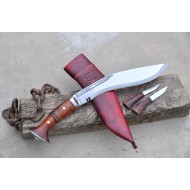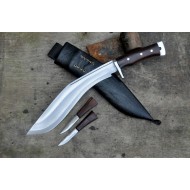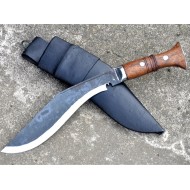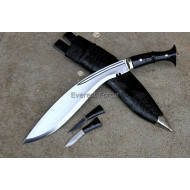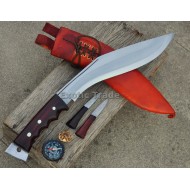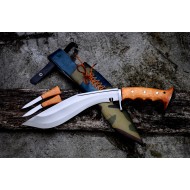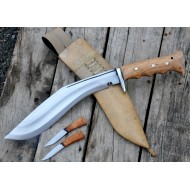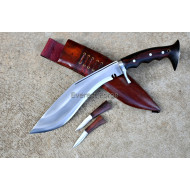
- Model: Signature Kukri/Khukuri
- Product Code: SIGNATURE64
- Location: Kathmandu, Nepal
Available Options
A Hand-Forged Nepali Kukri With a Panawal Riveted Hilt and Deep Belly
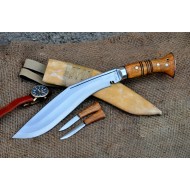
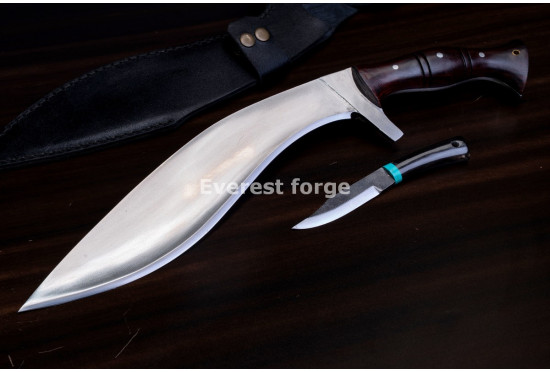
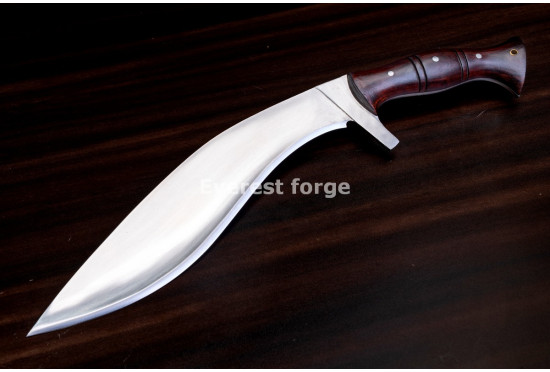
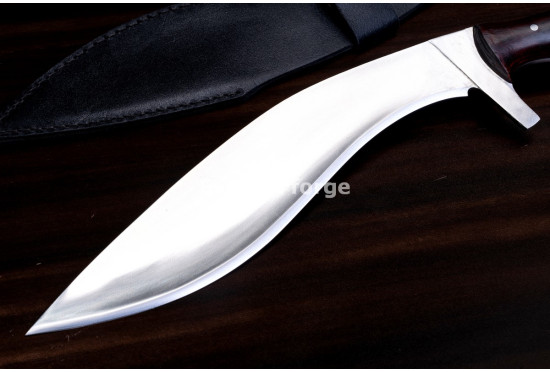
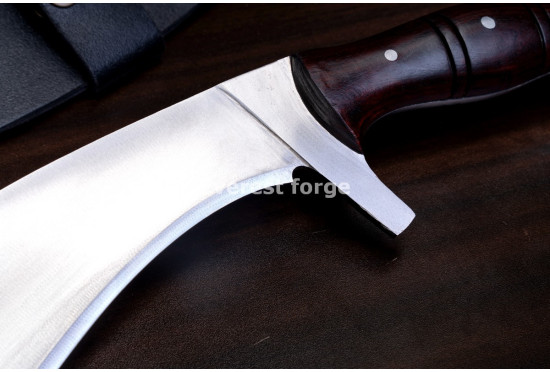
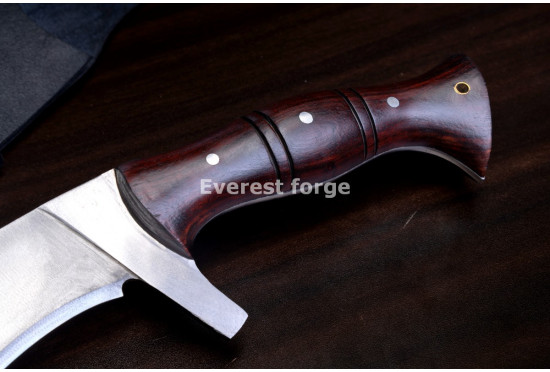
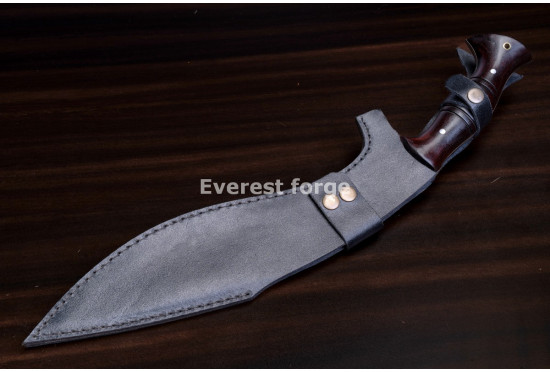
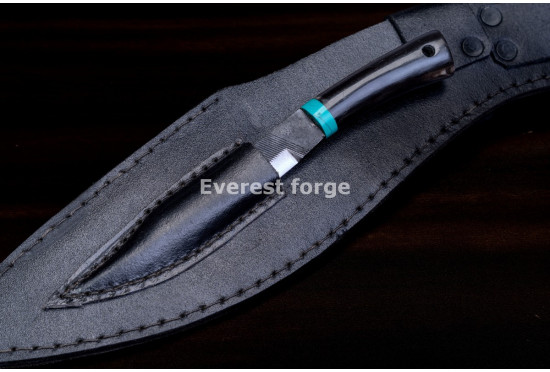
This is a 13.5 inch hand-forged kukri built on panawal construction: the tang is the full width of the hilt and rosewood scales are riveted straight through it, which is the stronger of the two traditional Nepali hilt builds. The blade carries a deep broad belly with the classic forward drop, a cho notch cut at the base of the edge, and a semi-polished working finish. Overall length is 19.5 inches and the kukri weighs approximately 780 grams. It is forged from 5160 high-carbon steel by our own kami in Kathmandu and ships in a black leather sheath with a karda companion knife.
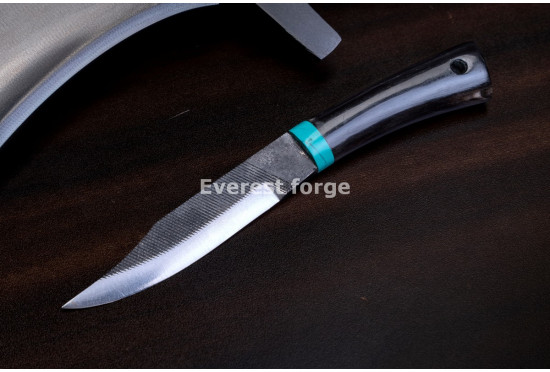
An honest note. This kukri ships with the karda, the small utility knife, but not the chakmak. The chakmak is the second companion in a full traditional kit — a blunt hardened steel burnisher, not a knife, used to roll a turned edge back straight without grinding metal away. It is genuinely useful and it is the tool most people do not know they want until they own one. We would rather tell you it is absent than let you count the pieces in the photograph and assume. If you want the complete traditional arrangement — dap scabbard, karda and chakmak together — ask for it and our smiths will build it. It is the first option below.
Have This Kukri Forged Your Way
Blade length, pattern, hilt construction and what rides in the sheath alongside it are all decided at the forge. Tell us the job and our kami will tell you what to order.
Start a Custom Forge Order →Why This Kukri Is Built the Way It Is
Specifications
Build Options
Is This the Right Kukri for You?
Buy This If You Want
- The strongest traditional hilt construction, for a kukri that will do real chopping
- A deep-bellied blade with mass where the cut lands rather than a slim display profile
- A karda in the sheath, so you have something for the fine work the kukri cannot do
- A finish that shows the steel instead of hiding the forging under a mirror buff
- A second kukri to sit alongside a lighter service-size one
Look Elsewhere If You Want
- The complete traditional kit out of the box — the chakmak and dap are a request, not the default
- The lightest kukri you can carry; at 780 grams this is a working weight, not a walking one
- The most traditional look, which is the turned hilt without visible rivets
- A stainless blade needing no care, since 5160 is carbon steel and will rust if left wet
- A clearing blade for green growth, where a machete does the job faster and with less effort
Ask Our Kami Which Kukri to Order
Swords we research. Khukuri we make, and have made since 2010. Tell the smiths what you need one for and they will tell you the pattern, the length and the hilt to ask for.
Talk to the Forge →How to Order
Who This Kukri Is For
- People who will actually chop with it — firewood, limbing, clearing, camp work
- Smallholders and land managers who need one blade that will take daily use for years
- Second-kukri buyers who already own something at service size and want the heavier tool
- Collectors of Nepali arms looking for a correctly built panawal hilt from a working Nepali forge
What Is Included
- One hand-forged kukri knife, sharpened and ready to use
- One karda companion utility knife
- Fitted black leather sheath with press-stud strap
- Certificate of hand-forging from the workshop
- Everest Forge manufacturer warranty against defects in forging and heat treatment
Explore the Collection
Shipping, Returns and Care
Stock pieces are dispatched within two to three business days. Custom builds take four to six weeks at the forge before they ship. Everything travels tracked with DHL or FedEx and typically arrives in seven to fourteen business days. Every piece carries the Everest Forge manufacturer warranty against defects in forging and heat treatment.
Large fixed blades are restricted in some countries and in some states and provinces within them. It is your responsibility to check that this kukri may lawfully be imported and possessed where you live before ordering, because a parcel seized by customs cannot be returned to us and cannot be refunded. Note that a kukri shipped with a karda is two blades in one parcel, which some jurisdictions count separately. Ask us before you buy if you are unsure.
5160 is a high-carbon steel and it will rust if left wet or stored damp. Wipe the blade dry after use, keep a light film of oil on it, and do not store the kukri in the leather for long periods. A semi-polished finish shows fingerprints and light surface marks more readily than a mirror polish does, which is normal and is part of what the finish is. The rosewood scales take an occasional coat of oil.
Frequently Asked Questions
What does panawal mean?
It is the Nepali name for the riveted-scale hilt construction: the tang is forged the full width and shape of the handle, and two scales of rosewood or horn are laid on either side and riveted straight through the steel. You can see the result on this kukri — the rivet heads on the face of the scales, and a thin line of tang steel showing along the top and bottom of the grip. The alternative traditional build is a turned hilt, where the tang narrows and runs into a solid one-piece handle, secured at the butt cap. Both are genuine and both have been made in Nepal for as long as anyone has records of. Panawal is the stronger arrangement because there is simply more steel in the handle and because the load is spread across three rivets instead of concentrated at a butt cap. It is what you want if the kukri is going to be used hard and often.
If panawal is stronger, why does anyone buy a turned hilt?
Three reasons, and they are all legitimate. It is lighter, because a full-width tang is a meaningful amount of extra steel in the hand and it also shifts balance rearward slightly, which some people dislike on a tool that is supposed to be forward-heavy. It is more comfortable for long use, because a one-piece turned grip has no rivet heads and no tang edges to press into the palm over an afternoon. And it is the more traditional look for a service or village kukri, which is what most people picture when they picture a kukri at all. Panawal is the right answer for hard chopping and for anyone who intends to abuse the tool; the turned hilt is the right answer for carrying, for moderate use and for the classic appearance. Neither is a downgrade. We build both and this page will not pretend the one it is selling wins on every count.
Where on the blade should I be hitting?
About two-thirds of the way along, in the deepest part of the belly, and this is the single most useful thing a new kukri owner can learn. Every blade has a point along its length where an impact produces the least vibration back into the hand — strike there and the energy goes into the cut, strike well away from it and a shock runs up the handle and stings your palm. On a kukri that point sits in the forward belly, which is exactly why the blade is deep and heavy there and why it is bent forward in the first place: the geometry puts the mass and the sweet spot in the same place and then angles them into the target. If a kukri jars your hand, the usual cause is not that the knife is badly made but that you are hitting with the wrong part of it. Aim the belly, not the tip and not the section near the cho.
Is 780 grams heavy for a kukri?
It is a working weight rather than a carrying weight, and the difference matters more than the number. Our 12 inch service kukri comes in around 650 grams; this one is 780 across 13.5 inches, so you are carrying roughly twenty percent more knife. In the cut you will notice that as less effort per stroke, because the blade does more of the work. On a belt across a long day you will notice it as weight. Chopping fatigue is not really about total mass anyway, it is about how far forward the balance sits and how cleanly you are striking — a heavier kukri hit properly on the belly is less tiring than a lighter one hit badly. If the tool is going in a pack or staying at camp, take this. If it is going on your hip for eight hours of walking, take the shorter one.
What is the small knife, and what happened to the second one?
The small knife is the karda, a utility blade of three or four inches that rides alongside the kukri and does everything the big blade cannot: cord, food, whittling, anything needing a point. The second companion in a full traditional kit is the chakmak, and it is not supplied here. A chakmak is not a knife at all — it is a blunt piece of hardened steel used like a butcher's steel to push a rolled edge back straight without removing metal, and traditionally its spine also struck a flint, which is where the name comes from. Between them the karda covers what the kukri is too big for and the chakmak keeps the kukri sharp between real sharpenings. Ask for the complete kit and you get the dap scabbard with both pockets and both tools.
What is the notch near the handle?
The cho, also called the kaudi. It is filed by hand into the edge just ahead of the bolster and it is the feature that identifies a genuine Nepali kukri rather than a copied silhouette. It stops a crack running back out of the edge into the tang, and it keeps sap and fluid from tracking down onto the grip. In Nepal it carries meaning as well, read variously as a trident, a cow's hoof or a mark of the divine, and the reading depends on who you ask. If you are looking at any kukri anywhere and there is no cho at all, or the cho is a perfectly identical stamping across every example in the listing, it did not come from a Nepali forge.
What steel is it, and how is the edge hardened?
5160 high-carbon spring steel, which is the same alloy family as the vehicle leaf springs Nepali kamis have traditionally forged kukris from. The edge is hardened differentially rather than the whole blade being through-hardened, so the cutting edge is hard while the spine and belly stay soft and springy. That is essential on a blade designed to be swung into wood: a through-hardened kukri would crack, whereas one hardened only at the edge holds the cut and absorbs the shock everywhere else. It is not stainless, deliberately, because the stainless grades that genuinely resist rust give up the toughness this tool depends on.
How is this different from your Kukri Knife, Ringed Hilt?
They are a deliberate pair and the difference is construction and size. The ringed-hilt kukri is 12 inches, built at Nepali service proportions, with a turned one-piece hilt and no visible rivets, and it weighs around 650 grams. This one is 13.5 inches, panawal, with riveted rosewood scales, a deeper belly and 780 grams. Choose the ringed hilt if you want the classic look, the lighter carry and the more traditional service size. Choose this one if the kukri will be doing real work, if you want the strongest hilt available, or if you want the karda in the sheath. Plenty of people who use a kukri seriously end up owning one of each, and they cover different jobs rather than duplicating.
Why is it not mirror polished?
Because it is finished as a working blade rather than a display one. A mirror polish takes a great deal of hand time at the buffing wheel and it looks superb in a photograph, but it hides more than it shows: forging marks, the transition line from differential hardening, the actual surface of the steel. A semi-polished finish leaves those visible. It also behaves differently in use, showing fingerprints, patina and light scratching sooner, which some buyers dislike and others specifically want because the blade starts recording its own history. If you would prefer the mirror finish for display, it is a selectable option above and costs a little more in labour, not materials.
How sharp does it arrive?
Sharp and ready to work. Every kukri is finished on a stone by hand before it leaves the forge, with a working edge rather than a razor polish, because a kukri meets wood, grit and bone and a fine edge does not survive that contact. The karda comes sharp too. If you would prefer either or both shipped blunt — for display, for a gift, or because of the rules where you live — say so in the order comments and we will send them unsharpened at no extra cost.
Can I baton with it?
Yes, and panawal construction is exactly why you can. Batoning means striking the spine of the blade with a piece of wood to drive it through a log, and it is the most demanding thing most people ask of a knife because the force goes into the blade sideways and into the hilt as repeated shock. A hidden tang secured at a butt cap will do it but does not enjoy it. A full-width riveted tang is built for it. Strike the spine over the belly rather than out near the tip, keep the blade square in the cut, and do not use a rock as your baton.
Who makes these?
Our own kami, in our own workshop in Tokha-3 on the northern edge of Kathmandu. Kami is the Nepali word for smith and most of ours came from families that have forged blades for generations. Everest Forge has operated since 2010, and we forge, grind, heat treat, fit the hilts and do our own leatherwork in the same building. We say this more firmly on a kukri page than anywhere else on the site, because there is a great deal sold internationally as a Nepali kukri that has never been near Nepal, and because the khukuri is not a tradition we researched. It is the one we come from.
| Specification | |
| Blade: | 13.5 inches. Hand forged from 5160 carbon steel |
| Total Length: | 19.5 inches |
| Handle: | 6 inches. Panawal construction, full width tang with rosewood scales riveted through |
| Weight: | approx 780g kukri, 970g with sheath |
| Note: | Includes: karda companion knife Note: Some variation in weight, dimensions and finish may occur as each piece is hand forged. Keep the blade lightly oiled when not in use |