Menu
Your Cart

Hand-Forged Kukri Knife, Sirupate Pattern

Hand-Forged Kukri Knife, Sirupate Pattern
$164.99
Ex Tax: $164.99
  • Model: Traditional Kukris / Khukuris
  • Product Code: Classicsirupate015
  • Location: Kathmandu, Nepal

Available Options

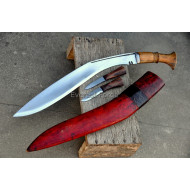
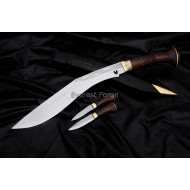
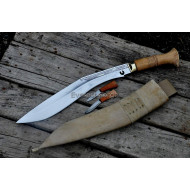
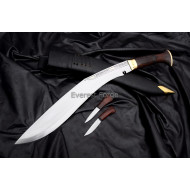
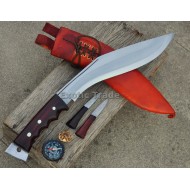
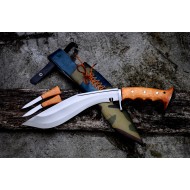
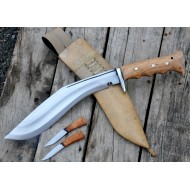
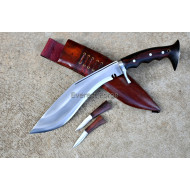
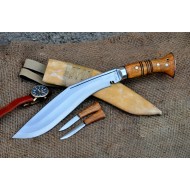
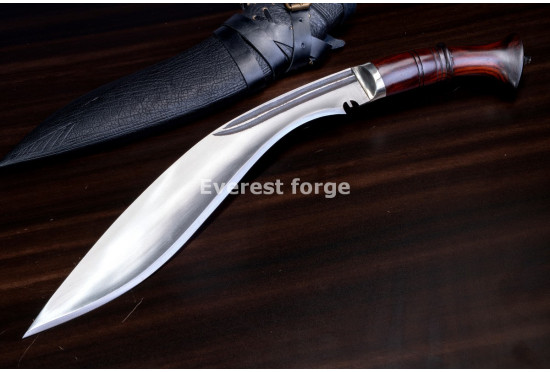
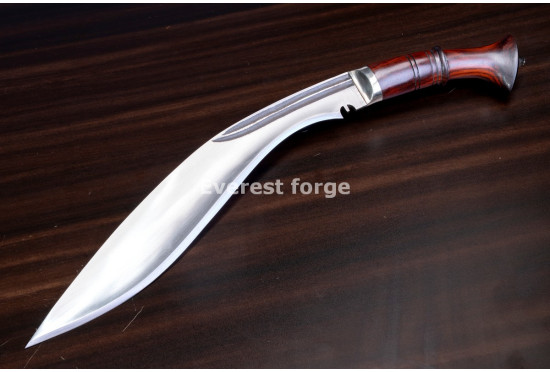
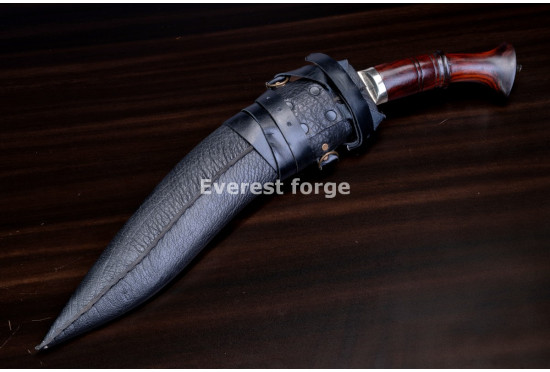
A Hand-Forged Sirupate Khukuri With a Chirra Blade and Flared Rosewood Hilt

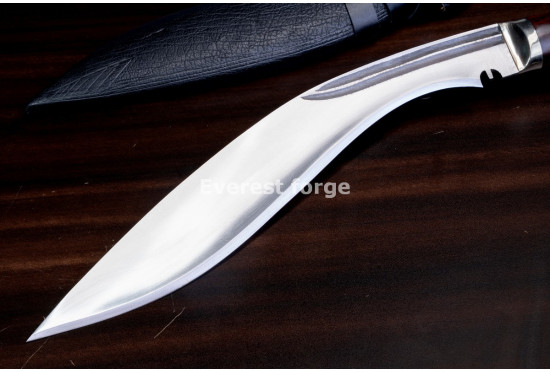
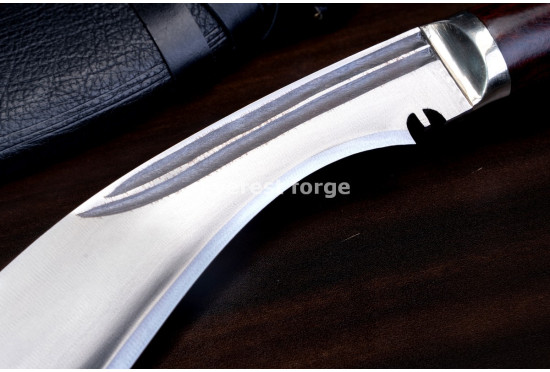
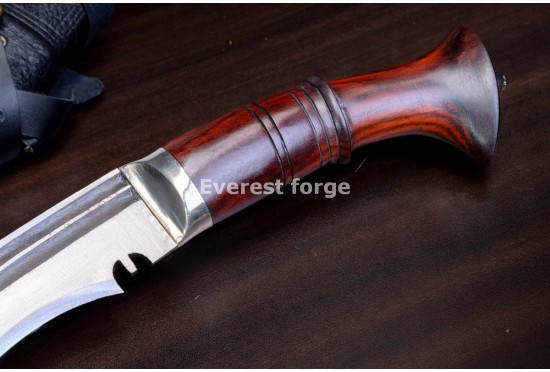
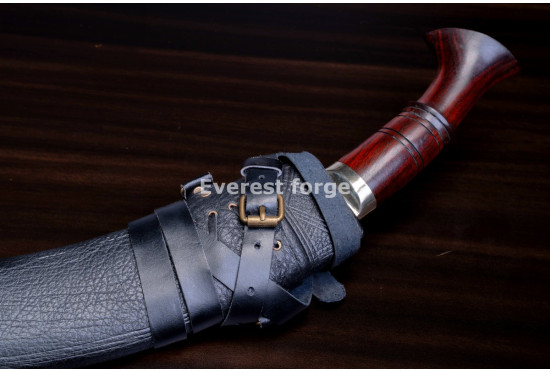
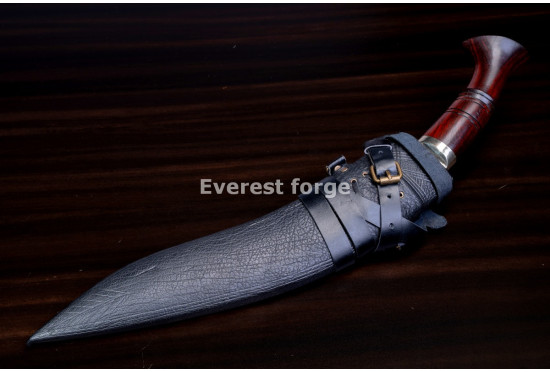
This is a 15 inch hand-forged sirupate, the slender pattern of Nepali kukri named after the leaf of the siru grass. The blade runs long and narrow through its length with a chirra ground inside the spine and the cho notch filed at the base of the edge, and it is mounted on a turned rosewood hilt waisted through the middle with a ring groove and a pronounced flared butt, fitted to a steel bolster. Overall length is 21 inches and the kukri weighs approximately 730 grams, which is light for its length and is the point of the pattern. Forged from 5160 high-carbon steel by our own kami in Tokha-3, Kathmandu, and supplied in a black leather scabbard with a laced frog.

An honest note. Sirupate is a term about width, not length. A sirupate blade is slim and even through its length rather than swelling into a deep belly, which is what gives the pattern its speed, its reach and its usable point, and it is why the name refers to a long narrow leaf. A great deal of what is sold internationally as a sirupate is simply a long kukri of ordinary width, because the word sells and few buyers know what it means. Ours is forged to the slim profile. If you are shopping across sellers, ask any of them for the blade width at its widest point rather than the length, because that single number is what separates a sirupate from a standard pattern and it is the one figure that is almost never listed.

Made to your specification

Have This Kukri Forged Your Way

Blade length, width, pattern, hilt construction and scabbard are all decided at the forge. Tell us the job and our kami will tell you what to order.

Start a Custom Forge Order →

Why This Kukri Is Built the Way It Is

Slim, So It MovesA sirupate carries less metal across the blade than a working chopper of the same length, so it comes round faster and reaches further for the same effort. Length without the weight penalty is the whole idea.
A Point You Can Actually UseBroad kukris have a point in the sense that the edges meet somewhere, but the geometry behind it is too thick to drive. A slim blade gives you a tip that will do work.
The Chirra Sharpens the BalanceThe fuller runs inside the spine through the section nearest the hand, taking weight out of the part of the blade that contributes least and leaving the bias where the cut happens.

Specifications

Blade Length15 inches
Handle Length6.5 inches
Overall Length21 inches
Blade Steel5160 high-carbon spring steel, oil-quenched and tempered
PatternSirupate — slim and even through the blade rather than deep-bellied
Blade ProfileForward-curved with a long drawn point, edge on the inner curve
Blade DetailChirra ground inside the spine, cho notch at the base of the edge
HiltTurned rosewood, waisted with a ring groove and a pronounced flared butt
FittingsSteel bolster
Standard BuildPolished blade, rosewood hilt — size, finish and hilt material are selectable above
ScabbardBlack leather with tooled detail and a laced belt frog
CompanionsNone as standard; karda and chakmak available with a dap scabbard
WeightApproximately 730 grams for the kukri, 1040 grams with the scabbard
OriginHand-forged in Tokha-3, Kathmandu, Nepal

Build Options

Blade LengthFifteen inches as shown, or up to eighteen if you want the full reach a sirupate is capable of, or down to twelve if you want the pattern in a size you can wear all day.
Blade WidthSlimmer still for a faster, more slashing blade, or a little broader if you want the pattern to take on more wood. This is the measurement that defines a sirupate, so it is worth specifying.
Karda and ChakmakThe two traditional companions in a dap scabbard with pockets behind the blade. This kukri ships without them; adding them makes it a complete set.
Hilt ConstructionThe turned hilt shown, or panawal, with scales riveted through a full-width tang, which is the stronger build for hard use.
Hilt MaterialRosewood as standard. Water buffalo horn is the other traditional choice and is what a great many sirupate carry.
Chirra CountThe single chirra shown, or two, three or five on more elaborate patterns. Beyond a certain number they become decorative rather than structural.

Is This the Right Kukri for You?

Buy This If You Want

  • A genuinely slim sirupate rather than a long kukri sold under the name
  • Reach and speed rather than raw chopping mass
  • A kukri with a point you can actually drive
  • The most elegant of the traditional Nepali patterns, and the one collectors ask for
  • A long blade that is still only 730 grams

Look Elsewhere If You Want

  • A firewood chopper — a slim blade is the wrong tool and a budhume or bhojpure pattern is the right one
  • The complete traditional kit, since the karda and chakmak are not included here
  • The strongest hilt for hard daily use, which is panawal with riveted scales
  • A blade you can baton without thinking about it; slim stock is less forgiving
  • A stainless blade needing no care, since 5160 is carbon steel and will rust if left wet
Our own craft, not someone else's

Ask Our Kami Which Pattern to Order

Sirupate, budhume, bhojpure: the patterns are not styling names, they are different tools. Describe the work and the smiths will tell you which one and what width to ask for.

Talk to the Forge →

How to Order

Choose your blade length, finish and hilt material from the options above the description.
Note your preferred blade width, chirra count and whether you want the companions in the order comments.
We confirm the build by email and start forging. Custom work takes four to six weeks.
Your kukri ships tracked by DHL or FedEx and arrives in seven to fourteen business days.

Who This Kukri Is For

  • Collectors of Nepali arms who know the patterns and want the slim one built correctly
  • Second-kukri buyers who already own a chopper and want something faster in the hand
  • Walkers and trekkers who want length without carrying a kilogram on the hip
  • Anyone drawn to the shape — the sirupate is the most graceful of the patterns and that is a legitimate reason

What Is Included

  • One hand-forged sirupate kukri, sharpened and ready to use
  • Fitted black leather scabbard with laced belt frog
  • Certificate of hand-forging from the workshop
  • Everest Forge manufacturer warranty against defects in forging and heat treatment

Explore the Collection

Shipping, Returns and Care

Stock pieces are dispatched within two to three business days. Custom builds take four to six weeks at the forge before they ship. Everything travels tracked with DHL or FedEx and typically arrives in seven to fourteen business days. Every piece carries the Everest Forge manufacturer warranty against defects in forging and heat treatment.

Large fixed blades are restricted in some countries and in some states and provinces within them. It is your responsibility to check that this kukri may lawfully be imported and possessed where you live before ordering, because a parcel seized by customs cannot be returned to us and cannot be refunded. Ask us before you buy if you are unsure and we will tell you what we know about your destination.

5160 is a high-carbon steel and it will rust if left wet or stored damp. Wipe the blade dry after use and keep a light film of oil on it. Do not store the kukri in the scabbard for long periods, because leather holds moisture against steel. The rosewood hilt takes an occasional coat of oil. A slim blade rewards keeping the edge maintained rather than letting it go dull and then grinding it back, because there is less metal to spare over a long life.

Frequently Asked Questions

What makes a kukri a sirupate?

Width, and only width. The name comes from the siru, a tall narrow-leafed grass, and it describes a blade that stays slim and even through its length instead of swelling into the deep belly a standard kukri has. That slimness is the whole pattern: less metal across the blade means it comes round faster, reaches further for the same effort and carries a point thin enough to actually drive, while a broad-bellied kukri puts its mass forward for chopping and has a tip that is really just where the edges meet. Length has nothing to do with it. A twelve inch kukri can be a sirupate and an eighteen inch one can fail to be. This matters commercially because a great deal of what is sold as sirupate internationally is simply a long kukri of ordinary width, and the word is used because it sells. If you are comparing sellers, ask for the blade width at its widest point. It is the number that decides the answer and it is almost never listed.

What does blade width actually change?

More than most buyers expect. A narrow blade has less material to push through the cut, so it penetrates deeper into green wood and flesh for the same swing and it slices rather than splits. A broad blade wedges: it stops in the cut sooner but it carries far more mass behind the edge, so in seasoned wood it does more work per stroke and is much harder to bind. Width also decides the point. Anything under roughly two inches across gives you a tip with thin enough geometry to thrust; much beyond that and the point becomes ornamental. And it decides how the blade recovers — a slim blade is quicker to bring back for a second stroke, which matters for clearing and matters a great deal if the tool is ever used as a weapon, which is what the sirupate pattern was historically prized for. The trade against all that is durability: less steel means less margin when you hit a nail, a stone or a frozen knot.

Where do the kukri pattern names come from?

Mostly from places and plants, which tells you something about how the patterns developed. Sirupate is named for the siru leaf it resembles. Bhojpure takes its name from Bhojpur, a district in eastern Nepal, and describes the thick heavy-bellied working kukri made there. Budhume describes a broad deep-bellied form. Dhankuta, another eastern hill town, is associated with fine slender work and its name attaches to some of the best sirupate made. These are not marketing categories invented for export; they are what different valleys made, shaped by what the people there were cutting and what steel they had. That is also why the definitions blur at the edges and why two sellers will describe the same blade differently. The reliable approach is to ignore the label and ask for the measurements: blade length, blade width at the widest point, spine thickness and weight. Four numbers tell you what you are buying regardless of what it is called.

Is a sirupate any good for chopping wood?

It will chop, but it is not the pattern to buy if chopping is the job. A slim blade at 730 grams simply does not carry the mass that makes a heavy kukri drive through seasoned hardwood, and you will work harder for less. What it does very well is everything involving reach and speed: clearing, limbing green growth, cutting cane and bamboo, and general camp work where you want a long blade you are not fighting to control. If firewood and standing timber are the point, order a bhojpure or budhume pattern, or take our panawal kukri, which is shorter, heavier through the belly and built for exactly that. Plenty of people who use kukris seriously own one of each, and the two do genuinely different jobs rather than overlapping.

What is the groove along the spine?

A chirra, the Nepali name for the fuller ground into a kukri blade. This one carries a single chirra running inside the spine through the section nearest the hand. It removes metal from where it contributes least, and because a kukri is deliberately forward-biased, taking weight out of the rear of the blade sharpens that bias rather than balancing it out. On a sirupate that effect matters more than on a broad kukri, because the whole pattern is built around keeping weight down while keeping length. Kukris are counted by how many chirras they carry — one, two, three or five — and past two or three the extra grooves are decorative work rather than anything structural.

What is the notch near the handle?

The cho, also called the kaudi, filed by hand into the edge just ahead of the bolster. It arrests cracks running back out of the edge into the tang and keeps sap and fluid off the grip, and in Nepal it carries symbolic readings as well, variously a trident, a cow's hoof or a mark of the divine depending on who you ask. Every kukri we make has one, cut individually. A kukri with no cho at all, or with a perfectly identical stamped cho across every example in a listing, did not come from a Nepali forge.

What steel is it, and how is the edge hardened?

5160 high-carbon spring steel, the same alloy family as the vehicle leaf springs Nepali kamis have forged kukris from for generations. The edge is hardened differentially rather than the blade being through-hardened, so the cutting edge is hard while the spine and belly stay soft and springy. On a slim blade that matters more than usual: a through-hardened sirupate would be brittle in exactly the section that has least metal to spare. It is not stainless, deliberately, because the stainless grades that genuinely resist rust give up the toughness this pattern depends on.

How is this different from your other kukris?

It is the only slim pattern we list, and the longest blade in the range at fifteen inches. Our Kukri Set is 14.5 inches with a deep belly, a wide-bevel grind and both companions. Our Panawal Hilt kukri is 13.5 inches with riveted scales and is the one built for hard chopping. Our Ringed Hilt and Carved Grip kukris are both 12 inch service-size blades, the first in plain dress and the second in presentation dress. If you want reach and speed, take this one. If you want a chopper, take the panawal. If you want one kukri that arrives complete, take the set. If you want something to wear all day, take a twelve inch.

Can I add the karda and chakmak?

Yes. The karda is a small utility knife of three or four inches for the fine work a fifteen inch blade cannot do, and the chakmak is a blunt hardened burnisher used to push a rolled edge back true without grinding metal away. Both ride in pockets behind the blade in a dap scabbard, so adding them means a different scabbard rather than a simple addition. Say so in the order comments, or order our complete set instead, which arrives with both. On a sirupate the chakmak earns its place more than usual, because a slim blade has less steel to give away over years of sharpening and truing an edge beats grinding it back.

How sharp does it arrive?

Sharp and ready to work, finished on a stone by hand, with a working edge rather than a razor polish because a kukri meets wood, grit and bone and a fine edge does not survive that. If you would prefer it shipped blunt — for display, for a gift, or because of the rules where you live — say so in the order comments and we will send it unsharpened at no extra cost.

Is it too long to carry?

Less than you would think, because the weight is where it matters. Twenty-one inches overall sounds like a lot on a belt, and it is a visible knife, but at 730 grams it is lighter than several of our shorter kukris and lighter than most people expect to pick up. Where fifteen inches does become a nuisance is in dense growth and when you sit down, and a sheath this long wants a proper frog rather than a simple loop, which is why this one has one. If you want the pattern in something less conspicuous, twelve or thirteen inches keeps the slim profile and most of the character while being considerably easier to wear.

Who makes these?

Our own kami, in our own workshop in Tokha-3 on the northern edge of Kathmandu. Kami is the Nepali word for smith, and most of ours came from families that have forged blades for generations. Everest Forge has operated since 2010, and we forge, grind, heat treat, fit the hilts and make the scabbards in the same building. The sirupate is a pattern that rewards a smith who knows it, because getting a blade this slim to hold its geometry through the quench is harder than making a thick one, and it is the pattern where the difference between a forge and an assembler shows most plainly.

Specification
Blade: 15 inches. Hand forged from 5160 carbon steel
Total Length: 21 inches
Handle: 6.5 inches. Turned rosewood, waisted with ring groove and flared butt, steel bolster
Weight: approx 730g kukri, 1040g with scabbard
Note: Some variation in weight, dimensions and finish may occur as each piece is hand forged. Keep the blade lightly oiled when not in use

Write a review

Note: HTML is not translated!
Bad Good
Captcha