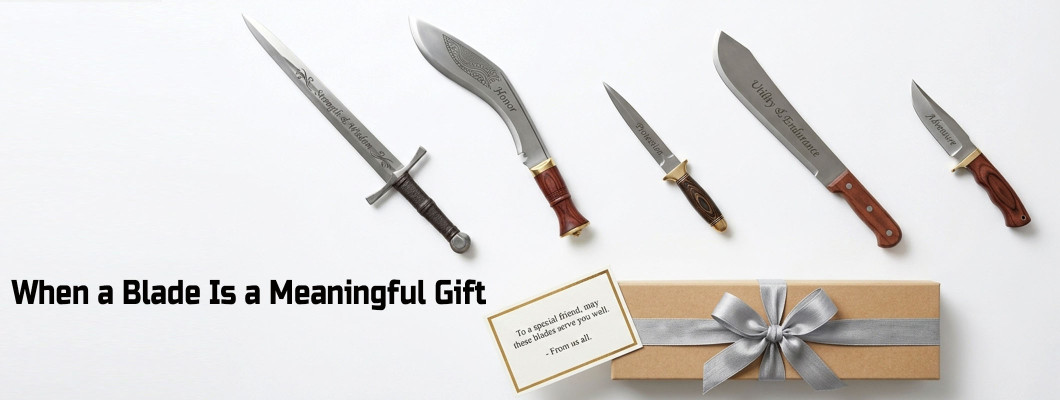
When a Sword, Dagger, Kukri, Machete or Knife Is a Meaningful Gift
A blade is a meaningful gift when the person receiving it can keep it, use it or display it, and when it marks something worth marking. It is a poor gift when it is only impressive. That single distinction settles most of the decision, and it is why a modest kukri given for the right reason outlasts an expensive sword given for the wrong one.
This guide is about matching the blade to the person and the occasion — which type suits which recipient, what to engrave, how far ahead to order, and the situations where a blade is the wrong present no matter how good it is. We forge every one of these to order, so we see which gifts land and which ones come back as an awkward email six weeks later.
The Coin: The One Custom Worth Knowing Before You Give a Blade
Across much of Europe, North America and parts of Asia there is a long-standing belief that giving someone a knife will cut the friendship. The remedy is fixed and simple: the recipient hands back a small coin, so the blade counts as bought rather than given.
Whether or not either of you is superstitious, tape a coin to the box. It costs nothing, it gives the moment a small ritual, and for a recipient who does hold to it you have removed the only objection they were going to raise out loud. It is also the neatest way to hand over something that can otherwise feel heavy to receive.
Which Blade Suits Which Occasion
| Occasion | What tends to fit | Why it works |
|---|---|---|
| Wedding or anniversary | Engraved dagger, matched pair, sgian-dubh | Marks a fixed date and stays on display |
| Retirement or end of service | Presentation sword, ceremonial kothimora kukri/khukuri | Room for a name, rank and dates on the blade |
| Graduation or coming of age | Bowie, compact EDC knife, working kukri/khukuri | First serious tool that is genuinely theirs |
| Milestone birthday for a collector | Historical sword from a period they already study | Fits a collection instead of competing with it |
| Groomsmen or a team | Matched small daggers, forged to one specification | They actually match, which single orders do not |
| Someone who works outdoors | Machete, heavy working kukri/khukuri, axe | Used weekly rather than admired annually |
| Parent to child, or a handover | Any type, engraved with both names | Reads as succession rather than as a purchase |
| A cook | Hand-forged chef or kitchen knife | Improves something they do every single day |
The pattern in that table is worth naming. The best blade gifts are either used constantly or displayed permanently. The ones that disappoint sit in between — too good to knock about, not meaningful enough to hang up.
Swords: For Display, Ceremony and People Who Already Care
A sword is the right gift when the recipient has a wall, an interest and somewhere to put it. It is the wrong gift when it is chosen to impress the room rather than the person.
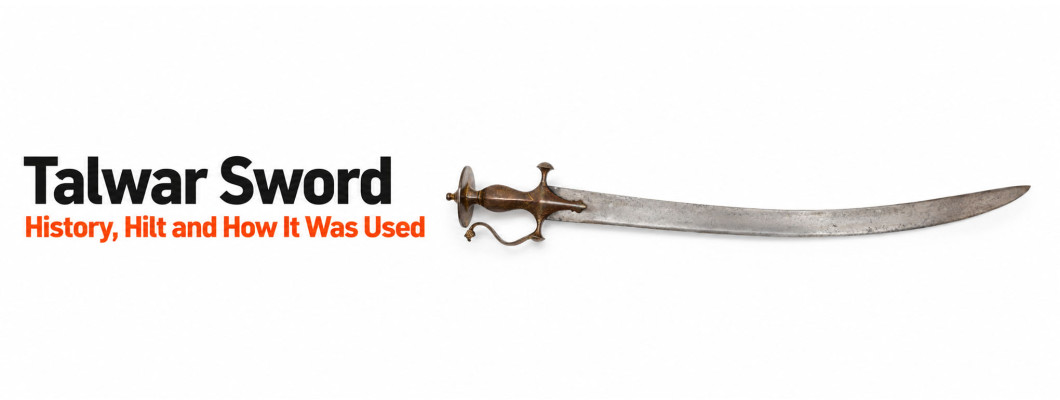
Give a sword when: they collect, they study a period, they practise a martial art, they are being honoured at a retirement or presentation, or they have a fantasy or historical attachment strong enough that you already know which culture to buy from. Swords by culture is the fastest way to narrow that down.
Two things decide whether it succeeds. The first is wall space — measure before you order, because a 40-inch sword needs somewhere obvious to live and a stand should be part of the gift, not an afterthought. The second is edge. For a household with children or a purely decorative recipient, ask for a blunt display edge; it costs nothing extra and nobody can tell by looking.
For a presentation piece — retirement, service, a club or association — the engraving matters more than the model. Name, dates and a short line. Our guide to engraving a family crest or coat of arms covers what can and cannot honestly be put on a blade.
Kukri and Khukuri: The Most Meaningful Gift We Make
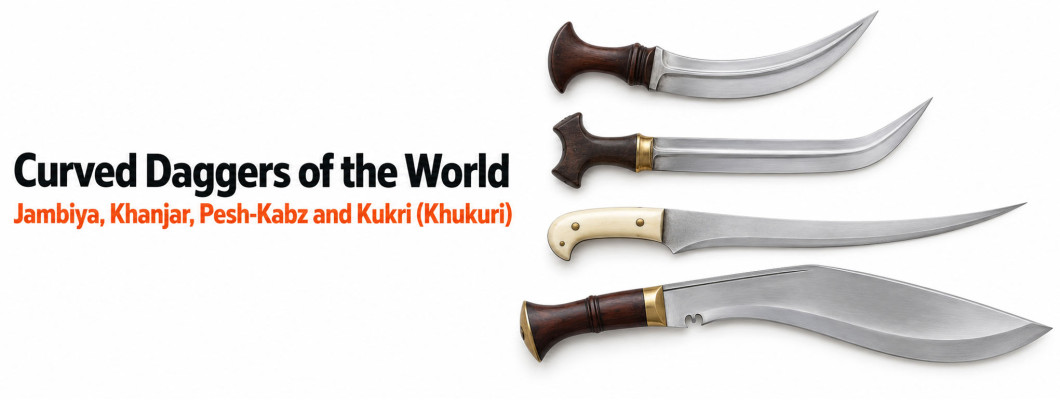
The kukri is Nepal's national blade and, in Nepali households, a genuine heirloom passed down rather than bought new. That is not marketing history; it is the ordinary status of the object where we forge it. It is why the khukuri carries more weight as a gift than almost anything else in our range.
Give a kukri or khukuri when the recipient has a connection to Nepal or to Gurkha history, when they work outdoors, when they are being honoured for service, or when you want a gift that is both symbolic and genuinely useful. Very few objects are both.
Choose by what they will do with it. A working khukuri for someone who clears land or camps. A historical replica for a collector or a military history reader. A kothimora ceremonial kukri, with its decorated scabbard, for a formal presentation. A small EDC kukri for someone who will carry it rather than hang it.
If you are buying for someone who knows kukris well, read the complete kukri and khukuri guide first — the difference between a chirra, a sirupate and a budhume is the difference between a gift that lands and one that is politely thanked for.
Daggers: The Best Gift-Sized Blade
A dagger is the most giftable size we make, and the reason is unglamorous: it fits on a shelf, in a drawer or on a small wall mount, so the recipient never has to solve a storage problem to accept it.
Give a dagger when you want something engraved and personal without committing the recipient to a display wall — groomsmen, a milestone birthday, a memorial piece, a colleague leaving, a set for a group. It is also the right answer when you are giving to someone whose home you have never seen.
Sets must be ordered together. If you want eight matching pieces, they have to be forged to one specification in one run. Matching a ninth to a set made last year is far harder than forging all nine at once, and the difference shows in photographs.
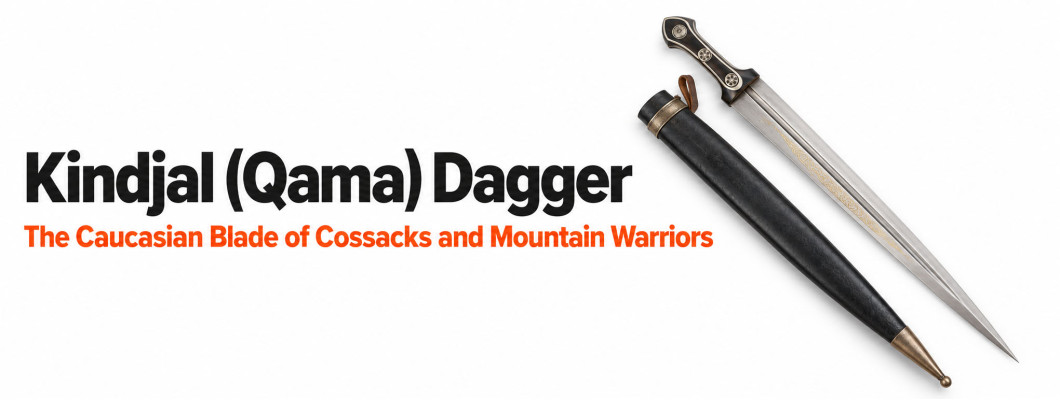
Browse traditional and historical daggers for a recipient with period interests, or tactical and fantasy daggers for one whose taste runs modern.
Machetes: A Gift for Someone Who Will Wear It Out
A machete is the least ceremonial and most honest gift on this page. Nobody displays one. It goes in the shed, gets used, gets dull, gets sharpened, and is still there in fifteen years.
Give a machete when the recipient owns land, gardens seriously, camps, farms, clears trails or lives somewhere the vegetation fights back. Give it engraved with their name and it becomes the one tool in the shed that never gets lent out and never goes missing.
Match the length to the work, not the drama. Compact machetes up to 15 inches for pack carry and close work, 16 to 20 inches for general clearing, and oversized only for someone who has told you they want the reach. An overlong machete for a first-time user is tiring rather than impressive.
Knives: The Gift That Gets Used Every Day
Knives are the safest choice on this list and the easiest to get slightly wrong, because the category is wide and the recipient's habits decide everything.
A hunting or bushcraft knife for someone who is already outdoors — engraved with a date, a first hunt, or a club crest. A bowie for a milestone gift with presence, since it is large enough to feel like an occasion and still usable. A compact EDC knife for someone who carries a blade daily and will judge it on the grind, not the story. A chef or kitchen knife for someone who cooks — the only gift here that improves an ordinary Tuesday.
All of ours are 5160 spring steel and full tang, which means they take an edge and keep it, and also that they are carbon steel and will spot if left wet. If the recipient is not the type to wipe a blade down, include a small bottle of oil with the gift and say so out loud.
Spears and axes deserve a mention: an axe is an excellent gift for a camper or a Viking-history reader, and a forged spear is a rare and striking display piece for a collector who has run out of swords to want.
When a Blade Is the Wrong Gift
This is the section most gift guides leave out, and it is the one that saves people money.
When it cannot legally be delivered to them. Age limits, restricted types and import rules vary widely, and the address matters more than your intentions. Check before ordering rather than after.
When they share a home with someone who will object. A blade that has to be hidden is not a gift; it is a problem you have handed over. If you do not know the household, choose a small piece or ask.
When you are sending it to their workplace. Many employers have policies, and few gifts are more awkward to open at a desk.
When it is a surprise and they cannot receive it. International parcels often need a signature and may attract duties at the door. A surprise that arrives as a customs bill is not the moment you planned.
When you are buying by price rather than by fit. The most expensive blade in a category is not the most meaningful one. A $140 working khukuri for someone who clears brush beats a $400 sword for someone with no wall.
When you are not certain what they want. A blade is a specific object with a specific owner. If you are guessing, a gift voucher lets them choose the type, size, handle and engraving themselves, and the choosing is half the pleasure.
Engraving: What Turns a Purchase Into a Gift
Engraving is free on every blade we make, and it is the single thing that separates a gift from a product. It is also the step where mistakes are permanent.
Keep the text short. A name and a date reads well for fifty years. A paragraph reads like a plaque. Initials, a name, a date, a short motto, a regimental line, a family crest — those are the forms that survive.
Engraving happens before the blade is finished, not after, because we confirm the artwork with you first. That means engraved gifts need to be ordered earlier than plain ones, not later.
Read the proof twice. Names get spelled two ways in the same family and dates get written in two formats depending on which country you are in. We send the engraving for approval before any work begins, and after cutting there is no undoing it.
Engraved blades cannot be returned unless faulty, because they are specific to one person and cannot be resold. That is the trade for making it theirs. See how personalisation works for what can go where on each blade type.
Ordering a Gift From a Forge That Holds No Stock
We hold no stock. Every blade is forged after the order is placed, which is what makes it yours and also what makes timing the thing people get wrong.
Work backwards from the date. A gift needs forging, then engraving approval, then international shipping from Nepal. Tell us the occasion date rather than asking how long it takes, and we will tell you honestly whether it is achievable.
Sets take longer than singles. Eight matching daggers is not eight times one dagger, but it is not the same as one either. Order group gifts first.
Ask for a blunt edge if the household needs one. No extra cost, invisible in photographs, and it removes the only real objection a nervous recipient has.
Add a stand. A display blade without somewhere to sit ends up in a wardrobe, which is the quietest way for a good gift to fail. Wooden display stands are worth treating as part of the gift.
Check duties for the destination. Our duties and import information explains what is collected where, so the recipient is not handed a surprise.
Something They Will Still Own in Thirty Years
Swords, kukris and khukuris, daggers, machetes and knives in 5160 spring steel, full tang, hand-forged to order in Kathmandu with free engraving on every piece. Blunt display edges at no extra cost, matched sets forged together, and an honest answer about whether your date is achievable. If you are not sure what they want, a gift voucher lets them choose.
Frequently Asked Questions
Is a blade a good gift?
It is, when the recipient can keep it, use it or display it, and when it marks something worth marking. A blade given for a reason — a retirement, a wedding, a first season outdoors, a handover between generations — is one of the few gifts still owned decades later. A blade given only to impress usually ends up in a wardrobe. Match it to the person and the occasion rather than to a price.
Why do you give a coin when someone gifts you a knife?
There is a long-standing belief across Europe, North America and parts of Asia that giving a knife as a gift will cut the friendship, and that handing back a small coin cancels it because the blade then counts as bought rather than given. Whether or not either of you believes it, taping a coin to the box costs nothing, gives the moment a small ritual, and settles the matter for a recipient who does.
Which blade is the best gift for someone who works outdoors?
A machete or a heavy working kukri/khukuri, engraved with their name. Both get used weekly rather than admired annually, and an engraved tool is the one in the shed that never gets lent out or lost. Match the length to the work: up to 15 inches for pack carry and close work, 16 to 20 for general clearing, and longer only if they have said they want the reach.
What is the best blade gift for a retirement or end of service?
A presentation sword or a ceremonial kothimora kukri, engraved with the name, rank and dates. The engraving matters more than the model — it is what makes the piece unrepeatable and what the recipient reads every time they pass it. Order early, because engraving is confirmed with you before the blade is finished rather than added afterwards.
Can a blade be engraved with a name and date?
Yes, and engraving is free on every blade we make. Keep the text short — a name and a date, initials, a motto, a regimental line or a family crest. We send the engraving for approval before any work begins, so read the proof twice and check spelling and date format carefully, because after cutting there is no undoing it.
When is a blade a bad gift?
When it cannot legally be delivered to the recipient's address, when they share a home with someone who will object, when it is going to their workplace, when a surprise parcel needs a signature or attracts duties they were not expecting, or when you are guessing at what they want. In the last case a gift voucher is the better answer, since the choosing is half the pleasure.
Should a gift blade be sharp or blunt?
Ask for a blunt display edge if the blade is going into a household with children or to someone who wants it purely for the wall. It costs nothing extra and nobody can tell by looking. Keep it sharp for anyone who will actually use it — a working knife, machete or kukri is a tool, and a dull one is a disappointment rather than a safety measure.
How far ahead should I order a blade as a gift?
Earlier than you expect, and work backwards from the occasion date. We hold no stock — every blade is forged after the order is placed, then engraved, then shipped internationally from Nepal. Engraving adds a step before forging because we confirm the artwork first, and matched sets take longer than single pieces. Tell us the date rather than asking how long it takes.
Do hand-forged blades need looking after?
Yes. Our blades are 5160 spring steel, which takes an edge and keeps it but is carbon steel and will spot if it is left wet or stored in a damp sheath. A wipe and a light oil after use is the whole routine. If the recipient is not the type to do that, include a small bottle of oil with the gift and say so when you hand it over.
What if I do not know which blade they would want?
Use a gift voucher. A blade is a specific object with a specific owner, and type, size, handle material and engraving are all personal choices. A voucher lets the recipient make them, which usually produces a better outcome than a confident guess — and it removes any question about delivery restrictions at their address.