
Types of Swords: The Blades of Medieval Europe
Medieval Europe produced a great many swords, and the names get used loosely enough that the same blade is called three different things depending on who is describing it. This guide sets out the major types in the order they appeared, from the Roman spatha that fathered all of them to the Landsknecht sidearms of the early modern period.
One thing to know before the list. Sword names are mostly modern conveniences. Medieval people said "sword" and described it if they needed to; the tidy vocabulary of arming sword, longsword and greatsword was largely assembled by later collectors and historians. Where a term is genuinely period, we say so. Where it is a modern label, we say that too.
How Medieval Swords Are Classified
Names like "longsword" describe a rough shape. For anything more precise, collectors and historians use the Oakeshott typology, the system Ewart Oakeshott set out in The Sword in the Age of Chivalry. It classifies medieval European blades by profile, cross-section, fuller and taper rather than by name or date, running from Type X through Type XXII.
This matters practically. An Oakeshott type is not a kind of sword — it is a description that applies across the named types above. A Type XII is an arming sword. A Type XIIIa is a greatsword. Asking "which Oakeshott type" is how a serious buyer asks a precise question, and it is why several of our blades are listed by type number.
Our guide to the Oakeshott typology explained covers each type and what it was built to do.
Spatha (Roman Cavalry)

The Spatha was the Roman cavalry sword and the ancestor of nearly every later European blade. Long, straight and double-edged, it suited a rider who needed reach rather than the tight thrusting of the infantry gladius. After Rome fell its design spread across Europe and became the direct parent of the Viking and Carolingian swords.
If you want one object that explains why European swords look the way they do, this is it. The straight double-edged cruciform blade begins here.
Gladius (Ancient Rome)
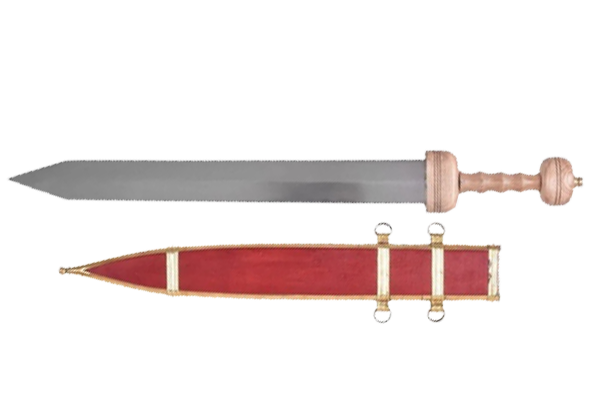
The Gladius is the short sword of the Roman legionary, roughly 60 cm, double-edged, and built to thrust from behind a shield in close formation. It is the weapon of a system rather than an individual, and it worked because the formation worked.
It established principles that persisted for a thousand years: a strong midrib, an agile point and balance close to the hand. Our short swords guide explains why formation warfare favoured blades this size.
Carolingian Sword
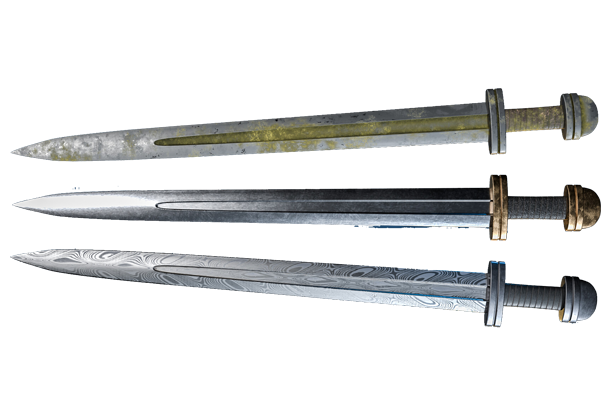
The Carolingian sword of the 8th to 10th centuries bridges late antiquity and the true medieval form. Broad and double-edged with a long fuller and a short crossguard, it cut powerfully while keeping a usable point. The finest examples carry inlaid inscriptions, the famous +ULFBERHT+ among them.
This pattern set the template for early medieval Europe, spreading by trade and gift-exchange and shaping Viking and Romanesque blades across the continent.
Viking Sword
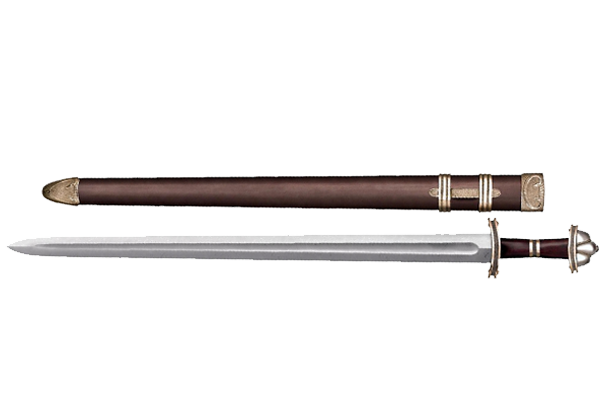
The Viking sword evolved directly from the spatha and served from the 8th to the 11th centuries. Broad, double-edged and optimised for cutting, with a short guard, a long fuller and the lobed pommel that identifies it instantly.
The short guard is the detail worth noticing: a Viking hand sat behind a shield and needed almost no protection. Our guide to sword guard types traces what happened once the shield disappeared.
Arming Sword

The arming sword was the knight's sidearm through the High Middle Ages, from roughly the 11th to the 14th century. Single-handed, typically 70 to 80 cm, and paired with a shield. Light, fast and precise rather than heavy.
It was also a symbol: knights received one at their dubbing, and the cruciform shape carried obvious religious meaning. Our full post on the arming sword covers its history and construction in detail.
Longsword

The longsword answered better armour. A grip long enough for two hands gave the leverage needed to control an opposing blade and to drive a point into the gaps in plate. In use from the late 13th century to the 16th, and the subject of the German fighting manuals.
Masters such as Johannes Liechtenauer taught it as a system of measure and timing rather than force. See short sword versus longsword for how it compares with a one-handed blade.
Bastard Sword (Hand-and-a-Half)
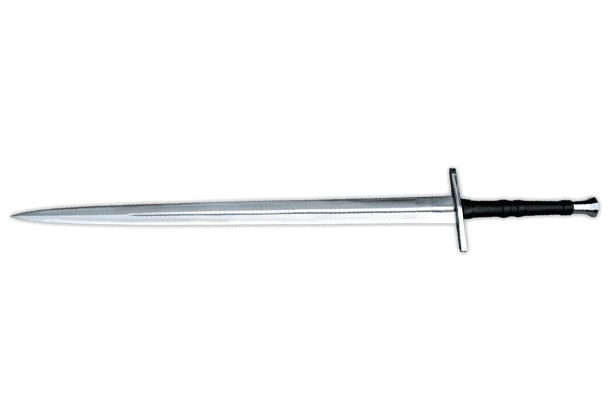
The bastard sword, or hand-and-a-half, has a grip long enough for two hands but can be used in one. The name comes from that mixed character rather than from any insult.
In practice bastard sword, hand-and-a-half and longsword describe overlapping ground rather than three separate weapons — the difference is proportion, not category.
Greatsword
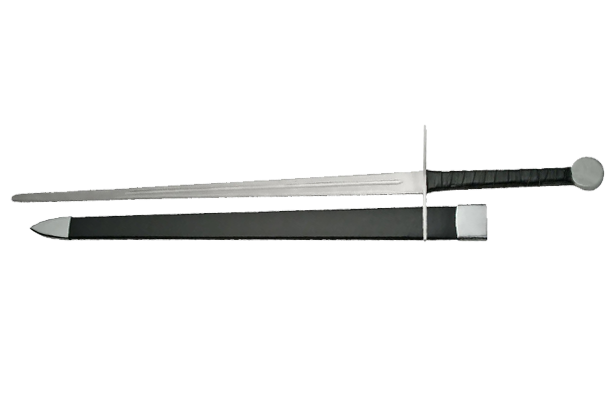
The greatsword is a genuinely two-handed battlefield weapon, larger than a longsword and used to deliver wide cuts, hold a line and counter cavalry. Unlike a hand-and-a-half it cannot be used in one hand by anyone.
Its reach and leverage made it formidable in open ground and useless in a corridor, which is the trade every large blade makes.
Zweihander
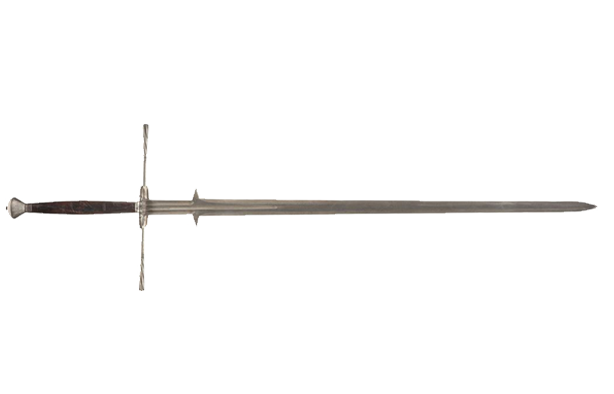
The Zweihander is the German two-hander of the Landsknecht mercenaries, capable of exceeding 180 cm. It was a specialist tool for breaking pike formations, and the men who carried it were often paid double.
Despite the size it is better balanced than photographs suggest, because the mass is distributed along the blade rather than concentrated at the tip. Our German swords guide covers the type in context.
Estoc
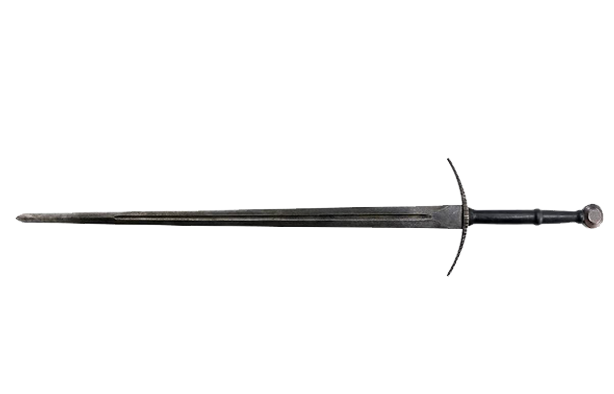
The estoc exists because slashing stopped working. Against full plate a cut achieves very little, so the estoc has no usable edge at all — a long, stiff blade of triangular or square section, made purely to thrust into gaps at the armpit, the visor or the joints.
It was used two-handed or from horseback and demanded precision rather than strength. The Russian konchar is the eastern equivalent, covered in our Russian sword types guide.
Falchion
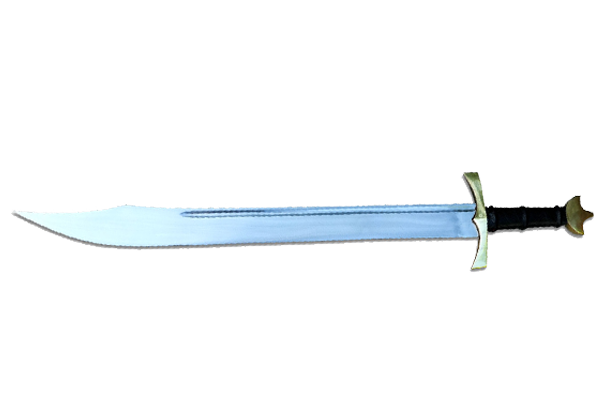
The falchion is one of the few single-edged European swords, broadening toward the tip so that mass sits where the cut lands. It combines the chopping authority of an axe with the control of a sword.
Some were plain soldiers' tools, others richly decorated for noble use, which makes surviving examples unusually varied.
Messers (Grosses and Langes Messer)
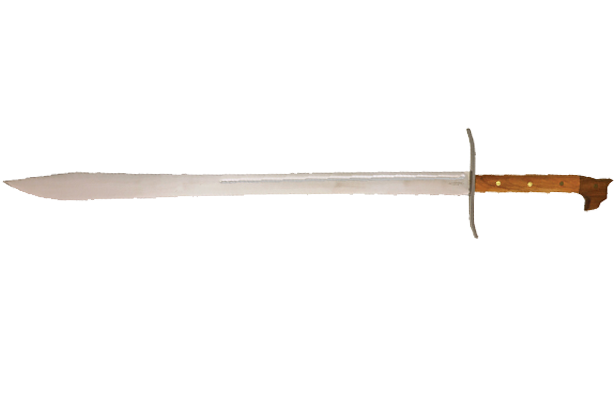
Messers are single-edged sword-knives of 15th-century Central Europe, built with slab grips riveted like a knife and a side guard called a nagel. The Grosses and Langes Messer offered serious cutting power at accessible cost.
They appear throughout the German fight books, and their knife-style construction was partly a legal and guild matter rather than purely a design choice.
Messer-Falchion Hybrids
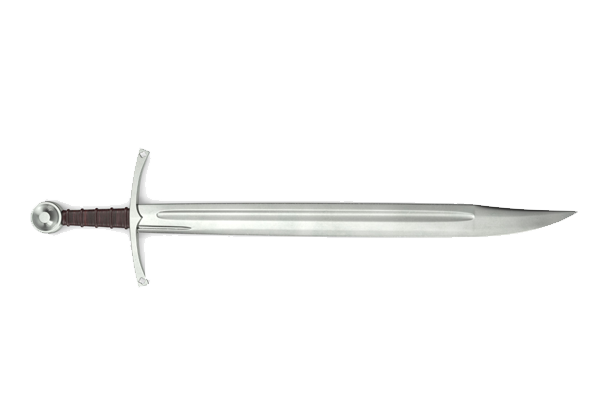
Messer-falchion hybrids combine single-edged profiles, forward mass and knife-style hilts to maximise cutting against unarmoured targets while keeping costs down. Many carry clipped or broadened tips for stronger draw cuts.
These regional solutions show smiths responding to changing armour and to urban self-defence rather than to battlefield fashion.
Cut-and-Thrust Sword
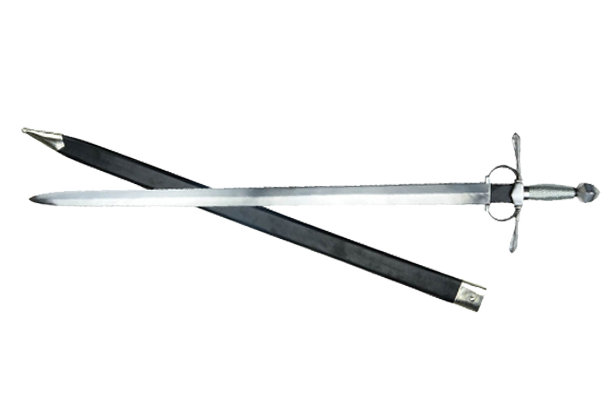
The cut-and-thrust sword spans the shift from armoured warfare to civilian carry. Narrower than a high-medieval cutter and broader than a rapier, with a protective hilt and a blade that still cuts decisively.
It reflects a change in doctrine as much as in armour: timing, measure and point control joining traditional hewing power.
Side Sword
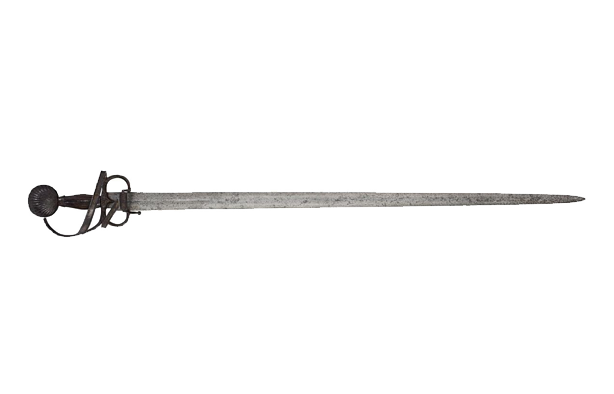
The side sword of the 16th century was daily wear for soldiers and civilians alike, and it prefigures the rapier. A complex hilt improved hand protection while the blade kept real cutting ability alongside a keen point.
It appears throughout the Italian and Iberian schools and marks the transition from battlefield blades to school-taught fencing.
Rapier
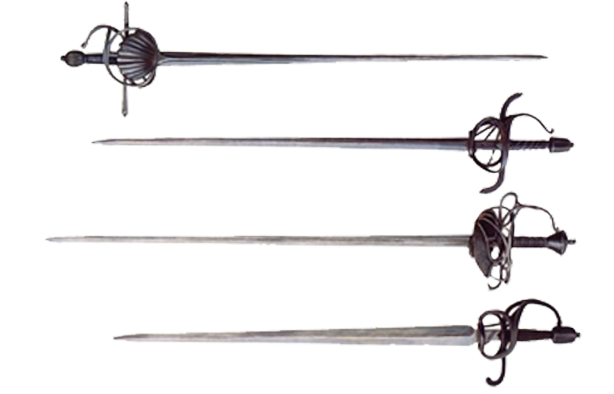
The rapier is slender, long and built for precision thrusting — a civilian duelling and status weapon rather than a battlefield one. Nobles wore it as a mark of education and standing.
Its elaborate hilt is the clearest evidence of a general rule: as armour left civilian life, hand protection moved from the armour onto the sword itself.
Broadsword
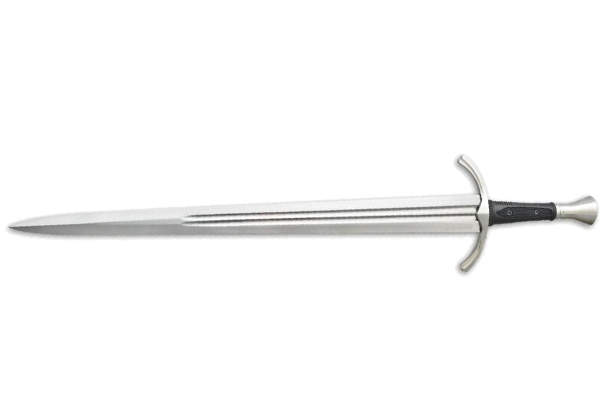
The broadsword is the most misused term in the subject. Strictly it means a broad, double-edged cutting sword of the 16th to 18th centuries, most famously in a basket hilt — not a generic medieval sword.
Popular usage applies it to almost any large straight blade, which is why our post on what a broadsword actually is exists.
Schiavona
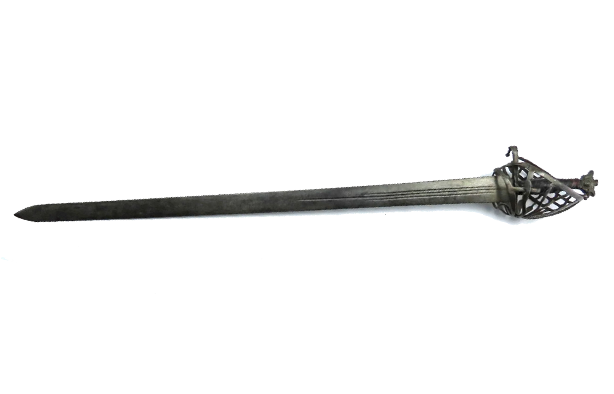
The Schiavona is the basket-hilted sword of the Venetian Slavic mercenaries, distinguished by a lattice guard and a cat-head pommel. Excellent hand defence with lively handling.
Equally at home in cavalry service and guard duty, it combines North Italian craftsmanship with hard military practicality.
Claymore

The Scottish claymore — claidheamh-mor, great sword — is a two-handed Highland weapon over 140 cm long, with its characteristic forward-sloping crossguard ending in quatrefoil terminals.
Note that the same word is later applied to the basket-hilted broadsword, which is a different weapon entirely. Context decides which is meant.
Flamberge

The flamberge, or flame-bladed sword, carries a wavy blade that is more than decorative — the undulations set up vibration on contact and make a blade harder to control in the bind.
Used by Renaissance elite soldiers and carried as much for prestige as for effect, it is among the great showpieces of European armouries.
Executioner's Sword

The executioner's sword is not a weapon of war. Broad, double-edged and blunt-tipped, with no point because it was never meant to thrust, it was made for a single specific task.
Many are inscribed with prayers or maxims about justice and mercy, and they are often finely made, which sits strangely with the purpose.
Baselard
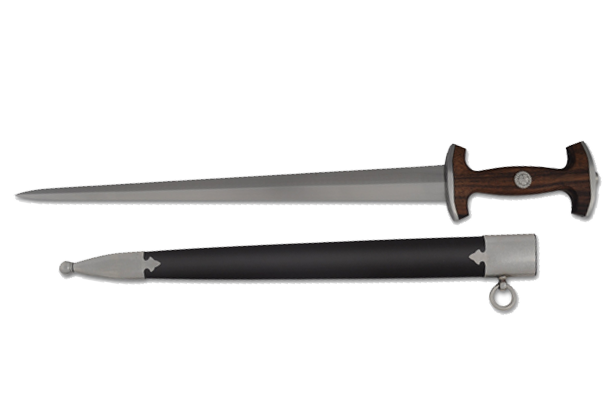
The baselard is a large dagger-sword with an I-shaped hilt, carried by burghers and soldiers from the 14th century. Long examples blur into short swords.
It became a ubiquitous civilian sidearm across guilds and militias. Our baselard guide covers the H-hilt and its sub-types.
Cinquedea
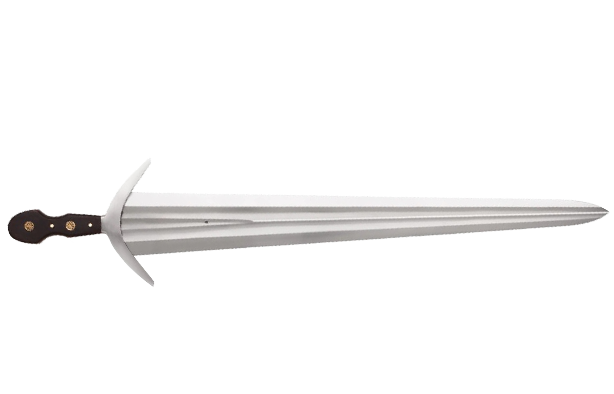
The cinquedea takes its name from its width — five fingers across at the guard. A broad, fluted Renaissance short sword prized in the Italian city-states.
Often richly decorated and worn as a statement of standing, while remaining a serious close-quarters weapon in narrow streets.
Katzbalger
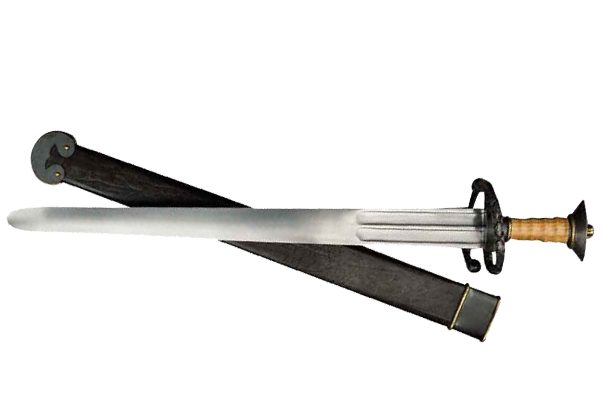
The Katzbalger is the short, stout sidearm of the Landsknechts, with an S-shaped or figure-eight guard and a broad resilient blade.
It came into its own once pike formations collapsed into melee — compact, quick and rugged, and closely tied to the swagger of early-modern German infantry.
The Spirit of Medieval Swordmaking
Read the list in order and the story is not really about swords. It is about armour. Blades widen and flatten while opponents wear mail, narrow and stiffen as plate arrives, then grow elaborate hand protection once armour leaves civilian life altogether. Every shape on this page is an answer to a question somebody else was asking.
At Everest Forge we forge these patterns by hand in 5160 spring steel, oil quenched and tempered, full tang. Not reproductions of museum pieces down to the last rivet, but working blades built the way these were built, by smiths using the same methods their grandfathers used.
Custom Forge
Commission a Medieval or European Sword
Send a reference — a museum photograph, an auction listing, an Oakeshott type number or a written description with dimensions. We confirm profile, taper, grip and fittings before anything is forged, and we tell you plainly where a reproduction differs from an original.
Frequently Asked Questions
What are the main types of medieval European swords?
The core sequence runs spatha, gladius, Carolingian sword, Viking sword, arming sword, longsword, bastard sword, greatsword and Zweihander, alongside specialist forms such as the estoc, falchion, messer, rapier, broadsword, claymore, executioner's sword, baselard, cinquedea and Katzbalger. Each answers the armour and the fighting style of its period rather than simply improving on the last.
What sword did medieval knights actually carry?
An arming sword for most of the High Middle Ages — single-handed, around 70 to 80 cm, carried with a shield. From the late 13th century the longsword became increasingly common as armour improved, because two hands give the leverage needed to control a blade and to thrust into the gaps in plate. Many knights owned both and chose according to what they expected to face.
What is the Oakeshott typology?
The standard classification system for medieval European swords, set out by Ewart Oakeshott in The Sword in the Age of Chivalry. It sorts blades by profile, cross-section, fuller and taper rather than by name, running from Type X to Type XXII. An Oakeshott type is not a separate kind of sword — it is a precise description that applies across the named types, so a Type XII is an arming sword and a Type XIIIa is a greatsword.
What is the difference between a longsword and a greatsword?
The number of hands you have a choice about. A longsword has a grip long enough for two hands but can be used in one, which is why it is also called a hand-and-a-half or bastard sword. A greatsword is genuinely two-handed and cannot be used in one hand by anyone. The Zweihander is the extreme of that category, exceeding 180 cm in some examples.
Why did sword shapes keep changing?
Armour. Against mail a broad flat cutting blade works well, so early medieval swords are wide with generous fullers. As plate arrived, cutting stopped being effective and blades narrowed and stiffened for thrusting into gaps, which produced the estoc at its extreme. When armour left civilian life the exposed hand became the target, and hilts grew side rings, swept bars and finally full baskets.
Is a broadsword a medieval sword?
Not strictly. In precise usage a broadsword is a broad, double-edged cutting sword of the 16th to 18th centuries, most famously mounted in a basket hilt. Popular usage applies the word to almost any large straight blade including medieval ones, which is why the term causes so much confusion among collectors and sellers alike.
What steel were medieval swords made from?
Carbon steel of varying and often inconsistent quality, since medieval smiths could not control composition the way a modern mill can. Pattern welding was used in the early medieval period partly to even out that inconsistency, and it declined once better steel became available. We forge in 5160 spring steel, which is a modern high-carbon steel chosen for toughness rather than a historical alloy.
Can you forge a custom medieval sword?
Yes. Send a museum photograph, an auction listing, an Oakeshott type number or a written description with dimensions, and we confirm profile, distal taper, grip and fittings before forging. Where a reproduction differs from the original — most often in construction rather than form — we say so rather than letting you assume otherwise.
Explore More
> The Oakeshott Typology Explained — how these blades are precisely classified
> The Arming Sword — the knight's one-handed sword in detail
> Short Sword vs Longsword — which to buy and why
> Sword Guard Types — what each guard was built to stop
> Types of Pommels — twenty forms and what they do
> What Is a Broadsword? — the most misused term in the subject
> German Swords — longsword to Zweihander