Menu
Your Cart

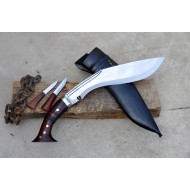
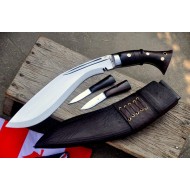
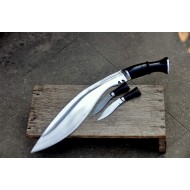
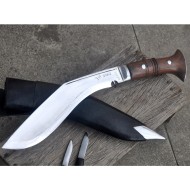
Hand-Forged Tactical Kukri, Crossguard Hilt

Hand-Forged Tactical Kukri, Crossguard Hilt
$164.99
Ex Tax: $164.99
  • Model: Hybrid Kukri
  • Product Code: Signaturekukri75
  • Location: Kathmandu, Nepal

Available Options

A Hand-Forged Tactical Kukri With a Crossguard Hilt and Wide Fullered Blade

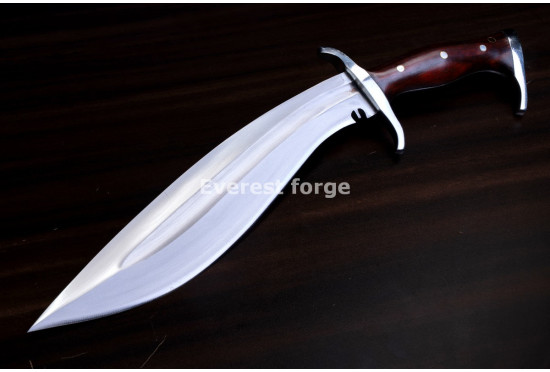
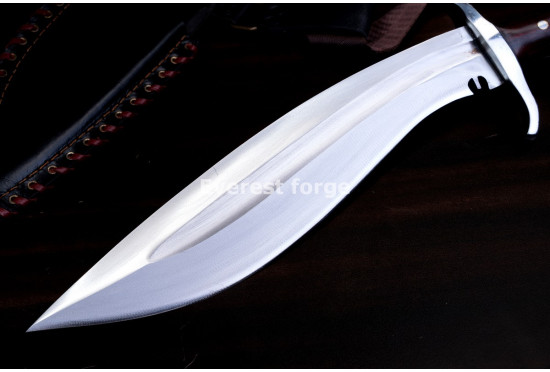
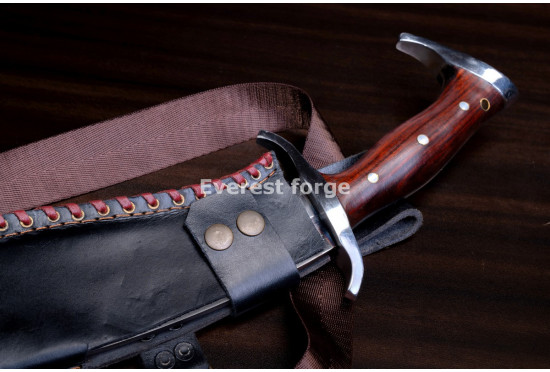
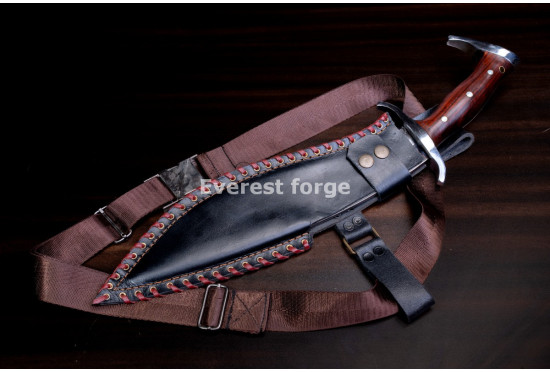
This is a 12 inch hand-forged kukri built on modern lines: the traditional forward-curved blade with a deep belly and a hand-cut cho, carrying a single broad fuller that runs almost the full length of the face, mounted on a polished steel crossguard with quillons sweeping down on both sides. The grip is contoured rosewood pinned through a full tang and capped in polished steel with a hooked butt. Overall length is 18 inches and it weighs approximately 890 grams, which makes it the heaviest blade we forge for its length. It ships in a black leather scabbard laced in red on a nylon shoulder harness. Forged from 5160 high-carbon steel by our own kami in Tokha-3, Kathmandu.

An honest note. This is not a traditional Nepali kukri and we are not going to sell it as one. The blade is genuine — the curve, the belly, the forward balance and the hand-cut cho are all correct, and it is forged by the same smiths who make our village patterns. Everything else is modern: no traditional kukri carries a crossguard, the contoured grip is an ergonomic design rather than the waisted-and-ringed Nepali form, and a nylon shoulder harness is not a dap. Those are deliberate choices for a particular kind of buyer and there is nothing wrong with any of them. But if what you want is the kukri a Nepali soldier or hill farmer actually carries, our bhojpure, sirupate and ringed-hilt pages are where to look, and they cost less.

Made to your specification

Have This Kukri Forged Your Way

Blade length, spine thickness, guard form, grip and carry rig are all decided at the forge. Tell us what you need it for and our kami will tell you what to order.

Start a Custom Forge Order →

Why This Kukri Is Built the Way It Is

Mass, and a Lot of It890 grams over twelve inches is the densest blade we make for its length, and it stays that way despite a broad fuller cut out of the face. That is thick stock, and it is the whole point of the piece.
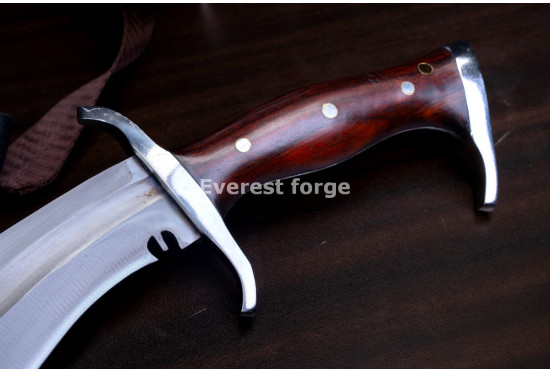
A Guard, Which No Kukri HasSteel quillons sweeping down both sides. It is not traditional and it is not free, but it puts something solid between your hand and the blade on a knife that will be thrust as well as swung.
A Hand-Cut Cho, Because That Part Is RealThe notch ahead of the guard is filed individually, exactly as on our village patterns. Modern fittings do not mean a modern blade.

Specifications

Blade Length12 inches
Handle Length6 inches
Overall Length18 inches
Blade Steel5160 high-carbon spring steel, oil-quenched and tempered
Blade ProfileForward-curved with a deep broad belly, edge on the inner curve
FullerSingle wide chirra running almost the full length of the blade face
Blade DetailHand-cut cho at the base of the edge, satin finish
GuardPolished steel crossguard with quillons sweeping down on both sides
HiltContoured rosewood scales pinned through a full tang, hooked steel butt cap
Standard BuildSatin blade, rosewood scales — size, finish and scale material are selectable above
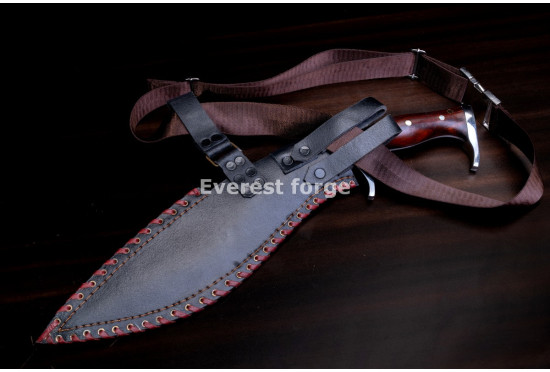
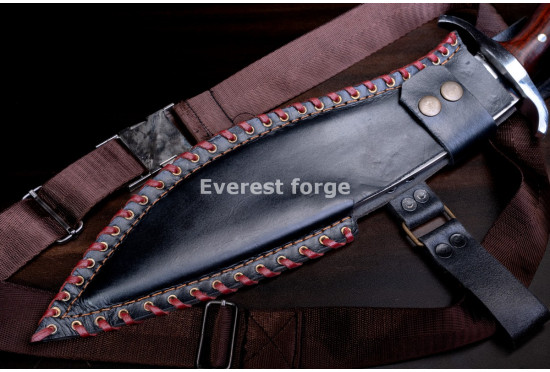
CarryBlack leather scabbard laced in red, on an adjustable nylon shoulder harness
WeightApproximately 890 grams for the kukri, 1180 grams with the scabbard and harness
OriginHand-forged in Tokha-3, Kathmandu, Nepal

Build Options

Spine ThicknessThis is what makes the knife heavy or light, not the fuller. Tell us the work and our kami will forge the spine to suit, and we will put the measurement on your order.
Guard FormThe swept crossguard shown, a single forward quillon, a plain straight cross, or no guard at all if you want the traditional arrangement on this blade.
Blade LengthTen to fifteen inches. Shorter concentrates the mass and is easier to wear on a harness; longer adds reach at the cost of control in close work.
FullerThe wide chirra shown, a narrow one, multiple chirras, or a plain blade. Read the answer below first, because a fuller is not a weight-saving device on a blade this thick.
Carry RigThe shoulder harness shown, a belt sheath, a dangler, or a traditional dap with karda and chakmak pockets if you want to bring it back toward the village pattern.
Scale MaterialRosewood as standard. Water buffalo horn, micarta or stacked leather washers are all cut and fitted in the same workshop.

Is This the Right Kukri for You?

Buy This If You Want

  • The heaviest short blade we forge, with real chopping mass in a twelve inch package
  • A guard between your hand and the edge, which no traditional kukri gives you
  • Harness carry rather than a belt, so the weight sits on your shoulders
  • A modern ergonomic grip you can hold through sustained work
  • A genuine forged kukri blade with a hand-cut cho underneath the modern fittings

Look Elsewhere If You Want

  • A traditional Nepali kukri — this is not one, and the village patterns cost less
  • Something light to carry all day, since this is the densest blade in the catalogue for its length
  • The karda and chakmak, which do not come with a harness rig
  • A stainless blade needing no care, since 5160 is carbon steel and will rust if left wet
  • A clearing blade for green growth, where a machete is faster and far less tiring
Our own craft, not someone else's

Ask Our Kami for a Spine Thickness

Every kukri we forge can be made heavier or lighter through the spine without changing anything else you can see. Describe the work and the smiths will tell you the number to ask for.

Talk to the Forge →

How to Order

Choose your blade length, finish and scale material from the options above the description.
Note your spine thickness, guard form and carry rig in the order comments.
We confirm the build by email and start forging. Preparation takes seven to ten days.
Your kukri ships tracked and arrives a further seven to ten days later.

Who This Kukri Is For

  • Buyers who want the mass without the length and will carry it on a rig rather than a belt
  • Collectors of modern forged blades who want a kukri that does not look like every other kukri
  • Campers and bushcrafters working in tight ground where a long blade keeps catching
  • Anyone who already owns a traditional kukri and wants the modern counterpart alongside it

What Is Included

  • One hand-forged kukri, sharpened and ready to use
  • Fitted black leather scabbard with red lacing
  • Adjustable nylon shoulder harness
  • Certificate of hand-forging from the workshop
  • Everest Forge manufacturer warranty against defects in forging and heat treatment

Explore the Collection

Kukri Knife, Bhojpure PatternThe traditional heavy working chopper →
Kukri Knife, Sirupate PatternThe slim fast blade →
Kukri Set, Wide Bevel BladeComplete, with karda and chakmak →

Shipping, Returns and Care

Every piece is prepared at the forge in seven to ten days, and shipping adds a further seven to ten days. Orders to the USA and Canada travel with FedEx; everywhere else ships on a DDP service, which means duties and taxes are settled before the parcel moves so there is nothing to pay on delivery. Every piece carries the Everest Forge manufacturer warranty against defects in forging and heat treatment.

Large fixed blades are restricted in some countries and in some states and provinces within them, and a guarded fighting knife is treated more strictly than a plain working blade in a few of them. It is your responsibility to check that this kukri may lawfully be imported and possessed where you live before ordering, because a parcel seized by customs cannot be returned to us and cannot be refunded. Ask us before you buy if you are unsure and we will tell you what we know about your destination.

5160 is a high-carbon steel and it will rust if left wet or stored damp. Wipe the blade dry after use and keep a light film of oil on it, paying attention to the fuller, which holds moisture that a cloth passes straight over. Do not store the kukri in the scabbard for long periods. The nylon harness can be washed and air-dried; do not put the leather scabbard in water. The rosewood scales take an occasional coat of oil.

Frequently Asked Questions

Why do two 12 inch kukris weigh 890 and 610 grams?

Because length tells you almost nothing about weight, and this is the clearest example in our range. We forge three kukris with twelve inch blades. This one weighs 890 grams. Our ringed-hilt service kukri weighs 650. Our carved-grip presentation kukri weighs 610. That is a spread of forty-six per cent across blades of identical length, and the difference is entirely in two dimensions you cannot see in a photograph: how wide the blade is and how thick the spine is. A blade shot from the side looks the same regardless. This one is thick stock and broad through the belly, which is why it is the densest blade we forge for its length even after a wide fuller has been cut out of the face. That is worth knowing before you order any kukri from anyone, and it is why we now put spine thickness on our listings and would encourage you to ask every seller for the same number.

What does the wide fuller do?

Less than most people assume, and on this blade it is worth being precise. A fuller removes metal from the middle of the blade face, where it contributes least to stiffness, so the blade loses weight without losing much strength. On a thin blade that matters a great deal. On a blade as thick as this one, a fuller of any width removes a modest fraction of a large amount of steel, and the piece remains the heaviest we make for its length. So the wide chirra here is doing three real things: it takes a little weight off, it stiffens the blade slightly by creating a raised spine and a raised edge line either side of the channel, and it looks like what it is, which is a lot of hand grinding. What it is not is a way to make a heavy kukri into a light one. If you want a lighter blade, ask for a thinner spine, which is a build option above and will change the weight by an order of magnitude more than any fuller.

Why does no traditional kukri have a guard?

Because the traditional design solves the same problem a different way and a guard would get in the way of everything else. A Nepali kukri stops your hand travelling forward with a steel bolster, and stops it coming off the back with a raised ring and a flared butt, which is the direction a forward-heavy blade actually wants to leave your hand. The cho catches sap and fluid before it reaches the grip. None of that needs quillons. And a guard has costs on this particular tool: it adds weight right at the balance point, where a kukri least wants it; it catches on undergrowth and on the mouth of a dap, which is drawn in a particular sweeping motion; and it interferes with choking up on the blade for close work, which is something a village user does constantly. What a guard adds is protection when the knife is thrust rather than swung, and confidence in a wet or bloody grip. That is a fighting requirement rather than a working one, which is exactly what this piece is for.

What does "tactical" actually mean here?

It is a marketing word and we would rather define ours than let you guess. On this piece it means four specific things: a guard, which no working kukri has; a contoured ergonomic grip rather than the traditional waisted-and-ringed form; harness carry rather than belt or dap; and a blade forged deliberately thick for a fighting rather than a farming role. That is the whole of it. What tactical does not mean, here or anywhere: it is not military issue, it has not been adopted by any armed force, and it is not better at cutting wood than the village patterns we make — those are the ones actually optimised for that job, and they cost less. If a seller uses the word without telling you what changed about the knife, the answer is usually that nothing did except the colour of the handle.

Is the cho real?

Yes, and it matters that we say so, because we refuse to call other blades kukris when it is missing. The cho is the notch filed into the edge just ahead of the guard. It arrests cracks running back out of the edge into the tang, it catches sap and fluid away from the grip, and in Nepal it carries symbolic readings as well, variously a trident, a cow's hoof or a mark of the divine. It is cut individually by hand on this knife exactly as on our village patterns. We make one machete with kukri-like curves and no cho, and its page says plainly that it is not a kukri for that reason. This one has one, so it is. The fittings on this piece are modern; the blade is not.

How does a shoulder harness compare to belt carry?

It suits this knife better than a belt does, which is why it comes with one. Eight hundred and ninety grams on a belt pulls at one point on your hip, drags your trousers down over a day and swings when you move. On a harness the weight spreads across your shoulders and sits flat against the body, and a short heavy blade is exactly the shape that works there — a long blade on a chest rig fouls your arms. The trade is access: a belt draw is faster and more natural, a harness needs a deliberate reach and is awkward with a pack on. The rig here is adjustable nylon rather than leather, which is a durability and cost decision rather than an aesthetic one; if you would prefer a leather belt sheath or a dangler we will make either.

What steel is it, and how is the edge hardened?

5160 high-carbon spring steel, the same alloy family as the vehicle leaf springs Nepali kamis have forged kukris from for generations. The edge is hardened differentially rather than the blade being through-hardened, so the cutting edge is hard while the spine and belly stay soft and springy and absorb the shock of chopping. On a blade this heavy that matters as much as on any kukri we make. It is not stainless, deliberately, because the stainless grades that genuinely resist rust give up the toughness a chopping blade depends on.

Is it full tang?

Yes. The tang is the full width and shape of the grip with rosewood scales pinned through it, and the line of steel shows between the scales along the outline of the handle. On a blade of this mass it is the only construction we would fit. The alternative, a narrow tang running into a solid grip and secured at the butt cap, is the traditional arrangement on many village kukris and is perfectly adequate at village weights, but it works loose at the shoulder under the repeated shock of a heavy blade and it is the standard failure point on cheap choppers. If you want the traditional turned hilt on this blade we will build it, and we would put a thinner spine on it at the same time.

Can I baton with it?

Yes, and this is the piece in our range best suited to it. The spine is thick, flat and unsharpened, the tang is full width with pinned scales, and the blade is forged for impact. Strike over the belly rather than out near the tip, keep the blade square in the cut so it does not twist, and use a wooden baton rather than a rock. One caution specific to this knife: the guard sits proud of the blade on both sides, so keep your supporting hand clear of the quillons when you are driving the blade through and check where they are before you swing in tight spaces.

How sharp does it arrive?

Sharp and ready to work, finished on a stone by hand at the forge, with a working edge rather than a razor polish because a kukri meets wood, grit and bone and a fine edge does not survive that contact. If you would prefer it shipped blunt — for display, for a gift, or because of the rules where you live — say so in the order comments and we will send it unsharpened at no extra cost.

How does it compare to your traditional kukris?

It is heavier than all of them and it is the only one with a guard. Our ringed-hilt kukri is the same twelve inch blade length in plain service dress with a turned grip and no guard, at 650 grams. Our bhojpure is the traditional heavy working pattern with brass fittings, a horn hilt and both companions. Our sirupate is the slim fast blade. Our wide-bevel set arrives complete with karda, chakmak and a proper scabbard. If you want the tool Nepalis actually use, take one of those and you will spend less. Take this one if you specifically want the mass, the guard and the harness, and understand that you are buying a modern fighting knife with a Nepali blade rather than a Nepali kukri with modern trim.

Who makes these?

Our own kami, in our own workshop in Tokha-3 on the northern edge of Kathmandu. Kami is the Nepali word for smith, and most of ours came from families that have forged blades for generations. Everest Forge has operated since 2010, and we forge, grind, heat treat, fit the hilts and cut the leather in the same building. The same hands make this and the village patterns, and the smiths are quite direct about which they would take up a hill themselves. We think that is worth knowing, and it is why both are on the site.

Specification
Blade: 12 inches. Hand forged from 5160 carbon steel
Total Length: 18 inches
Handle: 6 inches. Full tang with contoured rosewood scales pinned through, steel crossguard and hooked butt cap
Weight: approx 890g kukri, 1180g with scabbard and harness
Note: Some variation in weight, dimensions and finish may occur as each piece is hand forged. Keep the blade lightly oiled and clear the fuller when oiling

Write a review

Note: HTML is not translated!
Bad Good
Captcha