Menu
Your Cart

Hand-Forged Kukri Machete, Jimped Spine

Hand-Forged Kukri Machete, Jimped Spine
$149.99
Ex Tax: $149.99
  • Model: Hybrid Kukri
  • Product Code: HEAVYDUTYKUK012
  • Location: Kathmandu, Nepal

Available Options

A Hand-Forged Kukri Machete With a Broad Blade and Jimped Spine

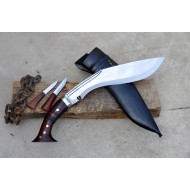
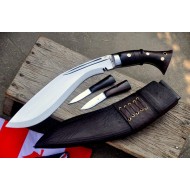
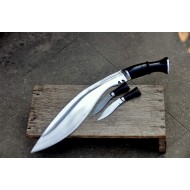
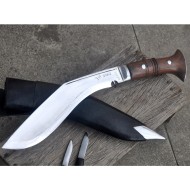
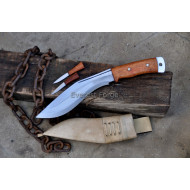
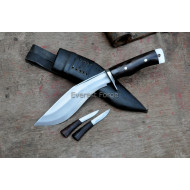
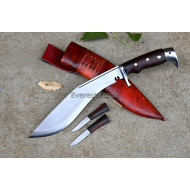
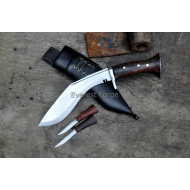
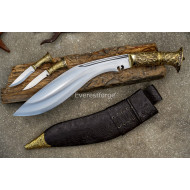
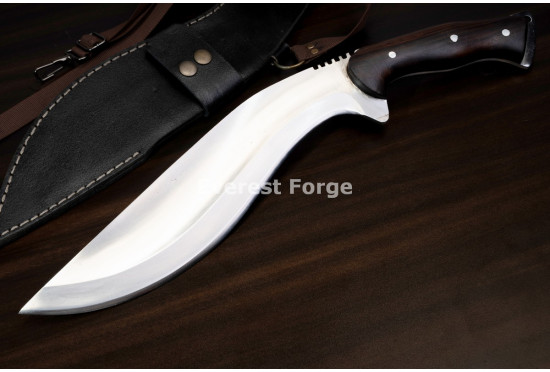
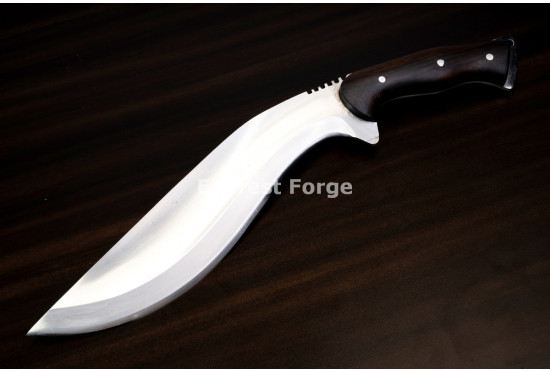
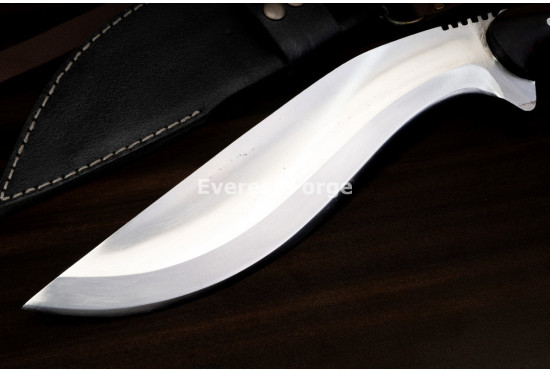
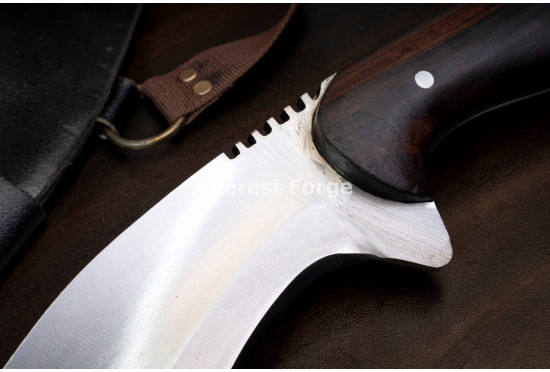
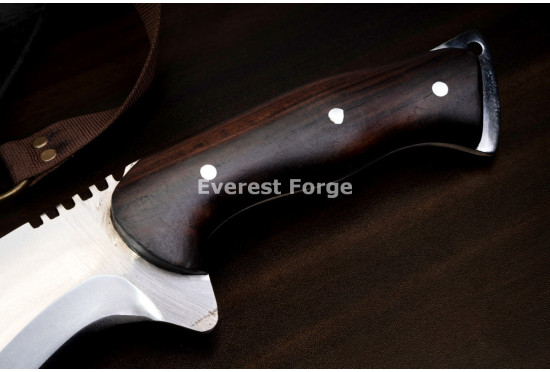
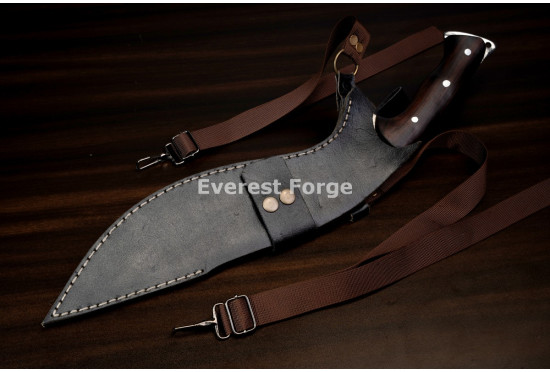
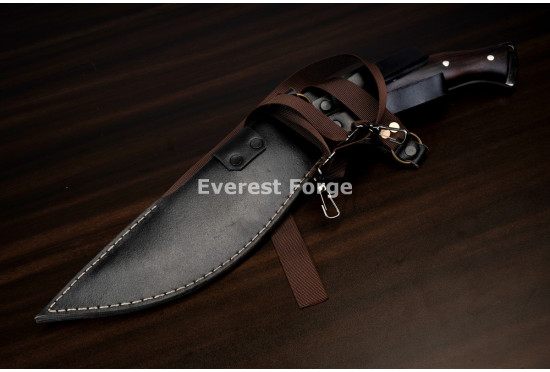
This is a 12 inch hand-forged kukri machete: a broad forward-curved blade with a deep belly through the working section, a hand-cut cho at the base of the edge, and a run of jimping filed into the spine where the thumb sits. There is no bolster and no guard — the rosewood scales run straight to the shoulder over a full tang, pinned through and capped in polished steel at the butt. Overall length is 18.5 inches. Forged from 5160 high-carbon steel by our own kami in Tokha-3, Kathmandu, and supplied in a black leather sheath saddle-stitched in contrasting thread, on an adjustable nylon shoulder harness.

An honest note. The weight figures supplied for this piece are identical to those recorded for a different knife in the same batch, which almost certainly means they were carried over on the sheet rather than measured. We have therefore left the weight row off this page rather than print a number we do not trust. It will go up once the piece has been on the scale, and if you want the exact figure before ordering, email us and we will weigh it and tell you rather than estimate. Second point, plainly: this is a working machete built on kukri geometry rather than a traditional Nepali kukri. It has the cho, the curve and the belly, and it is forged by the same smiths — but a village kukri has a bolster, a shaped traditional grip and a dap, and this has none of those. If you want the traditional article, our bhojpure and sirupate pages are where to look.

Made to your specification

Have This Machete Forged Your Way

Blade length, spine thickness, jimping and carry rig are all decided at the forge. Tell us what you are cutting and our kami will tell you what to order.

Start a Custom Forge Order →

Why This Machete Is Built the Way It Is

No Bolster, No GuardThe scales run straight to the blade shoulder. It is a plainer build than our traditional kukris and a stronger one in one specific way: there is no fitting to work loose, because there is no fitting.
Jimping Where the Thumb GoesFiled notches on the spine directly above the grip, so a wet or gloved thumb has something to bite into when you choke up for close, controlled cutting.
A Cho, Cut by HandThe notch at the base of the edge is filed individually. It is the mark that separates a kukri from a blade shaped to look like one, and this blade has it.

Specifications

Blade Length12 inches
Handle Length6.5 inches, of which 4.5 inches is grip
Overall Length18.5 inches
Blade Steel5160 high-carbon spring steel, oil-quenched and tempered
Blade ProfileBroad forward-curved with a deep belly, edge on the inner curve
Blade DetailHand-cut cho at the base of the edge, jimping filed into the spine above the grip
ConstructionFull tang with rosewood scales pinned through, no bolster, polished steel butt cap
Standard BuildSatin blade, rosewood scales — size, finish and scale material are selectable above
SheathBlack leather, saddle-stitched in contrasting thread, with a press-stud strap
CarryAdjustable nylon shoulder harness with clip fittings
OriginHand-forged in Tokha-3, Kathmandu, Nepal

Build Options

Spine ThicknessWhat actually sets the weight on a chopper. Tell us the vegetation or the wood and our kami will forge the spine heavier or lighter without changing anything you can see.
Blade LengthTen to sixteen inches. Shorter concentrates the mass and works better in tight ground; longer gives reach and clears more per swing.
JimpingThe run shown, a longer run further down the spine, or a plain spine. A plain spine gives you a cleaner striking surface for batoning.
A BolsterFitted steel at the shoulder if you want it. It looks more traditional and adds a hand stop, at the cost of one more component that can move over years of hard use.
Scale MaterialRosewood as standard. Water buffalo horn, micarta or stacked leather washers, all cut and fitted in the same workshop.
Carry RigThe nylon harness shown, a leather belt sheath, a dangler, or a traditional dap with karda and chakmak pockets.

Is This the Right Blade for You?

Buy This If You Want

  • Kukri chopping geometry in a plain working build with nothing to fuss over
  • A hand-cut cho, so it is genuinely a kukri rather than a shape borrowed
  • Jimping under the thumb for close controlled work
  • Harness carry, so the weight sits on your shoulders rather than your hip
  • A sheath saddle-stitched by hand rather than run through a machine

Look Elsewhere If You Want

  • A traditional Nepali kukri — no bolster, no traditional grip, no dap, and the village patterns cost less
  • The karda and chakmak, which do not come with a harness rig
  • Reach for clearing green growth, where an 18 inch machete does far more per swing
  • A guard between hand and edge, which this build deliberately does not have
  • A stainless blade needing no care, since 5160 is carbon steel and will rust if left wet
Our own craft, not someone else's

Ask Our Kami What to Order

Spine thickness and blade length should follow the vegetation, not a catalogue. Describe the ground you are working and the smiths will tell you what to ask for.

Talk to the Forge →

How to Order

Choose your blade length, finish and scale material from the options above the description.
Note your spine thickness, jimping preference and carry rig in the order comments.
We confirm the build by email and start forging. Preparation takes seven to ten days.
Your machete ships tracked and arrives a further seven to ten days later.

Who This Machete Is For

  • Smallholders and land managers clearing regrowth, scrub and light wood by hand
  • Campers and bushcrafters who want kukri chopping in a plain build they can abuse
  • Anyone carrying on a rig rather than a belt, which is what this harness is for
  • Buyers who already own a traditional kukri and want a working one they will not worry about

What Is Included

  • One hand-forged kukri machete, sharpened and ready to work
  • Fitted black leather sheath, saddle-stitched, with press-stud strap
  • Adjustable nylon shoulder harness
  • Certificate of hand-forging from the workshop
  • Everest Forge manufacturer warranty against defects in forging and heat treatment

Explore the Collection

Tactical Kukri, Crossguard HiltThe same size with a steel guard →
Kukri Knife, Bhojpure PatternThe traditional heavy working kukri →
Kukri Knife, Sirupate PatternThe slim fast blade →
Bush Machete, Brass-Fitted Hilt18 inch, for reach in green growth →

Shipping, Returns and Care

Every piece is prepared at the forge in seven to ten days, and shipping adds a further seven to ten days. Orders to the USA and Canada travel with FedEx; everywhere else ships on a DDP service, which means duties and taxes are settled before the parcel moves so there is nothing to pay on delivery. Every piece carries the Everest Forge manufacturer warranty against defects in forging and heat treatment.

Large fixed blades are restricted in some countries and in some states and provinces within them. It is your responsibility to check that this machete may lawfully be imported and possessed where you live before ordering, because a parcel seized by customs cannot be returned to us and cannot be refunded. Ask us before you buy if you are unsure and we will tell you what we know about your destination.

5160 is a high-carbon steel and it will rust if left wet or stored damp. Wipe the blade dry after use and keep a light film of oil on it, working a brush rather than a cloth along the jimping and the cho, which are the two places a wipe will skip. Do not store the machete in the sheath for long periods. The nylon harness can be washed and air-dried; keep the leather sheath out of water. The rosewood scales take an occasional coat of oil.

Frequently Asked Questions

Is this a real kukri?

The blade is. It has the forward curve with the edge on the inner side, the deep belly, the forward balance and a cho cut by hand at the base of the edge, and it is forged by the same kami who make our village patterns. Where it stops being traditional is everything behind the blade. A Nepali kukri has a fitted bolster, a shaped grip in the traditional waisted-and-ringed form, and a dap — the wooden-cored scabbard with pockets for the karda and chakmak. This has flat rosewood scales running straight to the shoulder, no bolster at all, and a nylon harness. That makes it a working machete on kukri geometry, which is a useful and honest thing to be. We hold the same line in the other direction too: one of our machetes has kukri-like curves and no cho, and its page says plainly that it is not a kukri for that reason. The test cuts both ways or it is worth nothing.

Why is there no bolster?

Because it is one fewer thing to come loose, and on a blade meant to be worked hard that is a real argument rather than a cost saving. A bolster is a fitted steel component sitting between the blade and the scales: it looks traditional, it gives the hand a stop, and it spreads the load at the shoulder. It is also a separate piece, and separate pieces on a chopping blade eventually move — not often, and not soon, but it is the most common thing to go wrong on a heavily used kukri after the edge. This build takes it out entirely, with the scales pinned straight onto the tang from the shoulder back. What you lose is the hand stop at the front, so the jimping and the shaping of the scales are doing that work instead. If you want the bolster, it is a build option and we will fit one; we would just rather tell you what it is for and let you choose.

What is the jimping on the spine for?

Thumb purchase. The filed notches sit on the spine directly above the front of the grip, which is where your thumb naturally goes when you choke up onto the blade for close work rather than swinging it. Wet, bloody or gloved hands slide on a smooth polished spine, and the notches give the thumb something to bite into so you can push down through a cut with control. On a chopper that matters more than it sounds, because the whole point of a short heavy blade is that it does two jobs: swung for the heavy work and choked up for the fine work. Our bush machete page goes into filework properly, including the honest question of which runs are functional and which are decoration. On this blade the run is short and sits exactly where a thumb lands, so it is doing the job rather than sitting there looking purposeful.

What is saddle stitching, and does it matter?

It matters more than almost any other detail on a sheath, and it is easy to check. Saddle stitching is done by hand with two needles on one thread, passing through each hole from both sides so every stitch is locked independently. Machine stitching uses one thread looped against another, chain-fashion. The practical difference shows up when a stitch is cut or wears through: a machine-stitched seam can unravel from that point, because the loops depend on each other, while a saddle-stitched seam stays put because each stitch is a separate knot in effect. On a sheath that spends its life against a wet belt with a sharp edge inside it, that is not academic. You can tell them apart by looking at the thread: saddle stitching leaves stitches that lean the same way on both faces, machine stitching leaves one face looking neat and the other showing the loop. Ours are done by hand in the same workshop as the blades.

How does it compare to your tactical kukri?

They are close in size and opposite in intent. Our Tactical Kukri is a 12 inch blade with a full steel crossguard, a wide chirra ground down the face, a contoured ergonomic grip and a hooked butt cap, and it is built as a modern fighting knife with a Nepali blade. This one is the same blade length with no guard, no bolster, no fuller and plain scales — a working machete meant to be used and not fussed over. If you want the guard and the presence, take the tactical. If you want the tool, take this, and it will cost you less. The honest summary is that we make three kinds of kukri now: the village patterns, which are the real thing; the working builds like this one, which take the geometry and drop the tradition; and the modern designs, which take the geometry and add fittings the tradition never had.

Why do no two of your blades look identical?

Because they are forged and ground by hand, and it is worth setting the expectation before your parcel arrives rather than after. Every blade is drawn out under the hammer from a bar of leaf-spring steel, so the profile is shaped by eye against a pattern rather than cut by a machine to a drawing. Grinds are put on by hand on a wheel. The cho is filed individually, the jimping is filed individually, and the scales are cut from natural rosewood, which varies in colour and grain from one board to the next and even across one board. What that means in practice: blade width can vary by a millimetre or two, the fuller or the jimping will not sit in exactly the same place, the belly may be a shade deeper or shallower, and the handle will not be the same colour as the one in the photograph. What does not vary is the steel, the heat treatment and the construction. If you need two pieces to match, order them together and say so, and we will forge them in one batch from one bar with scales from one board.

What is the notch near the handle?

The cho, also called the kaudi, filed by hand into the edge just ahead of the shoulder. It arrests cracks running back out of the edge into the tang, it keeps sap and fluid off the grip, and in Nepal it carries symbolic readings as well, variously a trident, a cow's hoof or a mark of the divine depending on who you ask. It is cut individually on every kukri we make. If you are looking at a kukri anywhere and there is no cho at all, or the cho is a perfectly identical stamping across every example in a listing, it did not come from a Nepali forge.

What steel is it, and how is the edge hardened?

5160 high-carbon spring steel, the same alloy family as the vehicle leaf springs Nepali kamis have forged kukris from for generations. The edge is hardened differentially rather than the blade being through-hardened, so the cutting edge is hard while the spine and belly stay soft and springy and absorb the shock of chopping. A through-hardened blade would crack under that; one hardened only at the edge holds the cut and takes the impact everywhere else. It is not stainless, deliberately, because the stainless grades that genuinely resist rust give up the toughness a chopping blade depends on.

Is it full tang?

Yes, and on this build you can see the whole of it. The tang is the full width and shape of the grip with rosewood scales pinned through it, and because there is no bolster the steel is visible from the blade shoulder all the way back to the butt cap along both edges of the handle. That is the strongest construction for a chopping blade and it is the one we would fit regardless of price. The alternative, a narrow tang running into a solid grip and secured at the butt, is traditional on many village kukris and adequate at village weights, but it works loose at the shoulder under sustained heavy use and it is the standard failure point on cheap choppers.

Can I baton with it?

Yes, with one caution about where you strike. The tang is full width, the steel is thick and the blade is built for impact, which is everything batoning needs. The caution is the jimping: those notches are on the spine, and hammering a wooden baton directly onto filed teeth will chew the baton and concentrate the blow on the tooth tips. Strike behind the jimping over the plain section of spine, keep the blade square in the cut, and use wood rather than a rock. If batoning is going to be a regular part of what you do with it, order the plain spine, which is a build option and gives you a clean striking surface along the whole length.

How sharp does it arrive?

Sharp and ready to work, finished on a stone by hand at the forge, with a working edge rather than a razor polish because a kukri meets wood, grit and bone and a fine edge does not survive that contact. If you would prefer it shipped blunt — for display, for a gift, or because of the rules where you live — say so in the order comments and we will send it unsharpened at no extra cost.

Who makes these?

Our own kami, in our own workshop in Tokha-3 on the northern edge of Kathmandu. Kami is the Nepali word for smith, and most of ours came from families that have forged blades for generations. Everest Forge has operated since 2010, and we forge, grind, heat treat, fit the scales and cut and stitch the leather in the same building. This is a working build rather than a traditional pattern, and the smiths are quite direct about which of our kukris they would take up a hill themselves. That is worth knowing, and it is why both are on the site.

Specification
Blade: 12 inches. Hand forged from 5160 carbon steel
Total Length: 18 inches
Handle: 6 inches. Full tang with contoured rosewood scales pinned through, steel crossguard and hooked butt cap
Weight: approx 890g kukri, 1180g with scabbard and harness
Note: Some variation in weight, dimensions and finish may occur as each piece is hand forged. Keep the blade lightly oiled and clear the fuller when oiling

Write a review

Note: HTML is not translated!
Bad Good
Captcha